Ismailia: The City of Beauty in the Heart of the Suez Canal
Ismailia, affectionately called by the Egyptians "Madinat al-Gamal" (the City of Beauty), is one of the most surprising and least known gems of modern Egypt. Situated at the midpoint of the Suez Canal, on the western shores of Lake Timsah, this garden city represents a unicum in the Egyptian urban panorama. Founded in 1863 as headquarters for the construction of the canal, Ismailia still today conserves that elegant and relaxed atmosphere that distinguishes it clearly from the chaotic metropolises of the country.
The name of the city pays homage to the Khedive Ismail Pasha, the Egyptian governor who supported with enthusiasm the project of the canal and transformed Egypt with an ambitious programme of modernisation. Ismailia was conceived from the beginning as a model city, planned according to avant-garde European urban principles, with ample tree-lined avenues, public gardens, orderly squares and a clear separation between the residential, commercial and administrative zones.
The Origins: Headquarters of the Canal
When Ferdinand de Lesseps established his headquarters at Ismailia in the sixties of the 19th century, the position was chosen with strategic care. Situated halfway between Port Said and Suez, Ismailia allowed the supervision of the works on both fronts of the canal. The proximity to Lake Timsah moreover guaranteed a reserve of fresh water and a more pleasant natural environment compared to the surrounding desert expanses.
The construction of the city proceeded parallel to that of the canal. De Lesseps had architects, engineers and urban planners arrive from France who designed a city that would reflect the best European standards of the epoch. The first constructions included the personal residence of de Lesseps, the offices of the Canal Company, lodgings for the engineers and their families, and a modern hospital. The fresh water from the Nile was channelled to Ismailia through the Ismailia canal, a separate hydraulic work that provided the lifeblood to the nascent city.
The House-Museum of Ferdinand de Lesseps
Among the principal attractions of Ismailia is the historic residence of Ferdinand de Lesseps, today transformed into a museum. This elegant villa in European style, immersed in a luxuriant garden, was the abode of the visionary French diplomat during the years of the construction of the canal. Inside, the rooms have been preserved with the original furnishings of the epoch, offering an intimate look at the daily life of the man who changed the geography of world commerce.
The museum hosts a collection of personal objects of de Lesseps, among which his writing desk, his personal library, instruments of navigation and cartography, and a rich private correspondence. The original maps of the project of the canal, exhibited in the principal rooms, are documents of extraordinary historical value. Period photographs show the various phases of the construction, from the first shovels of earth to the celebrations of the inauguration. The visit to the house-museum is an immersive experience that allows one to understand the personal and professional challenges faced by de Lesseps in the realisation of his great work.
Lake Timsah
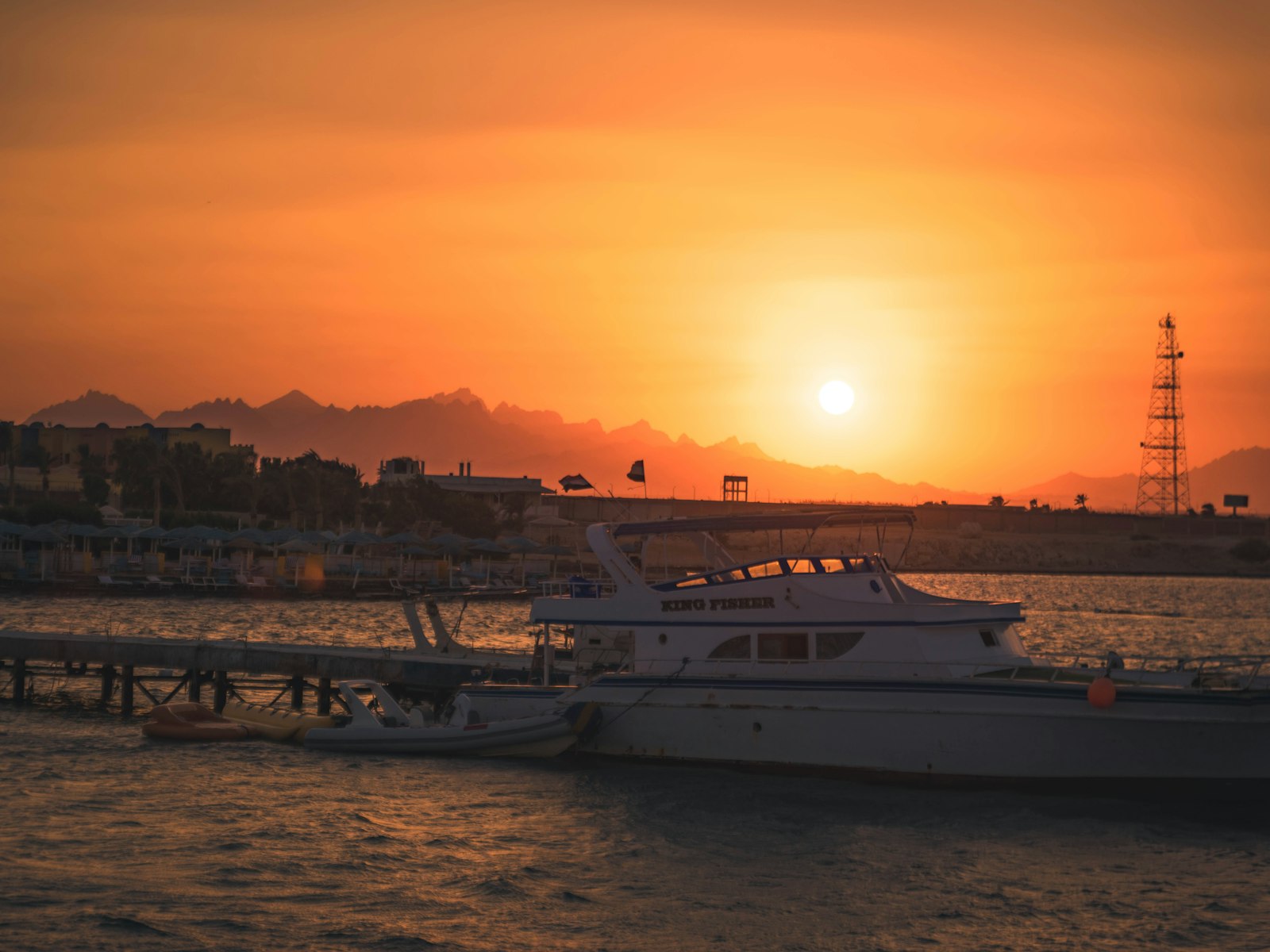
Lake Timsah (Lake of the Crocodile) is the natural jewel of Ismailia. This lake of brackish water, situated at the point where the canal crosses a natural depression, is a place of rare beauty that offers visitors and inhabitants a unique space of relaxation and recreation. The shores of the lake are flanked by public gardens, nautical clubs and restaurants that animate the lakefront especially in the summer evenings.
The lake is used for nautical activities such as sailing, rowing and boat trips. The beaches along its shores, although small, are frequented by the local families in the hotter months. From the lakefront it is possible to observe the transit of the great ships in the adjacent canal, creating an evocative contrast between the lacustrine tranquillity and the imposingness of world maritime commerce.
The name of the lake goes back to antiquity, when the crocodiles were still present in the zone. These reptiles disappeared centuries ago, but the toponym has remained as an echo of a wild past. The lake has undergone significant modifications during the construction of the canal, which altered its salinity and morphology, but it remains an interesting ecosystem for the enthusiasts of birdwatching, especially during the migratory seasons.
The Suez Canal Authority
Ismailia is the seat of the Suez Canal Authority (SCA), the Egyptian governmental entity responsible for the management, maintenance and development of the canal. The imposing building of the Authority, situated in the administrative quarter of the city, is a nerve centre of world maritime commerce. From here are coordinated the daily operations of transit of the ships, the maintenance of the infrastructure and the projects of expansion.
The Suez Canal Authority employs thousands of workers, among maritime pilots, engineers, technicians and administrative personnel, making Ismailia the beating heart of one of the most important waterways of the planet. The presence of the Authority has conferred to the city a strategic importance that goes well beyond its demographic dimensions, making it a decision-making centre for global commerce.
The Colonial Villas and the European Quarter
The historic centre of Ismailia conserves a colonial architectural heritage of great charm. The European quarter, designed by the French urban planners, presents elegant villas with luxuriant gardens, public buildings in neoclassical style and tree-lined streets that recall the Parisian boulevards in miniature. Many of these villas were the abode of the engineers and the executives of the Canal Company, and their tropical gardens, tended with passion, contributed to the nickname of "City of Beauty".
To stroll among the streets of the colonial quarter is like making a journey in time. The pastel-coloured façades, the wrought-iron railings, the wooden shutters and the red-tiled roofs create a Mediterranean atmosphere unusual in the Egyptian context. Some villas have been restored and used as offices or private residences, while others still await an intervention of recovery. The urban ensemble of the European quarter of Ismailia is a unique architectural document of the French colonial presence in Egypt.
The Museum of Ismailia
The Museum of Ismailia, situated in an elegant building in the centre of the city, hosts an archaeological collection that covers the history of the region from the pharaonic period to the Greco-Roman epoch. Among the most important finds are artefacts coming from the excavations of Tell el-Maskhuta, an ancient site situated a few kilometres from the city.
The collection includes stelae, statues, ceramics, jewellery and sarcophagi that testify to the strategic importance of the isthmus of Suez since antiquity. Particularly interesting are the finds relative to the pharaonic canal that connected the Nile to the Red Sea, demonstrating that the idea of a waterway across the isthmus goes back to millennia before de Lesseps. The museum, although of modest dimensions, offers an effective overview of the profound history of a land that has always been a crossroads of civilisations and commerce.
Tell el-Maskhuta: The Ancient Pithom
About 16 kilometres to the west of Ismailia is Tell el-Maskhuta, an archaeological site identified by many scholars with the ancient Pithom (or Tjeku), one of the storehouse cities mentioned in the Book of Exodus as built by the Israelites in slavery. The site was the object of excavations by the Swiss archaeologist Édouard Naville in 1883 and subsequently by various archaeological missions.
The excavations have revealed remains of a temple dedicated to the god Atum, granary storehouses, inscriptions dating to the epoch of Ramesses II and an important complex of buildings of the Persian period linked to the canal of Darius I. The finds coming from Tell el-Maskhuta are today distributed between the Museum of Ismailia and the Egyptian Museum of Cairo. The site, although not easily visitable without a local guide, represents a fascinating connection between biblical history, ancient Egypt and the modern waterway of the Suez Canal.
The Urban Planning: A Garden City
Ismailia was conceived as one of the first "garden cities" of the Middle East, inspired by the urban principles that in Europe would find expression only decades later. The planning of the city foresaw a rigid separation between green, residential and commercial zones, with standards of housing density very low compared to the Egyptian cities of the epoch.
The public gardens of Ismailia are numerous and well tended. The Mallaha Garden, along the Fresh Water Canal, is a green space particularly loved by the residents. The tree-lined avenues of mango, ficus and bougainvillea create shaded corridors that make the walks pleasant even in the hotter hours. This attention to urban greenery, exceptional by Egyptian standards, contributes to keeping alive the nickname of City of Beauty.
Tips for the Visit
How to Get There
Ismailia is reachable from Cairo in about two hours by car across the desert motorway. Frequent buses depart from the Turgoman station in Cairo. The city is well connected also with Port Said (an hour and a half) and Suez (an hour), making possible a combined visit of the three cities of the canal.
Recommended Itinerary
Begin the day with a visit to the house-museum of De Lesseps, then proceed towards the Museum of Ismailia to deepen the history of the region. After lunch, take a walk in the colonial quarter and along the shores of Lake Timsah. If you have time, a boat trip on the lake offers unique perspectives on the city and on the adjacent canal.
Where to Eat
The restaurants along Lake Timsah offer fresh fish and traditional Egyptian cuisine with a view over the water. The cafés of the historic centre are ideal for an afternoon stop with mint tea. Ismailia is noted also for the quality of its tropical fruit, in particular the mangoes cultivated in the gardens of the city.
Practical Tips
Ismailia is a tranquil and safe city, ideal for those who seek an Egyptian experience far from mass tourism. Bring comfortable shoes for the walks, sun protection and a camera. The best period for the visit goes from October to April. If you visit in spring, you will be able to admire the spectacular blossoming of the city gardens.
Ismailia is a surprise for the traveller who thinks they know Egypt: an elegant, green and relaxed city that recounts a different history, that of the modern Egypt that made itself a crossroads of the world.