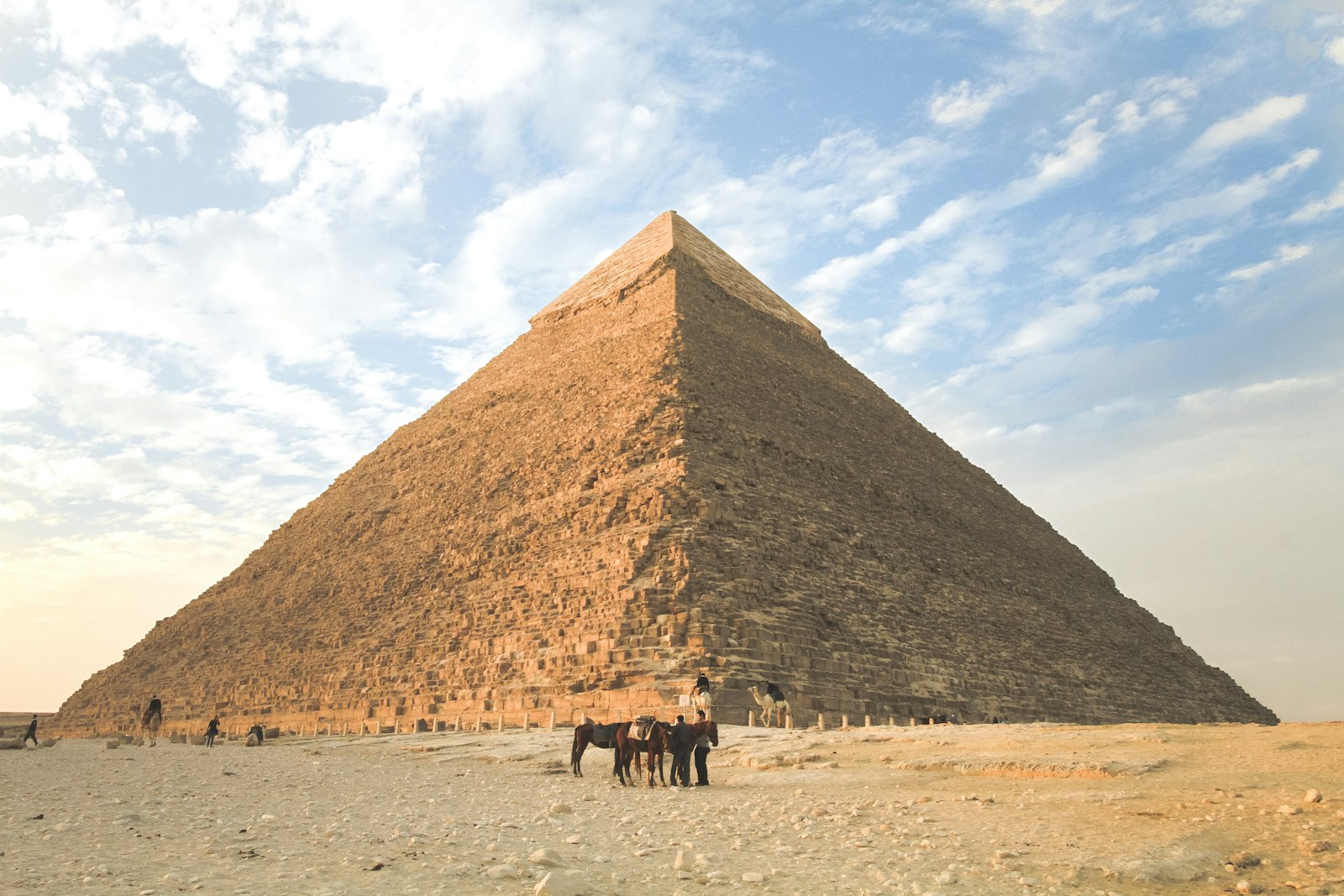
The Pyramids of Giza are the last of the Seven Wonders of the Ancient World still standing and are without doubt the most iconic symbol of Egypt and of human civilisation as a whole. Set on the Giza Plateau, on the south-western edge of Cairo, these three monumental structures — the Great Pyramid of Cheops, the Pyramid of Chephren and the Pyramid of Mycerinus — have defied the millennia, rising majestically from the desert for more than 4,500 years.
A UNESCO World Heritage Site since 1979, the Pyramids of Giza draw millions of visitors from all over the world every year, captivated by their grandeur and by the still-unsolved mysteries of their construction. If you are planning a trip to Egypt, a visit to the pyramids is absolutely the first unmissable appointment.
History of the Pyramids of Giza
The Great Pyramid of Cheops (Khufu)
The Great Pyramid is the oldest and largest of the three pyramids of Giza. It was built during the reign of the pharaoh Cheops (Khufu) of the Fourth Dynasty, around 2560 BC. With an original height of 146.6 metres (today reduced to 138.8 due to the loss of its casing), it was the tallest structure in the world for over 3,800 years.
The engineering precision of its construction is astonishing: the four sides of the base, each 230 metres long, show an alignment error of less than 5 centimetres. It is estimated that around 2.3 million stone blocks were used, each weighing an average of 2.5 tonnes, for a total weight of about 6 million tonnes.
The Pyramid of Chephren (Khafre)
The second pyramid was built by the pharaoh Chephren, son of Cheops, around 2530 BC. Although it is slightly smaller than the Great Pyramid (original height 143.5 metres), it often appears taller because it stands on ground raised by about 10 metres. It is easily recognisable by the white limestone casing still partially preserved at its summit.
Chephren is also credited with building the Great Sphinx, the colossal statue with the body of a lion and a human head that watches over the pyramids.
The Pyramid of Mycerinus (Menkaure)
The smallest of the three main pyramids was built by the pharaoh Mycerinus around 2510 BC. At 66 metres tall, it is considerably more modest than the other two, but it features a partial casing of red granite from Aswan on its lower section, giving it a particularly elegant appearance.
What to See at the Pyramids of Giza
The Giza Plateau
The whole complex of the Giza Plateau deserves thorough exploration. In addition to the three main pyramids, the site includes:
- The queens' pyramids, smaller structures dedicated to the royal consorts
- The valley temples where funerary rites were performed
- The Solar Boat Museum, which houses a 43-metre funerary vessel of Cheops, perfectly preserved
- The tombs of the nobles (mastabas), which offer reliefs and wall paintings of extraordinary beauty
- The Valley Temple of Chephren, connected to the Sphinx
Going Inside the Pyramids
It is possible to enter the Great Pyramid of Cheops with a supplementary ticket (400 EGP). The experience is unique but physically demanding: you make your way through narrow, low corridors in hot and humid conditions. You reach the King's Chamber, a rectangular granite room with the pharaoh's empty sarcophagus. The number of daily visitors is limited, so it is advisable to arrive early.
The Son et Lumière Show
Every evening, the pyramids become the stage for an evocative sound and light show that tells the story of ancient Egypt. The Sphinx "speaks", narrating the deeds of the pharaohs. The show is available in several languages.
How to Get to the Pyramids of Giza
From Central Cairo
The pyramids are about 15 km from the centre of Cairo:
- By taxi/Uber: 30-45 minutes (traffic permitting), cost 80-150 EGP
- By metro + bus: Metro Line 2 to Giza station, then microbus (cheap but complicated)
- Organised tour: the most convenient solution, includes guide and transport
From Cairo Airport
- Direct taxi: 45-60 minutes, about 250-400 EGP
- Private transfer: bookable online, safer and at a fixed price
Tips for Your Visit
- 🌅 Arrive at opening time (7:00 AM) to avoid crowds and heat
- 💧 Bring at least 2 litres of water per person
- 🧴 Sunscreen SPF 50+ and a hat are essential
- 👟 Closed, comfortable shoes (sand and uneven ground)
- 📷 Photography is free (except inside the pyramids)
- 🐪 Camel ride: agree the price BEFORE (200-300 EGP is reasonable)
- ❌ Avoid unofficial guides and pushy vendors
- 💰 Bring cash in Egyptian pounds for tickets and tips
Facts about the Pyramids
- The Great Pyramid is aligned almost perfectly to the cardinal points, with an error of only 3/60 of a degree
- The temperature inside the pyramids remains constant at 20°C, regardless of the outside temperature
- It is estimated that building the Great Pyramid took about 20 years and the labour of 20,000-30,000 workers
- Contrary to popular belief, the pyramids were not built by slaves but by paid workers
- Originally the pyramids were covered with polished white limestone that made them shine in the sun like diamonds
Frequently Asked Questions
How much does it cost to visit the Pyramids of Giza?
The entrance ticket to the plateau costs 240 EGP (~€7). Entry to the Great Pyramid requires a supplement of 400 EGP. The evening Son et Lumière show starts from 300 EGP.
How long do you need to visit the pyramids?
At least 3-4 hours are recommended for a full visit of the plateau. If you wish to go inside the pyramids and visit the Solar Boat Museum, plan for 5-6 hours.
Which time of day is best?
Dawn and early morning are ideal for photographic light and mild temperatures. Sunset offers spectacular colours but attracts larger crowds.
Are the pyramids accessible to people with disabilities?
The plateau is partially accessible. The sandy ground can be difficult for wheelchairs. The interior of the pyramids is not accessible. Golf carts are available to move around the plateau.