White Canyon: the White Limestone Canyon of Sinai
The White Canyon is one of the most fascinating natural wonders of the Sinai Peninsula. Located in the mountainous interior between Nuweiba and Dahab, this extraordinary geological corridor carved into the white limestone offers a unique hiking experience, where the snow-white walls rise vertically creating an almost lunar landscape of overwhelming beauty. The route culminates in the oasis of Ain Khudra, a garden of palms hidden in the heart of the desert that represents the perfect reward for hikers.
Unlike its more famous cousin, the Colored Canyon, the White Canyon owes its fame and its name to the predominant colour of its walls: a milky white, sometimes veined with grey and cream, which under the sunlight creates dazzling reflections and plays of shadows of extraordinary intensity. The experience of walking among these limestone walls is almost surreal, like crossing a dream sculpted in stone.
Geological Formation
The Origin of the Canyon
The White Canyon was formed over the course of millions of years through a slow and inexorable process of erosion. The rainwaters, although rare in the Sinai desert, periodically carved the soft limestone with a force sufficient to create the narrow passages and the vertical walls that we see today. The sudden floods, called "flash floods", which occur occasionally after the winter rains, have been the main modelling agent of this natural sculpture.
The limestone that composes the walls of the canyon dates back to the Cretaceous period, about 70-100 million years ago, when the entire area was submerged by a shallow tropical sea. The sediments of marine organisms — shells, corals and microorganisms — accumulated on the seabed for millions of years, slowly compacting until forming the white limestone that today characterises the canyon. Fossils of marine organisms are still visible in several points of the walls, silent witnesses of the ancient ocean.
The Particular Formations
The erosion has created in the White Canyon a surprising variety of geological formations. Natural arches, cave-shaped niches, isolated pillars and undulating surfaces tell the story of the natural forces that have modelled the rock over the course of the millennia. In some points, the walls of the canyon reach 30-40 metres in height, creating passages so narrow that the sunlight penetrates only in the central hours of the day.
The surfaces smoothed by the passage of water have an almost sculptural texture, with soft curves and organic forms that recall works of abstract art. The plays of light that are created when the rays of the sun filter between the narrow walls produce extraordinary photographic effects, making the White Canyon a paradise for enthusiasts of nature photography.
The Oasis of Ain Khudra
The Garden in the Desert
At the end of the route through the canyon, the landscape changes radically: from the dazzling white of the limestone one passes to the intense green of the oasis of Ain Khudra. This oasis, fed by underground springs that emerge at the base of the mountains, hosts a dense date palm grove that seems a mirage in the heart of the desert.
The oasis of Ain Khudra is one of the most magical places of Sinai. The fresh water that gushes from the rocks forms small pools where it is possible to refresh oneself after the walk in the canyon. The date palms, some of which are centuries old, create a roof of leaves that offers shade and shelter from the desert sun. The contrast between the surrounding desert and the lush vegetation of the oasis is simply spectacular.
The Bedouin Camp
Near the oasis there is a Bedouin camp where it is possible to rest, drink mint tea prepared on the fire and enjoy a traditional meal. The Bedouins of the area, belonging to the Muzeina tribe, manage the camp with warm hospitality and are a precious source of information on life in the desert, on the local medicinal plants and on the ancestral traditions of Sinai.
Many hikers choose to spend a night in the Bedouin camp, sleeping under the stars in a silence that only the desert can offer. The experience of the night sky in Sinai is something indescribable: far from any light pollution, the Milky Way unfolds in all its majesty, and the quantity of stars visible to the naked eye is such as to leave breathless even the most experienced travellers.
The Hiking Route
The Standard Itinerary
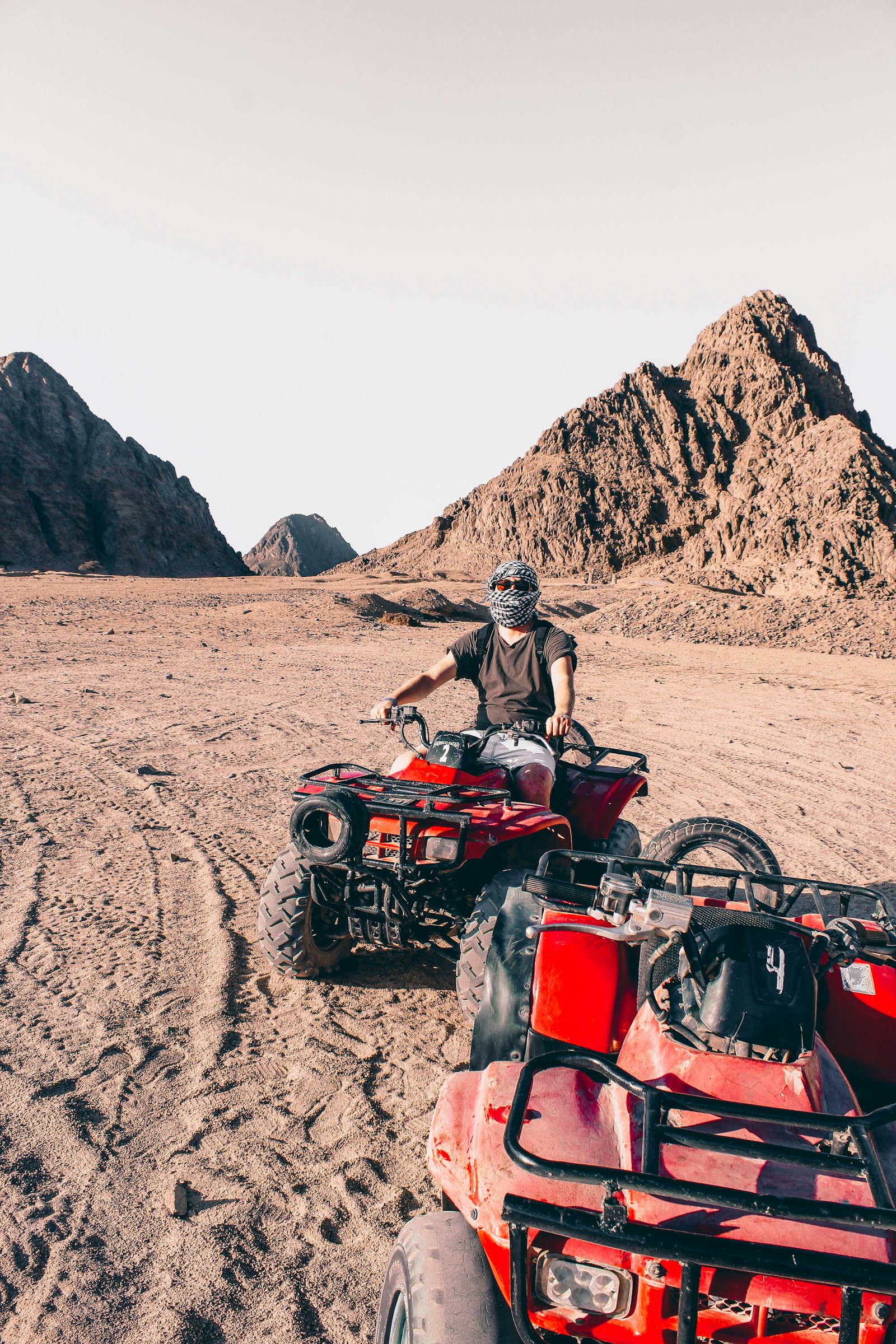
The standard excursion to the White Canyon usually departs from an access point along the road that connects Nuweiba to Saint Catherine. An off-road vehicle is necessary to reach the starting point of the path, since the access takes place through dirt tracks in the desert. The walk in the canyon lasts on average 2-3 hours, depending on the pace and the stops for photographs.
The route begins with a descent into the dry wadi that leads to the entrance of the canyon. As one proceeds, the walls draw closer and rise, creating an increasingly narrow and evocative corridor. Some passages require moving sideways, while in other points it might be necessary to climb over boulders or descend small rock drops. No stretch is particularly dangerous, but it is important to proceed with attention and wear adequate footwear.
The Combination with the Colored Canyon
One of the most popular excursions of eastern Sinai combines the visit to the White Canyon with that to the nearby Colored Canyon in the same day. The two canyons, although being relatively close, offer completely different experiences: the white and monochrome walls of the White Canyon contrast with the palette of reds, oranges, yellows and purples of the Colored Canyon.
The combined excursion is usually organised with departure early in the morning from Nuweiba, Dahab or Sharm el-Sheikh. A Bedouin guide accompanies the group through both canyons, with a lunch stop at the oasis of Ain Khudra or at the Bedouin camp. The entire day requires a good level of physical fitness, but it is accessible to the majority of visitors with a minimum of preparation.
The Narrow Passages
One of the most exciting aspects of the White Canyon are the narrow passages, known as "slot sections", where the walls draw close to a few tens of centimetres. Crossing these passages is an almost claustrophobic but exciting experience: the light penetrates from above creating luminous beams that illuminate the white walls with a theatrical effect.
In some points it is necessary to take off the backpack and carry it by hand to pass. People of robust build might find some passages particularly narrow. It is important to follow the indications of the Bedouin guide, who knows the alternative routes in case of difficulty.
Desert Flora and Fauna
Life in the Canyon
Despite the apparent aridity, the White Canyon and its surroundings host a surprising variety of life. In the cracks of the rocks grow xerophytic plants specialised in survival in extreme conditions, with very deep roots that reach the hidden humidity beneath the surface. After the rare rains, these shrubs produce coloured flowers that attract pollinating insects of the desert.
Among the fauna, the desert lizards are the most visible inhabitants, with species that have adapted perfectly to the colour of the surrounding rocks. The geckos, active above all in the twilight hours, populate the walls of the canyon. It is not rare to spot raptors that glide on the thermal currents above the canyon, in search of prey in the valleys below.
Tips for the Visit
How to Get There
The White Canyon is not reachable by public transport. It is necessary to organise the excursion with a tour operator from Nuweiba, Dahab or Sharm el-Sheikh, or to rent an off-road vehicle with driver. A Bedouin guide is strongly recommended — and in many areas mandatory — both for reasons of safety and for navigation in the desert.
Best Period
The ideal months to visit the White Canyon are from October to April. In summer the temperatures in the canyon can exceed 40°C, making the excursion dangerous. In winter the days are pleasantly warm during the day but the nights can be cold. Excursions immediately after periods of rain are discouraged, when the risk of sudden floods in the canyons is real and dangerous.
What to Bring
The essential equipment includes at least 3 litres of water per person, energy food, sun protection with high factor, wide-brimmed hat, sunglasses, closed shoes with good grip and a light backpack. Bring also a light jacket to protect yourself from the wind and possibly trekking gloves for the stretches of rock climbing.
Respect for the Environment
The White Canyon is a fragile natural environment. Take away all your waste, do not collect stones or fossils, do not carve the walls and stay on the paths indicated by the guide. The desert ecosystem is extremely sensitive and the recovery from any damage requires very long times.
Safety
Always inform someone of your itinerary and of the expected time of return. Mobile phones rarely have coverage in the inner zones of Sinai. Never venture into the canyon alone and without a guide. In case of sudden bad weather, abandon the canyon immediately and move to an elevated position: flash floods can transform a dry wadi into an impetuous torrent in a few minutes.
The White Canyon is one of the hidden gems of Sinai, a place where the force of nature has created a monumental work of art of white limestone that invites to be explored with respect and wonder.