The Blue Hole of Dahab: the Legendary Sinkhole of the Red Sea
The Blue Hole of Dahab is one of the most celebrated and fascinating underwater geological formations in the world. Located along the eastern coast of the Sinai Peninsula, about 8 kilometres north of the town of Dahab, this giant natural marine well attracts every year thousands of divers, freedivers and snorkelling lovers from every part of the planet. With its 130 metres of depth and a diameter of about 60 metres, the Blue Hole is a sinkhole of cobalt-blue water that opens suddenly in the coastal coral reef, creating a breathtaking visual contrast between the turquoise of the shallow reef and the abyssal blue of the well.
Dahab, which in Arabic means "gold", is a coastal town that has conserved a relaxed and bohemian atmosphere, very different from the mass tourism of Sharm el-Sheikh. The Blue Hole is its most precious jewel, a place where natural beauty, underwater adventure and a certain aura of mystery merge into an unforgettable experience.
Geology and Formation
How the Blue Hole Was Formed
The Blue Hole of Dahab is a marine sinkhole, that is to say a chasm formed by the collapse of an underwater karst cavity. Millions of years ago, during periods of lower sea level, the underground waters progressively dissolved the limestone rock, creating a vast underground cavern. When the roof of the cavern became too thin to support its own weight, it collapsed, forming the deep well visible today.
The chasm has an approximately circular form, with walls that descend vertically to a depth of about 130 metres. At about 56 metres of depth, on the eastern side of the well, opens a natural passage known as "The Arch", an underwater tunnel about 26 metres long that connects the interior of the Blue Hole with the open sea. This natural arch is the element that has rendered the Blue Hole famous in the world of diving, but also sadly known for the risks that it involves.
The Surrounding Coral Reef
The Blue Hole is surrounded by a spectacular coral reef that grows up to the surface of the water, creating a shallow lagoon that separates the well from the open sea. The reef is in exceptional conditions, with a rich variety of hard and soft corals, gorgonians and sponges that host an incredible diversity of marine life. The edge of the well, where the coral reef meets the blue void, is particularly evocative: it is like looking out over an underwater precipice where the seabed disappears into the darkness.
Underwater Diving
The Arch: the Legendary Passage
The Arch is the underwater passage that has rendered the Blue Hole of Dahab one of the most discussed and respected dive sites in the world. This natural tunnel, located at about 56 metres of depth, connects the interior of the Blue Hole with the external wall of the reef that faces the open sea. Crossing the Arch is considered a technical dive of the highest level, reserved exclusively to divers with advanced training, experience in deep diving and appropriate equipment (gas mixtures such as trimix or heliox).
The beauty of the crossing of the Arch is legendary among divers: swimming through the tunnel and emerging on the external wall of the reef, with the infinite blue of the open sea ahead and the coral reef that extends upwards, is an experience that is described as one of the most intense and gratifying of world diving.
Recreational Dives
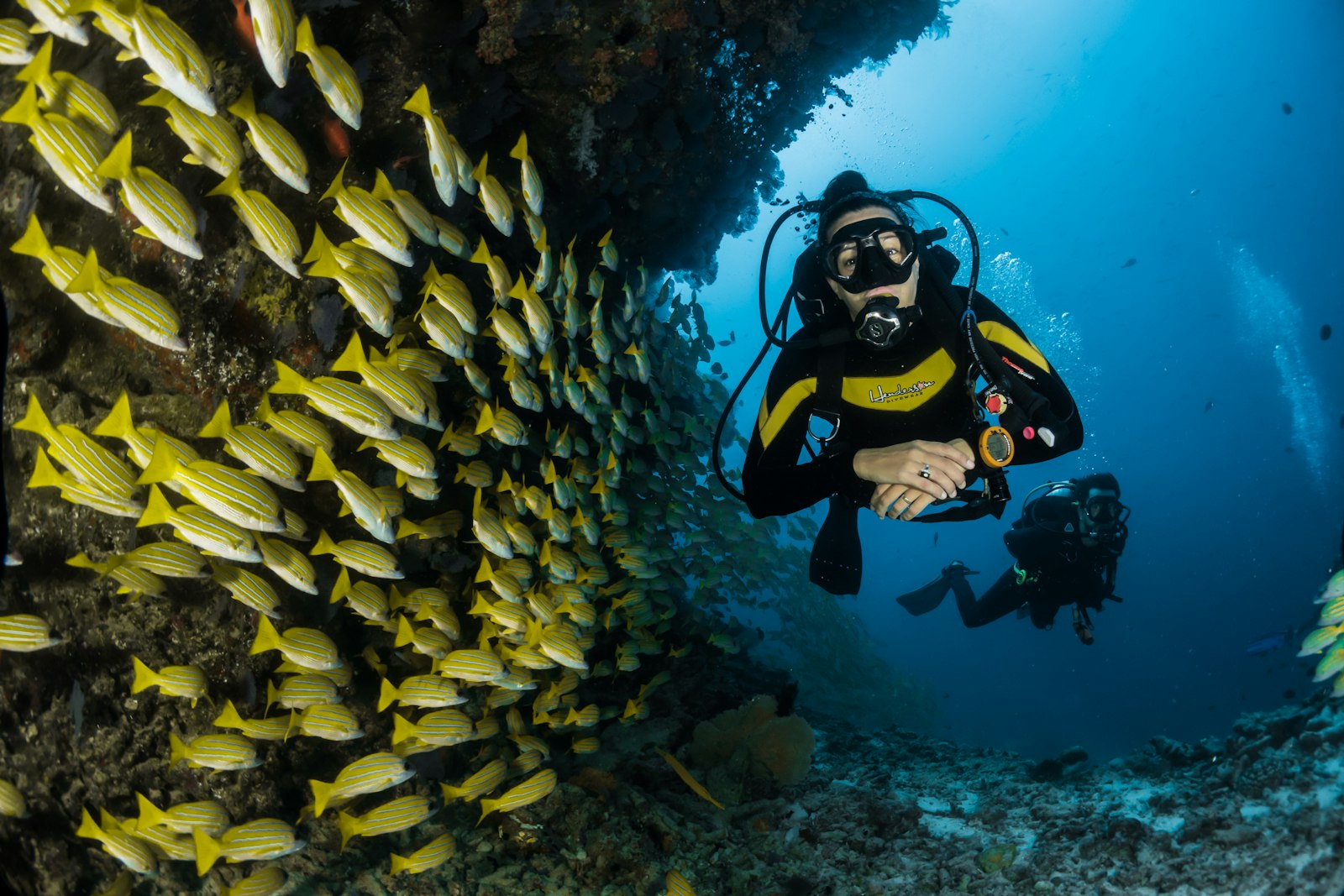
The Blue Hole offers excellent opportunities also for recreational divers who respect the depth limits of their certification. The most popular dive at the recreational level is the "Bells to Blue Hole", which departs from an entry point called "The Bells", a chimney in the coral reef located about 200 metres north of the Blue Hole. The divers descend through the chimney into the reef, emerge on the external wall at about 30 metres of depth and swim along the spectacular coral wall towards the south until re-entering the Blue Hole through its upper edge.
This dive offers breathtaking panoramas, with the wall of the reef that plunges into the blue depths of the open sea and a rich marine life that includes Napoleon fish, barracuda, lionfish, angelfish and occasionally turtles and eagle rays.
Freediving: Apnoea at the Blue Hole
The Blue Hole of Dahab is also one of the most important freediving sites in the world. The natural structure of the well, with its vertical walls that offer a visual reference during the descent and the calm water protected by the coral reef, creates ideal conditions for deep apnoea. Numerous world records of apnoea have been established or attempted in the Blue Hole, and the international community of freedivers has elected Dahab as one of the world capitals of this discipline.
Various freediving centres in Dahab offer courses for all levels, from the introduction to freediving up to advanced training for deep dives. Even beginners can experience the magic of apnoea in the Blue Hole under the guidance of qualified instructors, exploring the first metres of the chasm in total safety.
Snorkelling: Beauty Accessible to All
It is not necessary to be a diver to enjoy the beauty of the Blue Hole. Snorkelling along the edge of the chasm is an extraordinary experience accessible to anyone who knows how to swim. The coral reef around the well hosts an incredible variety of marine life: butterflyfish, clownfish, parrotfish, moray eels, octopuses and innumerable other species colour the reef with vivid tonalities.
The most evocative experience is swimming on the surface along the edge of the Blue Hole, looking downward where the coral seabed suddenly gives way to the abyssal blue void. The contrast between the shallow waters, illuminated by the sun and teeming with life, and the mysterious darkness of the well is an image that remains impressed in the memory.
Access to snorkelling is very easy: it is enough to enter the water directly from the shore, where the reef begins a few metres from the beach. Neither boats nor special equipment are necessary, only mask, snorkel and fins.
Bedouin Culture and the Cafés on the Shore
One of the most fascinating aspects of the Blue Hole is the unique atmosphere that one breathes on the shore. Various traditional Bedouin cafés, built with simple structures of wood and fabric, face directly onto the chasm, offering mint tea, hookah and traditional dishes while one contemplates the sea. Sitting in one of these cafés, with the feet in the sand and the gaze lost in the azure of the Blue Hole, is an experience of pure relaxation that summarises perfectly the spirit of Dahab.
The Bedouins of the area manage the cafés and offer services of guidance and logistics to the visitors, keeping alive a tradition of hospitality that dates back generations. The interaction with the local Bedouin community is a cultural enrichment that adds depth to the experience of the Blue Hole.
Nearby Sites: Canyon and Lighthouse
The Canyon
A few kilometres south of the Blue Hole is found The Canyon, another legendary dive site of Dahab. It is a narrow fissure in the coral reef, an underwater canyon about 30 metres deep with walls covered with soft corals and gorgonians. The dive in the Canyon is more accessible compared to the deep Blue Hole and is often recommended as an alternative or complement to the visit of the chasm.
Lighthouse Reef
The Lighthouse Reef, located in the centre of Dahab in front of the lighthouse, is the most accessible diving and snorkelling site of the area. The reef descends gently from the shore to moderate depths, offering ideal conditions for beginners and for night dives. The variety of marine life is exceptional, with a density of fish and corals that competes with far more celebrated sites.
Tips for the Visit
How to Arrive
Dahab is found on the eastern coast of Sinai, about 90 kilometres north of Sharm el-Sheikh, reachable by car in about an hour. The nearest airport is that of Sharm el-Sheikh, from which taxis and minibuses depart for Dahab. The town is small and easily explorable on foot or by bicycle. The Blue Hole is reached by taxi or minibus in about 15 minutes from the centre of Dahab.
Safety
The Blue Hole is a site that requires respect and awareness. Every dive must be carried out in respect of one's own certification and one's own limits. Never attempt to reach the Arch without specific technical training and the appropriate equipment. For snorkelling, always wear a buoyancy vest if you are not an expert swimmer and never venture alone into the deep zones. The currents outside the reef can be strong.
Equipment and Diving Centres
Dahab hosts numerous diving centres and freediving schools of international level that offer courses, equipment rental and guided dives for all levels. The prices are generally cheaper compared to Sharm el-Sheikh, maintaining high standards of quality and safety. Always verify that the diving centre is affiliated with a recognised organisation (PADI, SSI, AIDA for freediving).
When to Visit
The Blue Hole is visitable all year. The temperature of the water varies between 21°C in winter and 28°C in summer. The best period for diving is from October to April, when the air temperatures are pleasant and the underwater visibility is excellent. In summer, the heat can be intense but the dives and snorkelling offer a welcome refreshment.
The Blue Hole of Dahab is a place that attracts and fascinates anyone who visits it. Whether you are expert divers in search of strong emotions, freedivers in search of the silence of the depths, or simple lovers of the sea desirous of snorkelling in crystalline waters, this blue chasm in the desert of Sinai will give you an experience that you will never forget.