Merimde Beni Salama: The Dawn of Egyptian Civilization
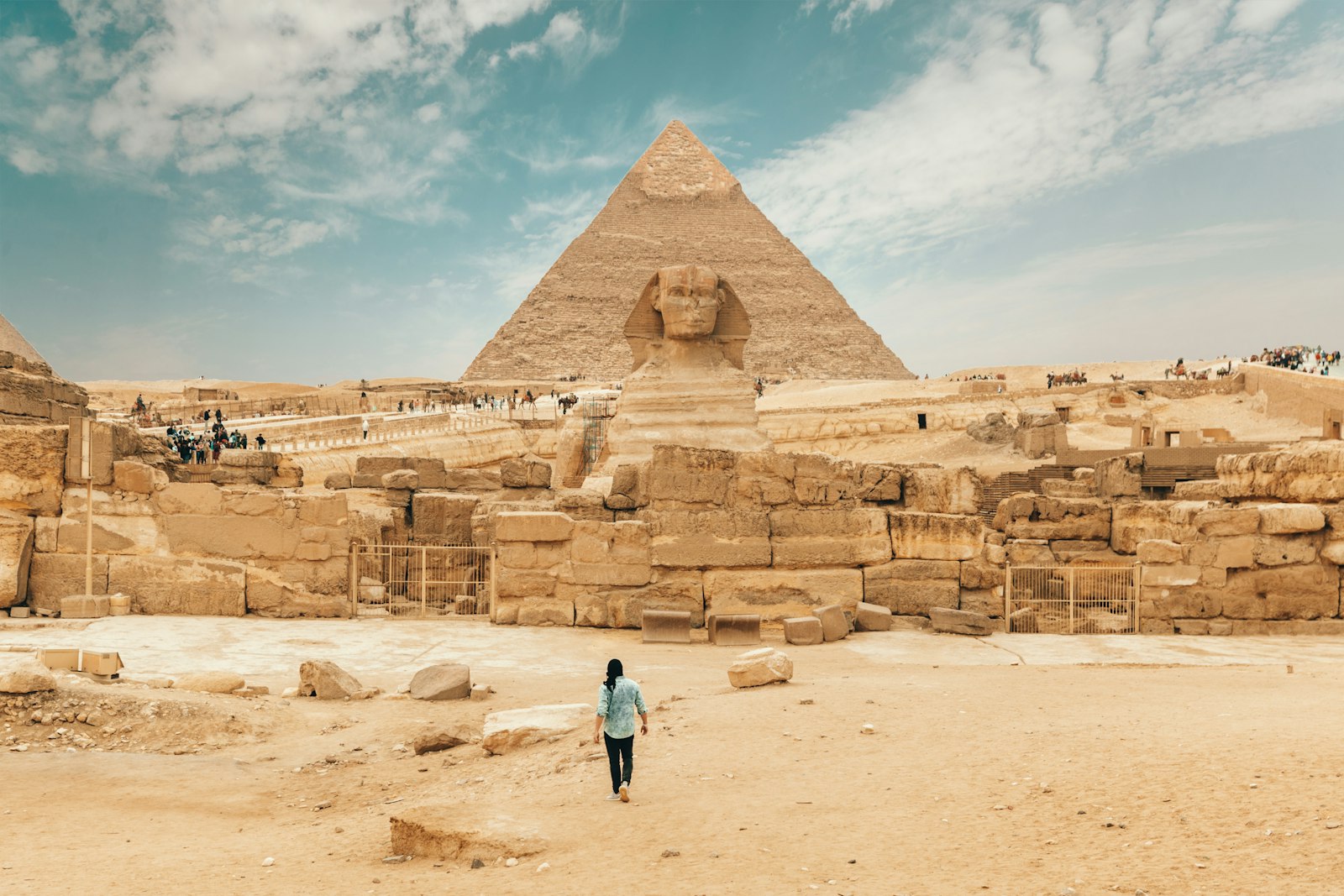
Long before the pharaohs erected the pyramids, long before the temples of Karnak and Luxor illuminated the banks of the Nile, a small group of human beings settled at the western margins of the Nile Delta and accomplished one of the most significant revolutions in the history of humanity: the transition from the nomadic life of hunter-gatherers to the sedentary one of farmers and herders. Merimde Beni Salama, situated in the governorate of Menoufiya about 60 kilometres north-west of Cairo, is the oldest known settlement of Lower Egypt, with a dating that extends approximately from 5000 to 4100 BC.
This prehistoric site, although little known to the general public and rarely included in conventional tourist itineraries, holds a fundamental importance for the understanding of the origins of Egyptian civilization. Here, seven millennia ago, the first inhabitants of the Delta began to cultivate wheat and barley, to raise cattle and pigs, to produce ceramics and to build the first permanent dwellings, laying the foundations of that extraordinary culture that would reach its apex with the pharaonic civilization.
The Discovery and the Excavations
The Austrian Campaigns
The discovery of Merimde Beni Salama is owed to the Austrian archaeologist Hermann Junker, who conducted six excavation campaigns between 1929 and 1939 on behalf of the Academy of Sciences of Vienna. Junker, already known for his excavations in the necropolis of Giza, located the site during a survey in the western Delta and immediately understood its extraordinary importance.
Junker's excavations revealed a settlement of surprising dimensions, extended over an area of about 25 hectares — an enormous surface for a Neolithic village, which suggested a population of several thousand people in the more advanced phases. The works were interrupted by the outbreak of the Second World War and were not resumed for several decades.
The DAI Missions
Starting from the 1970s, the German Archaeological Institute (Deutsches Archäologisches Institut, DAI) resumed the excavations at Merimde with modern methods and updated technologies. These new campaigns allowed the chronology of the site to be refined, identifying at least five successive phases of occupation, each characterized by progressive cultural and technological developments.
The German archaeologists applied techniques of pollen analysis, radiocarbon dating and archaeozoological study of animal remains, obtaining a very detailed picture of the natural environment and of the economy of the ancient inhabitants. The results confirmed that Merimde represented one of the first and most important agricultural communities of northern Africa, with cultural connections that extended to the Near East and the Sahara.
Life in the Neolithic Village
The Dwellings
The excavations have revealed a succession of dwelling models that reflects the social evolution of the community in the course of almost a millennium. The first phases of occupation (around 5000 BC) are characterized by very simple structures: semi-underground shelters of oval form, dug into the ground and probably covered with branches and animal hides. These primitive dwellings, of two-three metres in diameter, were sufficient for a restricted family nucleus.
In the successive phases the buildings became more complex and solid. Oval houses appeared built with walls of clay and straw (pisé), with floors of beaten earth and internal hearths. Some dwellings reached considerable dimensions, suggesting a growing social differentiation within the community. The arrangement of the houses reveals a first attempt at urban organization, with dwellings grouped together and common spaces among the different residential nuclei.
The Grain Silos
One of the most significant discoveries at Merimde is the presence of silos for the conservation of cereals, circular structures of clay destined for the storage of wheat and barley. The existence of these storage structures is the tangible proof of the agricultural revolution: not only did these ancient Egyptians cultivate cereals, but they produced sufficient quantities to require conservation systems for the non-productive months.
The silos were built with woven baskets coated with clay, a technique that protected the cereals from humidity and rodents. Their position — some inside the dwellings, others in common areas — suggests that the management of the food reserves was in part individual and in part collective, an organization that would reach its apex millennia later in the grandiose storage structures of pharaonic Egypt.
The Ceramics
The ceramic production of Merimde is among the most ancient documented in Egypt. The fragments found during the excavations show a progression from the rough and undecorated ceramics of the first phases to more refined and occasionally decorated forms in the successive phases. The vases were modelled by hand (the potter's wheel had not yet been invented) and fired in simple pit kilns.
The most common forms include hemispherical bowls, jars for conservation, shallow plates and cylindrical beakers. The ceramics of the more recent phases present decorations incised with geometric motifs — lines, dots, zigzags — which constitute the first artistic expressions on ceramic support of prepharaonic Egypt. The study of the clays and of the manufacturing techniques has allowed the archaeologists to identify cultural connections with other ceramic traditions of the Near East and of the Sahara, suggesting that the inhabitants of Merimde were not isolated but maintained contacts with distant communities.
The Head of Merimde
The Most Ancient Human Sculpture of Egypt
The most famous find coming from Merimde Beni Salama is a small terracotta head, just a few centimetres high, considered the most ancient three-dimensional representation of a human face found in Egypt. This sculpture, today preserved in the Egyptian Museum of Cairo, portrays a stylized face with prominent nose, deep eye sockets and a barely sketched mouth.
The dating of the head to the 5th millennium BC makes it anterior by more than two thousand years to the first sculptures of pharaonic Egypt. Its significance is debated: it could be a ritual object, a protective amulet or simply an artistic exercise. Whatever its function was, the head of Merimde testifies to the precocious capacity of the inhabitants of the Delta to represent the human figure in three-dimensional forms, an ability that would reach unsurpassed heights in the great pharaonic statuary.
The Economy and the Agricultural Revolution
Farmers and Herders
The analysis of the botanical and zoological remains of Merimde has allowed the economy of the ancient inhabitants to be reconstructed in detail. Agriculture was based on the cultivation of emmer wheat (Triticum dicoccum) and of barley (Hordeum vulgare), two cereals that would remain at the base of Egyptian nourishment for millennia. Traces of flax also suggest a precocious textile production.
The breeding included cattle, pigs, goats and sheep, introduced probably from the Near East through the Sinai. The bone remains show that the animals were slaughtered at different ages, suggesting a diversified use: meat and hides from the young, milk and labour force from the adults. Hunting and fishing, although progressively less important, were never completely abandoned: bones of gazelles, hippopotamuses, Nile fish and aquatic birds indicate that the natural resources of the Delta continued to integrate the diet.
The Connections with the Near East
The presence at Merimde of domestic species (cereals and animals) originating from the Near East is the proof of contacts with the agricultural communities of the Fertile Crescent, where the Neolithic revolution had begun some millennia before. The "agricultural revolution" of the Nile Delta was therefore not a local invention but the result of cultural and biological transfers through the Sinai and the southern Levant.
Nevertheless, the material culture of Merimde also shows strong original elements, suggesting that the inhabitants adapted the imported knowledge to their specific environment and developed their own traditions. The interaction between external influences and local innovation is one of the most fascinating themes of the research on this site.
Tips for the Visit
How to Get There
Merimde Beni Salama is found in the governorate of Menoufiya, about 60 kilometres north-west of Cairo, along the road that leads to Alexandria through the western Delta. The site is reachable by car in about an hour and a half from Cairo. There exist no direct public means, so it is advisable to hire a car with driver or organize a private excursion.
What to Expect
Merimde Beni Salama is not a monumental archaeological site: there are no pyramids, temples or colossal statues. What one sees is the excavation ground, with trenches, stratigraphic sections and remains of foundations of dwellings. To fully appreciate the significance of the site it is advisable to inform oneself in advance about the prehistory of Egypt or to be accompanied by a specialized guide.
The site is little frequented by tourists, which makes it an intimate and authentic experience. The surrounding countryside, with its cultivated fields and the palm groves along the irrigation canals, offers a landscape that is not very different from the one that the first inhabitants of Merimde saw seven thousand years ago — with the exception of the electric pylons and the minarets in the distance.
Combining with Other Visits
The visit to Merimde can be combined with an excursion in the western Delta of the Nile, including stops at Wadi el-Natrun (with its Coptic monasteries) or at Rosetta (the city where the famous Rosetta Stone was found). For those who desire a thematic route on Egyptian prehistory, the Egyptian Museum of Cairo houses the head of Merimde and other predynastic finds that complete the visit to the site.
Practical Suggestions
Wear sturdy shoes suited to agricultural ground and bring water and sun protection. The site is completely in the open, without zones of shade nor services. The best months for the visit are the winter ones, from November to March, when the temperatures are mild and the countryside is green. Before going to the site, verify that it is accessible: periods of inundation or agricultural works can occasionally make the reaching of the excavation area difficult.
Merimde Beni Salama is not a destination for everyone: it is a place for curious travellers, lovers of prehistory and seekers of origins. For those who have the patience to look beyond the appearance of an empty ground and the capacity to imagine a village of seven thousand years ago with its oval houses, its wheat fields and its flocks, Merimde is a journey to the very roots of Egyptian civilization, to the moment in which everything had its beginning.