The Egyptian Museum of Cairo: Guardian of a Millennial Civilisation
The Egyptian Museum of Cairo, located in the iconic Tahrir Square in the heart of the Egyptian capital, is one of the oldest and most important museums in the world dedicated to the archaeology and history of ancient Egypt. Founded in 1902, this building with its salmon-pink neoclassical facade has housed for over a century the vastest collection of Egyptian antiquities ever gathered, with over 120,000 artefacts spanning five thousand years of pharaonic civilisation.
Despite the gradual transfer of part of the collection to the new Grand Egyptian Museum of Giza, the Egyptian Museum of Cairo retains an irresistible charm and a historical importance that make it an unmissable stop for anyone visiting Egypt. Strolling among its halls crowded with treasures is like leafing through a living book of human history, where every display case tells stories of pharaohs, priests, craftsmen and common people who lived millennia ago.
The History of the Museum
Auguste Mariette and the Birth of Modern Egyptology
The history of the Egyptian Museum is inextricably linked to that of Auguste Mariette, the French archaeologist who in 1858 founded the Egyptian Antiquities Service at the behest of the Khedive Said Pasha. Mariette, who had discovered the Serapeum of Saqqara in 1851, understood the urgent need to protect the Egyptian archaeological heritage from the systematic looting carried out by European collectors and traders.
The first museum was set up in 1858 at Bulaq, a port district of Cairo, in a warehouse made available by the government. This provisional seat suffered a devastating Nile flood in 1878 that damaged numerous artefacts. After a brief transfer to the Giza palace of the Khedive Ismail, the collection finally found its definitive home in the building designed by the French architect Marcel Dourgnon, inaugurated on 15 November 1902 by the Khedive Abbas Hilmi II.
The Building of Tahrir Square
The museum building, constructed in neoclassical style with eclectic elements, was conceived specifically to house the archaeological collection. The main facade, decorated with a sculpted pediment, presents on the sides of the entrance two niches with allegorical figures of Upper and Lower Egypt. The interior develops over two floors around a large central double-height atrium, with over a hundred exhibition halls connected by corridors and monumental staircases.
The garden in front of the museum houses a collection of sculptures, sarcophagi and stelae from various archaeological sites. At the centre of the garden is the tomb of Auguste Mariette, a tribute to the founder of the museum who died in Cairo in 1881. The entrance of the garden is flanked by two sphinxes and by busts of illustrious Egyptologists who contributed to the birth and development of the museum.
The Collections
Ground Floor: The Chronological Journey
The ground floor of the museum is organised according to a chronological route that begins from the entrance and proceeds clockwise through the different eras of Egyptian history. In the first halls are artefacts of the predynastic period and the Old Kingdom, including the famous statues of Rahotep and Nofret, masterpieces of 4th Dynasty sculpture with their eyes still vivid in rock crystal and the extraordinary original polychromy.
The central hall of the atrium is dominated by colossal statues, including those of Amenhotep III and Queen Tiye, and by the monumental stele of Merneptah, known as the "Israel Stele" for the first mention of the Hebrew people in history. Continuing along the route one encounters the royal sarcophagi of the Middle Kingdom, the sculptures of the Amarna period with their revolutionary style, and the monuments of the New Kingdom up to the Ptolemaic and Roman era.
Upper Floor: The Treasures of the Pharaohs
The first floor of the museum houses the most famous thematic collections. The Royal Mummies Room, accessible with a supplementary ticket, preserves the mortal remains of some of the greatest pharaohs in history, including Ramesses II, Seti I, Thutmose III and Queen Hatshepsut. These mummies, discovered in the caches of Deir el-Bahari and the Valley of the Kings, are presented in air-conditioned cases that guarantee their conservation.
The halls dedicated to the royal jewels present necklaces, pectorals, bracelets and diadems of extraordinary workmanship from the tombs of the pharaohs of the Middle and New Kingdom. Particularly noteworthy is the treasure of Queen Ahhotep, mother of the pharaoh Ahmose I, with her golden flies and ceremonial weapons.
The Tutankhamun Collection
For decades, the Tutankhamun collection was the highlight of the museum, attracting millions of visitors from all over the world. The famous funerary mask in solid gold, weighing about 11 kilograms, with its inlays of lapis lazuli, quartz and obsidian, has become the very symbol of ancient Egypt. Beside the mask, the museum exhibited the golden throne, the canopic jars, the jewels and a selection of the over 5,000 objects found in the tomb of the young pharaoh by Howard Carter in 1922.
With the progressive transfer of these treasures to the Grand Egyptian Museum, the Egyptian Museum of Cairo is redefining its own exhibition identity, enhancing previously less visible artefacts and offering new perspectives on Egyptian civilisation.
Lesser-Known but Extraordinary Artefacts
In addition to the most famous pieces, the museum houses countless lesser-known but enormously valuable historical and artistic treasures. The Narmer Palette, dating to around 3100 BC, is one of the oldest historical documents in the world and celebrates the unification of Upper and Lower Egypt. The diorite statue of the pharaoh Khafre protected by the god Horus in the form of a falcon is considered one of the absolute masterpieces of Egyptian sculpture. The statuette of the seated scribe, with his penetrating crystal eyes, captures forever the intellectual intensity of ancient Egypt.
The museum also houses a vast collection of papyri, including texts from the Book of the Dead, contracts, letters and administrative documents that offer precious information on the daily life of the ancient Egyptians. The collection of ushabti comprises thousands of these small funerary statuettes, each with its own inscriptions and peculiar characteristics.
The Legacy of Mariette and the Great Egyptologists
A Museum Born of Passion
The history of the Egyptian Museum is also the history of the great Egyptologists who dedicated their lives to the study and preservation of pharaonic civilisation. After Mariette, the museum was directed by a series of illustrious French scholars, including Gaston Maspero, who discovered the Pyramid Texts at Saqqara, and Pierre Lacau, who managed the delicate question of the division of the treasures of Tutankhamun.
The first Egyptian director of the museum was Mahmoud Hamza, appointed in 1950, marking an important turning point in the management of the national cultural heritage. Since then, the museum has been led by eminent Egyptian scholars who have worked to modernise the structures and expand the collections, while maintaining the historical character of the institution.
The Museum during the Revolution
During the Egyptian revolution of 2011, the museum found itself at the centre of the events of Tahrir Square. On the night of 28 January, some looters penetrated the building, damaging and stealing several artefacts. However, a group of Egyptian citizens spontaneously formed a human chain around the museum to protect it, a gesture that aroused emotion throughout the world. Most of the stolen artefacts were subsequently recovered and restored.
Tips for the Visit
How to Get There
The Egyptian Museum is located in Tahrir Square, in the centre of Cairo, and is easily reachable by metro (Sadat stop, lines 1 and 2). Alternatively, taxis and ride-sharing services such as Uber and Careem are widely available. It is advisable to avoid the rush hours of Cairo traffic, particularly intense in the morning and evening hours.
Hours and Tickets
The museum is open every day from 9:00 to 17:00. Tickets can be purchased at the entrance or online. The standard ticket allows access to all the galleries of the ground floor and the first floor. For the Royal Mummies Room a supplementary ticket is necessary. It is advisable to visit the museum in the early hours of the morning or in the late afternoon to avoid the most numerous tourist groups.
Organising the Visit
Given the enormous quantity of artefacts on display, it is practically impossible to see everything in a single visit. It is advisable to select in advance the sections of greatest interest and to dedicate at least three hours to the visit. A guide or an audio guide are precious tools to contextualise the artefacts and appreciate their historical and artistic significance.
What to Know Before Entering
Inside the museum it is forbidden to photograph with flash and in some halls photography is entirely forbidden. Large bags and backpacks must be deposited at the cloakroom at the entrance. The museum does not have an efficient air conditioning system in all halls, so light clothing and water are recommended.
Combining the Visit
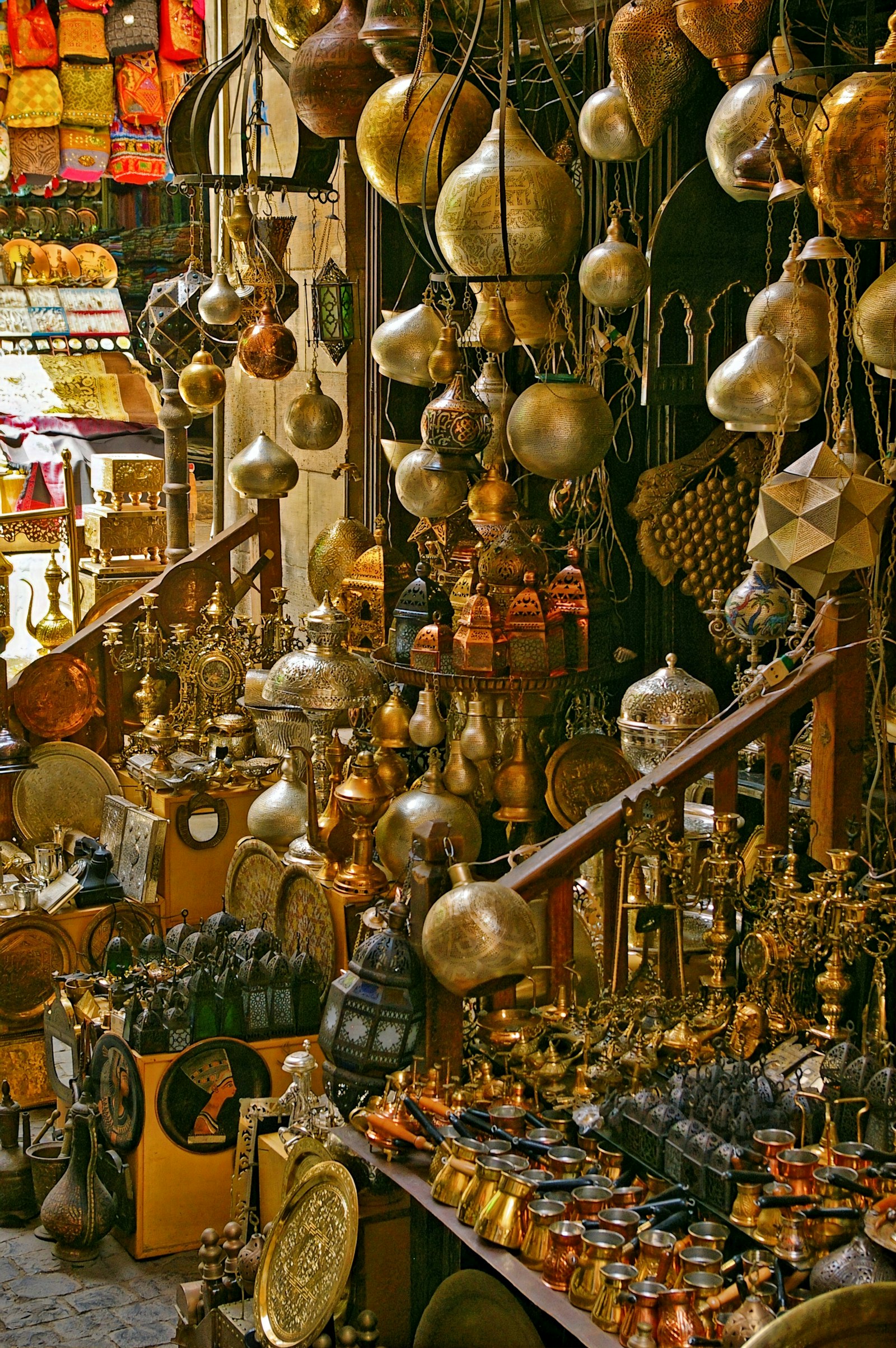
The central position of the museum makes it an ideal starting point to explore historic Cairo. A few steps away are the Nile with its panoramic cruises, the Islamic quarter with the Mosque of Al-Azhar and the bazaar of Khan el-Khalili, and the Coptic quarter with its millennial churches. A stroll along the Corniche of the Nile at sunset is the perfect way to conclude a day begun among the antiquities of the museum.
A Museum that Looks to the Future
Despite the transfer of part of the collection to the GEM, the Egyptian Museum of Cairo is destined to remain a cultural institution of primary importance. Renovation and refurbishment projects are underway that will transform the historic halls into modern exhibition spaces, with particular attention to preventive conservation and accessibility. The museum will continue to house significant collections and temporary exhibitions, keeping alive the link between the beating heart of Cairo and its millennial heritage.
Visiting the Egyptian Museum of Cairo means entering a place where history is breathed in every hall, where every object tells a millennial story and where the emotion of discovery accompanies the visitor from the entrance to the exit. It is a cultural and human experience that enriches profoundly and that leaves an unforgettable memory of a museum that made the history of world Egyptology.