The Temple of Hibis: a Unique Testimony of Persia in Egypt
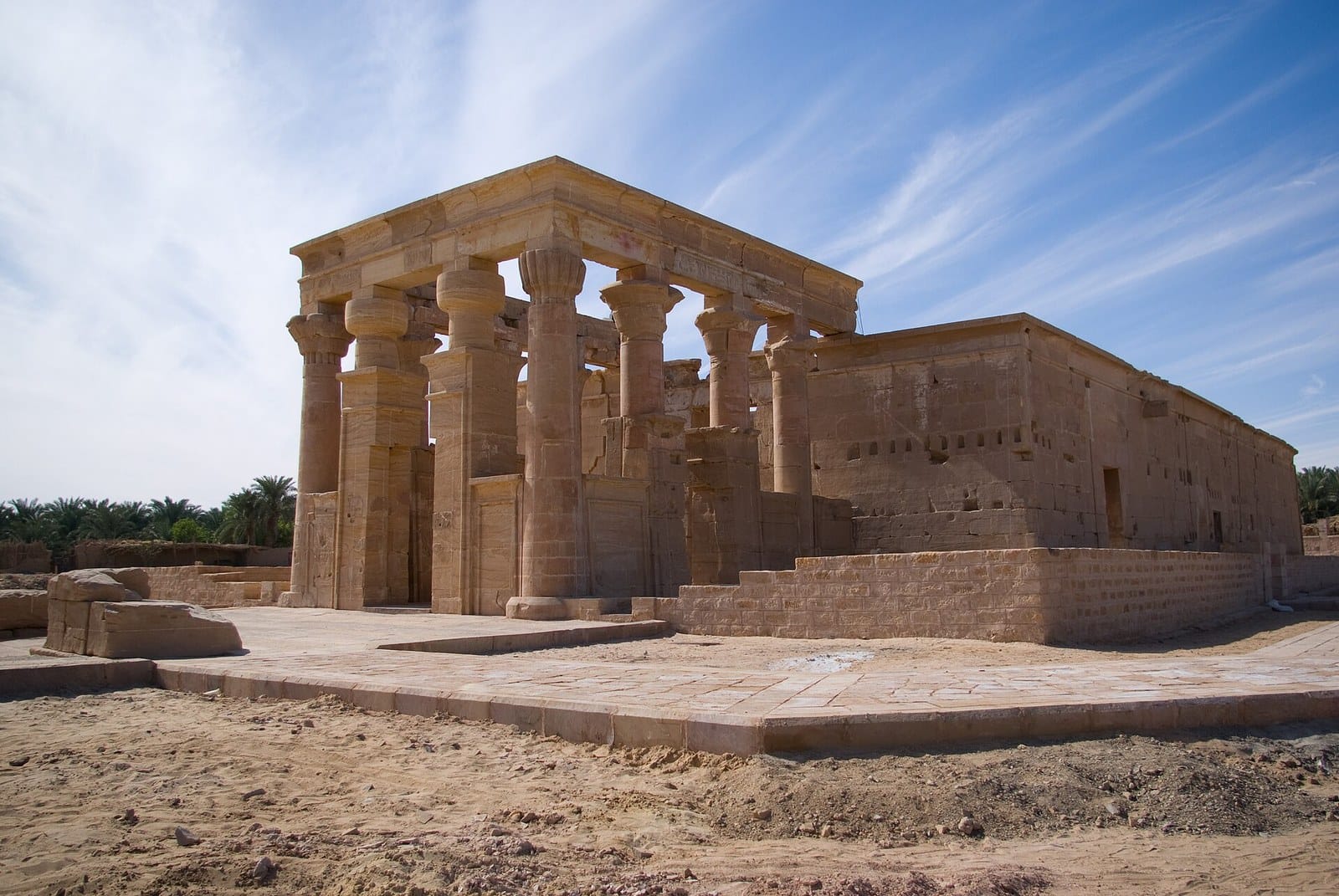
The Temple of Hibis represents one of the most significant and singular monuments of the entire Egyptian archaeological heritage: it is the only well-preserved temple of the Persian period in all the country, a sanctuary that bears witness to one of the least known but most fascinating periods of the millennial history of Egypt. Located in the Kharga Oasis, in the heart of the Western Desert, this temple dedicated to the god Amun was begun under the pharaoh Psamtik II of the 26th dynasty (595-589 BC) and completed under the great Persian king Darius I (522-486 BC), during the Achaemenid domination of Egypt known as the 27th dynasty.
The ancient name of the temple, "Hebet" or "Hibis", means "the plough", a reference to the agricultural fertility of the oasis that contrasted with the aridity of the surrounding desert. This sanctuary, which has passed through millennia of history accumulating layers of decoration and enlargements by Persian, Ptolemaic and Roman sovereigns, offers a unique and stratified reading of the evolution of architecture and religion in ancient Egypt.
History of the Temple
The Origins in the 26th Dynasty
The construction of the temple began during the 26th dynasty, the last great period of Egyptian independence before the Persian conquest. The pharaoh Psamtik II initiated the project as part of a policy of strengthening the Egyptian presence in the oases of the Western Desert, regions strategic for the control of the commercial routes towards Sudan and Libya. The oldest blocks of the temple, in local sandstone, bear inscriptions and reliefs in the Saite style, characterised by a formal elegance that deliberately recalls the models of the Old Kingdom.
The choice of the site was not casual: the temple rose near a perennial spring that guaranteed the water supply and was situated in a dominant position with respect to the surrounding oasis. The dedication to the god Amun reflected the theological importance of this deity, whose cult had spread capillary throughout the oases of the desert during the first millennium BC.
The Persian Domination and Darius I
The event that makes the Temple of Hibis unique in the history of Egyptian architecture is its completion under Darius I the Great, the powerful sovereign of the Achaemenid Empire who conquered Egypt in 525 BC. Contrary to the image of brutal conquerors often associated with the Persians, Darius I adopted in Egypt a policy of respect for local traditions and of patronage of the indigenous cults. The completion and embellishment of the Temple of Hibis were part of this strategy of legitimisation.
Darius I had himself depicted on the walls of the temple in the guise of a traditional Egyptian pharaoh, with the crowns of Upper and Lower Egypt, in the act of making offerings to the god Amun and to the other deities of the Egyptian pantheon. This iconographic choice was not a mere formal homage, but a political declaration: the Persian king presented himself as the legitimate successor of the pharaohs, protector of the temples and guarantor of the cosmic order (Maat).
The inscriptions of the Persian period in the temple are of exceptional historical importance because they constitute one of the very few direct sources on the religious policy of the Achaemenid sovereigns in Egypt. They reveal that Darius I did not limit himself to completing the structure but endowed it with agricultural revenues, priestly personnel and cult objects, integrating it fully into the Egyptian temple system.
Ptolemaic and Roman Enlargements
After the fall of the Persian domination, the temple continued to be the object of veneration and enlargement. The Ptolemaic sovereigns and subsequently the Roman emperors added decorations, restored damaged parts and enriched the iconographic programme of the walls. This secular stratification makes the Temple of Hibis an extraordinary document of the stylistic and religious evolution of Egypt through almost a millennium of history.
Architecture and Structure
The Plan of the Temple
The Temple of Hibis follows the classical plan of the Egyptian temples, with an axial sequence of spaces that leads from the profane to the sacred. The most characteristic element is the presence of three monumental pylons in sequence, an architectural peculiarity that distinguishes Hibis from most other Egyptian temples, where generally one or two pylons are present.
The processional route begins with a Sacred Way that leads to the first pylon, beyond which opens a wide courtyard. The second pylon introduces a hypostyle hall, while the third pylon gives access to the sanctuary proper, where the statue of Amun was kept. This progression of spaces reflects the theological concept of the journey from the earthly world to the heart of the divine dwelling, an architecture that transforms physical movement into spiritual experience.
The Construction in Sandstone
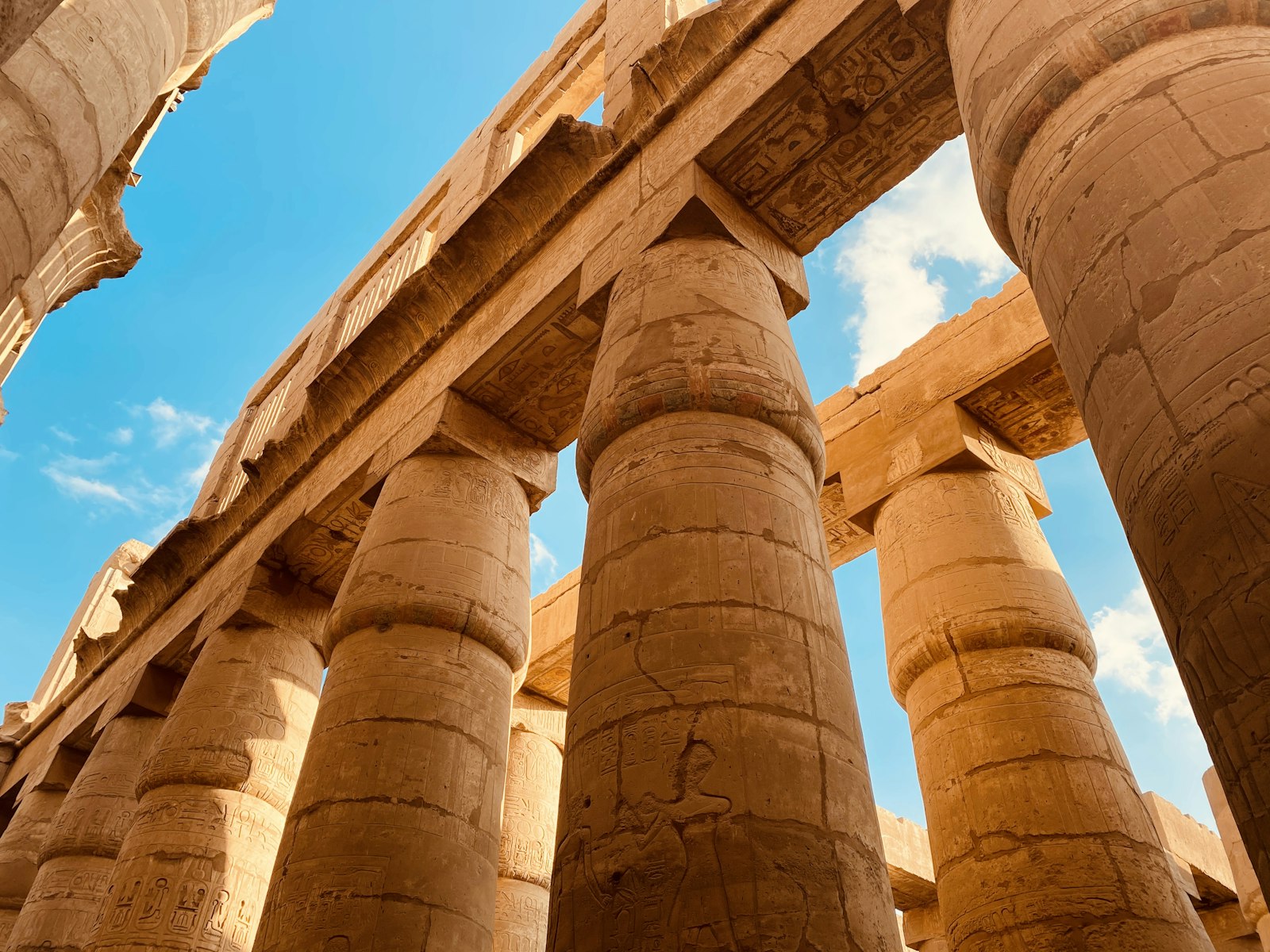
The temple is built entirely in local sandstone, a material that gives it a warm golden colour perfectly harmonised with the surrounding desert landscape. The sandstone, softer than the granite used in other temples, allowed the decorators to realise reliefs of great finesse and richness of detail, although that same softness rendered it more vulnerable to erosion over the course of the millennia.
The Reliefs and Decorations
The walls of the temple constitute a veritable encyclopaedia of Egyptian religion. The reliefs, distributed over hundreds of square metres of surface, depict scenes of offering, divine processions, rituals of purification and mythological representations with a variety and a complexity that have no comparison in any other temple of the oases.
Of particular interest is the wall of the inner sanctuary that presents an almost complete catalogue of the deities of the Egyptian pantheon, with over 500 divine figures arranged in superimposed registers. This "encyclopaedia of the gods" is an inestimable source for the study of late Egyptian religion and of its transformations under the influence of the foreign dominations.
The reliefs of the Persian period are recognisable by certain stylistic peculiarities, such as a certain rigidity of the figures and a particular attention to the details of the clothing and the royal insignia. The Ptolemaic reliefs, on the contrary, show a more accentuated naturalism and a greater fluidity of the lines, while the Roman ones are distinguished by a more schematic and conventional treatment of the figures.
The Relocation of 2006
A Modern Engineering Challenge
One of the most dramatic episodes in the recent history of the Temple of Hibis is its physical relocation, which took place in 2006, made necessary by the rising of the water table that threatened to destroy the foundations of the monument. The increase of the level of the underground water, caused by the expansion of modern irrigation in the oasis, had provoked phenomena of capillarity that were eroding the base of the sandstone blocks, compromising the stability of the structure.
The relocation operation, carried out with the collaboration of international experts, entailed the lifting of the entire temple and its transfer to higher ground in the immediate vicinity of the original site. This engineering feat, which recalls the rescue of the temples of Abu Simbel in the 1960s, represented a technical challenge of great complexity, given the fragility of the sandstone and the age of the blocks.
The new site, carefully prepared with drainage and waterproofing systems, now guarantees a more effective protection against the underground waters. The relocation also offered the opportunity to study in detail the foundations of the temple, revealing precious information on the construction techniques used in antiquity.
The Temple in the Context of the Oasis
A Religious Centre in the Oasis
The Temple of Hibis was not an isolated monument, but the religious heart of an entire community. Around the temple developed a priestly complex with dwellings for the clergy, storerooms for the offerings, workshops for the preparation of the rituals and structures for the reception of the pilgrims. The Kharga Oasis, a caravan crossroads of strategic importance, attracted the faithful and merchants from all the Nile Valley and from the desert.
The religious festivals celebrated in the temple marked the rhythm of life in the oasis and represented moments of social aggregation and cultural exchange. The annual procession in which the statue of Amun was carried out of the sanctuary and led through the oasis was the most important event of the year, an occasion of collective joy that confirmed the bond between the community and its protective god.
Tips for the Visit
How to Get There
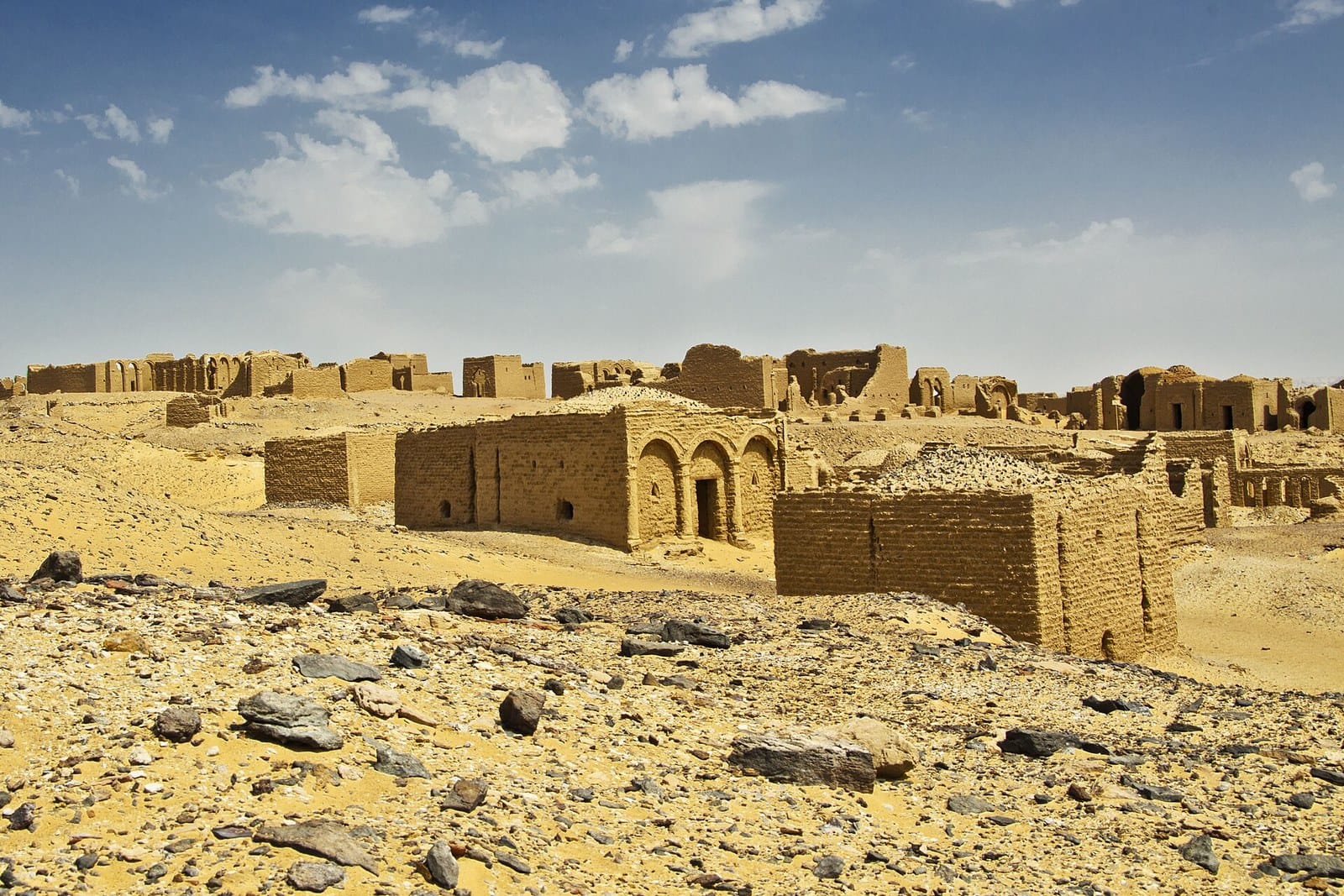
The Temple of Hibis is located about 2 kilometres north of the centre of El-Kharga, easily reached by taxi or on foot. The site is well signposted and has a small car park. It is advisable to combine the visit with that of the nearby Necropolis of Bagawat, situated a few kilometres away.
Opening Hours and Tickets
The temple is open daily from 08:00 to 17:00. The entrance ticket has a modest cost. There are no official guides on the site, so it is advisable to inform oneself in advance about the history of the temple or to hire a guide in El-Kharga.
What to Bring
Sun protection, a hat and water are essential, since the site is completely exposed to the sun. Comfortable shoes for walking on the sand. A magnifying glass can be useful to appreciate the finer details of the reliefs. Binoculars allow you to examine the decorations of the higher parts of the walls.
Photographic Suggestions
The best light for photographing the temple is that of the late afternoon, when the oblique rays of the sun enhance the relief of the decorations and confer on the sandstone an intense golden luminosity. The frames that include the surrounding desert landscape enhance the isolated and evocative position of the monument. The interior of the hypostyle hall, with its plays of light among the columns, offers particularly interesting photographic cues.
Recommended Combinations
The visit to the Temple of Hibis combines naturally with that of the Necropolis of Bagawat, reachable in a few minutes by car, and with the New Valley Museum in the centre of El-Kharga. For those who have more time, the Roman fortresses of Qasr el-Ghueita and Qasr Zayyan complete an itinerary that covers the principal epochs of the history of the oasis.
A Cross-Cultural Monument
The Temple of Hibis is much more than a religious building: it is a living document in which one reads the traces of different civilisations — Egyptian, Persian, Greek, Roman — that have succeeded and superimposed themselves in this remote corner of the desert. Its survival through the millennia, including the modern challenge of its physical relocation, bears witness to the exceptional value that every epoch has recognised in this sanctuary, making it an unmissable destination for those who wish to understand the complexity and the richness of Egyptian history beyond the traditional tourist circuits.