Kharga Oasis: the Great Gate of the Western Desert
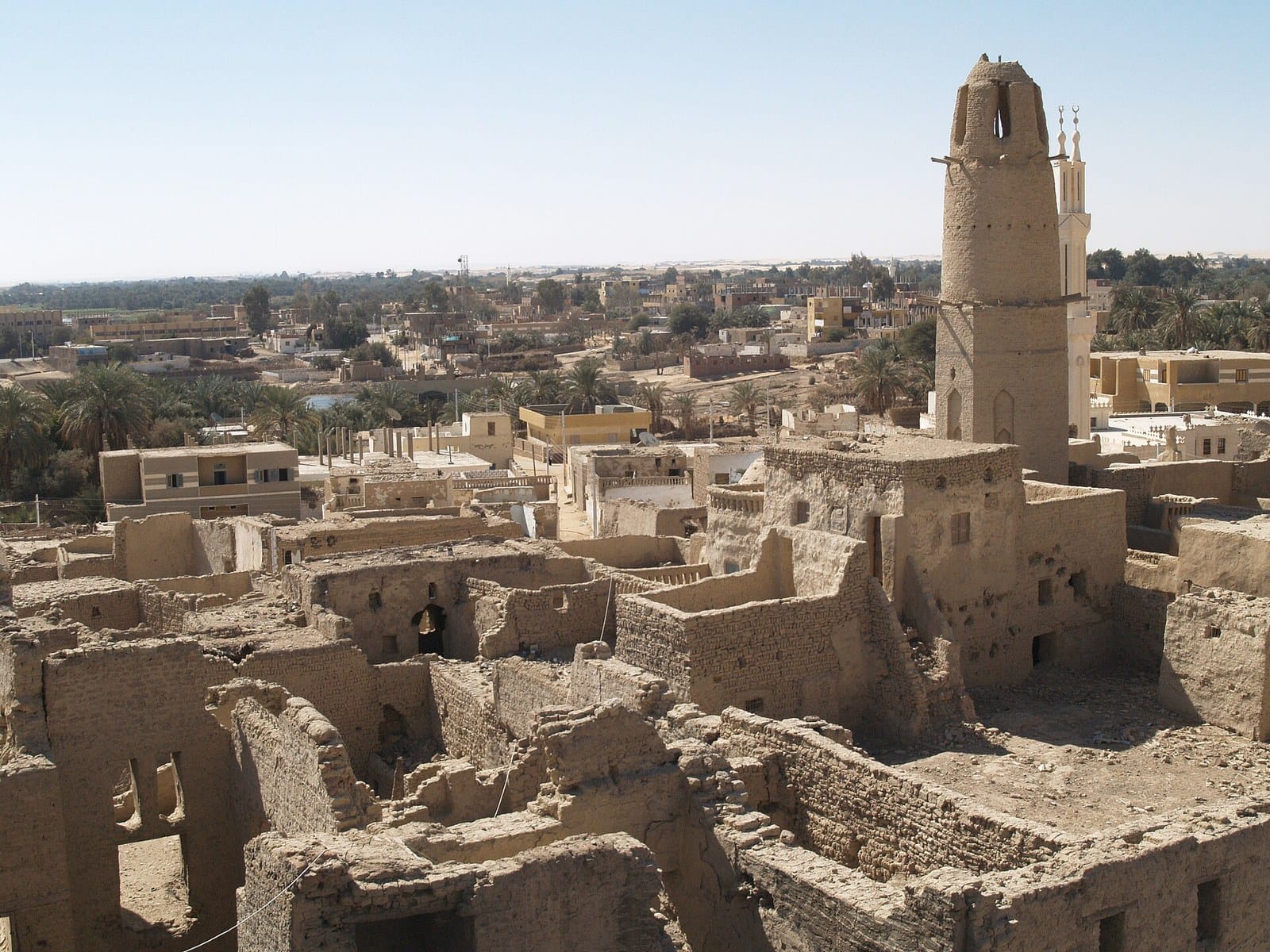
Kharga Oasis, known in Arabic as El-Wadi el-Gedid (the New Valley), is the largest and most southern of the oases of the Egyptian Western Desert. Extended for about 180 kilometres in length and up to 30 kilometres in width, this vast depression in the heart of the eastern Sahara represents a fundamental chapter in the history of the trans-Saharan trade routes and guards an archaeological heritage of extraordinary richness and variety.
Situated about 230 kilometres west of Luxor and connected to the Nile Valley by a modern asphalted road, Kharga was for millennia the starting point of the legendary Darb el-Arba'in, the Road of the Forty Days, one of the longest and most dangerous caravan routes of antiquity. Today the capital El-Kharga, with its about 70,000 inhabitants, is the administrative centre of the Governorate of the New Valley.
The Darb el-Arba'in: The Road of the Forty Days
A Legendary Route
The Darb el-Arba'in is one of the most ancient and celebrated trade routes of Africa. This caravan route of about 1,800 kilometres connected the region of Darfur, in western Sudan, with Kharga Oasis and, from there, with Asyut in the Nile Valley and the Mediterranean. The name "Forty Days" refers to the approximate duration of the journey that the caravans had to face across an implacable desert.
For millennia, this route was the principal channel through which spices, ivory, ostrich feathers, exotic skins and, unfortunately, slaves flowed from the heart of Africa towards the Mediterranean world. In the opposite direction travelled textiles, metal artefacts, salt and Egyptian luxury products. The caravans, composed sometimes of hundreds of camels and dromedaries, stopped at Kharga to rest, replenish water and trade before continuing towards the Nile Valley.
The Fortresses Guarding the Way
To protect this vital route and control the trade, successive powers — from the pharaohs to the Romans, from the Persians to the Arabs — built a chain of fortresses, post stations and wells along the Darb el-Arba'in. Many of these structures are still visible in Kharga Oasis and in its surroundings, silent witnesses of an era in which the desert was traversed by caravans that transported the riches of Africa.
The Roman Fortresses
Qasr el-Ghueita
The fortress of Qasr el-Ghueita (the "Palace of the Small Garden") is one of the most impressive sites of Kharga Oasis. Situated on a rocky promontory that dominates the depression, this imposing mudbrick structure dates back to the Roman period, although it incorporates more ancient elements attributed to the XXV and XXVI pharaonic dynasty. Inside the fortified enclosure is found a small temple dedicated to the Theban triad (Amun, Mut and Khonsu), with reliefs that depict various pharaohs in the act of making offerings to the gods.
The elevated position of the fortress offers a spectacular panoramic view over the oasis and the surrounding desert, allowing one to immediately understand its strategic function: from here it was possible to sight the approaching caravans along the Darb el-Arba'in with days of anticipation. The massive walls, still in good state of conservation in some stretches, reach a height of several metres and present corner towers and a fortified access system.
Qasr Zayyan
Further south, the fortress of Qasr Zayyan presents architectural characteristics similar to those of Qasr el-Ghueita. Built in the Roman period on previous structures, it served as a control station along the caravan route. Inside it is preserved a Ptolemaic-Roman temple dedicated to the god Amun, with mural reliefs that document the religious importance of the oasis during classical antiquity. The site, less visited than others, conserves an atmosphere of isolation and mystery that makes it particularly evocative.
The Fortress of El-Deir
El-Deir, situated in the northern extremity of the oasis, is the most spectacular of the Roman fortresses of Kharga. This imposing fortified complex in mudbrick, built probably in the 3rd-4th century AD, rises isolated in the desert with its walls up to 12 metres high, creating an image that seems to come out of an epic film. The fortress, which could host a garrison of several hundred soldiers, had its own water supply system and warehouses for provisions and materials.
The architecture of El-Deir reflects the tensions of the late Roman era, when the Empire had to defend its southern borders from the incursions of the nomadic peoples of the desert. The semicircular towers that mark the perimeter of the walls testify to the adoption of advanced defensive techniques, similar to those employed in the forts of the Roman limes in other parts of the Empire.
The Persian Aqueducts (Qanat)
Hydraulic Engineering in the Desert
One of the most fascinating aspects of Kharga Oasis is the system of underground aqueducts known as "qanat" or "manafis", introduced during the Persian domination (XXVII dynasty, 6th-5th century BC). These sophisticated irrigation systems, originating from the Iranian plateau, consist of underground tunnels excavated in the rock that convey the water from the aquifers to the cultivated fields exploiting natural gravity.
The qanat of Kharga represent one of the most ancient known applications of this hydraulic technology outside of Persia and testify to the level of organisation and engineering competence reached by the Persian administration in Egypt. Along the course of each qanat, vertical wells (the so-called "mother wells") allowed access for maintenance and ventilation of the tunnel. Some of these systems were several kilometres long and reached depths of tens of metres.
Although most of the ancient qanat are today in disuse, their traces are still visible in the landscape of the oasis in the form of alignments of wells that are lost in the desert. Some have been restored and put back into function, demonstrating that the Persian technology of 2,500 years ago is still valid and functional.
The New Valley Museum (El-Kharga Museum)
Testimonies of Five Millennia
The New Valley Museum, situated in the centre of El-Kharga, is an indispensable stop for those who visit the oasis. Inaugurated in 1993 in a modern building but inspired by the traditional architecture of the oases, the museum gathers a rich and varied collection of finds coming from the excavations conducted in the oases of the Western Desert.
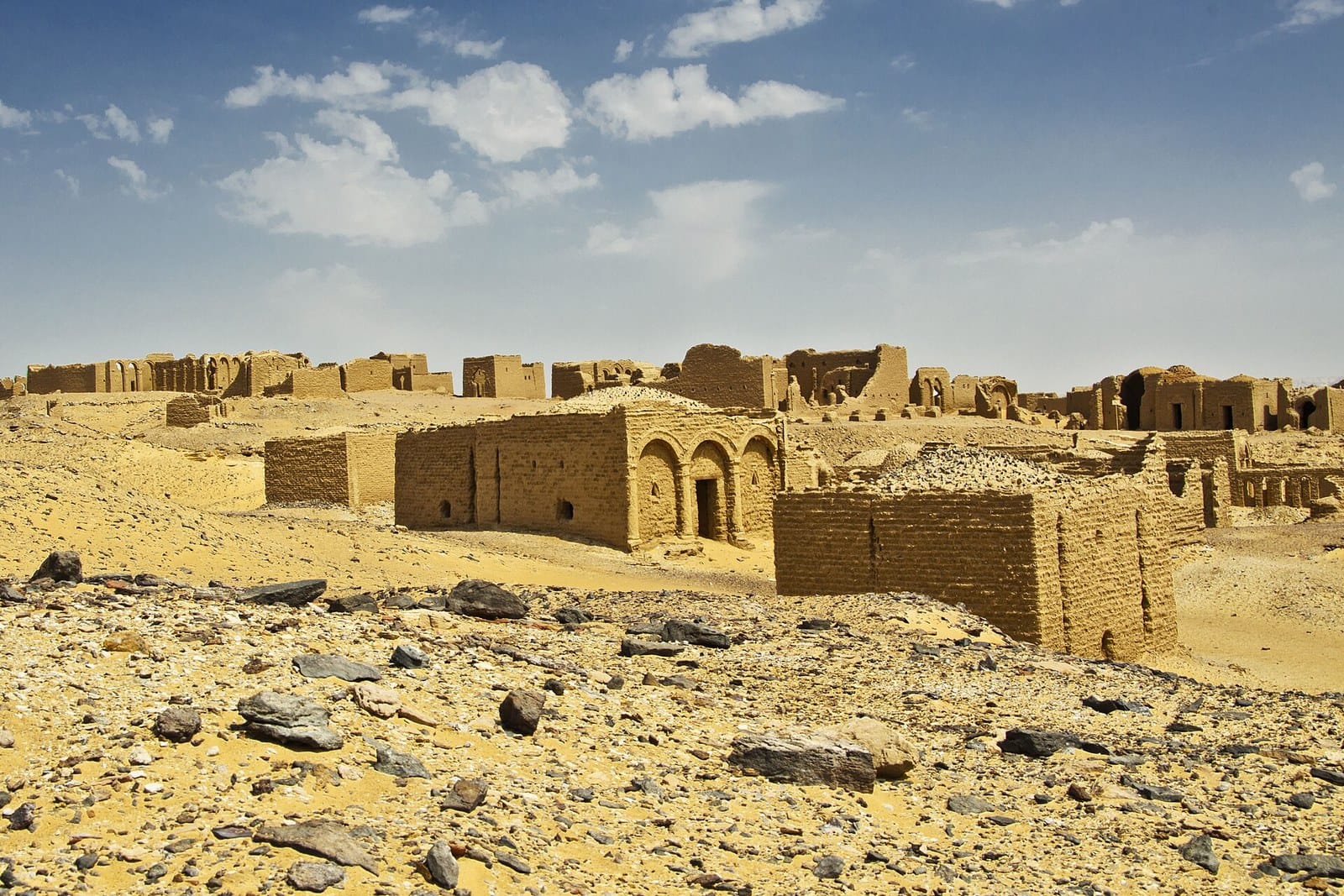
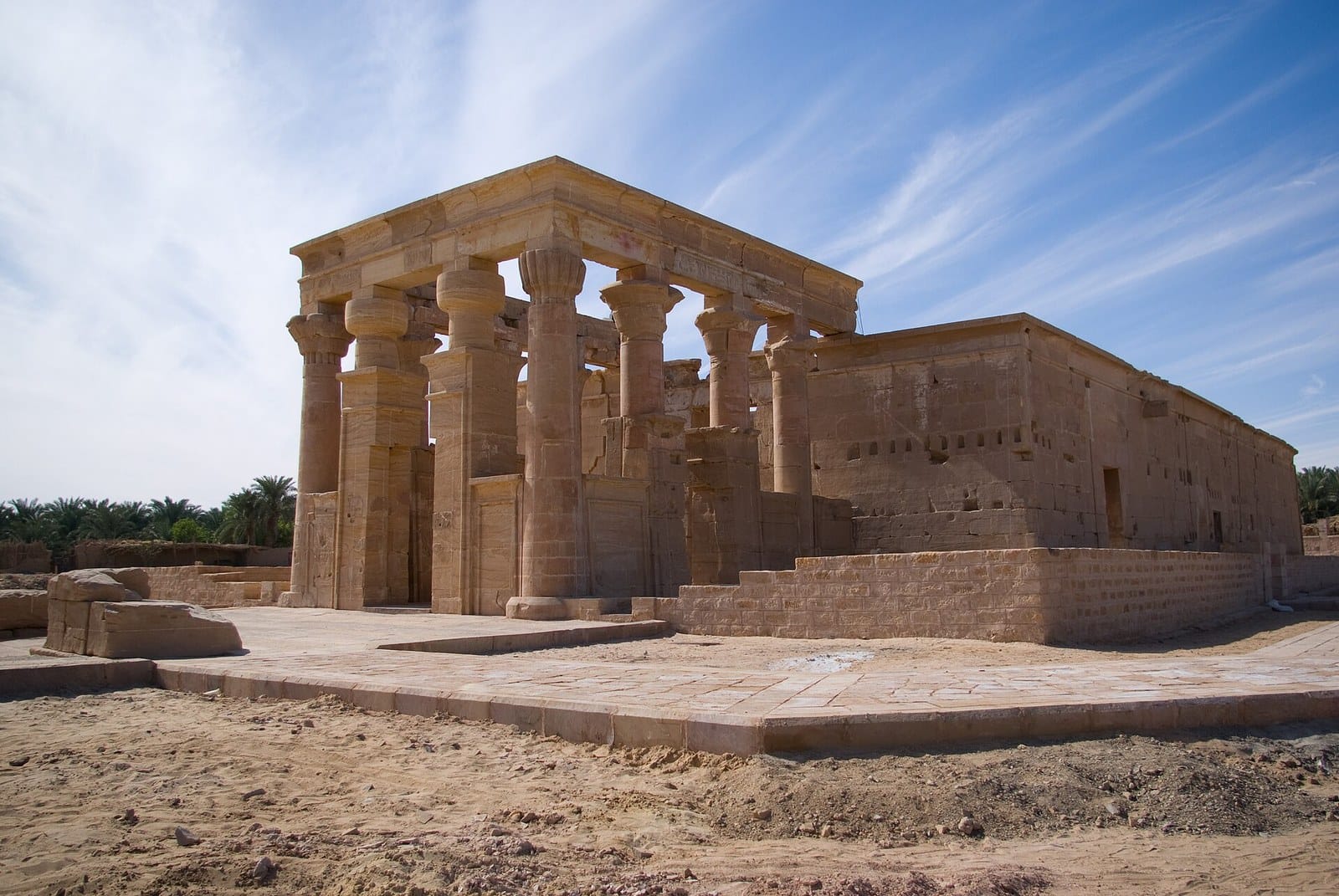
The collection ranges from the prehistoric to the Islamic era and comprises ceramics, jewels, coins, statuettes in bronze and terracotta, polychrome Coptic fabrics, agricultural tools and objects of daily life. Of particular interest are the finds coming from the necropolis of Bagawat, the reliefs of the temple of Hibis and a collection of mummies and sarcophagi that testify to the funerary practices in the oases.
The museum offers also an excellent section dedicated to the geology and the palaeontology of the region, with fossils that document the evolution of the desert landscape over the course of millions of years. Informative panels in Arabic and English illustrate the history of the oases and the challenges of life in the desert.
The Territory of the Oasis
Landscapes and Nature
Kharga Oasis develops in an elongated depression oriented from north-north-east to south-south-west, flanked to the east by a limestone escarpment that reaches 400 metres in height and that represents one of the most spectacular landscape elements of the region. This cliff, modelled by aeolian erosion into fantastic forms, offers scenery of great suggestion, especially in the hours of dawn and sunset.
The vegetation of the oasis is dominated by the date palm groves, which constitute the principal agricultural resource of the region. The varieties of dates cultivated at Kharga are celebrated for their quality and sweetness. Fields of grain, rice and vegetables occupy the irrigated areas, creating a green mosaic that contrasts vividly with the surrounding sands.
The Fauna of the Desert
Despite the aridity of the environment, Kharga Oasis hosts a surprisingly rich fauna. Dorcas gazelles and fennec foxes inhabit the desert margins, while desert larks, bee-eaters and birds of prey like the lesser kestrel frequent the cultivated areas. The springs and the canals of the oasis attract numerous species of migratory birds during the transit seasons.
Tips for the Visit
How to Get There
El-Kharga is reachable by car from Asyut (about 4 hours via the desert road), from Luxor (about 3-4 hours) or from Dakhla Oasis (about 2-3 hours). There are also public bus services from Asyut and from Cairo, although the frequencies are limited. It is possible to rent cars and local guides at El-Kharga to explore the archaeological sites, many of which require an off-road vehicle.
Best Period
As for the other oases of the Western Desert, the ideal period to visit Kharga runs from October to April, with pleasant daytime temperatures (20-30°C) and cool nights. In the summer months temperatures can reach 48°C, making the visit of the archaeological sites exposed to the sun extremely tiring and inadvisable.
Where to Stay
El-Kharga has some mid-level hotels, among them the Pioneers Hotel and the Kharga Oasis Hotel, which offer comfortable accommodation at reasonable prices. The accommodation offer is more limited compared to the tourist destinations of the Nile Valley, but the quality of the welcome amply compensates.
What to Bring
Bring abundant water, sun protection, a hat and sunglasses. Robust shoes are essential for visiting the Roman fortresses and the archaeological sites in the desert. A torch is useful for exploring the qanat and the darker structures. Bring sufficient cash since the banking services are basic. Binoculars can be useful to observe the desert fauna and the architectural details of the fortresses.
Recommended Itinerary
An ideal two-day itinerary provides for the visit of the Temple of Hibis and the Necropolis of Bagawat in the first day, followed by the New Valley Museum. The second day can be dedicated to the Roman fortresses of Qasr el-Ghueita, Qasr Zayyan and, for the more adventurous, El-Deir. Those who have more time can explore the Persian qanat and the minor sites scattered in the oasis.
A Heritage to Discover
Kharga Oasis, with its archaeological richness and its millennia-old history of caravan crossroads, offers a travel experience unique and deeply different from that of the conventional tourist destinations of Egypt. Here, far from the crowd, the visitor can enter into contact with an extraordinary historical heritage, immersed in a desert landscape of primordial beauty that invites contemplation and reflection.