The Temple of Wadi es-Sebua: The Valley of the Lions of Ramesses II
In the heart of Egyptian Nubia, on the sandy shores of Lake Nasser, stands one of the most evocative and least known temples of all Egypt: the Temple of Wadi es-Sebua, whose Arabic name means literally "Valley of the Lions." This poetic name originates from the majestic avenue of sphinxes that precedes the entrance of the temple, whose leonine figures guarding the sacred enclosure impressed the medieval Arab travelers who first described the site after millennia of oblivion.
Erected by the will of the great pharaoh Ramesses II during the 19th Dynasty, the temple represents one of the most ambitious architectural undertakings of the sovereign in the Nubian region. Its history, spanning the pharaonic era, the Christian period, and the modern rescue from the waters of Lake Nasser, is a fascinating tale of transformation, destruction, and rebirth that deserves to be known by every visitor to Egypt.
History of the Temple
The Construction under Ramesses II
Ramesses II, the most prolific builder of ancient Egypt, erected the Temple of Wadi es-Sebua around 1240 BC, during the central decades of his very long reign. The temple was part of an ambitious program of Nubian constructions that also included the famous temples of Abu Simbel, the temple of Derr, and that of Gerf Hussein, all conceived to affirm the divine power of the pharaoh and Egyptian dominion over Nubia.
The viceroy of Nubia Setau, faithful official of Ramesses II, supervised the construction of the temple using Libyan prisoners of war as labor. The inscriptions of the temple celebrate the military victories of the pharaoh and present him as the earthly manifestation of the god Amun-Ra, a propaganda strategy intended to impress the Nubian populations and consolidate their submission to Egyptian authority.
The Christian Conversion
With the advent of Christianity in the Nubian region, starting from the 6th century AD, the Temple of Wadi es-Sebua was converted into a Coptic Christian church. This transformation involved significant modifications to the building: the images of the pagan gods were plastered over and covered with Christian paintings, crosses, and representations of saints. The cella of the sanctuary, which originally housed the statue of the god, was transformed into an apse decorated with figures of Christian saints.
The irony of history dictated that the Christian paintings overlaid the pharaonic reliefs, creating involuntarily evocative iconographic superimpositions. In one of the most famous and curious scenes, the figure of Saint Peter with the keys appears painted directly above an image of Ramesses II making offerings to Amun: the Christian saint thus seems to receive the offerings of the pharaoh, in an involuntary dialogue between religions separated by two millennia.
The Rescue from the Waters
When the waters of Lake Nasser threatened to submerge the temple in the 1960s, an international operation coordinated by UNESCO allowed its rescue. In 1964, the temple was completely dismantled and rebuilt about 4 kilometers further west and on higher ground compared to the original position. The operation was particularly complex due to the partially rock-cut nature of the temple: the rear section, carved directly into the rock, was cut into blocks and transported together with the part built in masonry.
Architecture and Decoration
The Avenue of Sphinxes
The most iconic element of the Temple of Wadi es-Sebua is without doubt the long processional avenue flanked by sphinxes that leads to the first pylon. The sphinxes, originally about twenty in number, present a particular aspect: the first part of the avenue is flanked by sphinxes with human heads and leonine bodies in the classic Egyptian tradition, while the second part presents sphinxes with falcon heads, sacred to the god Horus. Between the paws of each sphinx is carved a small statue of Ramesses II, a detail that underlines the identification of the pharaoh with divine power.
Unfortunately, many of these sphinxes have come down to us in poor conditions of preservation, eroded by wind and sand over the course of the millennia. Some are little more than indistinct forms, while others still preserve recognizable features that allow one to imagine the original magnificence of the processional avenue.
The First and Second Pylons
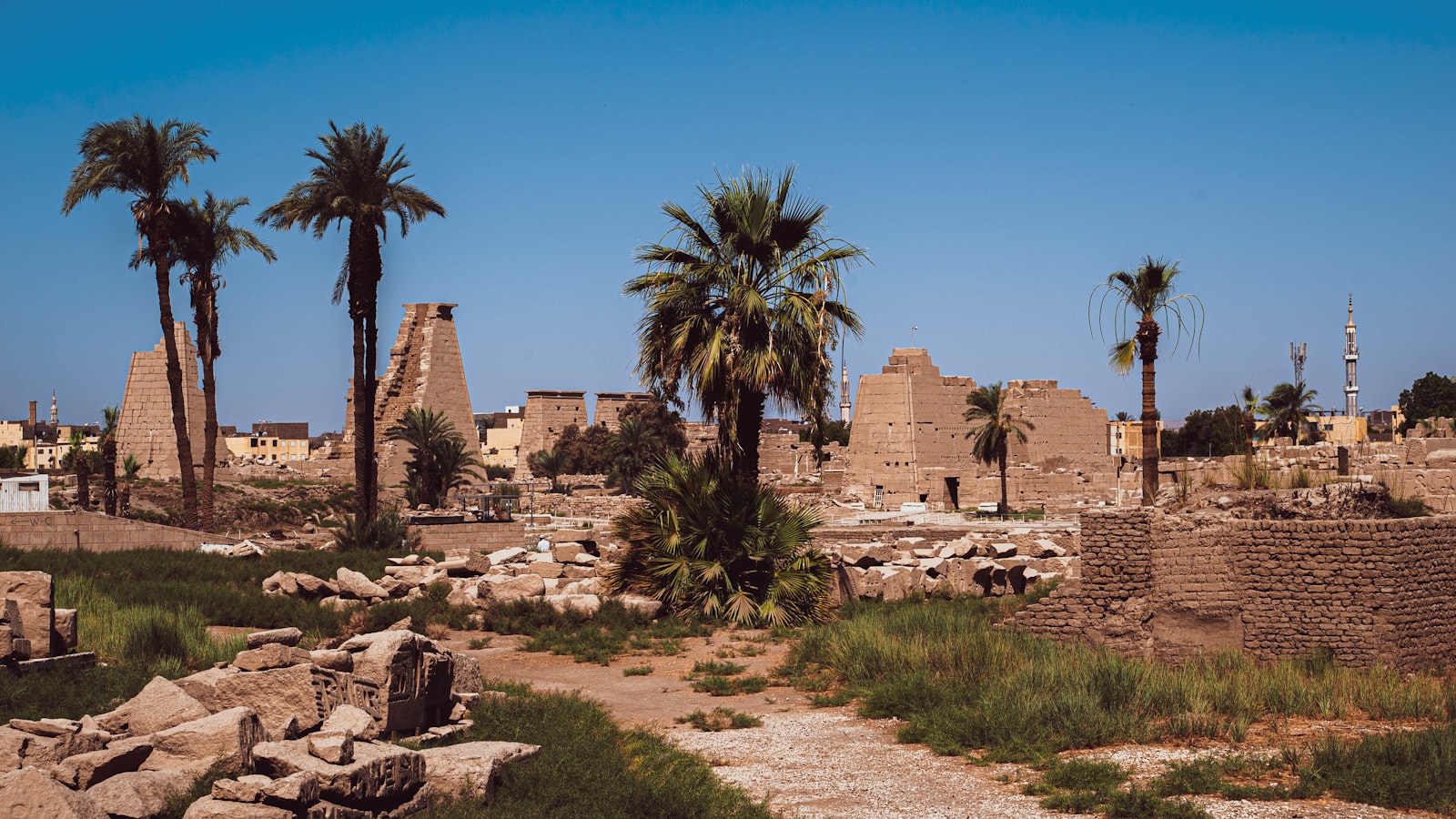
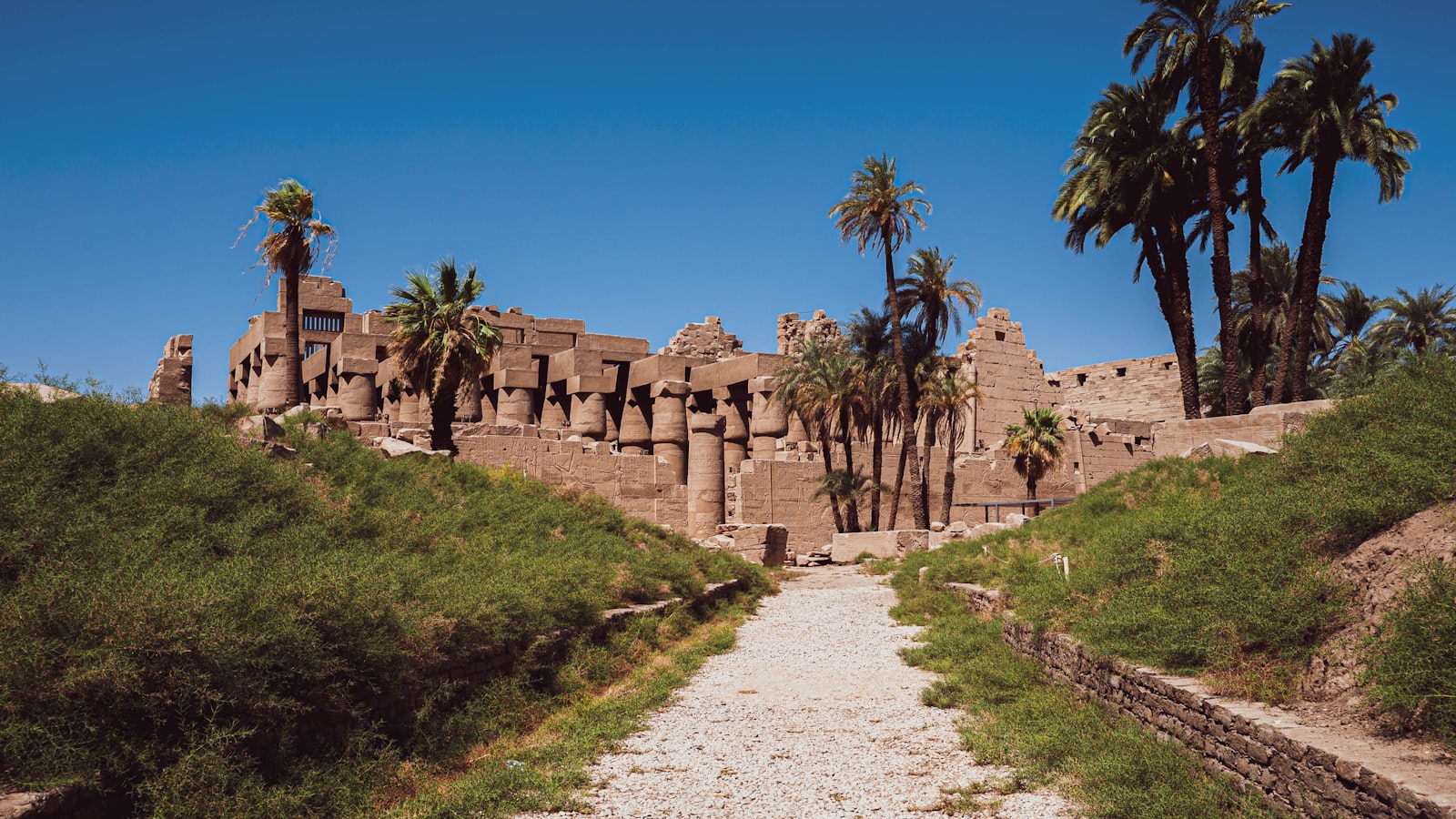
The first pylon, built in mudbrick, introduces the outer courtyard of the temple. On the sides of the portal stood colossal statues of Ramesses II, of which the bases and some fragments remain today. The courtyard was surrounded by a portico with Osirian pillars — pillars against which statues of the pharaoh in the pose of the god Osiris lean — which gave the environment a solemn and imposing atmosphere.
The second pylon, in sandstone, is decorated with reliefs that celebrate the military victories of Ramesses II and his offerings to the gods. Beyond this pylon one accesses the most sacred part of the temple, where the architecture changes nature: from masonry construction one passes to the section carved in the rock, a transition that symbolized the passage from the earthly world to the divine realm.
The Rock-Cut Part
The rear section of the temple is entirely carved in the natural rock, a characteristic that Wadi es-Sebua shares with other Nubian temples of Ramesses II, first among them Abu Simbel. The rock-cut hypostyle hall presents pillars carved from the rock itself and walls decorated with reliefs that show the pharaoh before the principal deities of the temple.
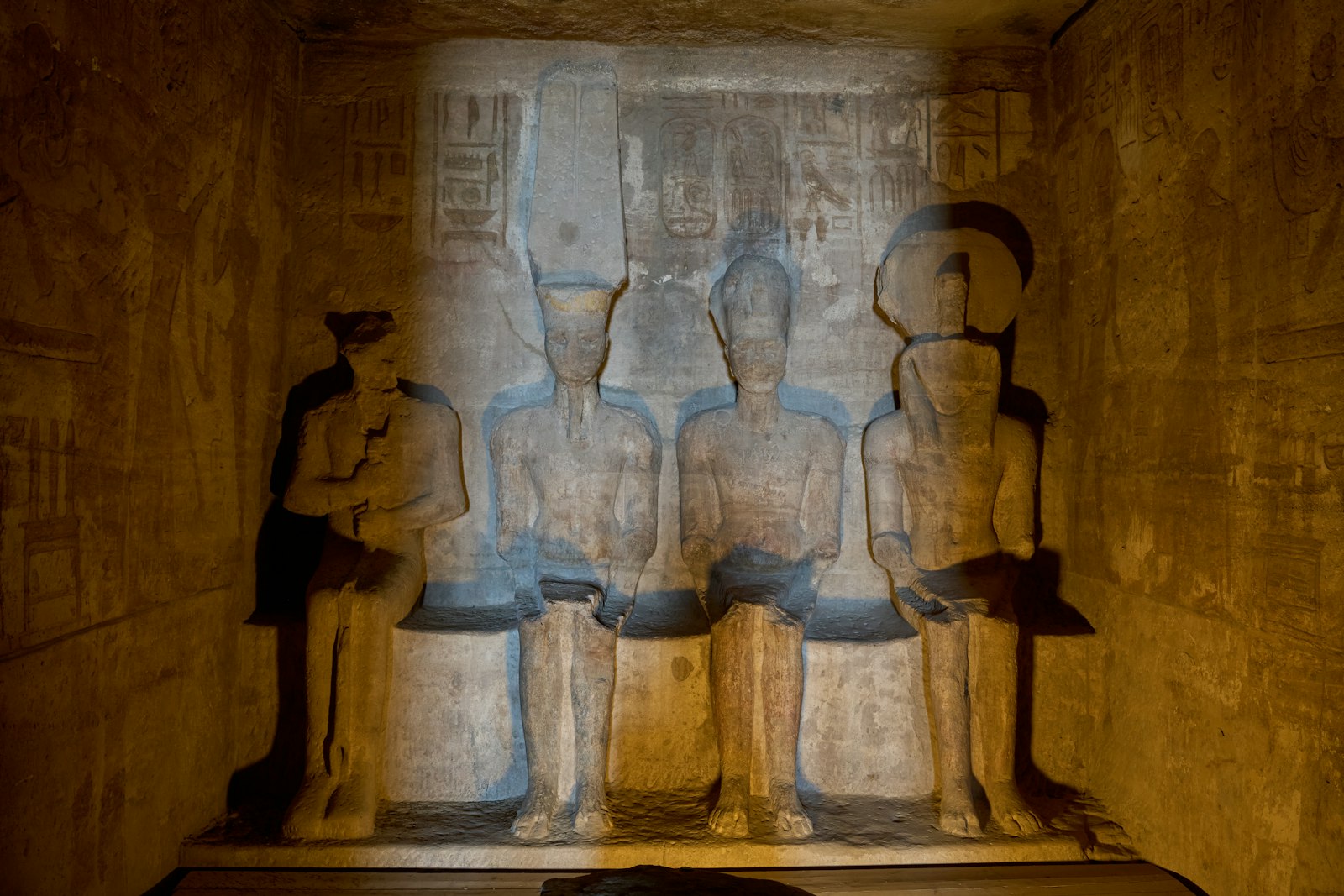
The innermost sanctuary originally contained a sculptural group depicting Ramesses II seated among the gods Amun-Ra and Ra-Horakhty. It is precisely in this cella that the Christian conversion has left the most visible and fascinating traces, with the Coptic paintings overlaying the pharaonic reliefs, creating an artistic and religious palimpsest unique in the world.
The Context of the Lake Nasser Cruises
An Unmissable Stop
The Temple of Wadi es-Sebua is one of the main stops of the Lake Nasser cruises, the luxurious boat journeys that connect Aswan to Abu Simbel crossing the heart of Egyptian Nubia. These cruises, much less crowded compared to those on the Nile between Luxor and Aswan, offer an exclusive and contemplative travel experience, with stops at the principal Nubian monuments rescued from the waters.
The visit to Wadi es-Sebua is usually combined with that to the nearby temples of Dakka and Maharraqa, all three located on the same site after the transfer carried out during the UNESCO rescue campaign. This concentration of monuments of different eras — from the New Kingdom to the Roman era — offers a unique opportunity to understand the evolution of Nubian sacred architecture over the course of more than a millennium.
The Atmosphere of the Site
Those who visit Wadi es-Sebua immediately grasp the particular atmosphere of the site: the isolation in the desert, the silence broken only by the wind and the distant lapping of the waters of the lake, the blinding light of the sun that illuminates the golden stones of the temple. Unlike the more frequented archaeological sites of Egypt, here it is possible to live an experience of solitude and contemplation that allows one to imagine how this sacred place must have appeared to the eyes of the faithful of three thousand years ago.
Tips for the Visit
How to Get There
Wadi es-Sebua is not easily reachable by land. The most common way to visit the temple is through a Lake Nasser cruise, which generally departs from Aswan and includes stops at the principal Nubian monuments. Alternatively, it is possible to organize a private excursion by boat from Aswan, but this option is considerably more expensive and requires advance planning.
When to Visit
The best period to visit Wadi es-Sebua is from October to April, when the temperatures are more bearable. During the summer months, the heat in the Nubian desert can reach extreme temperatures, making the visit physically difficult. The Lake Nasser cruises generally operate during the cool season, with departures from October to May.
What to Bring
Given the isolated position of the site, it is essential to bring abundant water, sun protection, a wide-brimmed hat, and closed shoes suitable for the sandy terrain. A flashlight can be useful for exploring the darker sections of the rock-cut temple. There are no refreshment facilities nearby, so it is advisable to bring sufficient snacks and beverages.
Curiosities about Wadi es-Sebua
The temple was visited in 1813 by the Swiss explorer Johann Ludwig Burckhardt, the same adventurer who rediscovered Petra in Jordan and Abu Simbel. His descriptions, published posthumously in 1819, awakened European interest in the monuments of Nubia and contributed to launching the first campaigns of systematic study of the region. At that time, the temple was still partially buried by the sand of the desert, with only the heads of the sphinxes visible above the dunes.
Visiting the Temple of Wadi es-Sebua is a journey through time across the eras of Nubian history, an experience that combines the grandeur of Ramesside architecture with the spirituality of the Christian conversion and the emotion of finding oneself in one of the most remote and fascinating places of all Egypt.