The Temple of the Oracle of Amun: Where Alexander the Great Became Son of the Sun
The Temple of the Oracle of Amun at Siwa is one of the archaeological sites most charged with history and mystery in all of Egypt. Perched on the rocky hill of Aghurmi, in the heart of the Siwa Oasis, this ancient sanctuary was for centuries one of the most venerated and consulted oracles of the Mediterranean world. Its fame reached its peak in 331 BC, when the young conqueror Alexander the Great crossed the desert to receive from the deity the confirmation of his own divine nature, an event that changed the course of ancient history.
Today the ruins of the temple, although reduced compared to their original grandeur, preserve an extraordinary charm. The elevated position offers breathtaking panoramas over the oasis and the surrounding desert, while the ancient stones whisper stories of pharaohs, priests, and pilgrims who for millennia sought in this remote place the answers of the deity.
History of the Temple
The Origins in the 26th Dynasty
The Temple of the Oracle was built during the 26th Egyptian Dynasty (664-525 BC), the period known as the Saite era, when Egypt experienced a cultural and political rebirth under the dominion of the pharaohs originating from the city of Sais, in the Nile Delta. It was probably the pharaoh Amasis (570-526 BC) who ordered the construction of the sanctuary, although some scholars attribute the work to his predecessor Apries.
The choice of Siwa as the seat of the oracle was not casual. The oasis, already inhabited by Berber populations who venerated local deities comparable to Amun, was located at a crossroads of ancient caravan routes that connected the Nile valley with Cyrenaica (present-day eastern Libya) and with the more remote regions of the Sahara. The foundation of the temple responded both to religious needs and to political strategies, consolidating Egyptian control over a territory of great commercial importance.
The Oracle and Its Functioning
The oracle of Amun at Siwa functioned differently compared to the famous oracle of Delphi in Greece. While at Delphi it was the Pythia who pronounced the responses in a state of trance, at Siwa the oracle manifested itself through the movements of a portable statue of the god Amun, transported on a ceremonial barque by a group of priests. The movements of the barque, the oscillations and the inclinations were interpreted by the priests as responses of the god to the questions posed by the consultants.
The ancient sources describe the statue of the oracle as composed of emeralds and other precious stones, adorned with a golden crown. The oracular procession was accompanied by chants, dances, and the sound of musical instruments, creating an atmosphere of sacredness and mystery that contributed to the evocative power of the rite. The consultants could pose questions on personal, military, political, and religious matters, and the responses of the oracle were considered binding and infallible.
The Fame in the Ancient World
The reputation of the oracle of Siwa spread rapidly in the Greek world thanks to the commercial and cultural contacts between Greek Cyrenaica and the oasis. The historian Herodotus, writing in the 5th century BC, mentions the oracle as one of the most important of the known world. The poet Pindar and the historian Diodorus Siculus also speak of it with reverence.
Among the most famous consultants before Alexander the Great are counted the Lydian king Croesus, who according to tradition sent emissaries to Siwa together with other oracles to verify their reliability, and the Spartan commander Lysander, who sought divine support for his political ambitions.
The Visit of Alexander the Great
The Journey Through the Desert
In 331 BC, after having founded the city of Alexandria on the Mediterranean coast, Alexander the Great undertook a journey of about 300 kilometers through the Western Desert to reach the Siwa Oasis. This decision surprised his generals and advisors, since the route was extremely dangerous and the army was in the midst of the military campaign against the Persian Empire.
The journey lasted about eight days and was studded with dangers. According to the ancient sources, the caravan risked perishing of thirst after having exhausted the water reserves, but was saved by a providential rain in the desert, an event interpreted as a divine sign. Other versions narrate that two serpents or two ravens guided Alexander through the sands to the oasis, an episode that further fueled the supernatural aura of the entire undertaking.
The Divine Proclamation
Upon his arrival at Siwa, Alexander was welcomed by the high priest of the temple, who greeted him as "son of Amun," that is, son of the supreme god of the Egyptian pantheon. In Egyptian theology, every pharaoh was considered a son of Amun-Ra, and with this greeting the priests recognized Alexander's legitimacy as the new sovereign of Egypt.
Alexander entered the holy of holies of the temple alone to consult the oracle. What the oracle revealed to him always remained a secret: Alexander declared that he would report the words of the god only to his mother Olympias, but he died before being able to do so. According to later sources, the oracle would have confirmed that Alexander was the son of Zeus-Amun and that he was destined to conquer the entire world. This experience profoundly marked the young king, who from that moment adopted the symbols of Amun and asked to be represented with the horns of a ram, the iconographic attribute of the god.
The Historical Consequences
The visit of Alexander to the oracle of Siwa had far-reaching consequences. The proclamation as son of Amun-Ra legitimized his dominion over Egypt in the eyes of the local population and of the priests. Furthermore, the identification with the deity influenced his vision of his own role in the world, leading him to adopt practices and rituals of oriental origin that aroused the criticism of his Macedonian companions.
After the death of Alexander in 323 BC, the rumor spread that the conqueror had expressed the desire to be buried at Siwa, beside the temple of the oracle. In reality his body was transported to Alexandria, where it was preserved in a famous mausoleum. The legend of the burial at Siwa, however, has fueled for centuries researches and speculations that continue still today.
The Temple Today
The Archaeological Structure
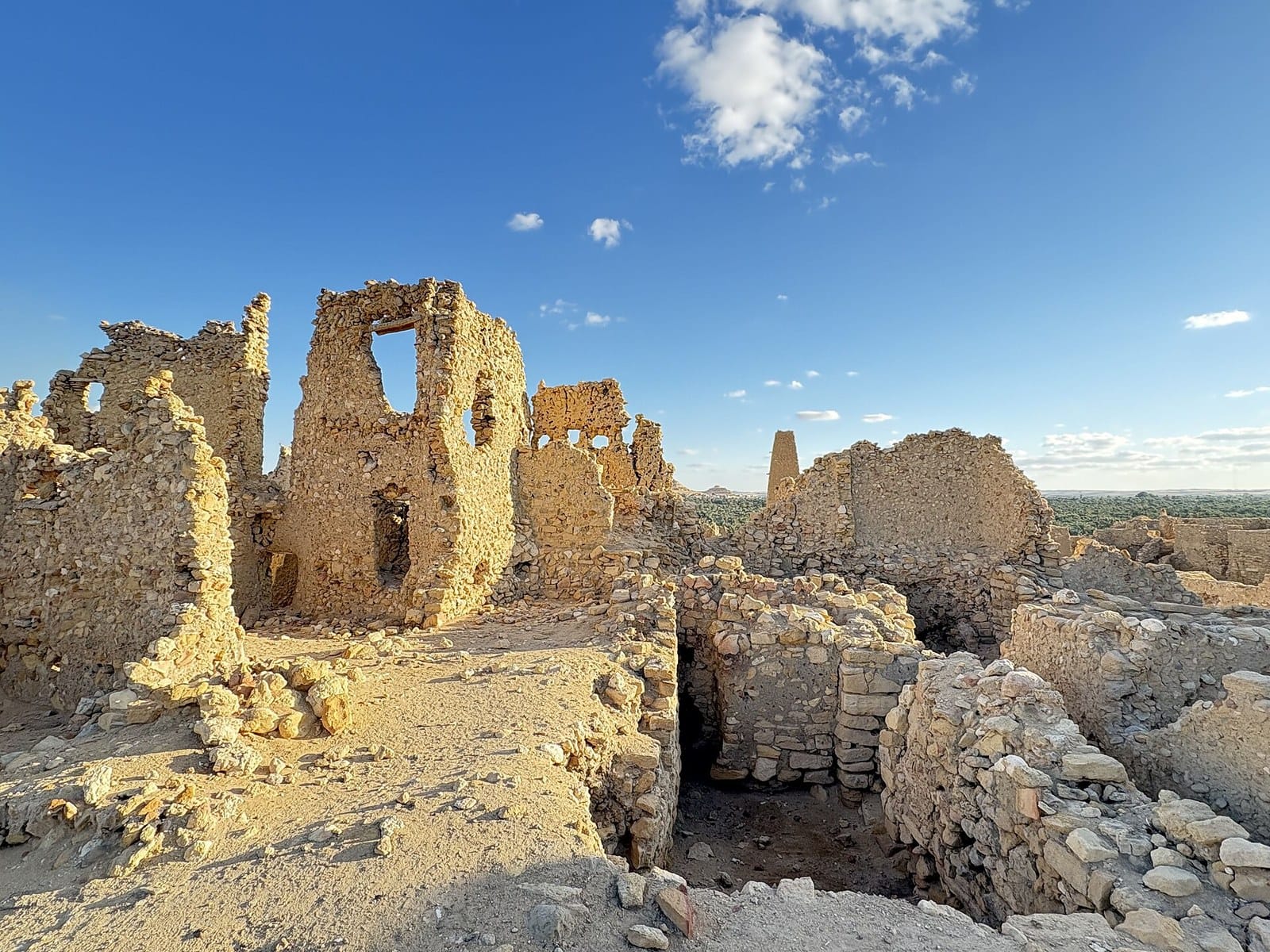
The ruins of the Temple of the Oracle are located on the summit of the hill of Aghurmi, a natural height of limestone rock that dominates the eastern part of the oasis. The original temple was a relatively compact building, constructed in blocks of local limestone, with an architecture typical of the Egyptian temples of the Late Period.
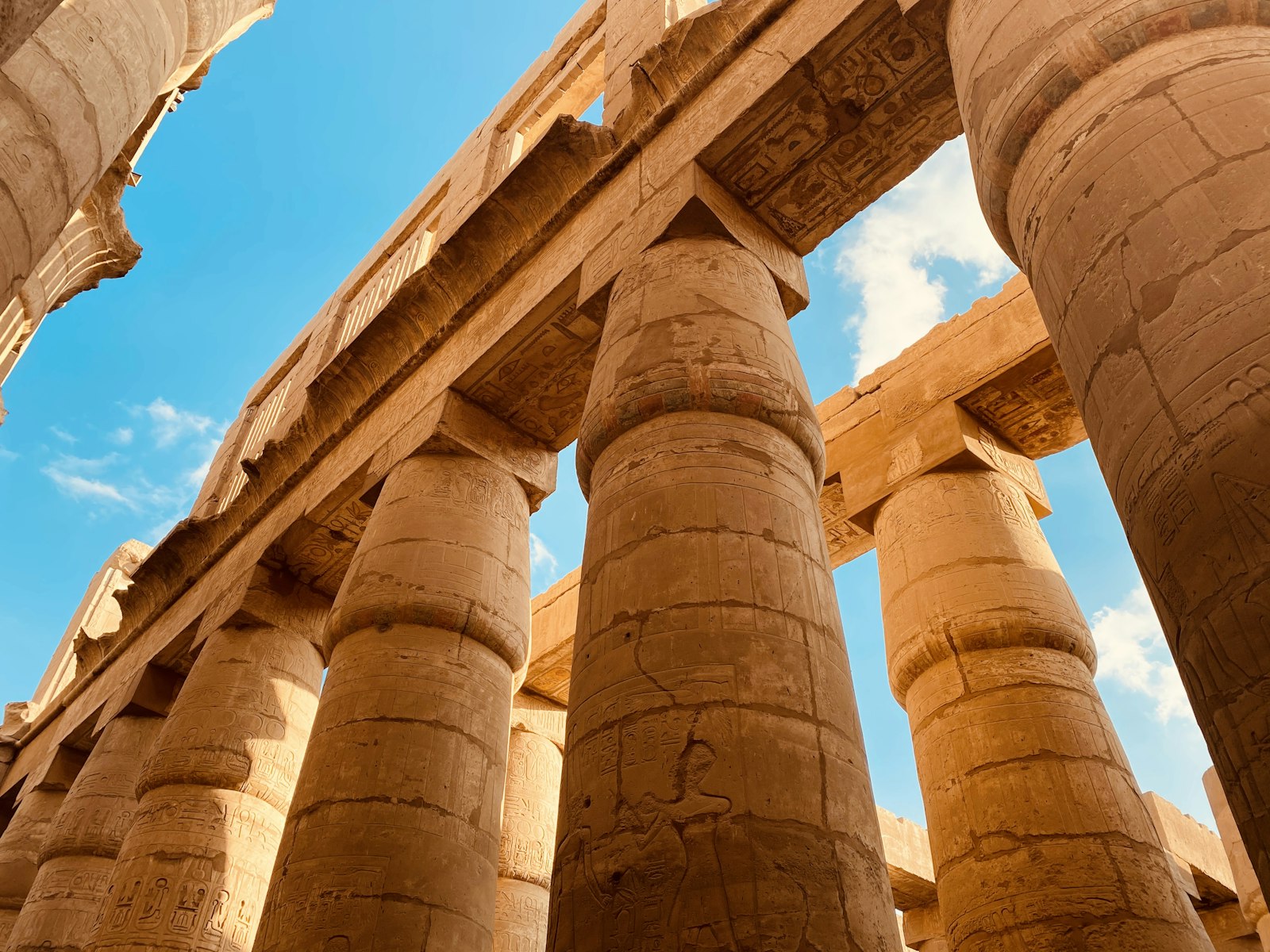
The main structure included a vestibule, a hypostyle hall with columns, and the inner sanctuary (the naos), where the statue of the oracle was guarded. Today the foundations, some portions of the perimeter walls, and fragments of reliefs that testify to the original decoration remain visible. The surviving hieroglyphic inscriptions, although fragmentary, confirm the dedication of the temple to Amun and provide precious information on the chronology of the construction.
The Panorama from the Hill
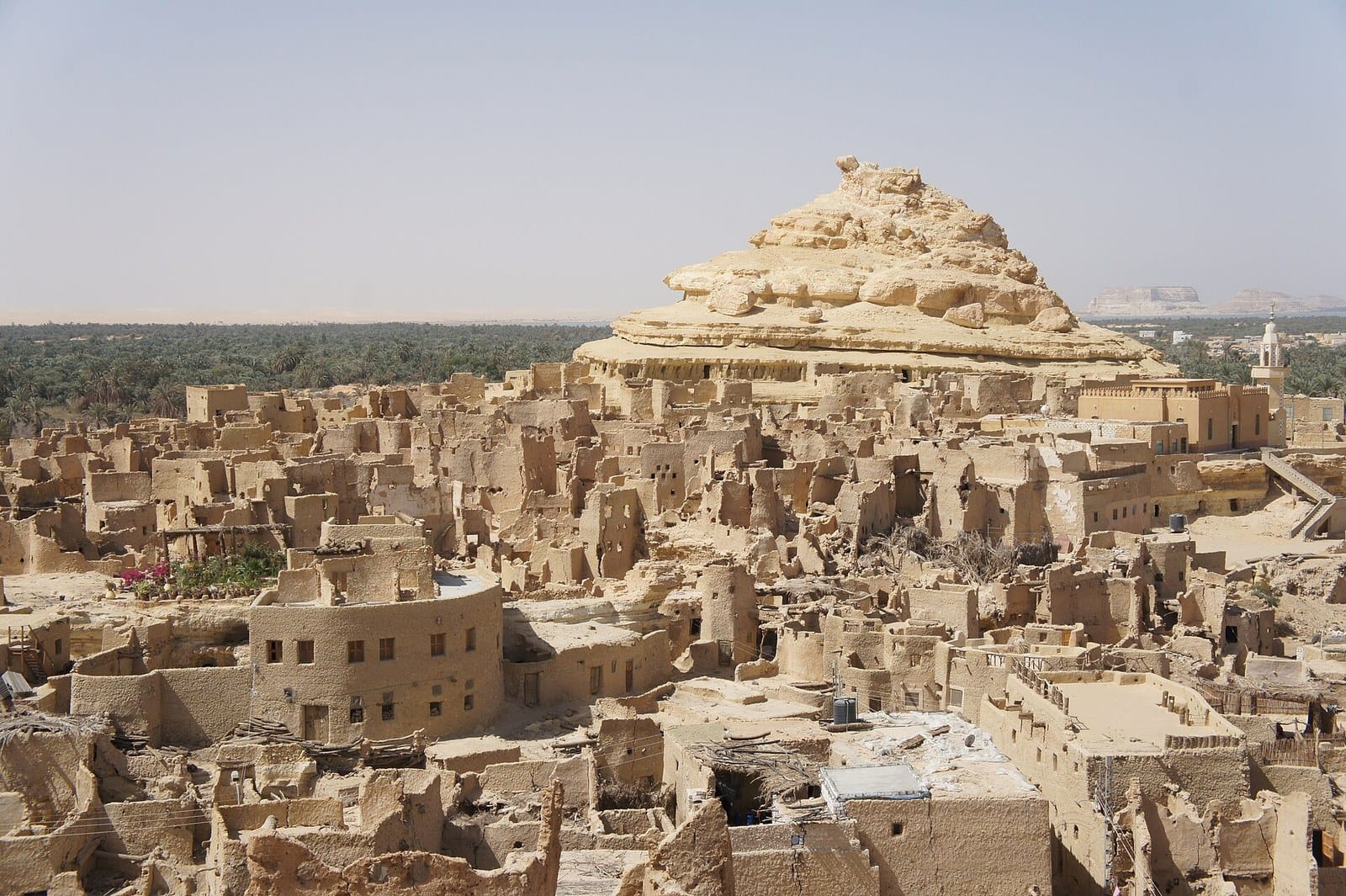
One of the most evocative aspects of the visit to the temple is the panorama enjoyed from the summit of Aghurmi. From this elevated position it is possible to embrace with the gaze the entire Siwa Oasis: the palm groves that extend as far as the eye can see, the salt lakes that shine under the sun, the ruins of the fortress of Shali and, on the horizon, the dunes of the Great Sand Sea. It is an ideal place to understand why the ancients chose precisely this hill to build a sanctuary dedicated to the god of the sun.
The Nearby Tomb of Amenhotep
In the immediate vicinity of the Temple of the Oracle is located the so-called Tomb of Amenhotep, a hypogeum carved in the rock of the hill that presents wall decorations of the Late Period. Although the traditional name refers to an Egyptian official, the exact identity of the owner of the tomb is still debated. The reliefs, which depict ritual scenes and Egyptian deities, are partially preserved and offer a further motive of interest for the visitors of the site.
Practical Tips for the Visit
Hours and Access
The site is generally accessible from 8:00 to 17:00. Entrance requires the purchase of a ticket at the ticket office located at the foot of the hill. The ascent to the summit is relatively short but takes place on a dirt path with some irregular steps; closed and comfortable shoes are recommended.
The Best Moment for the Visit
The best hours to visit the temple are early morning and late afternoon, when the temperatures are milder and the light is ideal for photography. At sunset, the hill of Aghurmi offers one of the most evocative observation points of the entire oasis. It is advisable to dedicate the visit to the temple within the framework of a day of exploration that also includes the nearby fortress of Shali and the Temple of Umm Ubeida.
The Temple of Umm Ubeida
A short distance from the hill of Aghurmi are located the remains of the Temple of Umm Ubeida, another sanctuary dedicated to Amun, of which today only one wall decorated with hieroglyphs survives. This temple, probably built under the pharaoh Nectanebo II (360-343 BC), completed the religious complex of the oasis and deserves a brief stop during the visit.
How to Reach the Site
The Temple of the Oracle is located about 4 kilometers from the center of Siwa and is reachable by bicycle, by karetta (cart drawn by a donkey), or with a short journey by car. Many hotels and guesthouses organize guided tours that include the visit to the temple together with other attractions of the oasis.
Photographic Suggestions
For the most evocative photographs, position yourself on the eastern side of the hill early in the morning, when the grazing light illuminates the ruins with golden tones. At sunset, the western side offers magnificent backlit views with the silhouette of the palms in the background. Bring a wide-angle lens to capture both the ruins and the surrounding panorama.
The Temple of the Oracle of Amun at Siwa is much more than an archaeological site: it is a place where history, spirituality, and natural beauty merge into an unforgettable experience. Walking among these ancient stones means retracing the steps of Alexander the Great, of the pharaohs, and of the pilgrims who for millennia sought in this remote corner of the desert the voice of the deity.