Siwa Oasis: the Hidden Jewel of the Western Desert
Siwa Oasis represents one of the most fascinating and mysterious places of the entire Egypt. Situated about 560 kilometres west of Cairo and only 50 kilometres from the Libyan border, this remote oasis is an island of lush greenery in the heart of the Western Desert. With its endless palm groves, sparkling salt lakes and a unique Berber culture that has resisted for millennia, Siwa offers a travel experience radically different compared to the classic Egyptian tourist destinations along the Nile.
The Siwa depression extends for about 80 kilometres in length and 20 in width, situated 18 metres below sea level. This particular geographic position, fed by over 200 natural springs, has allowed the birth of a luxuriant oasis that counts today about 300,000 date palms and 70,000 olive trees. The population, which slightly exceeds 30,000 inhabitants, is composed largely of Siwani, a people of Berber origin who keep alive their own language, Siwi, together with ancestral traditions and customs.
Millennia-Old History of the Oasis
From the Origins to the Pharaonic Era
The first testimonies of human settlement in the Siwa area date back to the Palaeolithic, as demonstrated by the findings of stone tools in the surrounding zones. However, the documented history of the oasis begins with the XXVI Egyptian dynasty (664-525 BC), when the Temple of the Oracle of Amun was built on the hill of Aghurmi. This sanctuary quickly became one of the most celebrated oracles of the ancient world, consulted by pharaohs, commanders and pilgrims coming from all over the Mediterranean.
The most celebrated moment in the history of the oracle was the visit of Alexander the Great in 331 BC, after his conquest of Egypt. The young Macedonian conqueror crossed the desert for eight days, risking death from thirst, in order to reach Siwa and consult the oracle. According to the ancient sources, the priests welcomed him as "son of Amun-Ra", thus legitimising his domination over Egypt and, symbolically, over the entire known world. This divine investiture profoundly influenced the perception that Alexander had of himself and his policy towards the Eastern peoples.
The Medieval Era and the Fortress of Shali
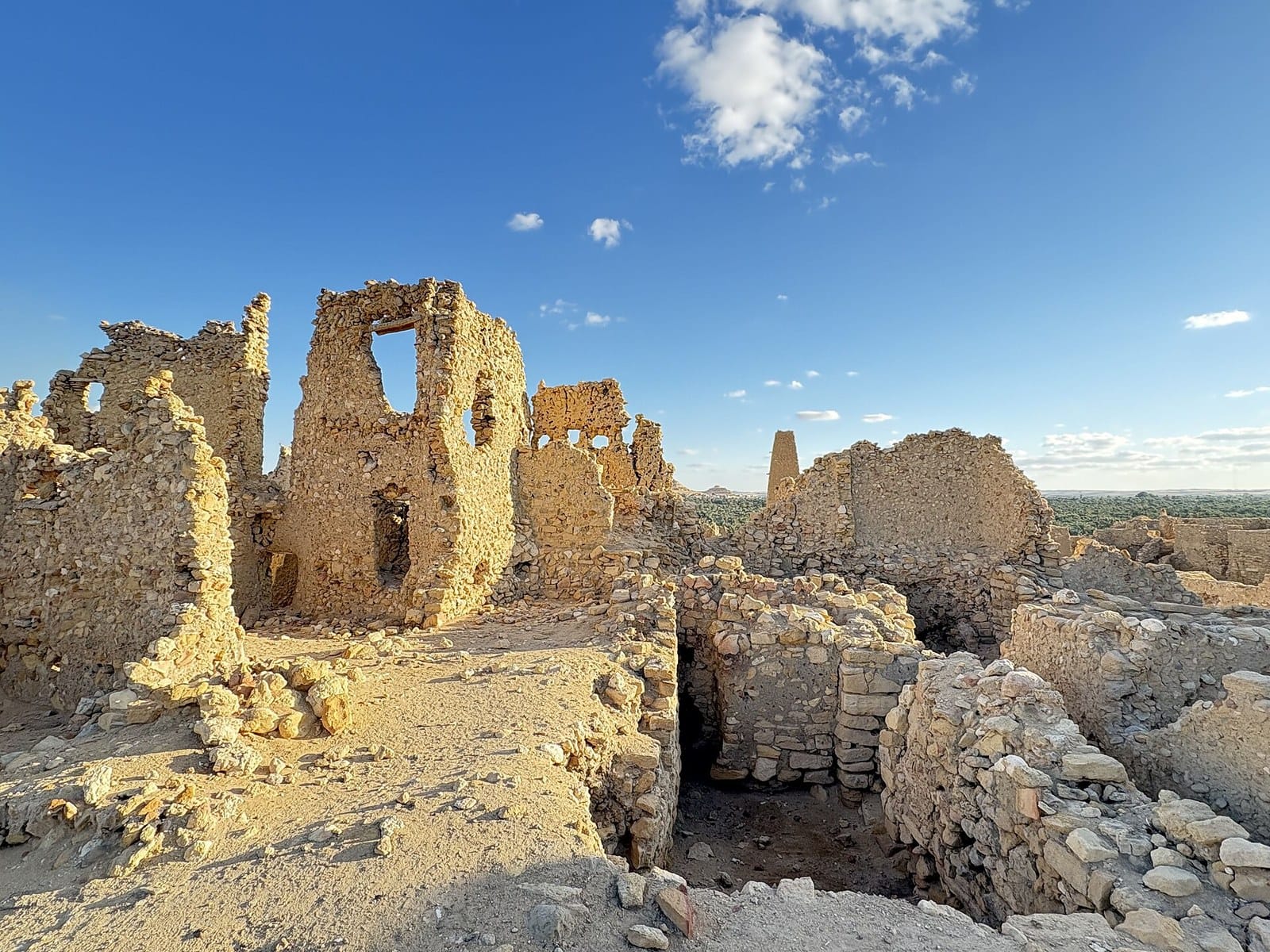
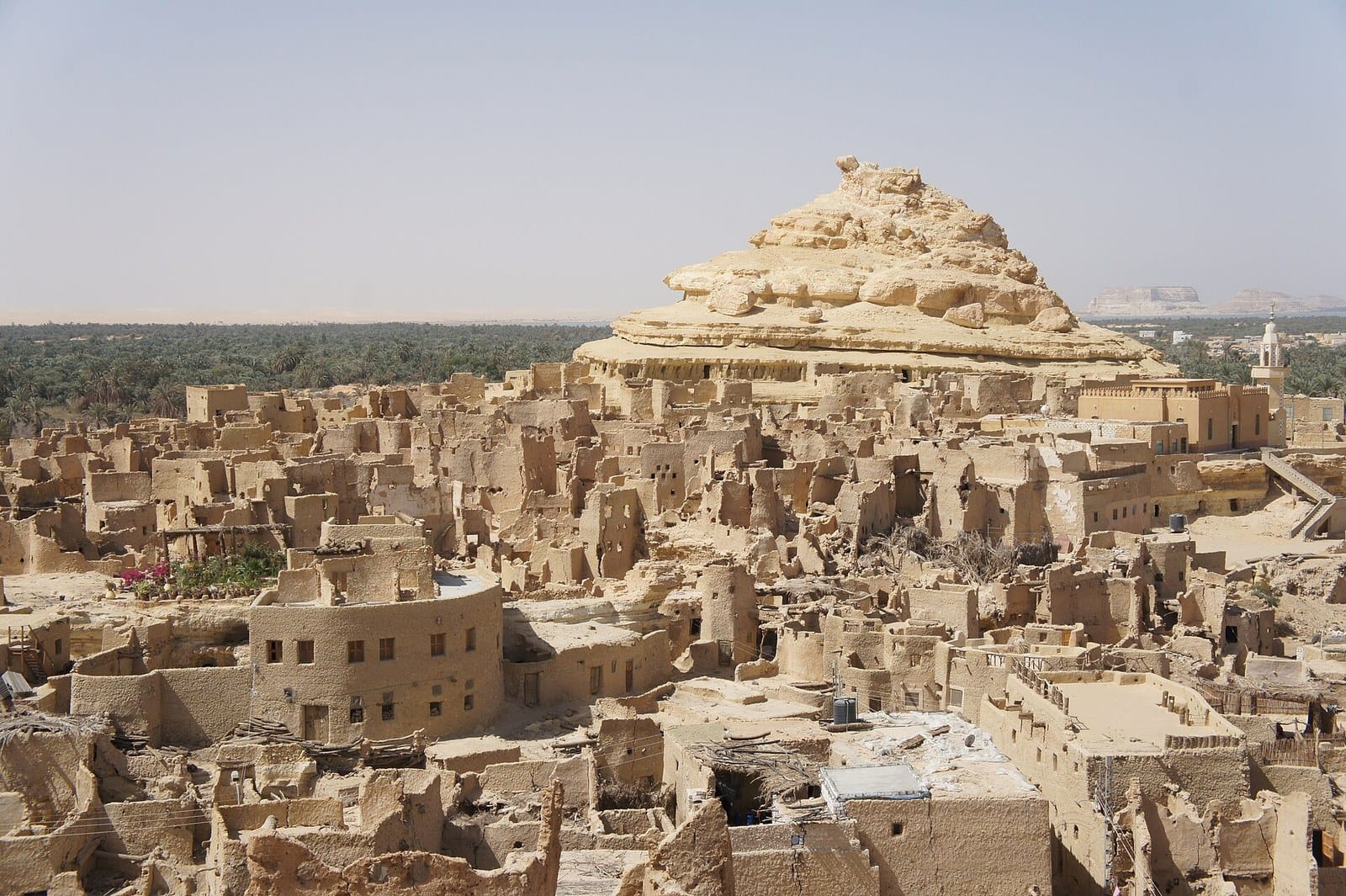
In 1203 AD, the inhabitants of the oasis built the fortress of Shali, a compact citadel constructed with kershef, a local building material composed of salt, clay and sand. This imposing structure, which rose on a natural hill, served to protect the population from the incursions of the Bedouin tribes of the desert. For centuries, all the inhabitants of Siwa lived within the walls of Shali, which grew upwards as new dwellings were built above the more ancient ones.
In 1926, three days of exceptional torrential rains caused the collapse of a great part of the fortress, since kershef is extremely vulnerable to water. The inhabitants were forced to abandon Shali and to move to the surrounding areas. Today the ruins of the fortress, with their organic forms and the warm colours of clay, represent the iconic symbol of Siwa and one of the most photographed attractions of the oasis.
The Natural Treasures of Siwa
The Salt Lakes
Siwa is surrounded by numerous salt lakes, the largest of which is the Birket Siwa, which extends for several square kilometres. These mirrors of water, whose salinity exceeds that of the Dead Sea, offer scenery of extraordinary beauty, especially at sunset when the waters take on golden and rosy tones. It is possible to float effortlessly in their hypersaline water, an experience comparable only with that of the Dead Sea in Jordan.
Lake Fetnas, situated on the homonymous islet reachable on foot, is the ideal point to admire the sunset. The silhouette of the palms that stands out against the fiery sky, reflected in the calm waters of the lake, composes a picture of rare suggestion that alone justifies the journey to Siwa.
Cleopatra's Spring
Cleopatra's Spring, known also as Ain Juba, is a natural pool of circular form fed by an underground spring that maintains the water at a constant and pleasant temperature. According to legend, Queen Cleopatra herself would have bathed in these waters during a visit to the oasis. Whether the story is true or not, the spring is today a popular meeting place both for locals and for tourists, an oasis within the oasis where one can refresh oneself after the excursions in the desert.
The Great Sand Sea
To the south and to the west of Siwa extends the Great Sand Sea, one of the most vast fields of dunes in the world, which extends for over 72,000 square kilometres between Egypt and Libya. The dunes, some of which exceed 100 metres in height, follow one another in parallel rows that are lost on the horizon, creating a landscape of hypnotic beauty. The off-road excursions in the Great Sand Sea, with stops for sandboarding on the dunes and camping under the stars, represent one of the most exciting experiences that Siwa can offer.
Siwan Culture and Traditions
The Language and the Society
The Siwan community is the only one in Egypt to speak a Berber language, Siwi, which testifies to the ancient connections with the North African populations of the Maghreb. Although Arabic is today understood and spoken by the majority of the inhabitants, Siwi remains the language of daily life, of poetry and of traditional ceremonies. The Siwan society is organised according to a system of clans and traditions very deeply rooted, which regulates community life, marriages and festivities.
The Siwan women are known for their splendid embroideries and the silver jewels, which constitute an integral part of the local artisanal tradition. The blankets, baskets and fabrics produced in the oasis present geometric and chromatic motifs that are unique, different from those of the Egyptian artisanal tradition of the Nile.
Local Gastronomy
The Siwan cuisine reflects the isolation and the self-sufficiency of the oasis. Dates, produced in over 30 varieties, are the staple food and are consumed fresh, dried, or transformed into sweets and beverages. The Siwan olive oil, produced with traditional methods, is considered among the best of Egypt. The typical dishes include the local tahini, the bread baked in the clay oven and the vegetable soups from the garden, often accompanied by mint tea served with generous quantities of sugar.
Practical Tips for the Visit
How to Get There
The most common way to reach Siwa from Cairo is by bus, with daily departures from the West Delta Bus Station of Alexandria or from Cairo. The journey lasts about 8-10 hours from Alexandria and 11-12 hours from Cairo. It is also possible to rent a car with driver, a more comfortable but significantly more expensive option. There are no regular air connections with Siwa, although a small airport is in a phase of development.
Where to Stay
Siwa offers a range of accommodation that goes from the simple hotels and campsites to the luxury ecolodges like the Adrère Amellal, built entirely with traditional materials and devoid of electricity, lit only with candles. This structure, often cited among the most unique hotels in the world, offers an experience of sustainable luxury in perfect harmony with the surrounding environment.
How to Get Around
The traditional means of transport of Siwa is the karetta, a small cart drawn by a donkey that allows one to move between the various attractions at a relaxed rhythm. Bicycles are a popular alternative to explore the centre of the oasis and the surrounding palm groves. For the excursions in the desert and to the more distant lakes it is necessary to rent an off-road vehicle with a local driver.
When to Visit
The best period to visit Siwa runs from October to April, when the temperatures are pleasant and the days sunny. In summer the temperatures can exceed 50°C, making any outdoor activity extremely difficult. In October is held the Siwa Festival (Siyaha), a traditional celebration of three days during which the entire community gathers to pray, celebrate and reconcile, a unique occasion to immerse oneself in the local culture.
What to Bring
Siwa is a remote place with limited services. It is advisable to bring sufficient cash (the ATMs are rare and not always functioning), personal medicines, sun protection, a hat, sunglasses and light but covering clothing, in respect of the conservative local traditions. An electric torch is useful for the evenings without street lighting, and a good book for the hottest hours of the day, when life in the oasis stops.
To visit Siwa Oasis means to make a journey in time, in a place where the rhythm of life is still marked by the rising and the setting of the sun, where the millennia-old traditions coexist with a nature of extraordinary beauty and where the hospitality of its inhabitants transforms every visitor into a guest of honour. It is an experience that enriches the soul and leaves indelible memories.