Wadi el-Natrun: the Cradle of Christian Monasticism
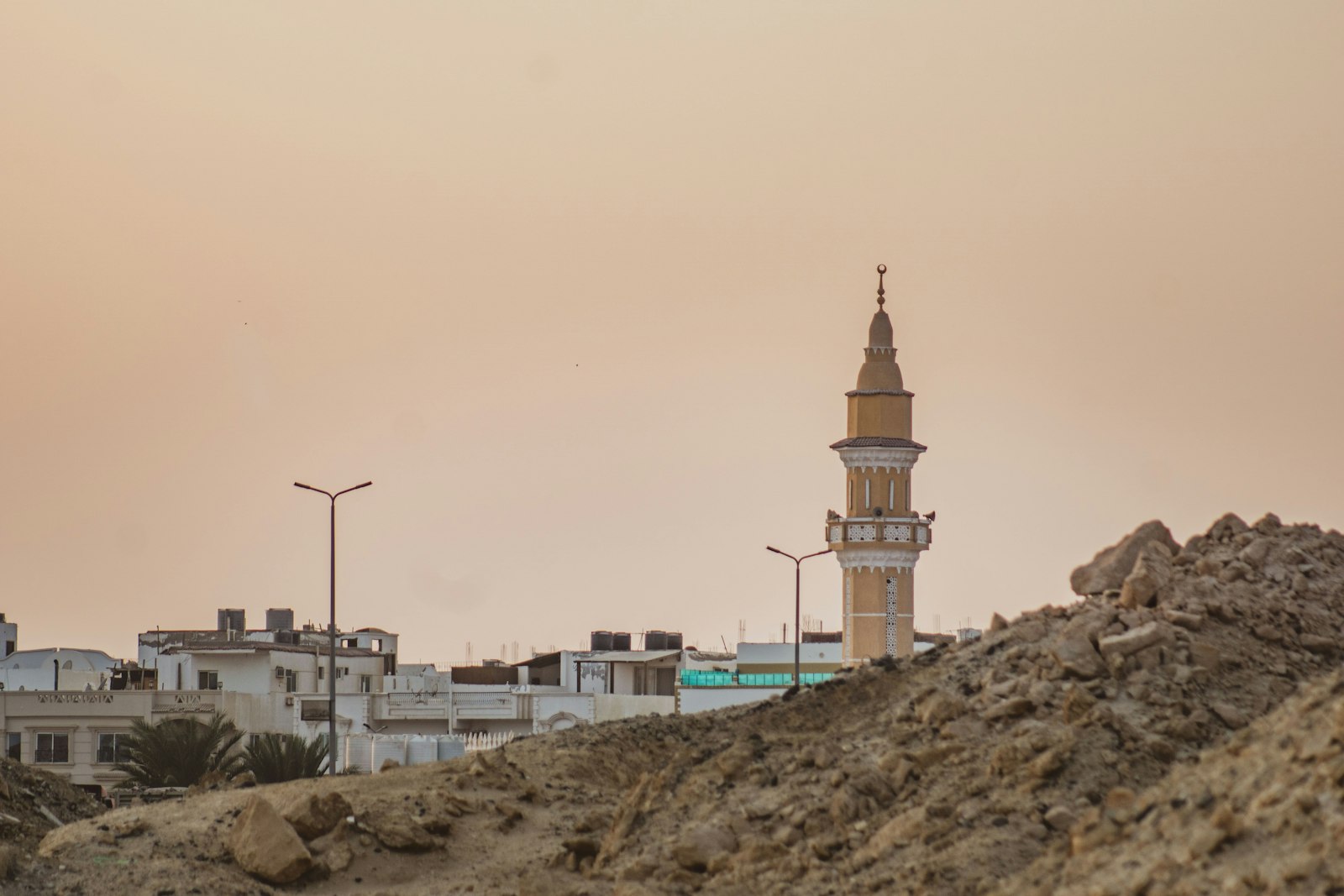
Wadi el-Natrun is a desert valley located halfway between Cairo and Alexandria, a place of extraordinary importance for the history of world Christianity. In this arid and solitary depression, dotted with salt lakes and deposits of natron, was born one of the most ancient and influential monastic traditions of history: Egyptian Christian monasticism. Of the over fifty monasteries that once populated this valley, four still survive today as active monastic communities, guarding artistic, library and spiritual treasures of immeasurable value.
For the traveller who wishes to know the deepest roots of Christianity and to discover a dimension of Egypt different from the pharaonic one, Wadi el-Natrun offers an experience of rare spiritual and cultural intensity. These monasteries are not museums of the past, but living communities that perpetuate an uninterrupted tradition of prayer, study and manual labour that dates back to the fourth century of the Christian era.
History of Wadi el-Natrun
The Origins of Monasticism
The monastic tradition of Wadi el-Natrun has its roots in the fourth century AD, when the first Christian anchorites withdrew into the Egyptian desert to live a life of prayer, penitence and contemplation. The desert, in the theology of the Fathers of the Church, was the place of spiritual struggle against temptations and of the search for closeness with God. Wadi el-Natrun, with its isolation and its austerity, represented the ideal place for this search.
The founder of Egyptian monasticism was Saint Anthony the Great (251-356 AD), who withdrew into the Eastern Desert, but it was his contemporary Saint Macarius the Great (300-391 AD) who founded the first monastic communities at Wadi el-Natrun. Macarius, born near Menuf in the Nile Delta, settled in the valley around 330 AD and rapidly attracted a great number of disciples. His rule of life, which combined eremitic solitude with moments of communal life, became the model for the monasteries of the valley.
The Golden Age
Between the fourth and seventh centuries, Wadi el-Natrun became one of the most important centres of Christian monasticism. Over fifty monasteries and hundreds of eremitic cells dotted the valley, hosting thousands of monks coming from all over Egypt, from Syria, from Ethiopia and even from Europe. The monasteries of Wadi el-Natrun became centres of culture, where manuscripts were copied, theology was studied and the art of the icon was practised.
Several popes (patriarchs) of the Coptic Orthodox Church came from the monasteries of Wadi el-Natrun, and the valley maintained its role as a centre of formation of the Coptic clergy for centuries. The influence of the monasticism of Wadi el-Natrun extended well beyond the confines of Egypt: Saint John Cassian, who visited the monasteries in the fifth century, brought to Europe the Egyptian monastic rules, which profoundly influenced Saint Benedict and Western monasticism.
The Trials and the Survival
The monasteries of Wadi el-Natrun suffered over the course of the centuries numerous invasions and sackings, on the part of the Bedouins, the Berbers and other nomadic groups. These aggressions explain the fortified aspect of the monasteries, with their high walls, the defence towers (qasr) and the drawbridges that allowed the monks to take refuge in the towers during the attacks. The Arab conquest of Egypt in 641 AD and the subsequent Islamisation led to a gradual numerical decline of the monastic communities, but not to their disappearance.
The Four Monasteries
Deir el-Baramus (Monastery of the Romans)
Deir el-Baramus is the most ancient of the four surviving monasteries, founded around 340 AD. The name "of the Romans" refers to the tradition according to which two young Roman monks, Maximus and Domitius, died there of extreme asceticism. The monastery preserves five churches, the most ancient of which, the Church of the Virgin Mary, presents frescoes of the sixth-seventh century of extraordinary artistic value. The medieval refectory, with its long stone table and the frescoes on the walls, is one of the most evocative environments of the entire complex.
Deir Anba Bishoi (Monastery of Saint Anba Bishoi)
Deir Anba Bishoi is the largest and most visited monastery of the valley, founded in the fourth century by Saint Anba Bishoi, disciple of Saint Macarius. The complex hosts the relics of the saint, venerated as intact by the Coptic tradition. The main church, dedicated to Saint Anba Bishoi, is a magnificent example of Coptic religious architecture with domes, apses and an iconostasis in inlaid wood.
The monastery has known a notable expansion in the twentieth century under the guidance of Pope Shenouda III, who resided there before and during his patriarchate. New buildings, a modern library and structures for the reception of pilgrims have been added to the historical complex, transforming Deir Anba Bishoi into the most active and dynamic centre of contemporary Coptic monasticism.
Deir el-Suryan (Monastery of the Syrians)
Deir el-Suryan owes its name to the community of Syrian monks that acquired it in the sixth century. The monastery is famous for its extraordinary collection of Syriac, Coptic and Arabic manuscripts, many of which of inestimable value. Its main church, dedicated to the Virgin Mary, preserves frescoes of the tenth century among the most important of Coptic art, recently restored by an international mission.
The door in sycamore wood that separates the nave from the sanctuary dates back to the tenth century and is decorated with inlays of ivory and ebony that represent biblical scenes and religious symbols. This door is considered one of the masterpieces of Coptic applied art.
Deir Anba Maqar (Monastery of Saint Macarius)
Deir Anba Maqar, the monastery founded by Saint Macarius the Great himself, is the most ancient of the four communities still active. Although for centuries it was the least frequented by visitors, it has known an important renewal starting from the nineteen-sixties, under the guidance of Father Matta el-Meskin, one of the most influential figures of modern Coptic monasticism.
The monastery guards the relics of Saint Macarius and of other Coptic saints, as well as a library with ancient manuscripts and a collection of icons. The complex includes also a self-sufficient agricultural area, where the monks cultivate fruit and vegetables and raise animals, following the monastic rule of manual labour.
The Natron and the Valley
The Salt Deposits
The name Wadi el-Natrun means "Valley of the Natron", from the mineral sodium carbonate that deposits naturally in the salt lakes of the depression. In ancient Egypt, natron was an essential material for the process of mummification, used to dehydrate the bodies of the deceased. The valley was therefore a strategic resource for the Egyptian priests, and the exploitation of the deposits of natron dates back to the Old Kingdom.
The salt lakes of the valley, which assume spectacular colours from white to pink according to the season and the mineral concentration, create a surreal landscape that contrasts with the severity of the monastic walls.
Practical Tips for the Visit
How to Get There
Wadi el-Natrun is located along the desert highway that connects Cairo to Alexandria, about 110 kilometres from Cairo. The most convenient way to reach the monasteries is by car, with a journey of about an hour and a half from Cairo. Several tour operators organise day excursions from the great centres.
Rules of Conduct
The monasteries are active places of worship, so modest clothing that covers arms and legs is required. Women must cover their head. Photography is generally permitted in the external spaces, but it is necessary to ask permission to photograph inside the churches and the areas of prayer. Please maintain a respectful and silent behaviour.
Organising the Visit
Not all the monasteries are open to visitors on all the days of the week, and the hours can vary during the Coptic festivities and the periods of fasting. It is advisable to check in advance the opening hours by contacting the monasteries or through the Coptic Patriarchate of Cairo. A complete visit of the four monasteries requires an entire day.
Wadi el-Natrun is a place where time seems to have stopped, where the walls of the monasteries guard seventeen centuries of uninterrupted faith and where the silence of the desert invites to reflection and contemplation. To visit these monasteries is a pilgrimage to the very roots of Christian monasticism, an experience that enriches the spirit and illuminates the comprehension of one of the most ancient and venerable religious traditions of the world.