Rosetta: the City of the Stone and of the Historic Houses
Rosetta, known in Arabic as Rashid, is one of the most fascinating and least visited cities of Egypt, a hidden jewel at the western mouth of the Nile Delta. Famous throughout the world for the discovery of the Rosetta Stone, the key that allowed the deciphering of the Egyptian hieroglyphs, this tranquil fishing city guards the most extraordinary heritage of Ottoman domestic architecture of all Egypt. Its historic houses, with the characteristic facades in red brick and polychrome tiles, represent a unique architectural treasure that transports the visitor into the atmosphere of the 17th and 18th centuries.
Located at the point where the western branch of the Nile throws itself into the Mediterranean Sea, Rosetta occupies a strategic position that has determined its fortune in past centuries and its current charm. Here the most celebrated river of Africa meets the sea, creating a fluvial and coastal landscape of great beauty, animated by fishing boats, fish markets and palm gardens.
The Rosetta Stone
The Discovery that Changed History
On 15 July 1799, during the Egyptian campaign of Napoleon Bonaparte, a French soldier named Pierre-François Bouchard discovered a large stele of black granodiorite in the foundations of Fort Rashid (known to the French as Fort Julien), a fortification that the soldiers were renovating near the city. The stone, which weighed about 760 kilograms, bore the same text inscribed in three different scripts: Egyptian hieroglyphs, demotic and ancient Greek.
This apparently fortuitous discovery proved to be one of the most important in the history of humanity. The Greek text, being readable, provided the key to decipher the other two scripts. After the surrender of the French army to the English in 1801, the stele was transferred to London, where it is found still today at the British Museum. It was the French scholar Jean-François Champollion who, in 1822, using the Rosetta Stone as a starting point, finally succeeded in deciphering the Egyptian hieroglyphs, opening a window onto three thousand years of pharaonic civilisation.
The Content of the Stele
The stele dates to 196 BC and contains a decree issued by an assembly of priests gathered at Memphis in honour of the pharaoh Ptolemy V Epiphanes. The decree, written in hieroglyph (the sacred script), in demotic (the popular script) and in Greek (the language of the Ptolemaic administration), lists the benefits granted by the pharaoh to the temples and to the population, and establishes that a copy of the decree should be exposed in every temple of Egypt. The Rosetta Stone is therefore one of these copies, miraculously survived through the millennia.
Fort Rashid
The fort where the stele was discovered, known as Fort Rashid or Fort Julien, is still visible at the mouth of the Rosetta branch of the Nile. Built by the Mamluks in the 15th century and reinforced by the French during the Napoleonic campaign, the fort rises on a dominant position that controls access to the Nile from the sea. A commemorative plaque recalls the place of the discovery, and the Egyptian authorities have expressed several times the desire to have the original stele back, currently conserved at the British Museum.
The Historic Ottoman Houses
A Unique Heritage
The true treasure of Rosetta are its historic Ottoman houses, the most beautiful and best preserved of all Egypt. During the 17th and 18th centuries, when Alexandria was in decline, Rosetta was the principal commercial port of the Delta, a prosperous centre of exchanges between Egypt, the Ottoman Empire and Europe. The rich merchants of the city built elegant residences that reflected their prosperity and their refined taste.
The houses of Rosetta are distinguished by their facades in red and black brick arranged in geometric motifs, enriched by inserts of polychrome tiles of Turkish and Dutch origin. The upper floors project over the street, supported by carved wooden brackets, creating a play of light and shadow that animates the narrow ways of the historic centre. The mashrabiyya (grilles in turned wood) in the upper floors allowed the women to observe the street without being seen, according to the Islamic tradition of the epoch.
The Most Important Houses
Of the twenty-two historic houses censused and protected, several have been restored and opened to the public as museums. The House of el-Amasyali, dating to the 18th century, is one of the most impressive, with three floors of splendidly decorated halls, ceilings in painted wood and floors in marble. The House Killy and the House Arab Killy are other notable examples of this domestic architecture, with internal courtyards, fountains and reception halls that testify to the standard of living of the Ottoman merchants.
The House of the Museum of Rosetta (Bayt el-Kilani) hosts a collection of finds that documents the history of the city and the discovery of the Rosetta Stone, with a replica of the stone and explanatory panels that illustrate the process of deciphering the hieroglyphs.
The Religious Architecture
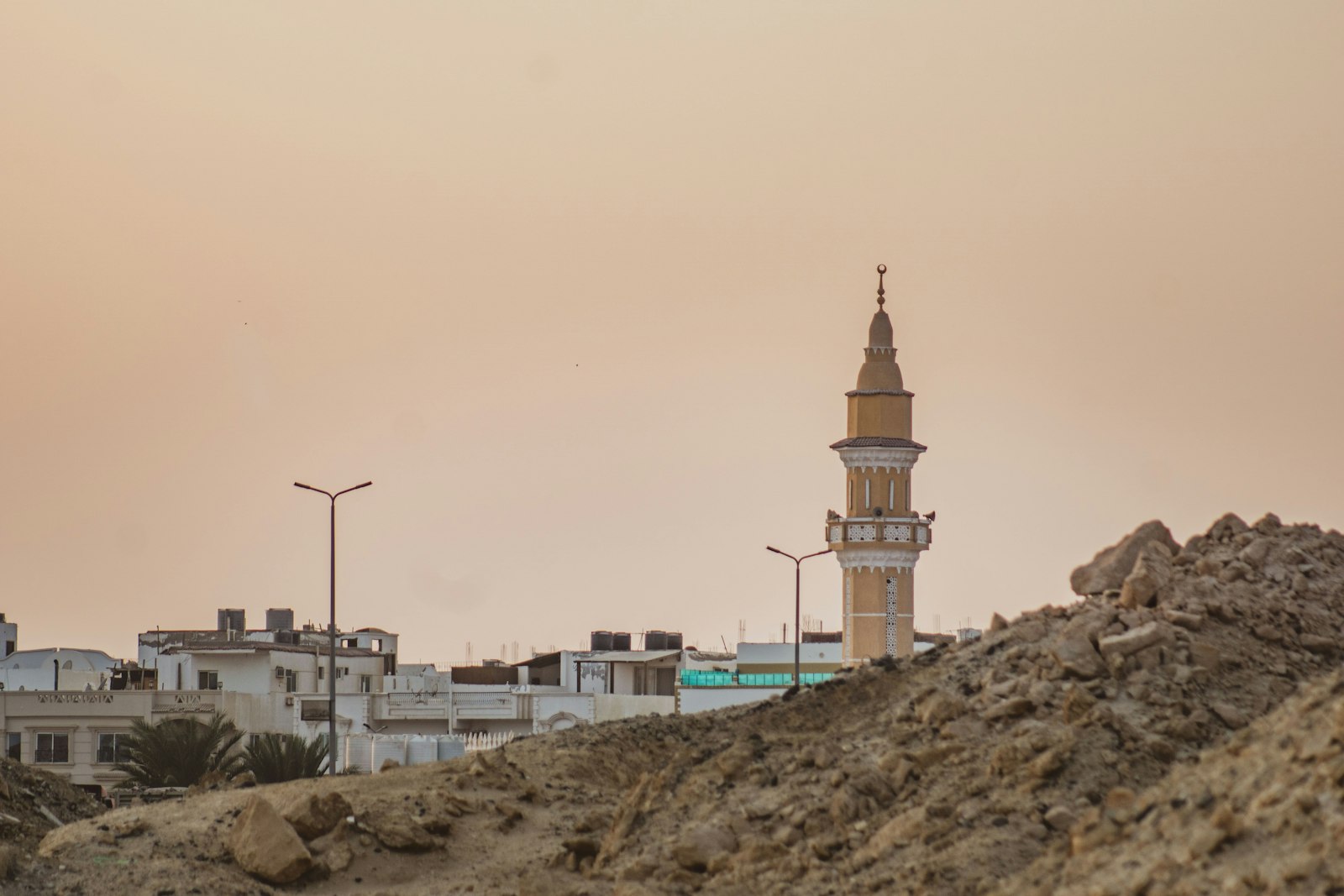
Rosetta also preserves numerous historic mosques of notable architectural interest. The mosque of Abu Mandur, located on a hill on the periphery of the city, offers a panoramic view of the Nile and of the surrounding countryside. The mosque of Zaghloul, in the historic centre, is a fine example of Ottoman religious architecture with slender minarets and stucco decorations.
The City Today
The Port and the Fishing
Rosetta is today a tranquil city of about 75,000 inhabitants, whose economy is based principally on fishing and agriculture. The fluvial port is still active, and the colourful boats of the fishermen animate the banks of the Nile with a picturesque atmosphere. The morning fish market is a lively and authentic experience, where the fresh catch is sold directly from the boats.
The fish of Rosetta is renowned throughout Egypt, in particular the Nile tilapia, the mullet and the prawns. Several restaurants along the banks of the Nile serve very fresh grilled fish, accompanied by the traditional Egyptian bread and by salads of local vegetables.
The Mouth of the Nile
The mouth of the Rosetta branch of the Nile, where the great river throws itself into the Mediterranean Sea, is a place of great naturalistic charm. The wetlands at the mouth host numerous species of aquatic birds and represent an important stopping point for migratory birds. A walk along the banks up to the mouth is a pleasant and relaxing experience, with panoramic views of the Nile and of the sea.
Practical Tips for the Visit
How to Get There
Rosetta is located about 65 kilometres east of Alexandria and about 250 kilometres from Cairo. The most comfortable way to reach the city is from Alexandria, with a journey by car or by microbus of about one hour. The microbuses depart regularly from the station of Moharem Bey in Alexandria. From Cairo, the journey by car lasts about three hours through the roads of the Delta.
What to See
An ideal visiting itinerary includes the historic centre with the Ottoman houses, the historic mosques, the riverfront and, if time permits, a trip up to the mouth of the Nile and to Fort Rashid. It is advisable to dedicate at least half a day to the visit, combining it eventually with Alexandria for a complete excursion.
Where to Eat
The restaurants along the Nile are the best choice to taste the fresh fish of Rosetta. The prices are generally very reasonable, and the atmosphere is that of an authentic Egyptian small town, not yet touched by mass tourism. Do not miss the occasion to try the fesikh (salted and dried mullet), a very popular local specialty, although its intense flavour is not appreciated by everyone.
When to Visit
The best period goes from October to April, when the climate is mild and pleasant. In summer, the proximity to the sea mitigates the heat, but the temperatures can nevertheless be elevated during the central hours. The Islamic holidays and Friday see the museums and some historic houses closed, so it is advisable to verify the hours before the visit.
Rosetta is a city that tells many stories: the story of a discovery that changed the world, the story of an epoch of commercial prosperity and architectural refinement, and the daily story of a community of fishermen that lives between the Nile and the sea. To visit Rosetta means to discover an intimate and authentic Egypt, where time flows with the slowness of the river and every corner hides a fragment of forgotten beauty.