Al-Qasr: the Medieval Village in the Heart of the Desert
Al-Qasr is one of the most extraordinary and least known sites of the entire Egypt, a perfectly preserved Islamic medieval village that rises on the foundations of far more ancient settlements in the heart of the Dakhla Oasis. Its name, which in Arabic means simply "the palace" or "the fortress", evokes the grandeur of a place that for centuries was the most important administrative and cultural centre of the oasis, a crossroads of civilisations where archaeological strata sediment that range from the pharaonic to the Ottoman era.
Located in the northern part of the Dakhla Oasis, Al-Qasr faces a landscape of breathtaking contrasts: on one side the lush palm groves of the oasis, on the other the pink limestone cliffs of the desert that stand out against a sky of a dazzling blue. This village, with its architecture in sun-dried mud bricks, its covered passages and its shaded alleys, offers the visitor a unique and unforgettable experience of journey through time.
A Palimpsest of Civilisations
Roman and Pharaonic Foundations
Archaeological excavations conducted in the area have revealed that the site of Al-Qasr was occupied since the pharaonic era. Fragments of ceramic, remains of stone structures and hieroglyphic inscriptions testify to the presence of a significant settlement already during the Old Kingdom. The Romans, who recognised the strategic importance of the position, built there a fort and infrastructures that served as a base for the subsequent medieval development.
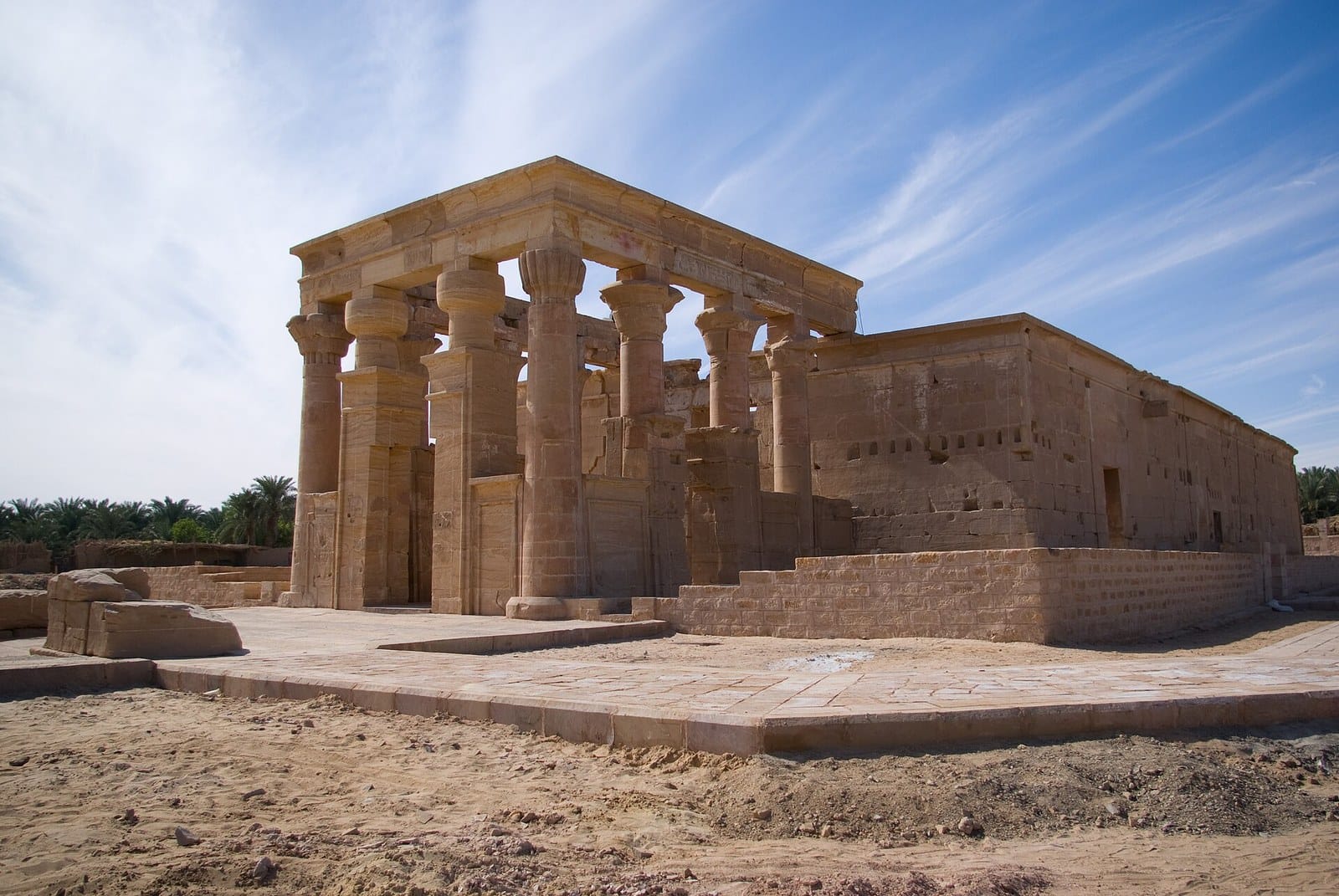
The foundations of some of the most ancient houses of the village rest directly on Roman structures, and in various points of the settlement are visible stone blocks and architectural fragments that date back to the classical era. A small Roman temple, partially incorporated in the later constructions, testifies to the sacred continuity of the place through the millennia.
The Islamic Development
With the arrival of Islam in the 7th century, Al-Qasr knew a new phase of development that shaped its current aspect. The village grew progressively, with new houses built on the ruins of the previous ones, creating that characteristic stratified aspect that today fascinates archaeologists and visitors. The Ayyubid period (12th-13th century) marked the apogee of the village, when Al-Qasr became an important centre of Islamic study and a commercial node along the trans-Saharan caravan routes.
The Ayyubid Minaret
The Most Ancient Monument of the Oases
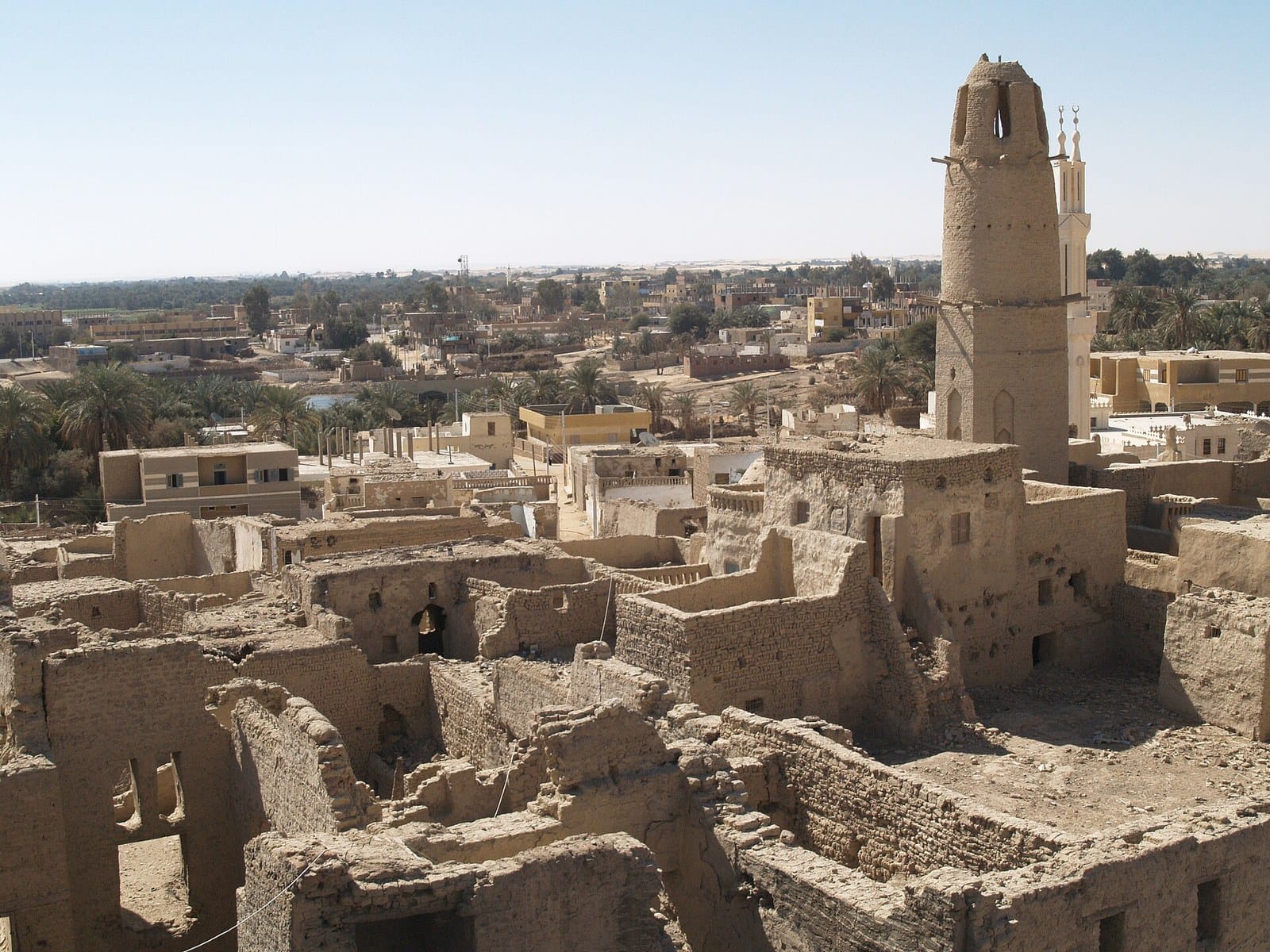
The minaret of the main mosque of Al-Qasr is considered the most ancient of the entire region of the oases of the Western Desert and represents the most recognisable architectural symbol of the village. Built during the Ayyubid period, probably in the 12th or 13th century, this mud-brick minaret rises with elegance above the roofs of the village, visible from great distance in the flat landscape of the oasis.
The structure presents a square form at the base that becomes cylindrical in the upper part, following an architectural model typical of the medieval Islamic architecture of Upper Egypt. The external surface, worked with simple but effective geometric motifs, testifies to the mastery of the local artisans in working the most humble and available material: the mud of the desert. Despite the apparent fragility of the material, the minaret has resisted for centuries to the wind, to the sand and to the thermal excursions of the desert thanks to construction techniques refined over the course of generations.
The Traditional Dwellings
Mudbrick Architecture
The houses of Al-Qasr represent an exceptional example of traditional mudbrick architecture (sun-dried mud bricks), a very ancient construction technique perfectly adapted to the extreme conditions of the desert. The dwellings, which develop over two or three floors, are built with bricks mixed with chopped straw and sand, a material that offers an excellent thermal insulation, keeping the environments fresh during the day and warm during the cold nights of the desert.
The facades of the houses are characterised by entrance doors surmounted by richly carved wooden lintels, one of the most precious and distinctive elements of Al-Qasr. These lintels, made in palm or acacia wood, bear Koranic inscriptions engraved with refined calligraphy, geometric and floral motifs, and sometimes the date of construction of the house and the name of the owner. Each lintel is a unique piece, expression of the identity of the family that inhabited the house, and many date back to the Mamluk and Ottoman period.
The Covered Passages
One of the most fascinating characteristics of Al-Qasr is the system of covered passages that crosses the entire village. These vaulted galleries, built above the narrow alleys, performed multiple functions: they protected the passers-by from the implacable sun, created natural air currents that freshened the environment and provided supplementary spaces for the overlying dwellings. To walk these shaded alleys is a unique sensorial experience, where the light filters through irregular openings creating evocative plays of chiaroscuro.
The labyrinthine layout of the streets is not casual but responds to a precise logic: the narrow and tortuous alleys reduce the exposure to the wind laden with sand and create zones of shade that lower the perceived temperature even in the hottest days. This organic urbanism, developed over the course of the centuries, represents a sophisticated architectural response to the climatic challenges of the desert.
The Mamluk Pepper Mill
A Monument of Traditional Industry
Among the most interesting buildings of Al-Qasr stands out the ancient pepper mill, dating back to the Mamluk period (14th-15th century). This structure, known locally as "tahuna", testifies to the commercial importance of the village along the routes of the spices that from Sudan and from sub-Saharan Africa reached the Mediterranean through the oases of the Western Desert.
The mill, operated by animal force, was used to grind pepper and other spices coming from the caravans that transited through the oasis along the ancient Darb el-Arba'in (the Road of the Forty Days). The structure still preserves the original mechanism in stone and wood, offering a tangible testimony of the economic activities that animated the village in the past centuries.
The Madrasa of Nasr el-Din
Centre of Islamic Culture
The madrasa (Koranic school) of Nasr el-Din is another building of great historical and architectural interest within the village. This educational institution, founded during the Mamluk period, was for centuries a centre of study and transmission of Islamic knowledge in the heart of the desert. Students coming from the surrounding oases and from the Nile Valley converged there to learn the Koran, Islamic jurisprudence and religious sciences.
The building presents a plan organised around a small internal courtyard, with study rooms, lodgings for the students and a prayer hall. The walls preserve traces of stucco decorations and inscriptions that testify to the cultural refinement reached by the community of Al-Qasr. The madrasa was active until the modern era, performing a fundamental role in the conservation and transmission of Islamic culture in the oases.
The Labyrinthine Streets
A Route Through the Epochs
To explore Al-Qasr means to lose oneself voluntarily in a labyrinth of alleys where every corner reveals a surprise: a carved portal, a prayer niche, a fragment of ancient inscription, a sudden opening that frames the desert. The narrowest alleys barely permit the passage of one person, while the principal ones, slightly wider, were travelled by the loads of the camels that brought goods to the market of the village.
The streets of the village follow a route that reflects the social hierarchy of the community: the most important families lived near the mosque and the madrasa, while the most modest dwellings were located at the periphery of the settlement. In various points of the village are visible the "sabat", arcades that connect buildings on opposite sides of the street, creating elevated passages that served both as private connections and as structural reinforcements for the adjacent constructions.
Restoration and Conservation
Challenges and Successes
Al-Qasr has been the object of important interventions of restoration and conservation starting from the 90s of the last century, thanks to the collaboration between Egyptian authorities and international organisations. The principal enemy of the mudbrick structures is water: the rare but intense rains, together with the rising of the water tables caused by modern irrigation, threaten the stability of the buildings. The restoration programmes have employed traditional techniques of mud construction, training at the same time local artisans who can guarantee the continuous maintenance of the site.
The project of valorisation of the village has also included the creation of signposted visit routes, informative panels and the training of local guides who accompany the visitors illustrating the history and the traditions of the village. Some buildings have been consolidated and partially reconstructed using materials and techniques identical to the original ones.
Tips for the Visit
How to Get There
Al-Qasr is located about 32 kilometres from the capital Mut and is reachable by car along an asphalted road in good conditions. It is possible to visit the village as a stop within the framework of a tour of the Dakhla Oasis. Local guides are available at the entrance of the village and offer guided visits of great interest.
Opening Hours and Tickets
The site is open from 08:00 to 17:00 every day. The entrance ticket has a modest cost and includes access to all the visitable buildings of the village. It is recommended to visit with a local guide to appreciate fully the historical and architectural richness of the settlement.
What to Bring
Closed and comfortable shoes are essential to travel the irregular and sometimes sloping alleys of the village. A torch is useful to explore the darker internal environments. Bring sufficient water and sun protection. A camera is a must: the plays of light in the covered alleys and the architectural details offer exceptional photographic cues.
Photographic Suggestions
The best hours to photograph Al-Qasr are early morning and late afternoon, when the grazing light exalts the volumes and the textures of the mud architecture. The covered passages offer particularly evocative chiaroscuro effects in the central hours of the day. Bring a wide-angle lens to capture the narrow alleys and a telephoto lens for the details of the carved lintels.
Respect and Sensitivity
Some families still reside in the old village and in the immediately adjacent areas. It is recommended to respect the privacy of the inhabitants, asking permission before photographing the people and maintaining a respectful and discreet behaviour. Modest clothing is appreciated and recommended.
A Fragile Jewel
Al-Qasr is a living monument to the capacity of man to create beauty and civilisation even in the most extreme conditions. This village, where the hands of generations of artisans have shaped the mud of the desert transforming it into a masterpiece of organic urbanism, deserves to be known and visited with the awareness of finding oneself before a fragile and precious heritage that tells centuries of history, culture and human adaptation in the heart of the Sahara.