Dakhla Oasis: A Journey into the Heart of the Western Desert
Dakhla Oasis is one of the most fascinating and least known gems of Egypt, a place where millennia-old history intertwines with desert landscapes of extraordinary beauty. Located in the heart of the Western Desert, about 310 kilometres west of Luxor and 190 kilometres west of Kharga Oasis, Dakhla extends for about 80 kilometres in length and 25 in width, hosting no fewer than 14 ancient settlements that testify to uninterrupted human presence since prehistory.
The name "Dakhla" means "the inner one" in Arabic, indicating its deep position in the desert. This natural depression, situated about 120 metres below sea level, is fed by fossil aquifers dating back thousands of years, creating a lush oasis where date palm groves, orchards and cultivated fields contrast spectacularly with the surrounding golden sands.
History and Ancient Settlements
From Prehistoric Origins to the Pharaonic Era
Human occupation of Dakhla Oasis dates back to extremely remote times. Archaeological finds attest to the presence of Neolithic communities that inhabited the region when the Sahara was still a green and fertile savannah, over 7,000 years ago. With progressive desertification, the oases became vital refuges and resting points along the caravan routes that connected the Nile Valley with the heart of Africa.
During the pharaonic period, Dakhla was known as "Kenmet", the fertile "black land", and held strategic importance as a commercial and military outpost. The pharaohs of the VI dynasty established garrisons and administrators there, and the oasis became a crucial node in the network of exchanges between Egypt and the sub-Saharan regions. The 14 ancient settlements scattered across the oasis testify to the vitality and complexity of this desert community over the millennia.
The Roman and Late Antique Period
Under Roman rule, Dakhla experienced a period of great prosperity. The Romans enhanced the irrigation system, built temples, fortresses and roads, transforming the oasis into an important agricultural and commercial centre. The production of grain, wine and olive oil fed the trade routes towards the Nile Valley. It was during this period that some of the most significant monuments of the oasis were built, including the temple of Deir el-Hagar.
Al-Qasr: The Medieval Village
A Labyrinth of Mud and History
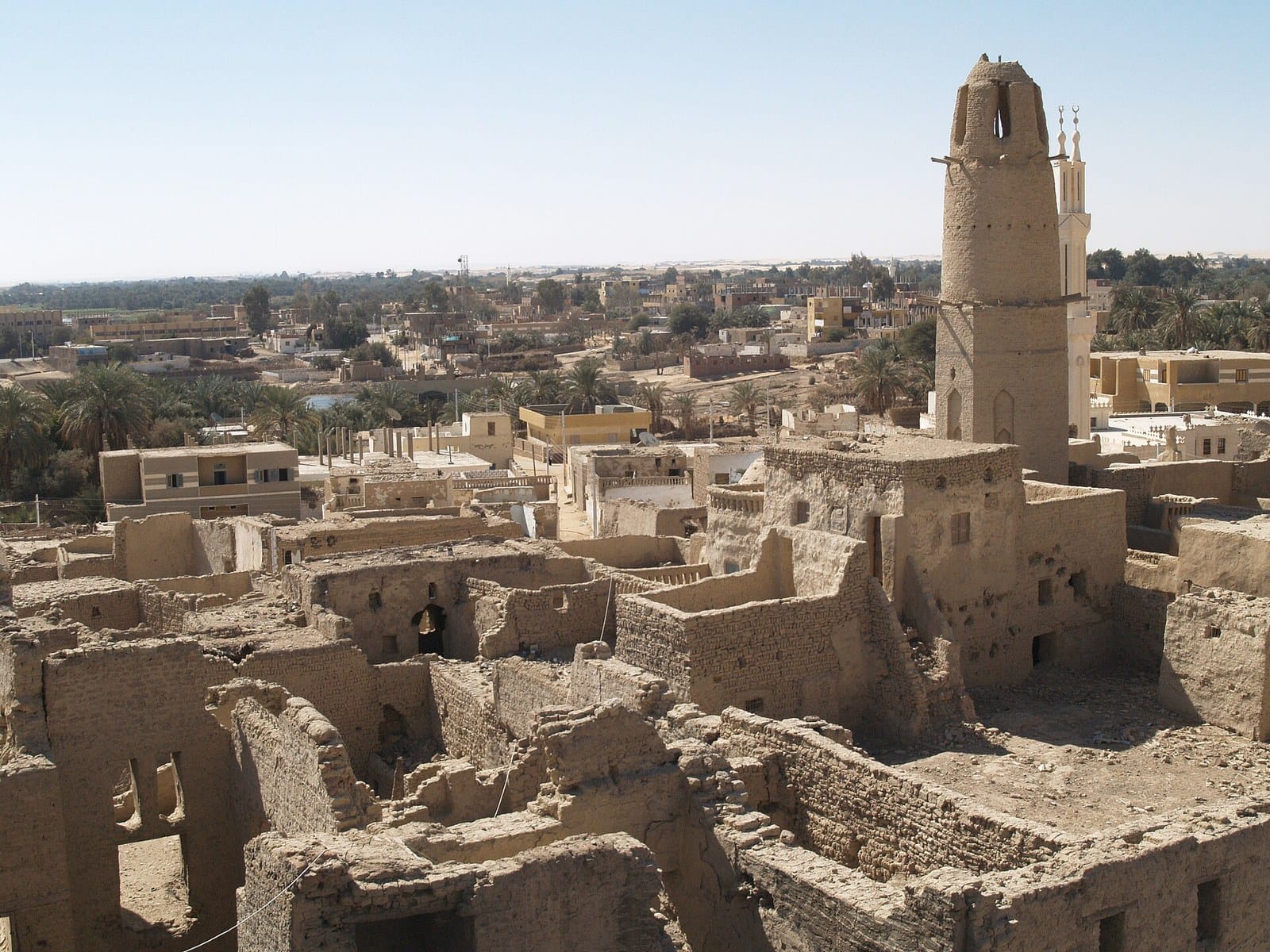
The village of Al-Qasr is without doubt the architectural jewel of Dakhla Oasis. This medieval settlement, built on foundations dating back to the Roman era and perhaps even to the pharaonic period, represents one of the best-preserved examples of traditional Islamic architecture in the entire Western Desert. Its narrow, winding streets, covered by vaulted passages of mudbrick, create a fascinating labyrinth where time seems to have stopped.
The traditional mudbrick houses feature facades decorated with carved wooden lintels bearing Quranic verses and geometric motifs. Many of these inscriptions date back to the Ayyubid and Mamluk periods, testifying to the continuity of the settlement through the centuries. The minaret of the main mosque, dating from the Ayyubid period, is considered one of the oldest in the entire oasis region.
The Ethnographic Museum
Al-Qasr also hosts a small but fascinating ethnographic museum that illustrates the daily life of the oasis inhabitants through the centuries. Domestic utensils, traditional fabrics, agricultural tools and ritual objects tell of a culture that was able to adapt to the extreme conditions of the desert while keeping alive a rich artisan tradition.
The Temple of Deir el-Hagar
A Roman Sanctuary in the Desert
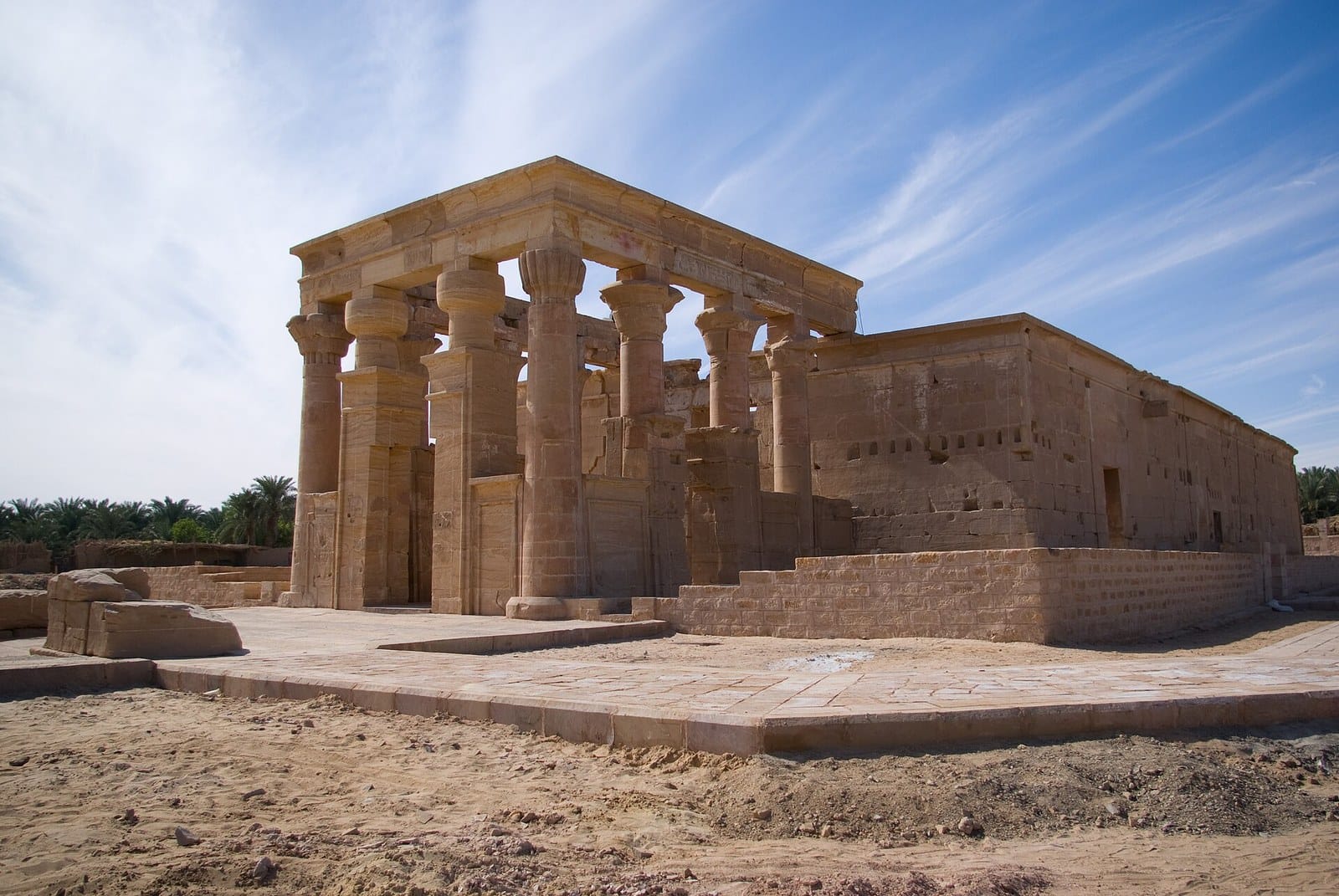
About 4 kilometres from the village of Al-Qasr stands the temple of Deir el-Hagar, one of the most impressive monuments of the oasis. This sandstone sanctuary, dedicated to the Theban triad composed of Amun, Mut and Khonsu, was built during the Roman period, between the reigns of the emperors Nero and Domitian (1st century AD), and subsequently enlarged under Trajan and Hadrian.
The temple, although of modest dimensions compared to the great complexes of the Nile Valley, strikes for the quality of its reliefs and for its evocative position in the desert. The interior walls preserve refined ritual scenes that show the Roman emperors in the guise of pharaohs, in the act of making offerings to the Egyptian deities. The fusion of Roman and pharaonic stylistic elements makes this temple a unique document of the cultural hybridisation that characterised Roman Egypt.
The site has been the subject of important restoration campaigns that have made it possible to consolidate the structure and protect the reliefs from the erosive action of wind and sand. The visit at sunset, when the golden light illuminates the sandstone, is a particularly evocative experience.
The Tombs of Muzawaka
Masterpieces of Funerary Painting
The tombs of Muzawaka constitute one of the most extraordinary archaeological sites of Dakhla Oasis and of all Roman Egypt. Excavated in the rock of a hill that dominates the oasis, these burials date back to the Roman period (1st-2nd century AD) and owe their name to the Arabic word "muzawwaq", which means "decorated", a reference to the splendid paintings that adorn their walls.
The Tomb of Petosiris
Among the numerous burials, the tomb of Petosiris is the most celebrated and best preserved. This high-ranking local official was buried in a chamber decorated with scenes that combine in an extraordinary way Egyptian iconography and Greco-Roman influences. The walls show the deceased in the afterlife, surrounded by traditional Egyptian deities depicted with a style that betrays the influence of Hellenistic art.
The Tomb of Petubastis
The tomb of Petubastis is equally spectacular and preserves one of the rarest and most precious elements of the entire oasis: a ceiling decorated with an elaborate polychrome zodiac. This astronomical representation, which combines the Greco-Roman constellations with Egyptian symbols, demonstrates the deep cultural interpenetration that characterised the oasis communities in the Roman era. The zodiacal figures are painted with vivid colours that have resisted surprisingly well the passing of the millennia.
The Thermal Springs
Wellness in the Desert
Dakhla Oasis is renowned for its numerous natural thermal springs, fed by deep aquifers that heat the water to temperatures between 35°C and 43°C. These springs, known and used since antiquity, offer modern visitors a unique relaxation experience in the spectacular context of the desert.
The most famous spring is that of Mut Talata, located near the capital Mut, easily accessible and equipped with pools in which one can immerse oneself. Other springs, such as that of Bir el-Gebel, are more isolated and require a short off-road transfer, but reward visitors with an atmosphere of absolute solitude and tranquillity. The water, rich in minerals, is considered beneficial for the skin and for the musculoskeletal system.
The Museum of Mut
Testimonies of Civilisation
The capital of the oasis, the small town of Mut, hosts an archaeological museum that gathers finds coming from the excavations conducted in the various sites of the oasis. The collection includes ceramics, statuettes, coins, Coptic fabrics and objects of daily life that cover a chronological span from the pharaonic to the Islamic era. The museum offers an excellent introduction to the history and culture of the oasis and represents a recommended stop before visiting the archaeological sites.
Tips for the Visit
How to Get There
Dakhla Oasis is reachable by car from Luxor via the Western Desert road (about 6-7 hours of travel) or from Kharga Oasis (about 2-3 hours). There are also internal flights from Cairo airport to that of Dakhla, although the frequencies are limited. The most practical way to visit the oasis is with a private car or an organised tour, given that the sites are scattered over a vast area.
Best Period
The ideal period to visit Dakhla runs from October to April, when temperatures are pleasant and the dry climate makes excursions comfortable. In the summer months temperatures can exceed 45°C, making the visit extremely tiring and potentially dangerous. Winter nights can be cold, with temperatures dropping even below 5°C, so it is advisable to bring layered clothing.
Where to Sleep
The oasis offers several accommodation options, from traditional mudbrick guesthouses to charming ecolodges. The Desert Lodge, situated on a panoramic hill, is one of the most appreciated structures and offers spectacular views over the oasis and the surrounding desert. Campsites and bivouacs in the desert are also available for those who desire a more adventurous experience.
What to Bring
For the visit of the oasis it is essential to bring abundant drinking water, high-factor sun protection, a wide-brimmed hat and sunglasses. Closed and comfortable shoes are indispensable for visiting the archaeological sites and walking on the sand. A torch is useful for exploring the tombs of Muzawaka. It is also advisable to bring cash, since ATMs and electronic payments are little widespread.
Photographic Suggestions
Dakhla Oasis offers exceptional photographic opportunities. The desert light, especially in the hours of dawn and sunset, creates magical atmospheres. The village of Al-Qasr, with its mud architecture and the plays of light and shadow in the covered streets, is particularly photogenic. The dunes that surround the oasis offer spectacular scenery, especially at twilight when the sky takes on intense colours. At night, far from any light pollution, the starry sky above Dakhla is an unforgettable spectacle that deserves to be photographed with a long exposure.
An Authentic Experience
Visiting Dakhla Oasis means immersing oneself in an Egypt far from conventional tourist circuits, where nature and history merge in a landscape of rare beauty. The warm welcome of the inhabitants, the peace of the desert and the richness of the archaeological sites make this destination an unrepeatable experience for those seeking an authentic and out-of-the-ordinary journey into the heart of northern Africa.