Medinet Habu: The Best Preserved Temple of the West Bank
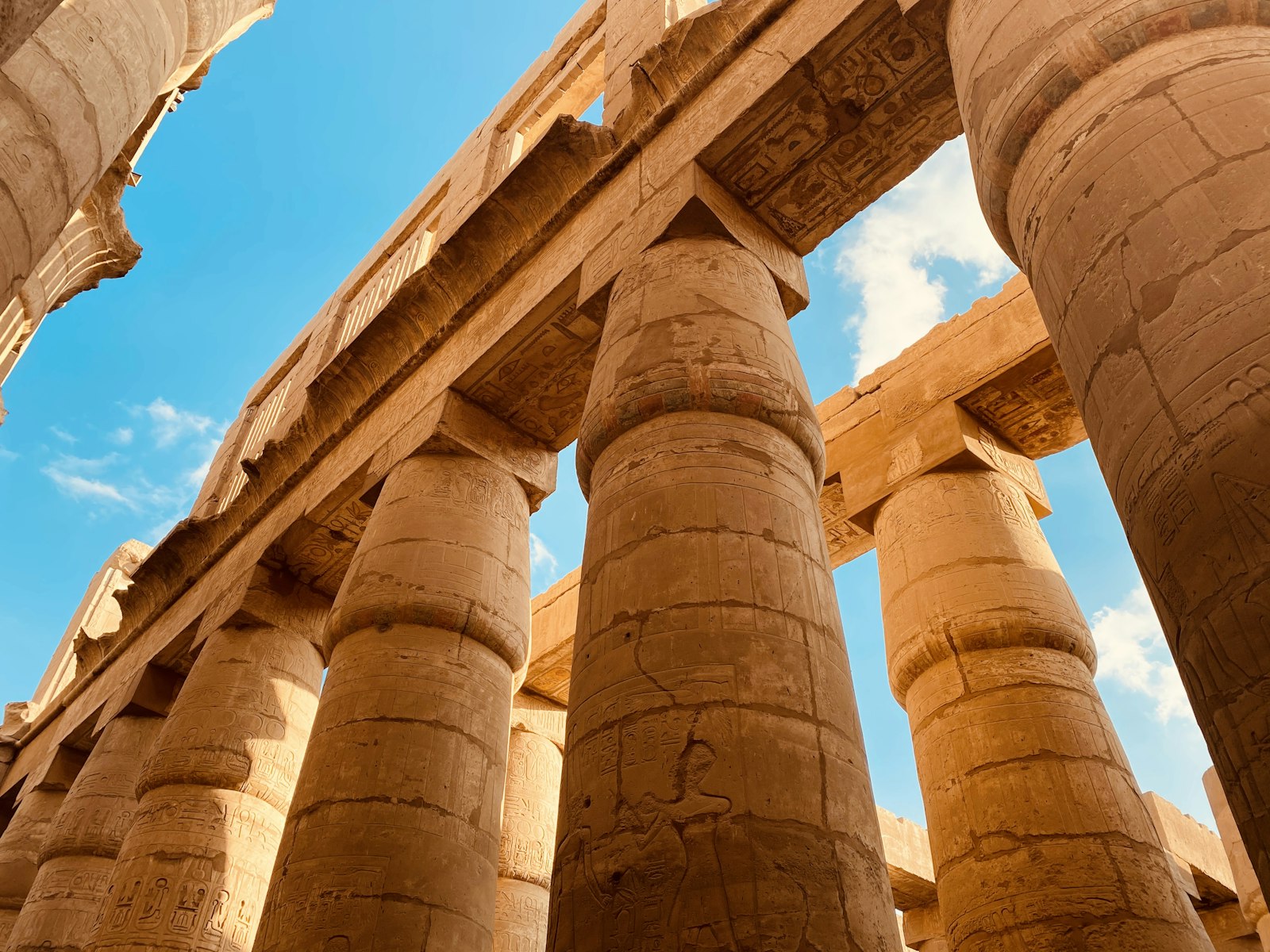
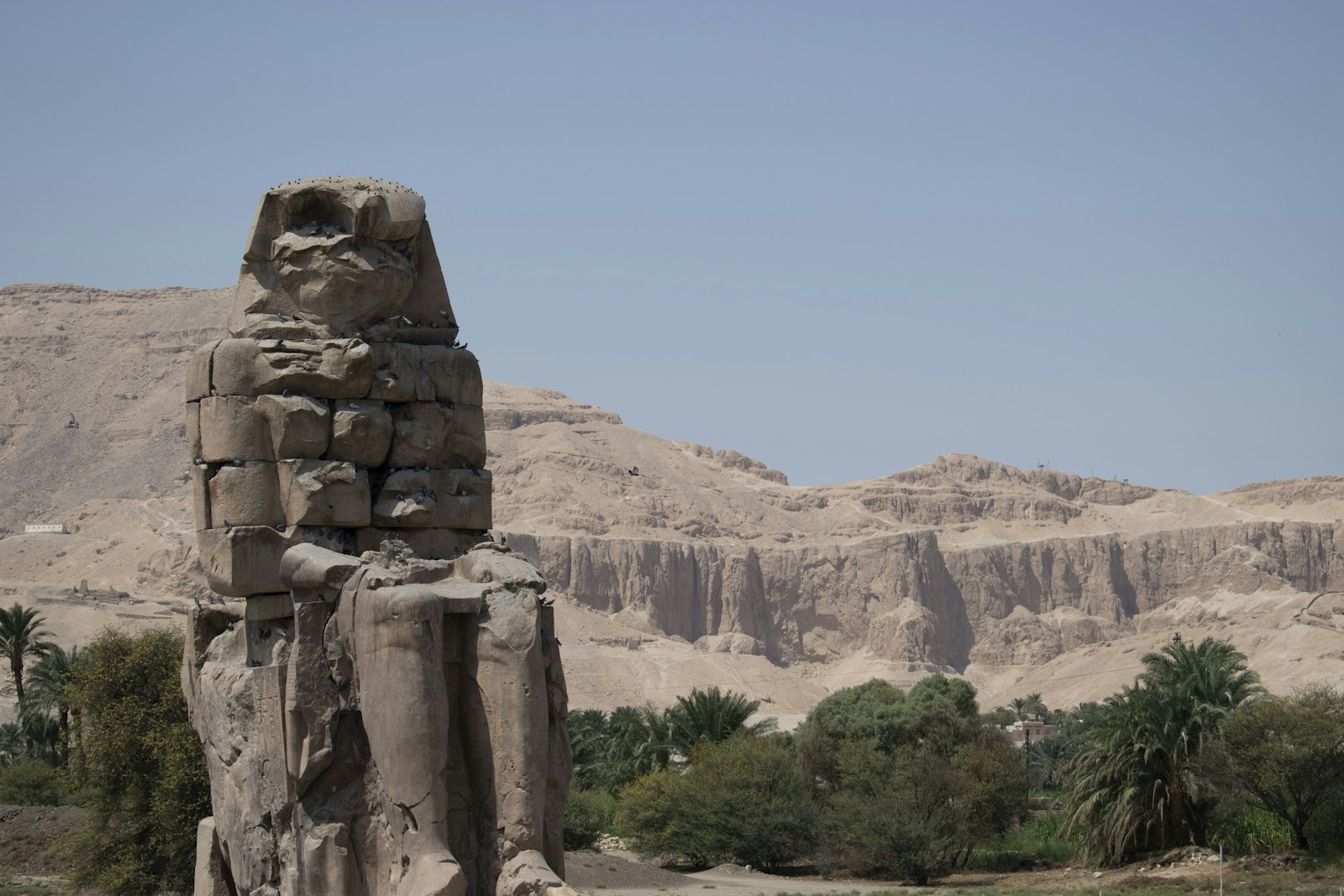
Medinet Habu is one of the hidden jewels of the west bank of Luxor, often overlooked by tourists who concentrate on the Valley of the Kings and the Temple of Hatshepsut. Yet this monumental complex, dominated by the grandiose funerary temple of Ramesses III, is the best preserved among all the funerary temples of the Theban necropolis and offers an extraordinary visiting experience. Its mighty walls, the richly sculpted reliefs that still preserve vivid traces of the original colours, and the intimate and uncrowded atmosphere make it one of the most fascinating places of the entire Egypt.
The name Medinet Habu, of Arabic origin, means "city of Habu" and refers to the Coptic Christian village that developed within the enclosure of the temple in the late-antique and medieval era. The archaeological complex includes several buildings, among which the funerary temple of Ramesses III, a smaller temple of the 18th dynasty dedicated to Amun, votive chapels and the remains of a royal palace.
Ramesses III and His Time
The Last Great Pharaoh
Ramesses III, second sovereign of the 20th dynasty, reigned over Egypt from about 1186 to 1155 BC, and was the last great warrior pharaoh of ancient Egypt. His reign was marked by unprecedented external threats: the invasions of the Sea Peoples, confederations of peoples coming from the eastern Mediterranean who were overwhelming the great civilisations of the Bronze Age. Ramesses III defeated them in two decisive battles, one on land and one naval, saving Egypt from the destruction that had struck the Hittite empire and the city-states of the Levant.
Despite these victories, the reign of Ramesses III was also marked by economic crises, corruption and palace intrigues. The strike of the workers of Deir el-Medina, the first documented strike of history, occurred during his reign because of the non-payment of food rations. The pharaoh himself was victim of a palace conspiracy, the harem affair, which according to recent analyses of his mummy may have caused his death by assassination.
The Architecture of the Complex
The Migdol: A Unique Fortified Gate
The entrance to the complex of Medinet Habu is one of the most unusual architectural elements of ancient Egypt. The migdol is a fortified gate of Syrian inspiration, with two twin towers that recall the fortresses of the Near East. This architectural choice reflects the foreign cultural influence that permeated the Egypt of the 20th dynasty and the personal taste of Ramesses III for exoticism. The reliefs on the walls of the migdol show scenes of the private life of the pharaoh, including unusual images of the sovereign in the company of his concubines, a very rare theme in official Egyptian art.
The First Court
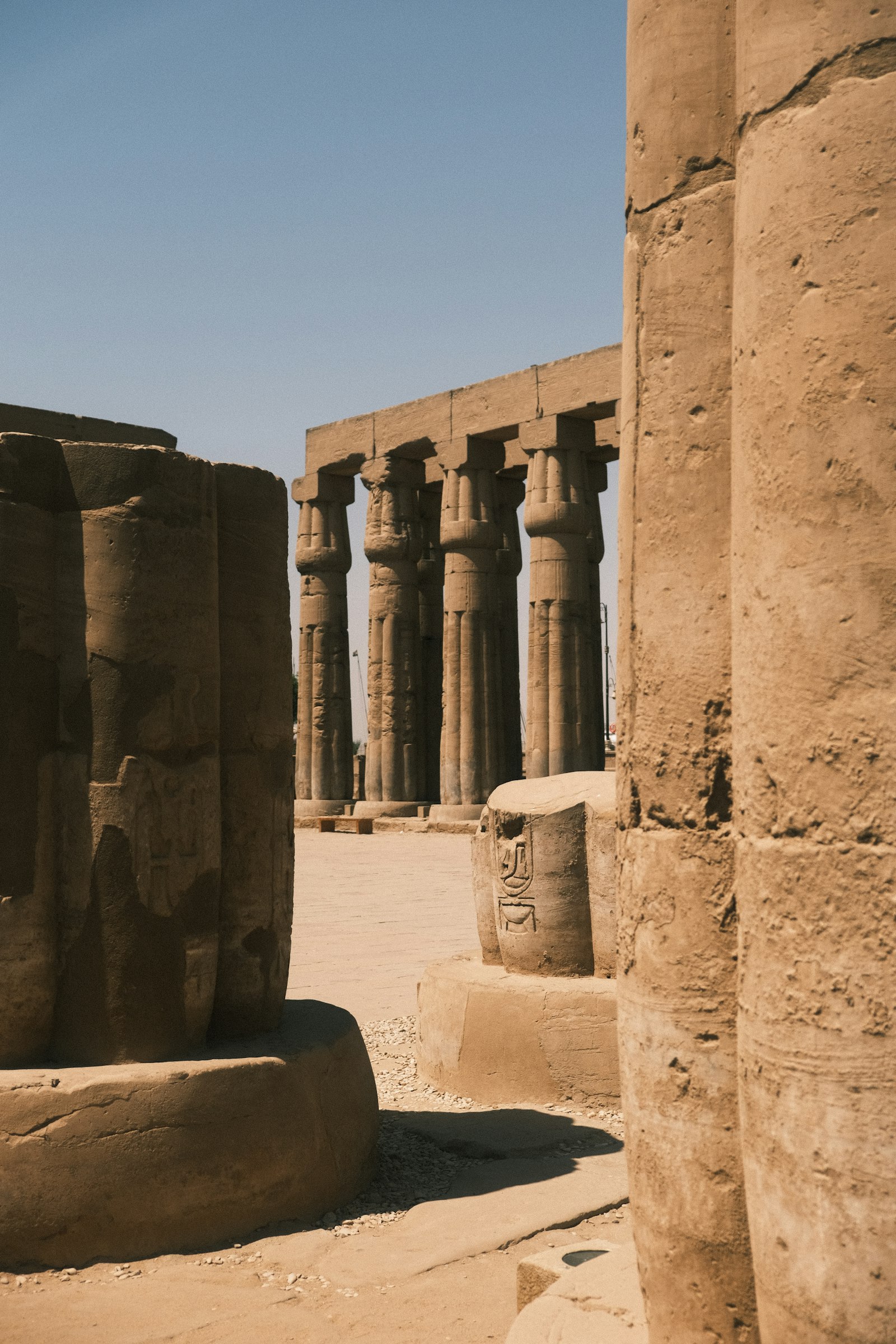
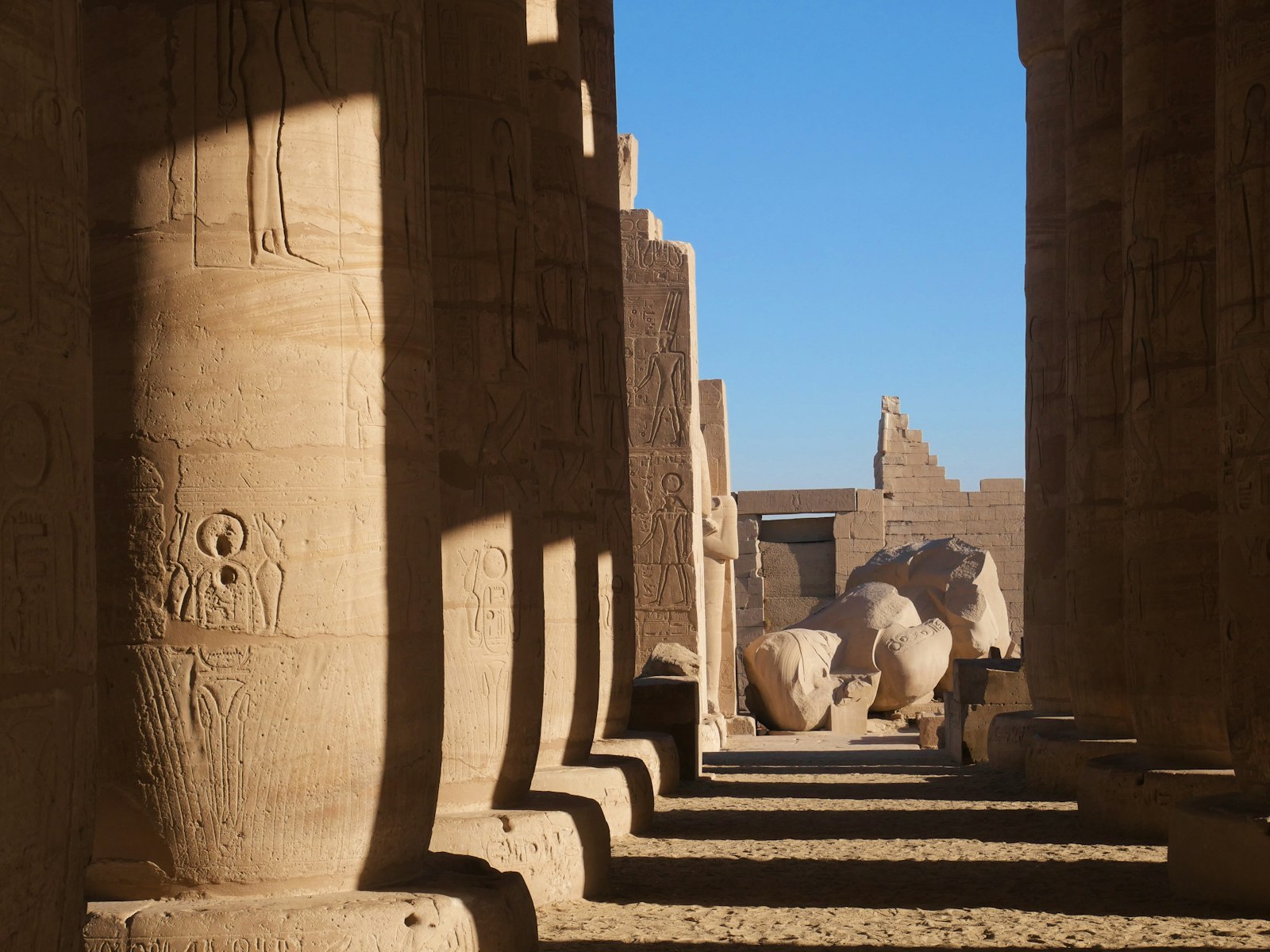
Having passed the migdol, one accesses the first court of the temple, flanked by Osiride pillars on the south side and by columns on the north side. The walls of this court host some of the most spectacular reliefs of the entire Egypt: the great scenes of battle against the Sea Peoples and the Libyans. These reliefs, of monumental dimensions and extraordinary vivacity, narrate with wealth of details the military campaigns of Ramesses III, from the preparation of the troops to the final clash, from the count of the killed enemies to the presentation of the prisoners to the pharaoh.
Particularly famous is the scene of the naval battle against the Sea Peoples, one of the most ancient representations of naval combat of history. The Egyptian ships, with their characteristic sails, clash with the boats of the enemies in a chaotic and dynamic composition that transmits the roar of the battle. The details are extraordinary: one can distinguish the different typologies of weapons, the armour of the warriors and even the expressions of terror on the faces of the defeated enemies.
The Second Court
The second court, surrounded on all four sides by columns and pillars, presents a more religious and ceremonial atmosphere. The walls are decorated with scenes of religious processions, offerings to the divinities and ceremonies of the festival of Min and of Sokar. The conservation of the original colours in this court is exceptional: reds, blues, yellows and greens are still clearly visible, offering a vivid idea of how the Egyptian temples must have appeared in their epoch of splendour.
The Inner Halls and the Sanctuary
The hypostyle halls and the inner rooms of the temple, although more damaged compared to the outer courts, still preserve reliefs and inscriptions of great interest. The sanctuary, where the cult statue of Amun was guarded, was the sacred heart of the temple, accessible only to the pharaoh and to the priests of highest grade. The walls of the inner halls are decorated with ritual and liturgical scenes that document the complex religious ceremonies of ancient Egypt.
The Royal Palace
On the southern side of the first court are found the remains of the royal palace of Ramesses III, a ceremonial residence used by the pharaoh during the religious festivals and the visits to the temple. A window of appearances connected the palace to the first court: from this window the pharaoh showed himself to the courtiers and distributed rewards to the deserving officials. The palace, although largely destroyed, still preserves the bases of the columns and the decorated floors.
The Temple of the 18th Dynasty
Within the enclosure of Medinet Habu there is also a smaller and more ancient temple, dating to the 18th dynasty, dedicated to the cult of Amun. This temple, founded by Hatshepsut and completed by Thutmose III, was subsequently enlarged and modified during the later epochs up to the Ptolemaic and Roman era. The chapels of the Divine Adoratrice of Amun, priestesses of very high rank who exercised an almost royal power at Thebes during the Third Intermediate Period and the Late Period, are particularly interesting for the quality of their reliefs.
The Original Colours
One of the most extraordinary characteristics of Medinet Habu is the exceptional conservation of the original colours on many of the sculpted surfaces. Differently from most Egyptian temples, where the pigments have almost completely disappeared, here wide areas of the reliefs still preserve the red, the blue, the yellow, the green and the black that the artisans applied over three thousand years ago. This polychromy transforms the visiting experience: instead of imagining the colours on monochrome surfaces of grey stone, the visitor can see with their own eyes the original chromatic splendour of Egyptian art.
Tips for the Visit
How to Get There
Medinet Habu is located at the southern extremity of the Theban necropolis, easily reachable from the west bank of Luxor by taxi or minibus. The site is less frequented compared to the Valley of the Kings and the Temple of Hatshepsut, which makes it particularly pleasant for a quiet and in-depth visit.
Times and Tickets
The temple is open from dawn to late afternoon. The entrance ticket is separate from that of the other sites of the west bank and can be purchased at the local ticket office. The cost is reasonable and the quality-price ratio is excellent, considering the artistic richness of the site.
Time of Visit
Dedicate at least two hours to Medinet Habu to adequately appreciate the reliefs and the architecture. Many visitors cross it hurriedly, missing extraordinary details. Take the time to observe the battle scenes of the Sea Peoples, the colours preserved in the second court and the delicate decorations of the inner chapels.
Photographic Suggestions
The best light to photograph the reliefs of the first court is that of the morning, when the grazing sun enhances the details of the sculptures. To capture the original colours, look for the protected areas of the inner halls where the polychromy is best preserved. The migdol is an exceptional photographic subject, especially in the late afternoon when the warm light accentuates its golden colour.
Medinet Habu is a hidden treasure that deserves much more than the fleeting attention that it often receives from the more hurried visitors. Its combination of imposing architecture, spectacular reliefs, preserved colours and intimate atmosphere makes it one of the most rewarding archaeological sites of the entire Egypt, an unmissable stage for anyone who wishes to understand the grandeur and the complexity of the pharaonic civilisation.