The Ramesseum: Ozymandias and the Eternal Glory of Ramesses II
The Ramesseum, the funerary temple of Ramesses II on the west bank of Luxor, is one of the most evocative monuments of ancient Egypt. Although partially in ruins, this monumental complex preserves a romantic charm that has inspired poets and travellers over the centuries. It was precisely the sight of the colossal fallen statue of Ramesses II that inspired the famous sonnet "Ozymandias" by Percy Bysshe Shelley in 1818, one of the most famous poems of English literature, a meditation on the transience of power and on the vanity of human ambitions.
The name "Ramesseum" was coined by the French Egyptologist Jean-François Champollion, who visited the temple in 1829 during his celebrated expedition to Egypt. In ancient Egyptian, the temple was known as "the Temple of Millions of Years of Usermaatra-Setepenra", using the regal name of Ramesses II, while the Greeks called it "Tomb of Osymandyas", a deformation of the pharaoh's praenomen from which derives the name used by Shelley.
Ramesses II: The Great Builder
An Exceptional Reign
Ramesses II, third pharaoh of the 19th dynasty, is perhaps the most celebrated sovereign of ancient Egypt. His reign, lasting an exceptional sixty-seven years (from approximately 1279 to 1213 BC), was the second longest of Egyptian history. During this extraordinarily long period, Ramesses conducted military campaigns, signed the first documented peace treaty of history with the Hittites, generated over a hundred children and built more monuments than any other pharaoh, from the temple of Abu Simbel in Nubia to the additions to the complex of Karnak.
The Ramesseum was conceived as the definitive funerary monument of the pharaoh, a complex where his cult would be celebrated for eternity. The construction began in the early years of his reign and continued for about twenty years, employing the best workforces of the epoch and materials coming from all over Egypt.
The Architecture of the Temple
The First Pylon and the Courtyard
The entrance to the Ramesseum was dominated by a first monumental pylon, today partially collapsed, decorated with scenes of the Battle of Kadesh. This clash, which occurred in 1274 BC between the Egyptian army and the Hittite one on the bank of the Orontes in today's Syria, was the warlike event most celebrated by Ramesses II, who had it represented on numerous temples throughout Egypt. The reliefs show the pharaoh on his war chariot heroically charging the enemy, scenes of the Egyptian encampment and the rout of the Hittite forces.
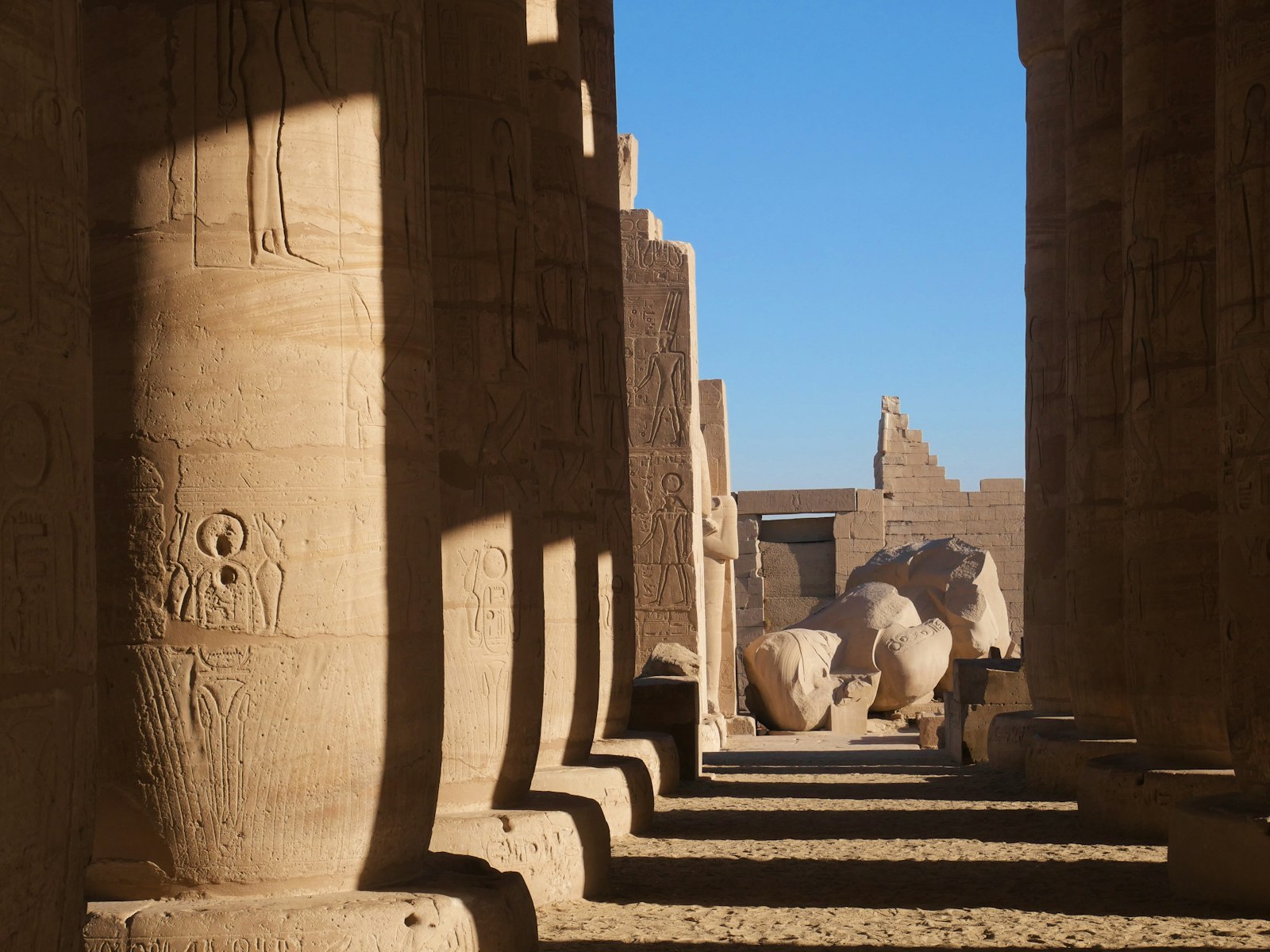
The first courtyard, the most vast of the complex, hosted the colossal seated statue of Ramesses II, one of the largest monoliths ever sculpted. This statue, originally about 17 metres high and weighing over 1,000 tonnes, was obtained from a single block of pink granite from Aswan. Its collapse, probably caused by an earthquake, created the fragments that still today lie scattered in the courtyard, offering a spectacle of grandiose fragility that profoundly strikes the visitor.
Shelley's Ozymandias
It is the sight of this fallen statue that inspired the famous sonnet by Percy Bysshe Shelley: "My name is Ozymandias, King of Kings; / Look on my Works, ye Mighty, and despair!" The poem, written in 1818 without Shelley having ever visited the site, reflects on the vanity of human power in the face of the inexorable passing of time. The fragments of the colossus — the prostrate torso, the broken face, the enormous hands — perfectly embody this meditation, making the Ramesseum one of the most literary destinations of the ancient world.
The Second Courtyard and the Osiride Pillars
The second courtyard is flanked on two sides by Osiride pillars, pillars against which leans the figure of the pharaoh in the pose of Osiris, the god of the dead, with the arms crossed on the chest and the symbols of regal power in hand. These pillars, although damaged, still preserve sculptural details of great quality and transmit a powerful impression of majesty. The walls of the courtyard are decorated with scenes of the festival of Min, celebration of fertility and renewal, and with further representations of the Battle of Kadesh.
The Hypostyle Hall
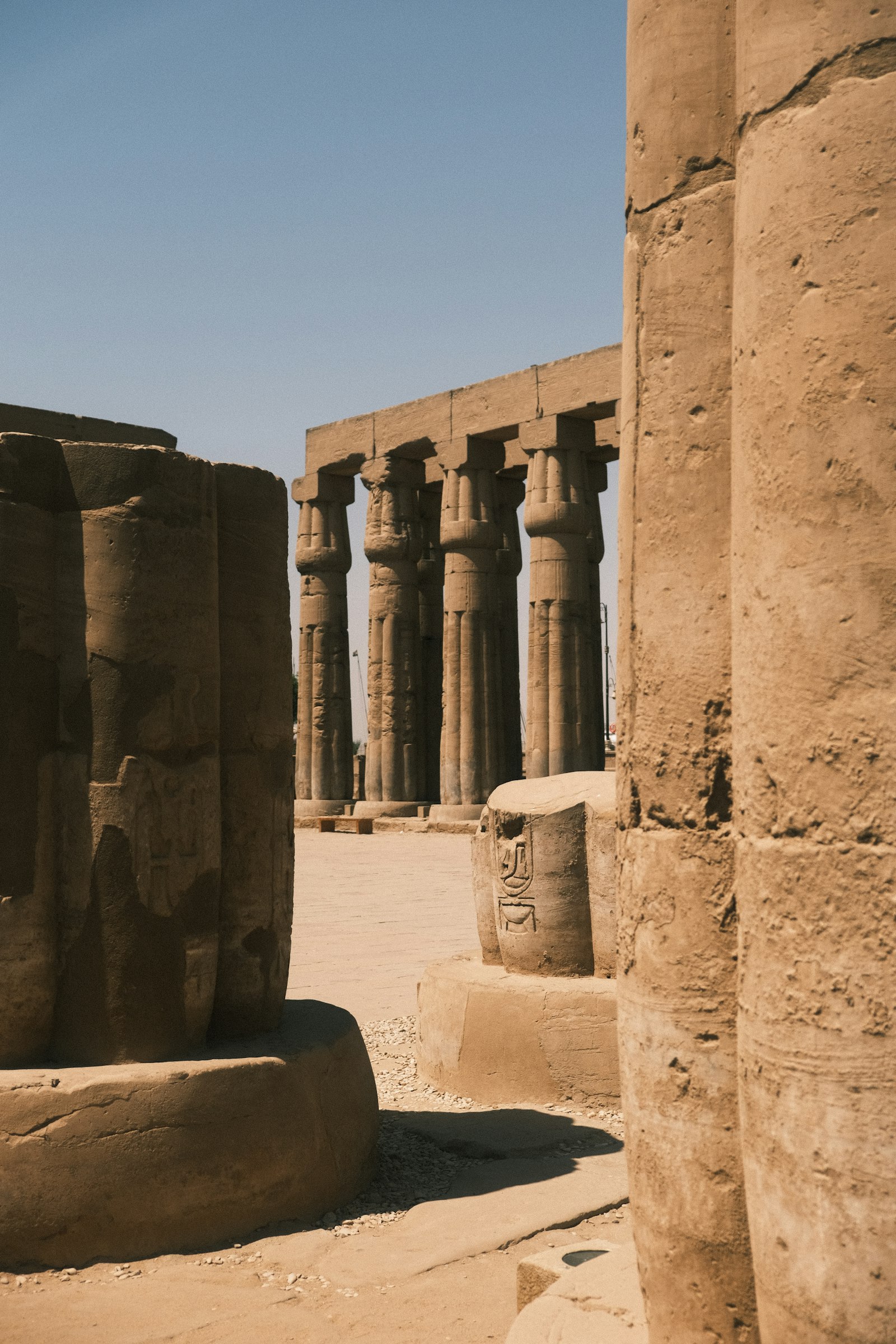
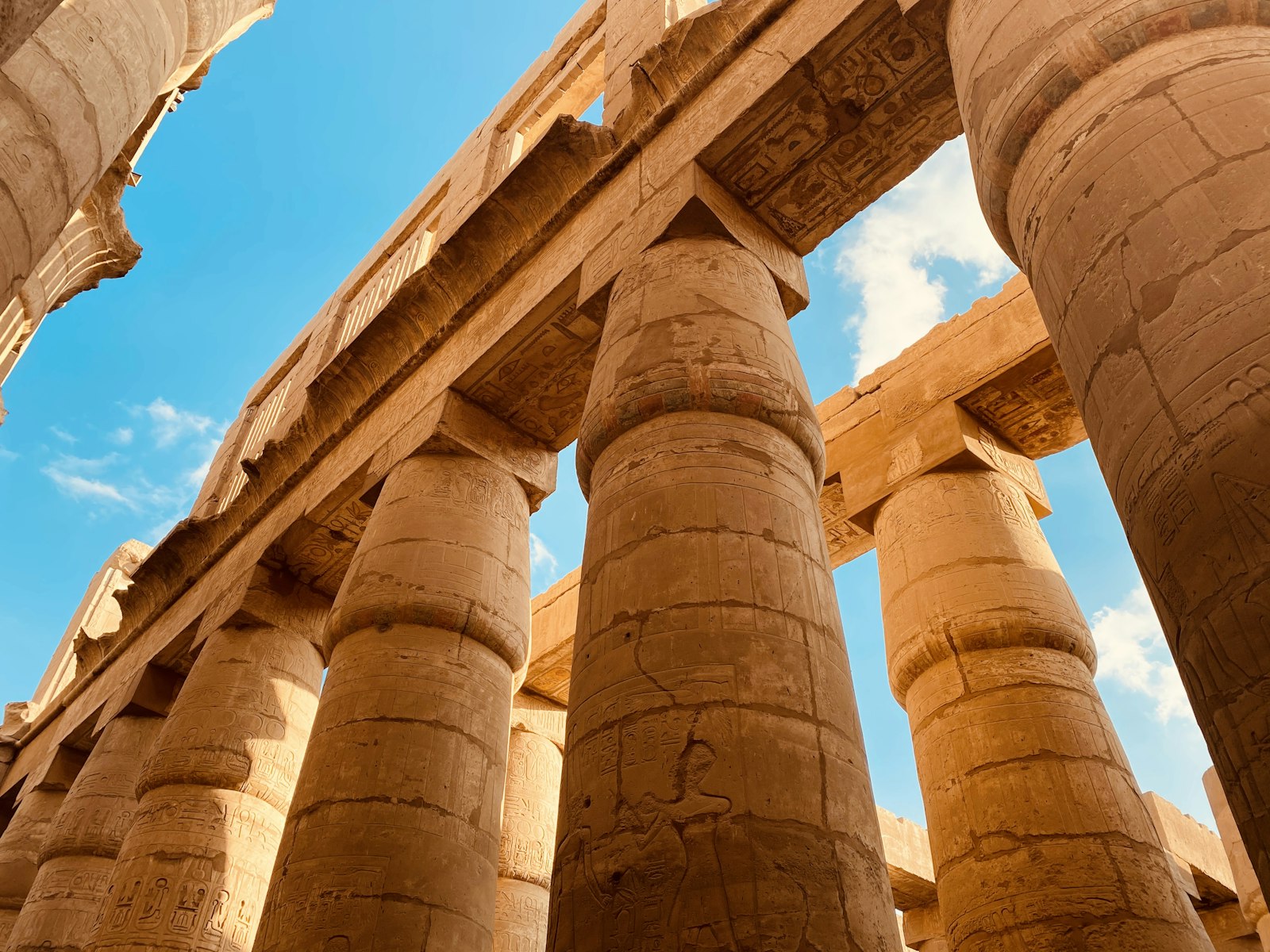
The great hypostyle hall of the Ramesseum, although reduced to a few columns still standing, must have been a space of extraordinary imposingness. Forty-eight papyriform columns supported a ceiling decorated with a remarkable astronomical ceiling, of which some fragments are still visible. This painted ceiling showed the constellations, the stellar decans and the figures of the celestial deities, constituting one of the most ancient astronomical representations of ancient Egypt. The light that filters between the surviving columns creates a suggestive atmosphere that evokes the ancient splendour of the hall.
The Inner Rooms and the Sanctuary
The rear rooms, increasingly smaller and darker as one approached the sanctuary, followed the traditional scheme of Egyptian temples: a route from light to shadow, from chaos to order, from the profane world to the sacred. The sanctuary, where the cult statue was guarded, is today almost completely destroyed, but the surrounding rooms still preserve reliefs of valuable workmanship.
The Mud Brick Warehouses
One of the most distinctive characteristics of the Ramesseum is the vast system of mud brick warehouses that surrounds the temple on three sides. These structures, with their characteristic barrel vaults, served to store the foodstuffs, the ritual offerings and the goods necessary to the functioning of the temple complex. Grain, oil, wine, linen and other products were conserved in hundreds of narrow and elongated cells, managed by an efficient temple bureaucracy.
The warehouses of the Ramesseum are among the best preserved of ancient Egypt and offer a concrete testimony of the temple economy. The estimates suggest that they could contain provisions sufficient to feed thousands of people for an entire year. These structures were therefore not only deposits but veritable centres of economic distribution, playing a crucial role in the life of the local community.
Archaeological Discoveries
The excavations at the Ramesseum have brought to light numerous finds of great importance. Among the most celebrated is the Ramesseum papyrus, a collection of medical, magical and literary texts dating to the Middle Kingdom, found in a tomb beneath the temple. These papyri are among the most ancient known Egyptian literary documents and include the so-called "dramatic papyrus of the Ramesseum", a text relating to the ceremony of the royal coronation.
Tips for the Visit
How to Get There
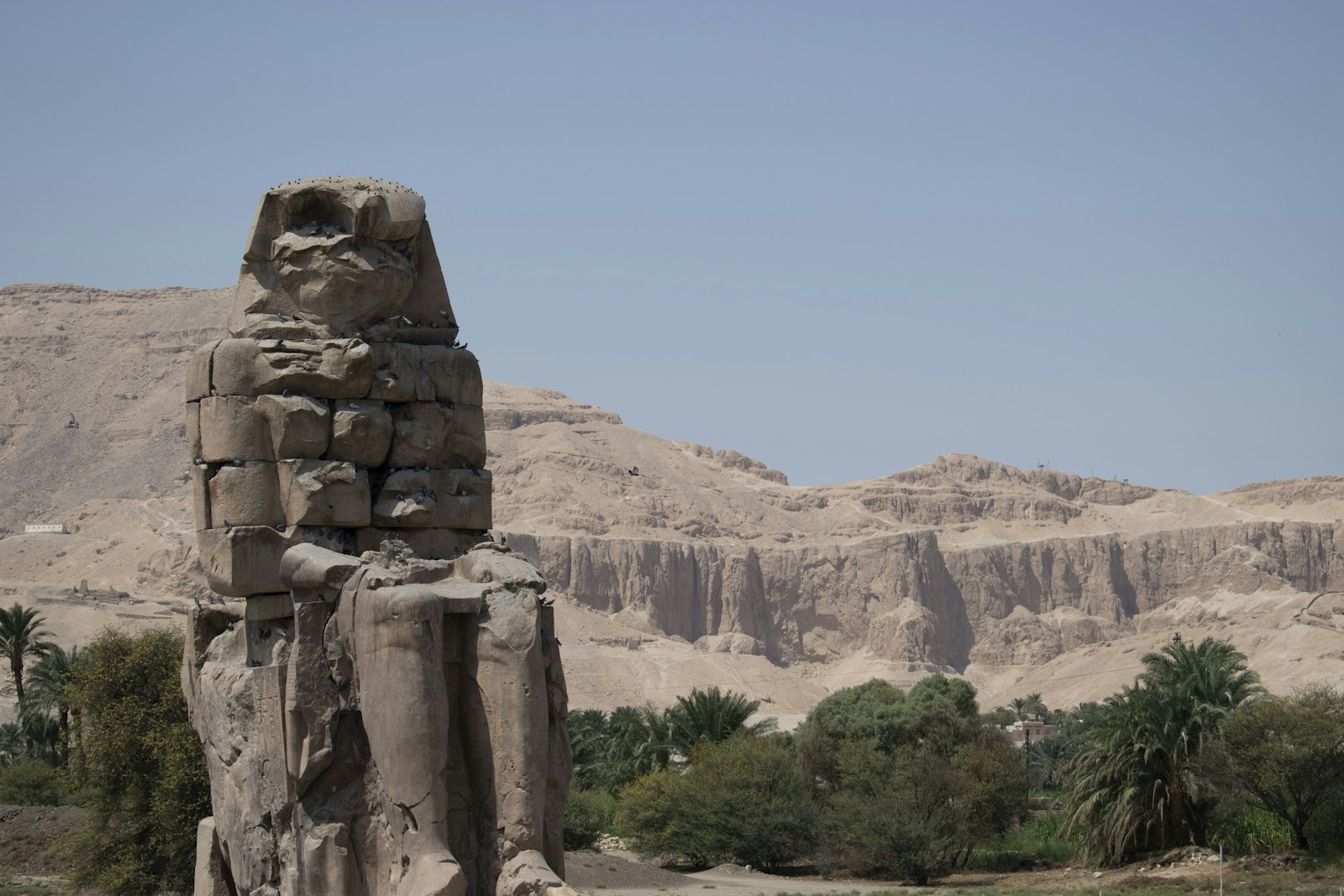
The Ramesseum is located on the west bank of Luxor, a short distance from the Colossi of Memnon and from the Temple of Hatshepsut. It is reachable by taxi, minibus or bicycle from the bank of the Nile. The route crosses the Egyptian countryside, offering picturesque glimpses of rural life along the river.
Hours and Tickets
The temple is open from dawn to late afternoon every day. The entrance ticket is separate from those of the other sites of the west bank. The Ramesseum is generally less crowded compared to other monuments, allowing a contemplative and relaxed visit.
Visiting Time
An hour and a half or two hours are sufficient to explore the complex calmly. Dedicate time to the observation of the fragments of the fallen colossus, of the reliefs of the Battle of Kadesh and of the magnificent mud brick warehouses. If you are passionate about literature, bring with you a copy of Shelley's Ozymandias to read it on the spot: an unforgettable experience.
Photographic Suggestions
The best shots are obtained from the second courtyard, framing the Osiride pillars with the Theban hills in the background. The fallen statue deserves photos from different angles to appreciate its dimensions. The mud brick warehouses are particularly photogenic, with their vaults that create fascinating plays of light and shadow. The sunset offers the best light for atmospheric photographs of the entire complex.
The Ramesseum is a place where grandeur and decadence merge in a melancholy harmony that speaks directly to the soul of the visitor. Among the scattered fragments of the largest colossus ever sculpted and the powerful walls of the still intact warehouses, one grasps all the complexity of the pharaonic civilisation: its immeasurable ambition, its artistic refinement and, finally, its fragile mortality in the face of time.