The Solar Boat Museum: a Journey Through Time on the Waters of the Nile
The Solar Boat Museum of Giza represented for decades one of the most fascinating and unique attractions of the Giza Plateau, housing within it a priceless treasure: the funerary boat of Pharaoh Khufu (Cheops), a cedarwood vessel 43.6 metres long, perfectly preserved for over 4,600 years beneath the sand of the Egyptian desert. This extraordinary ship, one of the oldest and best-preserved in the world, is today one of the most important pieces of the Grand Egyptian Museum (GEM), the new museum inaugurated near the Giza Plateau where it was transferred to ensure better conservation and a presentation more befitting its historical value.
The story of Khufu's solar boat is a gripping tale that interweaves archaeology, naval engineering, funerary rituals and the challenges of modern cultural heritage conservation. From its discovery in 1954 to its transfer to the GEM, this ship has fascinated millions of visitors and revolutionised our understanding of Egyptian navigation and technology of the Old Kingdom.
The Discovery
The 1954 Find
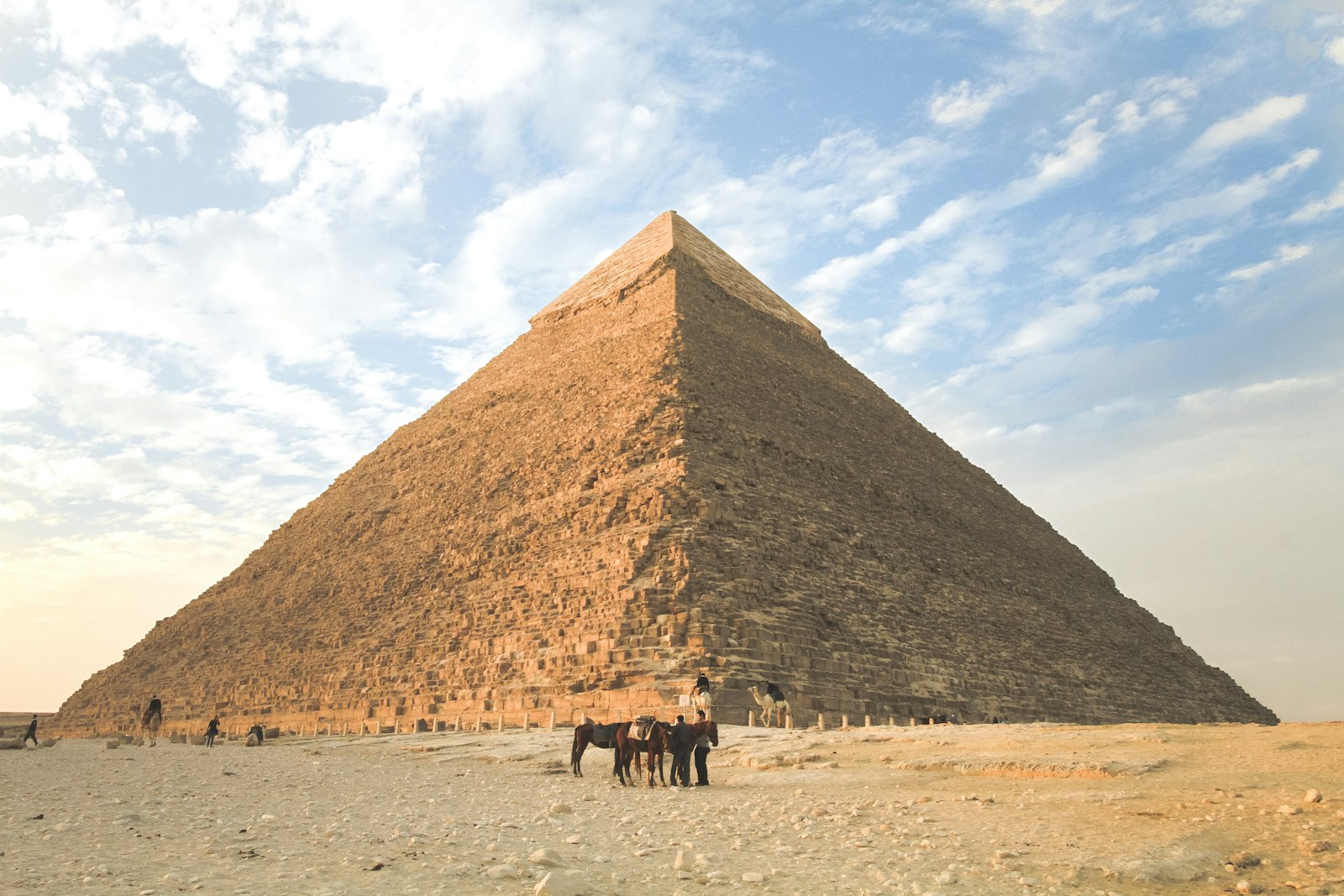
On 26 May 1954, the Egyptian archaeologist Kamal el-Mallakh made one of the most sensational discoveries in the history of Egyptology. During excavation and cleaning works at the foot of the southern face of the Great Pyramid of Khufu, el-Mallakh identified a large rectangular pit covered by 41 massive limestone blocks, each weighing about 16 tonnes, sealed with gypsum mortar.
When the first block was lifted, an intense scent of cedarwood spread into the dry desert air — an aroma that had been preserved intact for almost five millennia inside the sealed chamber. Beneath the stone blocks lay the boat of Pharaoh Khufu, dismantled into 1,224 pieces carefully arranged in 13 orderly layers inside the pit, like a giant three-dimensional puzzle.
The Reassembly Process
The monumental task of reassembling the boat was entrusted to the Egyptian restorer Ahmed Youssef Moustafa, also known as Haj Ahmed Youssef. The work required over 14 years of patient study and reconstruction, from 1957 to 1971. Youssef first had to understand the ancient techniques of Egyptian naval construction, studying each piece individually, analysing wear marks, assembly signs and lashing holes.
The process was a triumph of archaeological deduction and craftsmanship. Youssef used no reference models — no Egyptian ship of comparable size had ever been found in similar conditions — and had literally to reinvent the original construction techniques. The result was an extraordinary success: the reassembled boat corresponded perfectly to the depictions of funerary ships found in tombs and temples of the Old Kingdom.
The Solar Boat: Technical Characteristics
Dimensions and Structure
The reconstructed boat is a majestic vessel: 43.6 metres long, 5.9 metres wide at its widest point and with a draught of about 1.5 metres. The displacement is estimated at about 45 tonnes. The prow is elegantly raised and curved to form a stylised papyrus bundle, while the stern ends in a similar but lower shape, giving the ship a graceful and hydrodynamic profile.
The hull is composed mainly of planks of Lebanon cedar, a prized material that the ancient Egyptians imported by sea from the Phoenician coast (present-day Lebanon). Cedar is a wood naturally resistant to water, insects and rot, qualities that contributed decisively to the extraordinary preservation of the boat for almost five millennia.
The Construction Technique
The most fascinating feature of the solar boat is the construction technique used, known as "sewn shell construction". Unlike modern ships, built around a load-bearing frame (keel and ribs), Khufu's boat was assembled starting from the outer hull, joining the planks together with lashings of vegetable rope through holes drilled along the edges. No metal nail was used.
The hull planks were joined through an ingenious system: along the edges of the planks were cut V-shaped channels and holes through which passed ropes of vegetable fibre (probably halfah grass, a desert grass). The ropes, once wet, swelled and tightened the joints, making the hull watertight. Wooden wedges and tenons (wooden tongues inserted into mortises) completed the joining system, ensuring rigidity and structural stability.
The absence of metal nails and the use of vegetable lashings made the boat essentially dismantlable and reassemblable — a feature that proved providential for its burial in the pit and, millennia later, for its reconstruction.
The Equipment
The boat was equipped with five pairs of oars up to 8.5 metres long, two steering oars at the stern that acted as a rudder, and a large central cabin covered with a tent roof. The cabin, fitted with removable side walls, was probably intended to house the mummified body of the pharaoh during the ritual voyage.
At the prow was placed a small canopy, perhaps intended for the pilot or a priest who led the funerary ceremony. The mast for the sail was absent, which suggests that the boat was designed to be towed or propelled by oars, or that the sail was made of perishable material that has not survived.
Function and Ritual Significance
The Solar Boats in Egyptian Cosmology
In the cosmology of ancient Egypt, the sun crossed the sky during the day on the "day boat" (Mandjet) and travelled through the underworld during the night on the "night boat" (Mesektet). The deceased pharaoh, identified with the sun god Ra, needed a boat to make this eternal journey across the sky and the afterlife.
Khufu's solar boat was therefore much more than a simple means of transport: it was a cosmic vehicle intended to carry the soul of the pharaoh on his eternal journey with the god Ra across the heavens. Its burial beside the pyramid ensured that the pharaoh had at his disposal this essential means for his existence in the afterlife.
Practical or Purely Ritual Use?
A heated debate among Egyptologists concerns the question of whether Khufu's solar boat was actually used on water before burial or whether it was built exclusively for funerary purposes. The evidence is conflicting.
In favour of practical use there are wear marks on the hull planks, traces of algae and mineral deposits compatible with exposure to the water of the Nile. These clues suggest that the boat may have been used for the ceremonial transport of the pharaoh's body from the capital Memphis to the necropolis of Giza, sailing up the Nile in a solemn funeral procession.
In favour of the purely ritual nature there are the excessive dimensions for practical navigation in the Nile and the absence of signs of prolonged wear. According to this interpretation, the boat would have been built specifically for burial, as a symbolic instrument for the journey into the afterlife.
The most accepted theory today is a compromise between the two positions: the boat was probably used only once for the funerary procession of the pharaoh on the Nile, and then dismantled and buried to accompany him on his eternal journey.
The Second Boat
In 1987, a second pit containing another dismantled boat was identified next to the first, again at the foot of the Great Pyramid. The opening of the pit, conducted with more advanced technologies than the first discovery, revealed a vessel in worse conditions of preservation than the first boat. The process of extraction and restoration, begun in 2011 by a Japanese-Egyptian team, was completed after years of work, and the second boat is also destined for the Grand Egyptian Museum.
The presence of two solar boats flanking the pyramid is consistent with Egyptian cosmology: one for the daytime journey and one for the night journey of the pharaoh in the afterlife, mirroring the two mythological boats of the god Ra.
The Original Museum
The Building at the Foot of the Pyramid
The original Solar Boat Museum was built in 1982 directly above the pit in which the boat had been discovered, at the foot of the southern face of the Great Pyramid. The building, designed by the Italian architect Franco Minissi, was a modern and controversial structure: a parallelepiped of glass and concrete that contrasted with the surrounding desert environment but allowed visitors to admire the boat from above and from different angles.
The museum housed the reassembled boat in a large air-conditioned hall, with explanatory panels and a route on raised walkways that allowed every detail of the vessel to be observed. The soft lighting and the controlled temperature created an almost sacred atmosphere, appropriate for an artefact of such historical importance.
However, over the years, the conservation conditions inside the museum proved inadequate. The fluctuations in temperature and humidity, aggravated by the daily influx of hundreds of visitors, threatened the integrity of the millennia-old wood. Studies conducted by UNESCO and Japanese universities highlighted the need for a transfer to a more modern and controlled structure.
The Transfer to the Grand Egyptian Museum
An Extraordinary Operation
In 2021 the delicate process of transferring the solar boat from the original museum to the Grand Egyptian Museum (GEM) began, the new colossal museum under construction a few kilometres from the Giza Plateau. The operation, supported by the Japanese international cooperation agency (JICA), represented an unprecedented logistical challenge.
The boat, too fragile to be dismantled again, was transported whole on a special vehicle designed for the purpose, a remote-controlled trolley fitted with pneumatic suspensions that absorbed every vibration. The journey of about 7.5 kilometres from the original site to the GEM was covered at an average speed of less than 2 km/h, with continuous monitoring of the boat's conditions through vibration, temperature and humidity sensors.
The New Location
At the Grand Egyptian Museum, the solar boat is displayed in a specially designed hall with state-of-the-art air-conditioning systems that maintain constant temperatures and humidity, far superior to the conditions offered by the old museum. The new display includes interactive information panels, digital reconstructions of the assembly process and projections that illustrate the role of the boat in Egyptian funerary cosmology.
The location at the GEM also offers a significant advantage for visitors: the solar boat is now part of an integrated exhibition route that includes the treasures of Tutankhamun, the statues of the pharaohs of the Old Kingdom and a vast collection of artefacts that contextualise the boat within the broader panorama of Egyptian civilisation.
Tips for the Visit
Where to See the Boat Today
Khufu's solar boat is today visible at the Grand Egyptian Museum (GEM), located on Al Remaya Street, a few minutes from the Giza Plateau. The museum is reachable by taxi from the centre of Cairo or from the Giza Plateau itself. It is advisable to dedicate at least half a day to the visit of the GEM, which houses a collection of over 100,000 artefacts.
Combining the Visit
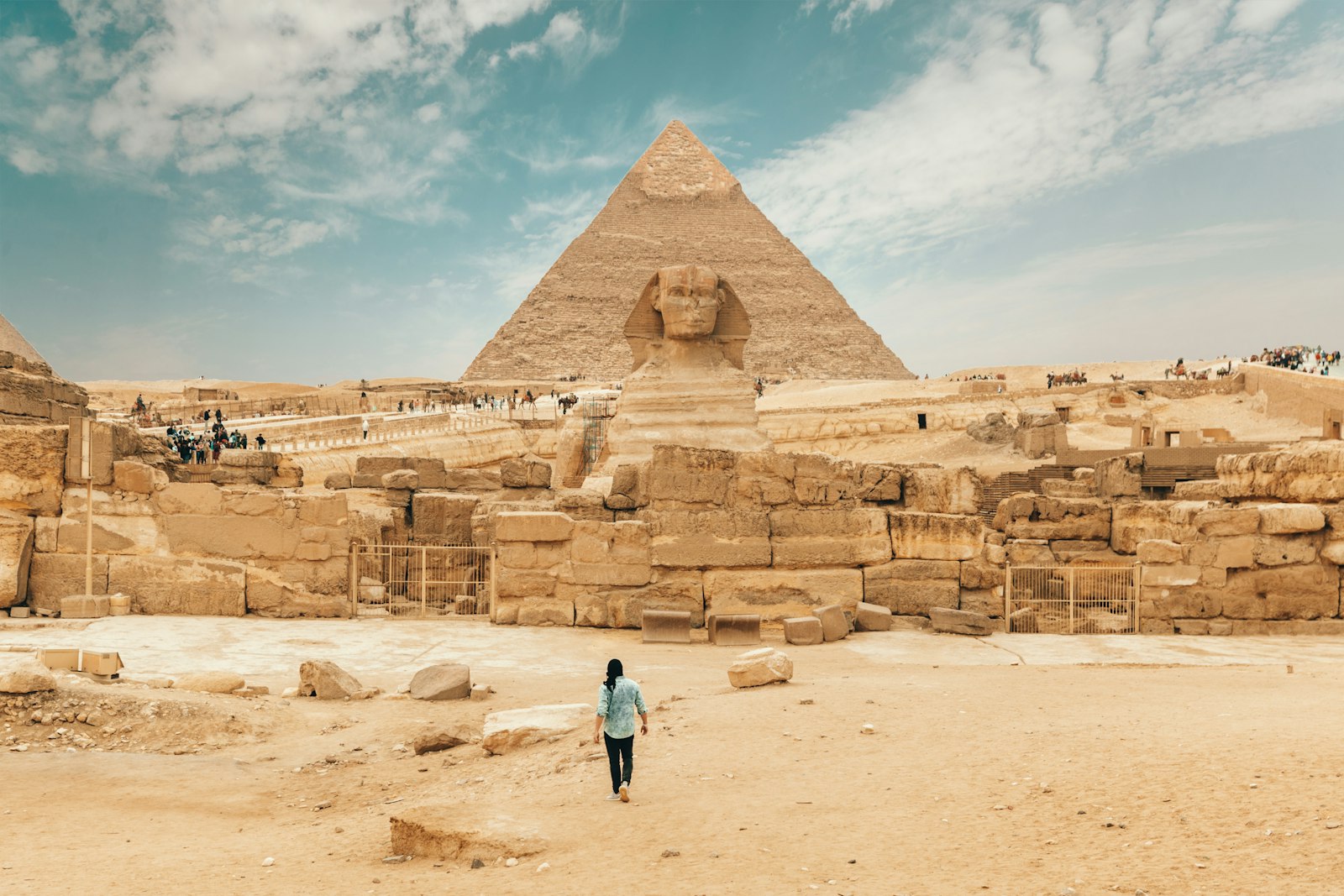
An ideal itinerary involves a morning visit to the Giza Plateau (pyramids and Sphinx) followed, in the afternoon, by a visit to the Grand Egyptian Museum. This route allows you to see first the monuments in their original context and then to deepen your understanding through the artefacts displayed in the museum, including the solar boat.
The Site of the Old Museum
Even though the boat has been transferred, it is worth visiting the area where the old museum stood, at the foot of the southern face of the Great Pyramid. Here it is possible to see the original pit in which the boat was discovered in 1954, with the marks of the limestone blocks that sealed it. A small information panel tells the story of the discovery and restoration.
What to Observe
When you admire the solar boat, pay particular attention to the vegetable rope lashings that join the hull planks: this construction technique, almost five millennia old, is surprisingly similar to that still used today by traditional boat builders in some regions of Africa and Asia. Observe also the central cabin, the oars and the details of the papyrus-shaped prow, all elements that reveal the craftsmanship and aesthetic sense of the ancient Egyptian naval builders.
Curiosities About the Solar Boat
Khufu's solar boat is one of the oldest plank-built vessels ever found in the world, dated to about 2,500 BC. The cedar wood with which it was built came from the forests of Lebanon, more than 500 kilometres from Egypt, testifying to the extensive trade networks of the Old Kingdom. The scent of cedar that was released when the pit was opened in 1954 had remained trapped in the sealed chamber for 4,600 years, an extraordinary phenomenon of preservation made possible by the desert climate and the perfect sealing of the limestone blocks. The restorer Ahmed Youssef took 14 years to reassemble the boat without the aid of instructions or manuals, using only his knowledge of ancient naval techniques and an extraordinary intuition. The boat contained no metal element: the 1,224 parts were joined exclusively with vegetable ropes and wooden joints, demonstrating that Egyptian technology was sufficiently advanced to build complex vessels without the use of nails or rivets.