The Nilometer: Measuring the Destiny of Egypt
The Nilometer of Roda Island is one of the most fascinating and underestimated monuments of Cairo, an engineering device that for over a millennium played a crucial role in the economic and social life of Egypt. Built in 861 AD during the Abbasid caliphate, this instrument for measuring the Nile floods is the most ancient Islamic monument still existing in the Egyptian capital. Its historical, scientific and cultural importance makes it an essential stop for those who wish to understand the vital relationship between Egypt and its great river.
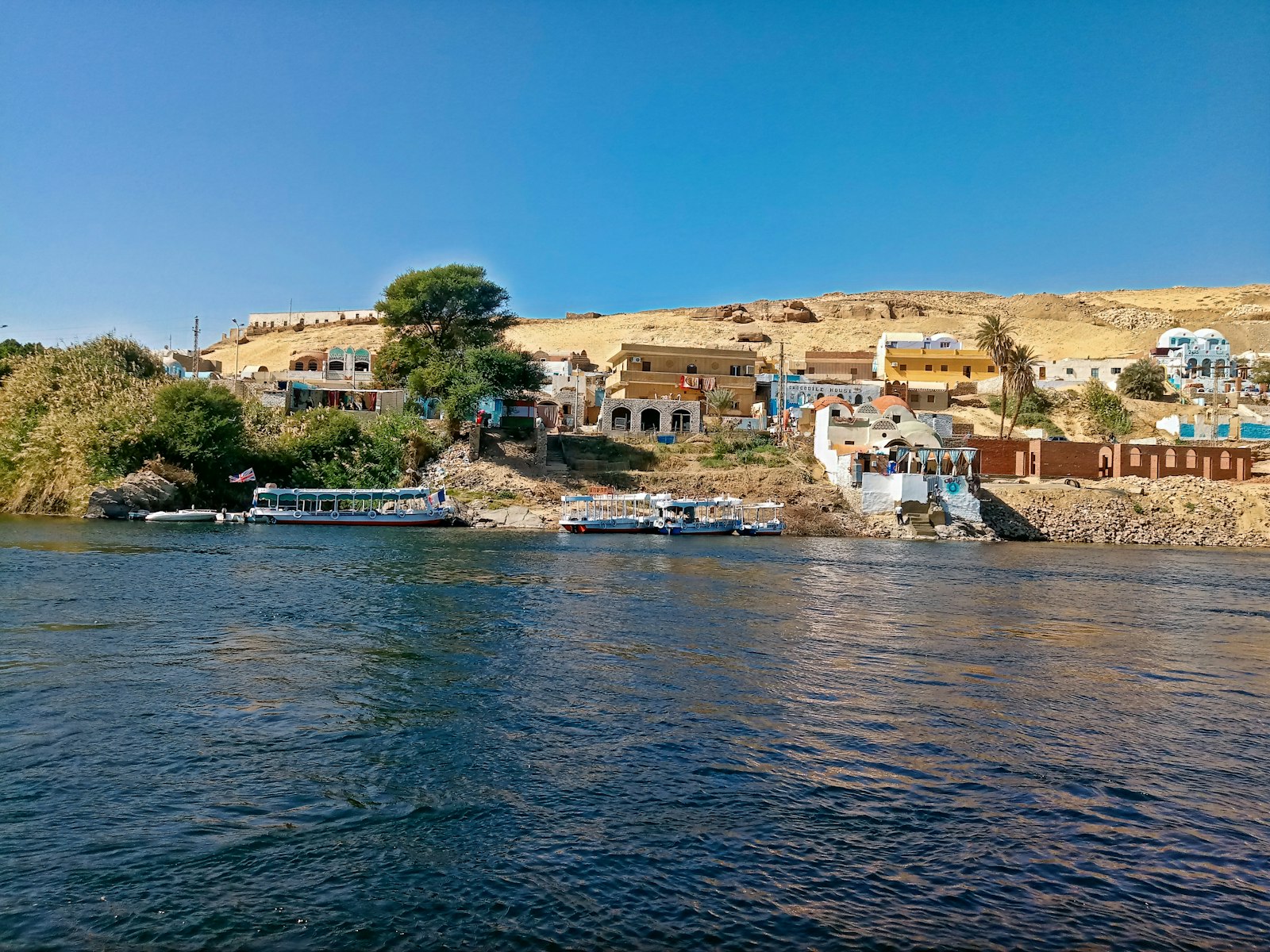
Situated on the southern tip of Roda Island (Rawda), in the middle of the Nile, the Nilometer presents itself today as a circular structure surmounted by a conical roof, inside which is found a deep well with a graduated marble column that served to measure the level of the waters during the annual flood. This simple but ingenious device determined the destiny of an entire nation: on the level of the water depended the harvests, the taxes, and ultimately the political and social stability of Egypt.
The History of the Nilometer
The Importance of the Nile Floods
To understand the significance of the Nilometer, one must first of all understand the role of the annual inundations of the Nile in Egyptian civilisation. Every year, between June and September, the monsoon rains on the highlands of Ethiopia made the level of the river rise, which overflowed flooding the valley and depositing on the terrain a thin layer of fertile silt. This natural phenomenon was the basis of Egyptian agriculture and, consequently, of the entire economy of the country.
A flood too low meant drought and famine. A flood too high caused destructive inundations that swept away villages and harvests. Only a flood in the right measure guaranteed a year of prosperity. Measuring the level of the water was therefore not an academic exercise, but a question of national survival.
The Tradition of the Nilometers
The practice of measuring the Nile floods goes back to the pharaonic era. The first nilometers were simple graduated scales engraved on the walls of the river quays or on boulders along the course of the river. The most ancient known is found at Aswan, near the island of Elephantine, and goes back to the period of the Old Kingdom. Over the course of the millennia, the nilometers became ever more sophisticated, evolving from simple indicators to true architectural structures.
The Nilometer of Roda Island was not the first built in that place. Historical sources mention a more ancient nilometer, going back to the era of the pharaohs, which was destroyed and rebuilt several times. The current structure was commissioned by the Abbasid caliph al-Mutawakkil in 861 AD and designed by the astronomer and mathematician Ahmad ibn Muhammad al-Hasib, one of the most brilliant scientists of the medieval Islamic world.
The Construction in 861 AD
The project of al-Hasib was ingeniously simple. At the centre of a deep well, connected to the Nile through three tunnels dug at different heights in the walls, was erected an octagonal column of white marble about eleven metres high, subdivided into sixteen Egyptian cubits (about eight and a half metres). The water of the Nile entered the well through the tunnels and its level on the column indicated with precision the entity of the flood.
The interior walls of the well were decorated with inscriptions in Kufic script, considered among the most ancient and refined examples of monumental Islamic calligraphy. These inscriptions include verses of the Quran relating to water and vegetation, to underline the link between faith and the divine gift of the Nile flood. The beauty of these inscriptions transforms a functional device into a work of art, a fundamental principle of Islamic aesthetics.
The Architectural Structure
The Well and the Column
The well of the Nilometer is a cylindrical structure dug in the rock and lined in stone, with a diameter of about five metres and a depth that reaches the level of the bed of the Nile. The central column, the heart of the device, is a monolith of white marble with octagonal section, fixed to the bottom of the well with a foot of wood and supported by a beam of cedar wood that crosses the well from part to part.
The graduations on the column indicate the cubits, with the critical threshold fixed at sixteen cubits: when the water reached this level, it meant that the flood was sufficient to guarantee a good harvest. Each cubit was in turn subdivided into twenty-four smaller parts for a more precise measurement.
The Connecting Tunnels
Three tunnels dug in the walls of the well at different heights connected the device with the waters of the Nile. This system permitted the water to enter gradually into the well without excessive turbulence, guaranteeing an accurate measurement. The tunnels were provided with grilles to filter the debris and prevent the silting.
The Conical Roof
The current conical roof of the Nilometer is not original but goes back to an Ottoman reconstruction of the 17th century, subsequently restored in modern times. The original structure probably had a different covering, perhaps a simple wooden canopy. The conical roof, with its form that recalls a pointed hat, has become however the distinctive sign of the monument and one of the most recognisable architectural profiles of Cairo.
The Kufic Inscriptions
The inscriptions that decorate the interior walls of the well are a calligraphic heritage of exceptional importance. Realised in Kufic characters sculpted in the stone and originally painted in red and blue, these inscriptions reproduce Quranic verses that exalt the divine power over the waters and over nature. The Sura 14 (Ibrahim), the Sura 54 (al-Qamar) and other Quranic passages relating to the rain and the rivers are engraved with an artistic mastery that testifies to the high level reached by Islamic calligraphy already in the 9th century.
The Economic and Social Role
The Fiscal System
The level of the waters measured by the Nilometer was not only an agricultural information, but the fundamental parameter on which was based the entire fiscal system of Egypt. When the flood reached the sixteen cubits, the government proclaimed the Wafa al-Nil, the "Completeness of the Nile", a public ceremony that announced the sufficient flood and authorised the collection of the taxes. If the flood was inferior, the taxes were reduced or condoned for the most affected farmers; if it was superior, the emergency measures were activated to manage the inundations.
This direct link between the measurement of the Nile and the fiscal policy made the Nilometer one of the most important instruments of power in the hands of the government. Whoever controlled the information on the flood controlled, in fact, the economy of the entire country.
The Celebrations of the Flood
The announcement of the sufficient flood was accompanied by great public festivities. The ceremony of the Wafa al-Nil was one of the most awaited events of the year: an artificial dam was broken to make the water flow into the irrigation canals, while the population celebrated with music, dances and banquets. A wooden doll dressed in bridal clothes, called "Arusa al-Nil" (the Bride of the Nile), was thrown into the waters as a symbolic offering, a legacy of the ancient pharaonic belief that the Nile was a divinity that required sacrifices to guarantee its benevolence.
The End of the Original Function
The construction of the Aswan dam in 1902, and above all of the Great Aswan Dam (Sadd el-Ali) in the Sixties of the 20th century, definitively put an end to the natural floods of the Nile and, consequently, to the original function of the Nilometer. The measuring device became a historical monument, silent witness of an era in which the destiny of millions of people depended on the caprice of a river.
Tips for the Visit
How to Get There
Roda Island is reachable through several bridges that connect it to the two banks of the Nile. The simplest way is to take the metro until the station of Mar Girgis (on the eastern bank) and then cross the bridge. Alternatively, a taxi can take you directly to the Palace of Manial, situated at the northern extremity of the island, from which you can reach the Nilometer strolling along the riverside.
Hours and Tickets
The Nilometer is open every day from 9:00 to 17:00. The entrance ticket is very economical. It is advisable to visit it in the morning, when the natural light penetrates into the well illuminating the Kufic inscriptions in a suggestive way.
Combining the Visit
The visit to the Nilometer combines perfectly with that to the nearby Palace of Manial, a royal residence of the early 20th century that hosts a museum of Islamic art and period furniture. The entire Roda Island deserves a stroll, with its tranquil gardens and the panoramic views over the Nile. For those who have more time, on the western bank are found the Giza Zoo and the University of Cairo.
Practical Suggestions
The Nilometer is a relatively small monument that does not require much time to be visited, but it is advisable to stop to admire calmly the inscriptions and the engineering of the device. A local guide can notably enrich the experience explaining the functioning of the hydraulic system and the meaning of the Quranic inscriptions. Bring with you a torch to observe better the details of the decorations in the deeper parts of the well.
The Nilometer of Roda Island is much more than a simple historical monument: it is the symbol of the millenary relationship between Egypt and the Nile, a bond that has shaped the civilisation, the economy and the culture of an entire people. To visit it means to understand, in a single place, the very essence of Egyptian history and the ingenuity with which generations of men have sought to interpret and control the forces of nature.