The Cairo Tower: the Lotus Flower that Dominates the City
The Cairo Tower is one of the most recognisable symbols of the Egyptian capital, an imposing structure 187 metres high that rises over Gezira Island in the heart of the Nile. Designed by the Egyptian architect Naoum Shebib and built between 1956 and 1961, the tower is characterised by its unmistakable lotus flower shape, a tribute to the most ancient symbol of Egypt that merges with the modernist aesthetic of the 1950s.
With its panoramic terrace that offers a 360-degree view of the city and its revolving restaurant located at the top, the Cairo Tower is one of the most visited attractions of the Egyptian metropolis. But beyond its tourist function, the tower is also a monument laden with political and historical meaning, closely linked to the era of President Gamal Abdel Nasser and to the birth of modern Egypt as an independent nation.
History of the Tower
The Political Context: Nasser's Egypt
To understand the meaning of the Cairo Tower it is essential to place it in the historical context of its construction. In 1952, the revolution of the Free Officers led by Gamal Abdel Nasser had overthrown the monarchy of King Farouk, establishing a republic that aimed to modernise the country and to affirm the full independence of Egypt from the colonial powers. The nationalisation of the Suez Canal in 1956 and the international crisis that followed had projected Nasser onto the world stage as leader of the movement of non-aligned countries and champion of Arab nationalism.
In this climate of national pride and modernising ambition, the construction of the Cairo Tower took on a symbolic value that went well beyond that of a simple infrastructural work. The tower was to be a tangible symbol of the new Egypt: modern, independent and proud of its millenary cultural heritage.
The Legend of the CIA Funding
The most colourful story linked to the Cairo Tower concerns its supposed funding. According to a widely diffused legend, during the Cold War the American CIA had attempted to bribe President Nasser with a briefcase containing three million dollars in cash, with the aim of influencing Egyptian foreign policy in favour of the United States. Nasser, indignant at the attempt at corruption, is said to have refused the bribe and decided to use those funds to build the tower, as an open and visible challenge to American arrogance.
Although historians have questioned the literal veracity of this story, it is confirmed that the Eisenhower administration had effectively allocated funds to "influence" the Egyptian government, and that these funds were somehow diverted towards national development projects. True or legendary as it may be, the story has contributed to giving the tower an aura of anti-colonial defiance that has reinforced its symbolic value in the Egyptian collective imagination.
The Design and the Construction
The design of the tower was entrusted to the Egyptian architect Naoum Shebib, who conceived a structure that combined modern construction technology with a formal language inspired by ancient Egyptian art. The choice of the lotus flower shape was not casual: the lotus was the symbol of Upper Egypt in pharaonic antiquity and represented rebirth and regeneration, themes perfectly in tune with the political message of the new republic.
The construction work began in 1956 and continued for five years, employing Egyptian engineers and workers with the technical support of foreign consultants. The main structure is in reinforced concrete, covered on the exterior by a lattice of Aswan granite that creates the characteristic latticework motif inspired by the petals of the lotus flower. The tower was inaugurated in 1961 and for many years remained the tallest structure in Africa, a record that consolidated its iconic value.
Architecture and Structure
The Lotus Flower Design
The shape of the Cairo Tower is its most distinctive and admired element. The structure rises from the ground with a cylindrical shaft that gradually widens towards the summit, where the granite latticework covering opens like the petals of a stylised lotus flower. This design is not purely decorative: the external lattice also has a structural function, contributing to the rigidity of the whole and giving the tower a wind resistance superior to that of a smooth cylindrical structure.
The pink granite used for the covering comes from the quarries of Aswan, in the south of Egypt, the same quarries that supplied the stone for the pharaonic obelisks and for the blocks of the King's Chamber in the Great Pyramid of Cheops. This material choice establishes a symbolic link between the modern tower and the monumental architecture of ancient Egypt, a common thread that crosses five thousand years of history.
The Internal Structure
The interior of the tower is organised on several levels accessible via high-speed lifts. The bearing structure consists of a central core in reinforced concrete that houses the lifts, the service stairs and the technical installations. The upper floors house the main attractions of the tower: the panoramic terrace, the revolving restaurant and a panoramic bar.
The panoramic terrace, located at about 160 metres in height, is the highest point accessible to the public and offers a spectacular view of the city. The revolving restaurant, one of the first of its kind in Africa and the Middle East, completes a full rotation in about 70 minutes, allowing diners to admire the entire panorama of Cairo during the meal.
The Panoramic View
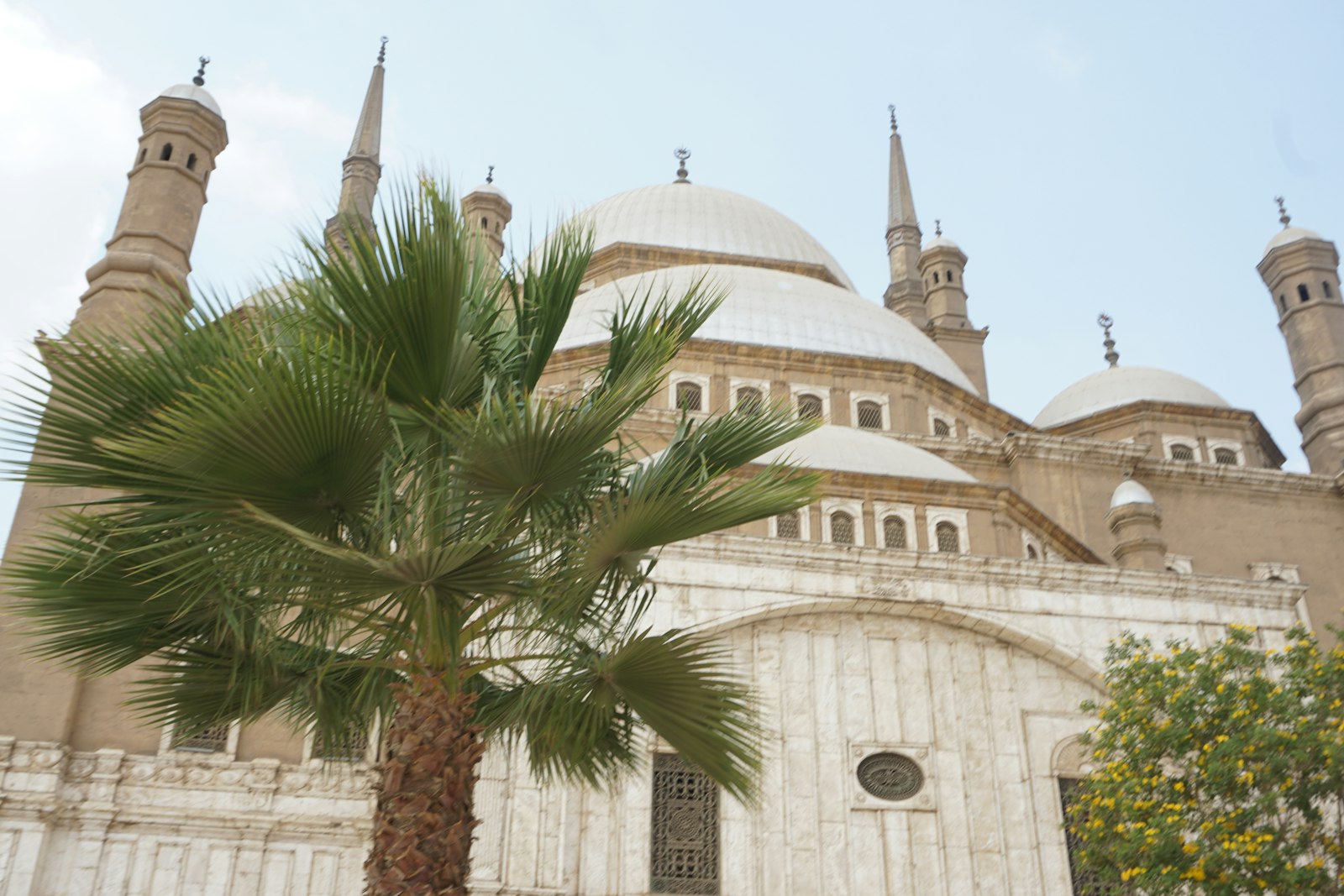
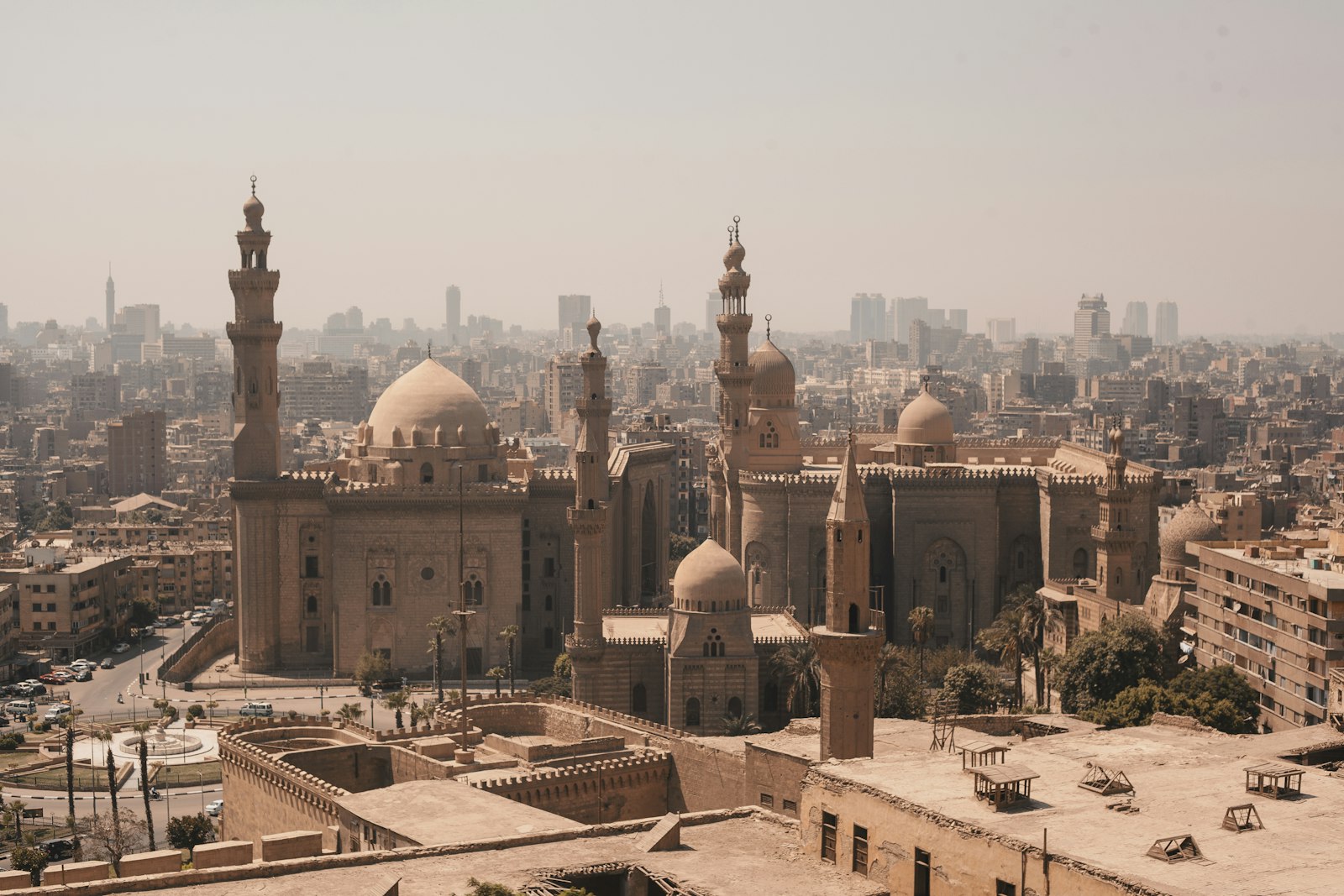
The view from the summit of the Cairo Tower is without doubt the most complete and spectacular that the city can offer. To the north one sees the modern districts of Zamalek and Mohandessin, with their skyscrapers and their busy arteries. To the east, beyond the Nile, extends the historic centre of Cairo with the domes and minarets of the hundreds of mosques of Islamic Cairo, dominated by the Citadel of Saladin and the Mosque of Muhammad Ali.
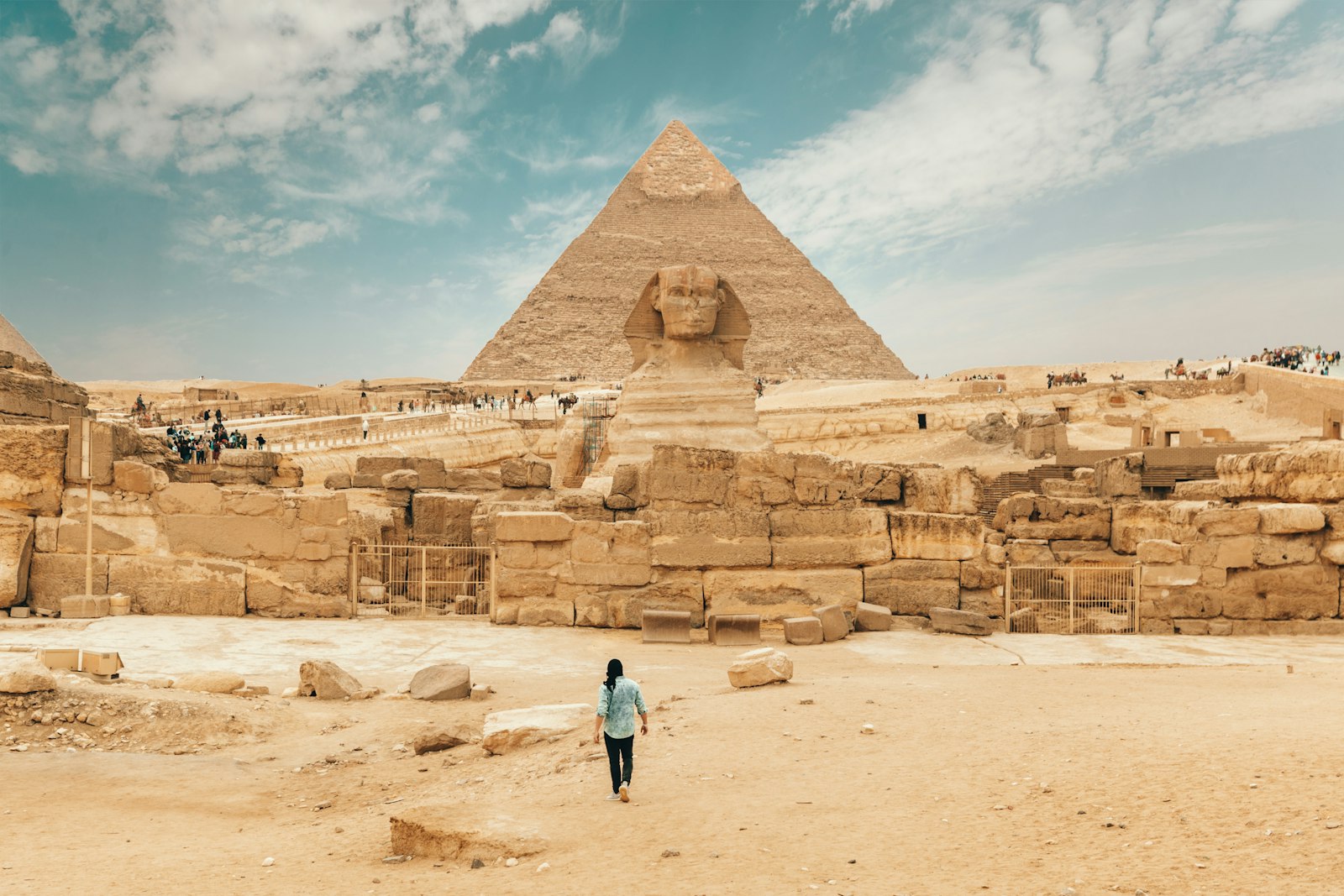
To the south, the gaze follows the course of the Nile towards Maadi and Helwan, while to the west, on clear days, it is possible to glimpse the silhouettes of the pyramids of Giza that stand out against the desert horizon. This panoramic view offers a unique perspective on the geography and historical stratification of Cairo, allowing one to grasp at a single glance the coexistence of the ancient, medieval and modern city.
The Tower in the Daily Life of Cairo
An Urban Landmark
For Cairenes, the Cairo Tower is much more than a tourist attraction: it is a daily landmark, a familiar element of the skyline that helps one to orient oneself in the vast metropolis. The tower is visible from almost every point of the city and its illuminated silhouette is a characteristic element of the night landscape of Cairo.
The tower is also a popular place for celebrations and special events. During national holidays it is illuminated with the colours of the Egyptian flag, and the panoramic terrace is a beloved place for weddings, engagements and romantic dinners. The revolving restaurant is particularly appreciated for dinners at sunset, when the city transforms from an expanse of sunlit buildings into a sea of sparkling lights.
Gezira Island
The tower is located on Gezira Island (from the Arabic for "island"), a river island in the Nile that also houses the residential district of Zamalek, the Museum of Modern Egyptian Art, the Cairo Opera House and the Gezira Sporting Club. The island is one of the most elegant and cosmopolitan areas of Cairo, with tree-lined avenues, fashionable cafés and art galleries that make it a pleasant destination regardless of the visit to the tower.
Experiences and Attractions
The Revolving Restaurant
The restaurant on the upper floor of the tower offers Egyptian and international cuisine with an unparalleled view. Dining here while the panorama slowly flows before one's eyes is a unique experience in Cairo. The restaurant serves both lunch and dinner, and it is highly recommended to book in advance, especially for weekend evenings and during the holidays.
The menu comprises traditional Egyptian dishes such as koshari, molokhia and kebab, as well as proposals of international cuisine. The panoramic bar, located on a slightly lower level, offers cocktails and drinks with the same spectacular view, representing a more economical alternative for those who wish to enjoy the panorama without committing to a complete dinner.
The Spectacle of the Sunset
One of the most magical moments to experience on the Cairo Tower is the sunset. When the sun sets in the west, beyond the pyramids, the sky is tinged with shades of orange, pink and violet that are reflected in the waters of the Nile, creating a natural spectacle of indescribable beauty. Within a few minutes, the lights of the city are turned on progressively, transforming the daytime panorama into a luminous carpet that extends to the horizon.
Tips for the Visit
How to Get There
The Cairo Tower is located on Gezira Island, easily reachable from the centre of Cairo. The nearest metro station is Gezira on line 2 (al-Munib - Shubra), from which the tower is reachable on foot in about 10 minutes. Alternatively, a taxi or a ride-sharing service from the centre of Cairo takes about 10-15 minutes. The entrance to the tower is on Sharia Hadayek al-Zuhreya, well signposted.
Opening Hours and Tickets
The tower is open every day from 9:00 to 1:00 at night, with hours that may vary during Ramadan and the holidays. The entrance ticket includes access to the panoramic terrace. Access to the revolving restaurant requires a separate reservation and is not included in the entrance ticket.
It is advisable to buy tickets online when possible to avoid the queues, which can be long especially in the evening hours of the weekend. Ticket prices differ for Egyptians and foreign tourists, a common practice in Egyptian tourist sites.
When to Visit
The best moment to visit the tower is an hour before sunset, so as to be able to admire the city both in the light of day and at twilight and after dark. Clear days, more frequent in the winter months, offer the best visibility and allow one to glimpse the pyramids on the horizon. During the summer, the haze and dust can reduce visibility, making the early hours of the morning preferable.
Photographic Suggestions
Bring a wide-angle lens to capture the panorama from the terrace, and a telephoto lens to photograph the details of the monuments visible in the distance. The terrace is exposed to the wind, which can cause camera vibrations: use a fast shutter speed or stabilise the camera. The best photographs are obtained during the "golden hour" that precedes the sunset and during the "blue hour" that follows it.
To photograph the tower from the outside, the best points are the Cairo riverside in the area of the Maspero Museum and the gardens along the Nile in the district of Garden City. The tower illuminated at night is particularly photogenic with its reflection in the waters of the Nile.
Combining the Visit
The Cairo Tower is easily combinable with a visit to the nearby Egyptian Museum in the very central Tahrir Square, reachable on foot crossing the Qasr el-Nil Bridge. On Gezira Island itself are found the Museum of Modern Art and the Cairo Opera House, the Gezira Art Gallery and the gardens of al-Andalus, which offer a relaxing stroll along the Nile. The gardens of al-Andalus, inspired by Moorish architecture, are particularly pleasant at sunset and offer an excellent view of the tower from below.
The Cairo Tower is much more than a simple panoramic platform: it is a symbol of modern Egypt, a monument to the determination of a people who knew how to combine their millenary heritage with the ambitions of contemporaneity. Climbing to the top of the tower and contemplating Cairo from above is an experience that allows one to embrace at a single glance five thousand years of human history, from the pharaonic pyramids to the skyscrapers of the 21st century.