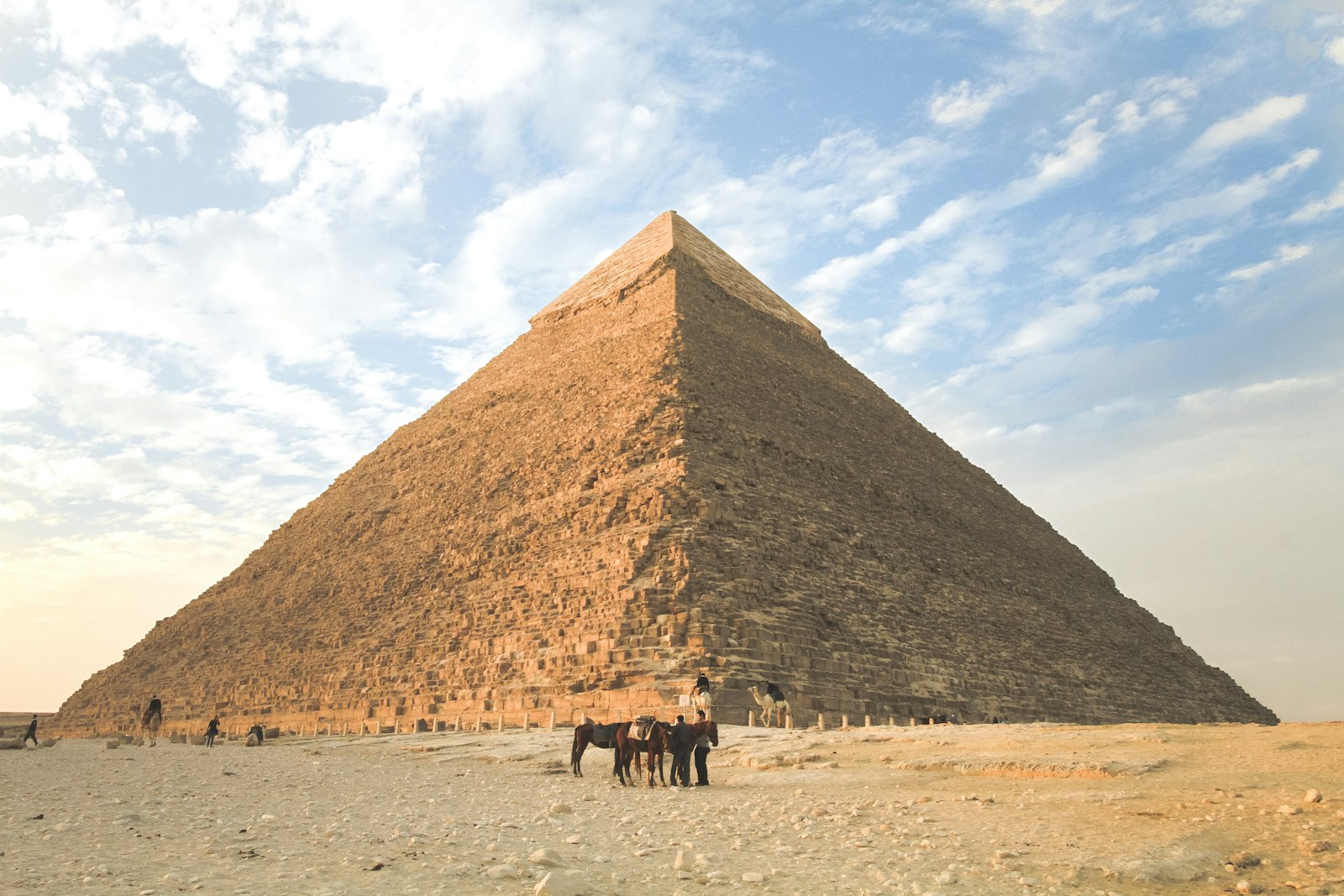
The Valley Temple of Chefren: Megalithic Architecture at the Foot of the Sphinx
The Valley Temple of Khafre is one of the most impressive and best preserved monuments in the entire funerary complex of the Giza Plateau. Located at the foot of the plateau, a short distance from the Great Sphinx, this megalithic granite building represents a masterpiece of Egyptian Old Kingdom architecture. Built around 2520 BC. during the 4th Dynasty, the temple was part of the funerary complex of the pharaoh Khafre (Chefren in Greek), which also included the pyramid, the high mortuary temple, the ceremonial ramp and, according to many scholars, the Sphinx itself.
The Valley Temple performed a fundamental function in the royal funerary ritual: it was the place where the body of the deceased pharaoh was received by the waters of the Nile, purified and prepared for mummification before being transported along the ceremonial ramp to the upper funerary temple and finally to the pyramid. It was also the center of the ruler's perpetual cult after burial, where priests officiated daily rituals to ensure the well-being of the pharaoh's soul in the afterlife.
The Discovery of the Temple
Auguste Mariette and the excavations of 1853
The rediscovery of the Valley Temple of Khafre is linked to the name of Auguste Mariette, one of the founding fathers of modern Egyptology. In 1853, Mariette, then a young official of the Louvre Museum on a mission to Egypt to acquire Coptic manuscripts, was attracted to the Giza Plateau and began exploratory excavations in the area of the Sphinx. It was during these works that he brought to light the Valley Temple, buried under centuries of desert sand.
The most sensational discovery occurred inside the temple itself: in a pit dug in the floor of the main hall, Mariette found a diorite statue of the pharaoh Chefren which is still considered one of the absolute masterpieces of Egyptian sculpture. The statue, 168 centimeters high, portrays the pharaoh sitting on a throne, with the falcon Horus behind him protecting him with outstretched wings. The serene and majestic expression of the face, the perfection of the proportions and the quality of the workmanship of the very hard green diorite have made this statue an icon of ancient Egyptian art. Today it is preserved in the Egyptian Museum in Cairo, where it occupies a place of honor in the room dedicated to the Old Kingdom.
The Context of Discovery
Mariette found the statue upside down in a shallow grave, probably hidden in ancient times to protect it from looters. Fragments of other statues were found along with it, indicating that the temple originally housed an entire sculptural collection dedicated to the pharaoh. This discovery not only revealed the existence of the temple, but also provided one of the first certain identifications of Khafre as the builder of the second pyramid of Giza.
The Architecture of the Temple
The Materials
The Valley Temple of Khafre is built of colossal blocks of pink Aswan granite and local limestone. Some granite blocks weigh over 100 tons, making this building one of the most impressive examples of ancient Egyptian megalithic architecture. Pink granite clads the interior walls and pillars, while limestone forms the structural core of the building. The floor is made of Egyptian alabaster (calcite), a translucent material that gave the interior of the temple an ethereal luminosity.
The choice of granite was not random: this material, in addition to being extremely resistant, was associated with permanence and eternity, essential qualities for a building destined to serve the cult of the pharaoh for eternity. The granite came from the quarries of Aswan, more than 900 kilometers south of Giza, and its transportation along the Nile was in itself an extraordinary logistical feat.
The Building Plan
The temple has a rectangular plan of approximately 45 x 13 meters, with an original height of approximately 13 meters. The building has two entrances on the eastern facade, originally flanked by granite sphinxes. These entrances lead to vestibules that converge in a transverse corridor, which in turn opens into the main hypostyle hall.
The hypostyle hall is the heart of the temple: a rectangular space supported by sixteen monolithic pink granite pillars, arranged in two parallel rows. Each pillar is a single block of granite approximately 4 meters high, with a square section of approximately 1 meter. The arrangement of the pillars creates corridors that converge towards the back of the room, where the statues of the pharaoh were located. Natural lighting penetrated through horizontal slits along the top of the walls, creating a solemn atmosphere of dim light that must have deeply impressed visitors of the time.
The Absence of Decoration
One of the most surprising features of the Valley Temple is the almost total absence of wall decoration. Unlike the temples of subsequent dynasties, richly decorated with reliefs and inscriptions, the walls of the temple of Khafre are smooth and bare, entrusted exclusively to the aesthetic effect of the polished pink granite. This austerity gives the building a surprising modernity and expressive power that many visitors compare to contemporary minimalist architecture.
The absence of decoration is probably intentional and reflects the aesthetics of the Old Kingdom, which favored mass and perfection of materials over ornamentation. The only decorations were the statues of the pharaoh, arranged along the walls of the hypostyle hall: originally twenty-three statues in alabaster, granodiorite and schist, each representing the pharaoh in different postures.
The Khafre Funeral Complex
The Ceremonial Ramp
From the Valley Temple started a covered and decorated ceremonial ramp, approximately 500 meters long, which rose towards the plateau up to the high funerary temple, located on the eastern side of the pyramid. The ramp, now largely destroyed, was covered in white limestone and probably decorated with reliefs illustrating ritual and mythological scenes. This processional way had both a practical function, for the transport of the pharaoh's body from the valley to the pyramid, and a symbolic one, representing the journey of the soul from the earthly world towards the celestial afterlife.
The Relationship with the Sphinx
The Valley Temple of Khafre is located in close proximity to the Great Sphinx, a fact that has fueled debate about the relationship between the two monuments. Most Egyptologists believe that the Sphinx was carved during Khafre's reign, as a guardian of his funerary complex. The so-called Sphinx Temple, located directly in front of the statue, is built with the same type of megalithic blocks as the Valley Temple, suggesting a contemporary construction.
However, some scholars have proposed that the Sphinx is older than Khafre, based on analysis of rock erosion and other evidence. The debate remains open, but the spatial and architectural relationship between the Valley Temple and the Sphinx is undeniable and offers visitors a visual experience of great impact.
The Funerary Cult
Daily Rituals
In the Valley Temple, a body of priests was responsible for performing daily rituals for the sustenance of the pharaoh's soul. These rituals included offerings of food, drink and incense, recitation of prayers and magical formulas, and the "ceremony of the opening of the mouth", a complex rite that aimed to bring the pharaoh's statues back to life to allow his spirit to benefit from the offerings.
The temple had warehouses for storing offerings and spaces for preparing rituals. Some inscriptions found near the temple attest that Chefren's funerary cult was maintained for centuries after his death, financed by land donations that generated the income necessary to support the priests and purchase offerings.
The End of the Cult
Khafre's funerary cult gradually died out during the First Intermediate Period (ca. 2181-2055 BC), when the collapse of Old Kingdom central authority made it impossible to maintain priesthoods and temple structures. The temple was progressively abandoned and covered by desert sand, which paradoxically ensured its excellent conservation until Mariette's rediscovery.
The Architectural Importance
The Valley Temple of Khafre occupies a unique place in the history of architecture. It is the oldest and best preserved of the valley temples associated with the Egyptian pyramids, and represents the pinnacle of the Old Kingdom megalithic tradition. Its influence on later Egyptian temple architecture was profound, although later generations preferred more ornate and less austere buildings.
The skill with which tens of tons of granite blocks were cut, transported and assembled with pinpoint precision remains one of the most impressive demonstrations of ancient engineering. Some joints between the blocks are so precise that not even a thin blade can be inserted between them, a construction quality that defies any attempt at rational explanation with the technologies of the time.
Tips for the Visit
How to Reach the Temple
The Valley Temple is located in the south-eastern area of the Giza Plateau, at the foot of the plateau, near the Great Sphinx. It can be reached on foot from the main entrance area following the path that leads to the Sphinx. It is recommended to visit it in combination with the Sphinx and the Sphinx Temple, which are located in the immediate vicinity.
Timetables and Tips
The visit to the temple is included in the entrance ticket to the Giza Plateau. The interior is generally cool and offers a pleasant refuge from the desert heat. It is advisable to dedicate at least thirty minutes to exploring the interior spaces, paying attention to the mastery of the granite workmanship and the effect of light that filters through the cracks in the walls.
The Ideal Photographic Point
The Valley Temple offers one of the best vantage points of the Sphinx, with Khafre's pyramid towering in the background. The view from the western side of the temple is particularly evocative in the late afternoon, when the warm light of the sunset illuminates the pink granite giving it golden hues.
The Valley Temple of Chefren represents one of the most fascinating and underrated monuments of the Giza Plateau. Its megalithic architecture, its history of discovery and its connection to the Sphinx make it an unmissable stop for anyone wishing to fully understand the greatness of the Egyptian civilization of the Old Kingdom.