The Temple of Kalabsha: the Giant of Lower Nubia
On the shores of Lake Nasser, a few kilometres from the majestic Aswan Dam, rises the Temple of Kalabsha, the largest free-standing temple of all Lower Nubia. This extraordinary monument, dedicated to the Nubian solar god Mandulis — the local equivalent of the Greek Helios and the Egyptian Ra — represents one of the most imposing testimonies of the fusion between Egyptian and Nubian culture, an artistic and religious synthesis that developed over centuries along the banks of the southern Nile.
The temple we admire today is not in its original position. Like many other monuments of Nubia, it was dismantled and rebuilt on a higher site to save it from the rising of the waters caused by the construction of the Aswan Dam in the 1960s. This rescue undertaking, conducted by West Germany as a contribution to the international UNESCO campaign for the salvage of the Nubian monuments, represents one of the most fascinating pages in the history of world archaeological conservation.
History of the Temple
The Ancient Origins
The site of Kalabsha, the ancient Talmis, was a religious centre of great importance in Lower Nubia from the pharaonic era. The first sacred structures date back to the New Kingdom, when the pharaoh Amenhotep II of the 18th dynasty erected a small sanctuary dedicated to Mandulis. However, the temple we see today was built mainly during the Roman period, under the reign of the emperor Augustus (30 BC - 14 AD), on the foundations of a previous building dating to the Ptolemaic era.
Augustus's choice to build such an imposing temple in a peripheral region of the Roman Empire was not casual. Lower Nubia was a strategic frontier zone, and the patronage of local cults was a fundamental instrument for maintaining the loyalty of the Nubian populations. Mandulis, the solar god worshipped at Talmis, was an extremely popular deity among the Nubians, and dedicating a magnificent temple to him served to consolidate the bond between Rome and the local communities.
The Roman and Subsequent Period
During the centuries of the Roman Empire, the Temple of Kalabsha became the principal cult centre of Lower Nubia, attracting pilgrims from all the region. The inscriptions on the walls of the temple, in Greek, Latin, hieroglyphic and Meroitic, bear witness to the cosmopolitan nature of its visitors and to the peaceful coexistence of different cultural and linguistic traditions.
With the advent of Christianity in Egypt, the temple was converted into a church, as happened to many pagan places of worship in the region. Some of the Christian decorations are still visible on the walls, superimposed on the original reliefs. A decree of the Nubian governor Silko, inscribed on the wall of the vestibule, celebrates the victory of Christianity over paganism in the region and represents one of the most important documents on the Christianisation of Nubia.
The Rescue and Reconstruction
When in the 1960s the Egyptian government undertook the construction of the Great Aswan Dam, the Temple of Kalabsha was located directly in the zone that would be submerged by Lake Nasser. The international UNESCO campaign for the salvage of the Nubian monuments involved dozens of nations, and West Germany took on the responsibility of the rescue of Kalabsha.
Between 1962 and 1963, a team of German engineers and archaeologists dismantled the temple piece by piece, cataloguing and numbering every single block. In total, about 13,000 blocks of sandstone were moved, for an overall weight of over 20,000 tonnes. The temple was rebuilt on a rocky promontory about 50 kilometres north of the original position, in the immediate vicinity of the Aswan Dam. The operation, which lasted about 18 months, was a triumph of engineering and archaeology, and the reconstructed temple faithfully preserves the original layout and appearance.
Architecture of the Temple
The Entrance Pylon
The approach to the temple takes place through a quay built on the shore of Lake Nasser, from which a ramp leads to the monumental entrance pylon. The pylon, about 14 metres high, is the most imposing structure of the complex and presents the typical trapezoidal form of the Egyptian temples. The outer walls of the pylon are decorated with reliefs depicting the pharaoh making offerings to the gods, although many of these decorations remained incomplete, suggesting that the resources to complete the decorative programme ran out before the end of the works.
The Courtyard and the Hypostyle Hall
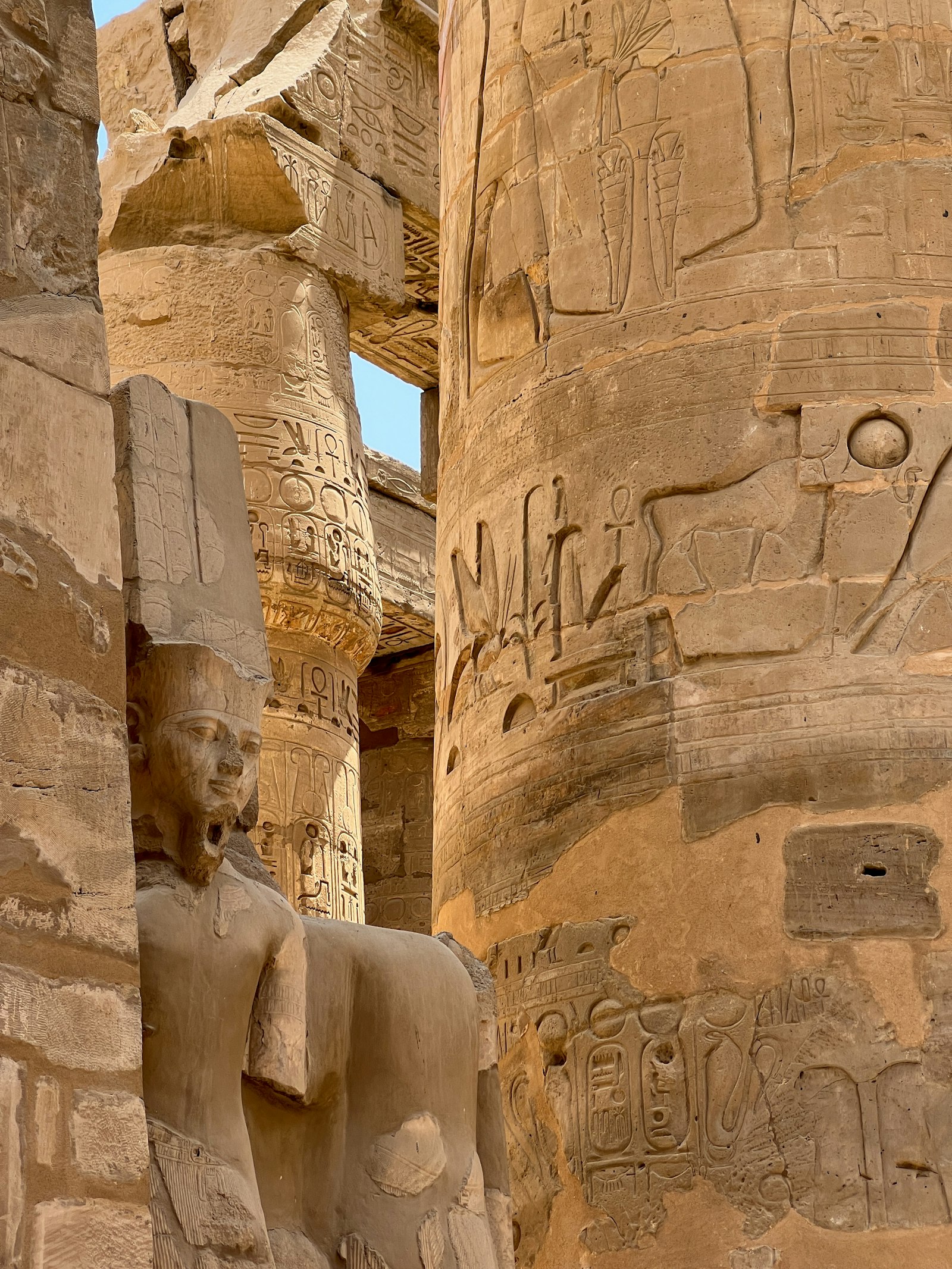
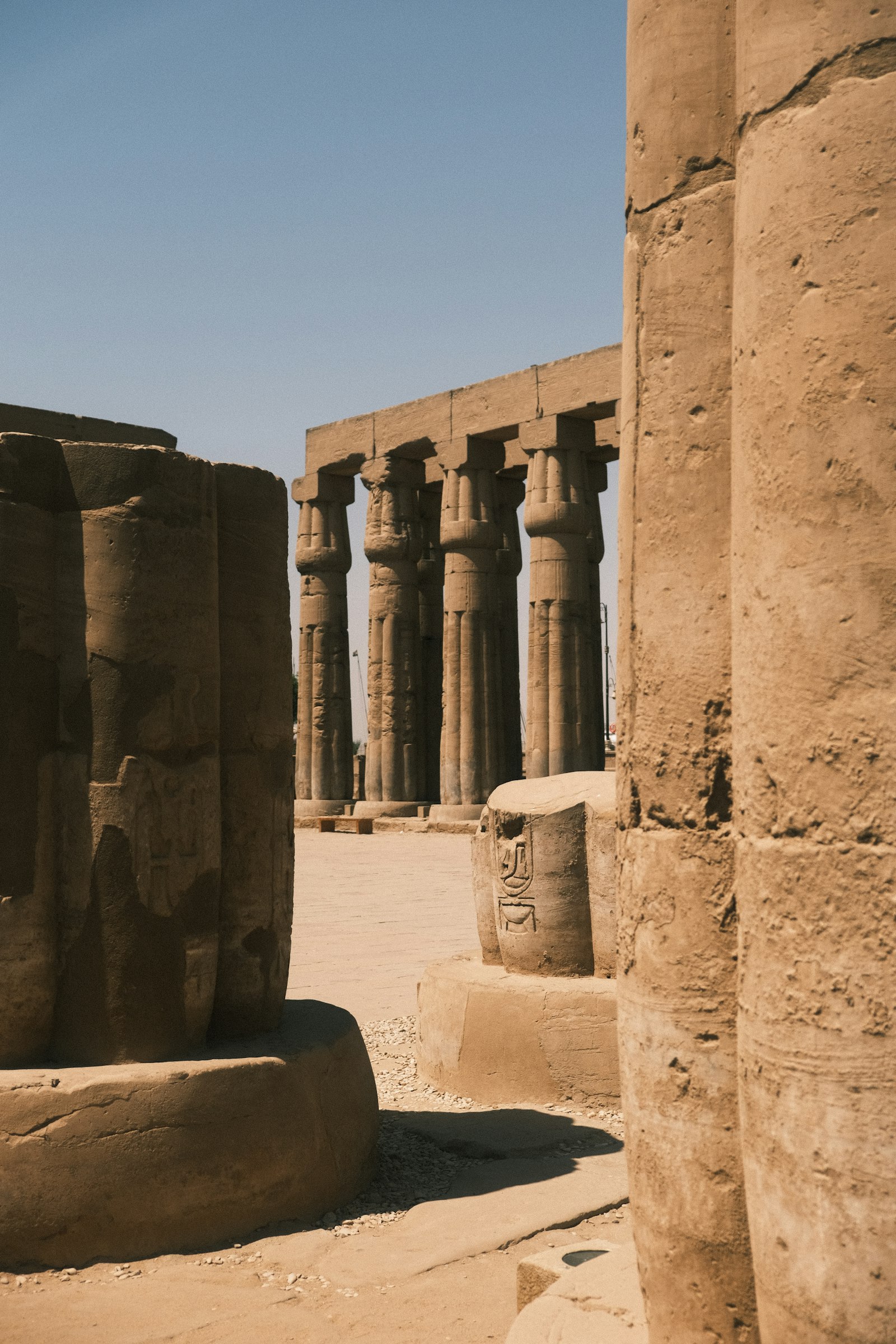
Beyond the pylon opens a wide colonnaded courtyard, surrounded on three sides by a portico with columns with elaborate floral capitals. The columns present a variety of vegetal capitals — papyrus, lotus, palm — that bear witness to the influence of the classical Egyptian decorative repertoire on a temple of the Roman era. The walls of the courtyard are decorated with reliefs that show ritual scenes and divine offerings.
The hypostyle hall, with its massive columns that support the ceiling, is the most evocative room of the temple. The half-light that reigns inside, interrupted by beams of light that filter through the openings in the ceiling, creates a mystical atmosphere that transports the visitor to a remote era. On the walls, detailed reliefs depict the procession of the Nubian and Egyptian gods, with Mandulis represented both in his human form with the hemhem crown and as a solar falcon.
The Inner Sanctuary
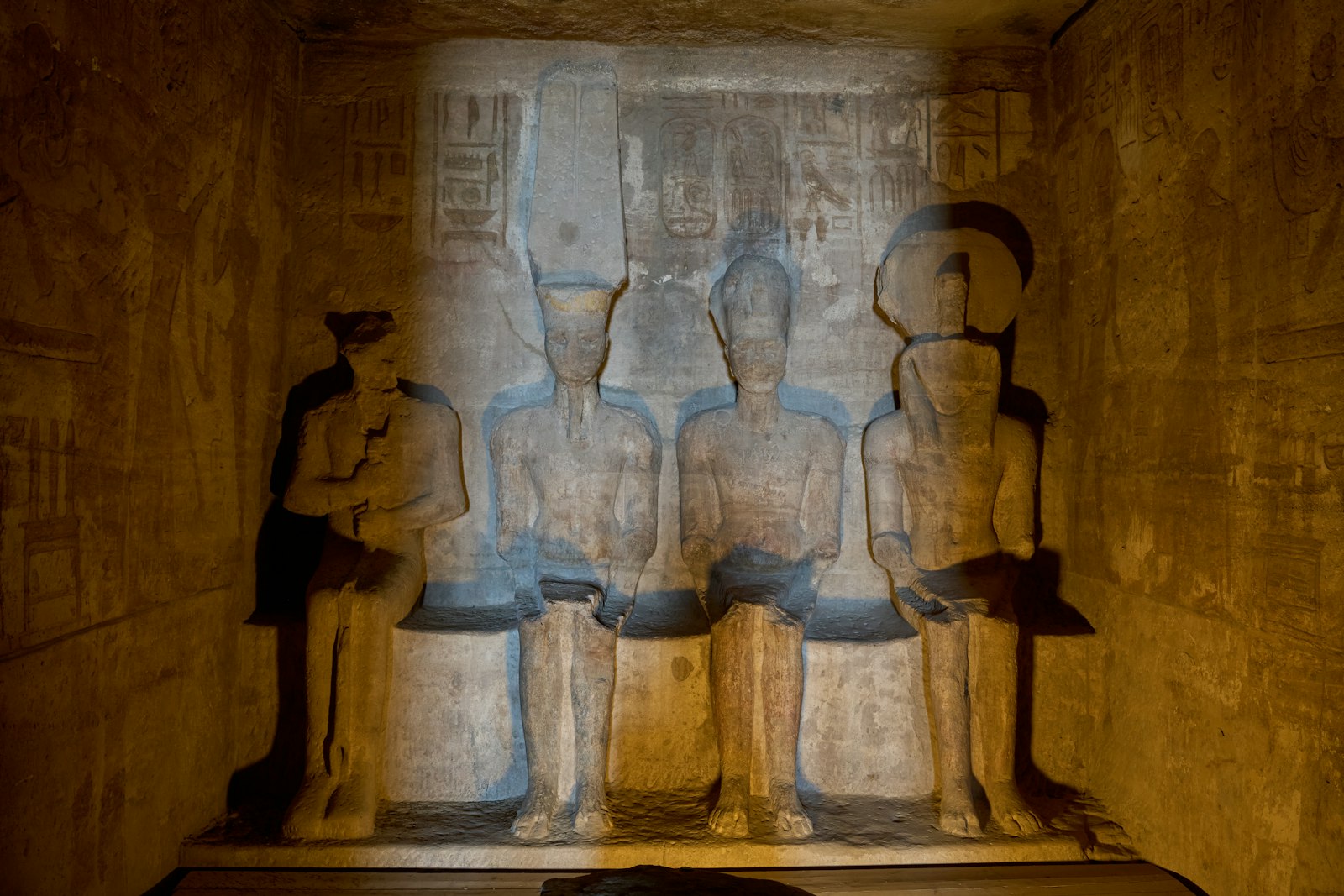
The heart of the temple is the sanctuary, a series of ever smaller and darker rooms that culminate in the cella of the naos where the sacred statue of the god Mandulis was kept. This spatial progression from the luminous outer courtyard to the darkness of the sancta sanctorum reflects the Egyptian theology of the temple as a microcosm of creation, where the light of the outer world gradually gives way to the primordial darkness from which the god emerges each day.
The walls of the sanctuary preserve the best-preserved reliefs of the entire temple, with scenes of offerings, rituals of purification and mythological representations of extraordinary finesse. Particularly remarkable is a scene that shows the pharaoh in the presence of Mandulis and the goddess Isis, in a composition that blends Egyptian and Nubian iconographic elements.
The Petroglyphs
One of the most fascinating aspects of the Temple of Kalabsha are the numerous petroglyphs visible on the outer walls, in particular on the upper terrace. These rock carvings, some of which date back to prehistoric eras preceding the construction of the temple, depict wild animals — elephants, giraffes, antelopes — and hunting scenes that bear witness to an era when the region was much greener and richer in wildlife than the present desert.
The Kiosk of Qertassi and Beit el-Wali
The Kiosk of Qertassi
In the immediate vicinity of the Temple of Kalabsha is the Kiosk of Qertassi, a graceful pavilion of the Roman era originally situated about 40 kilometres to the south. This small temple with a rectangular plan, composed of six elegant columns with Hathoric capitals, was also saved from the waters of Lake Nasser and rebuilt next to Kalabsha. Its present position, on a promontory overlooking the lake, offers one of the most evocative panoramas of the entire area.
The Temple of Beit el-Wali
A few steps from the Temple of Kalabsha is also the Temple of Beit el-Wali, a small rock-cut temple built by Ramesses II, which was transferred to the same site during the UNESCO rescue campaign. The visit to the three monuments — Kalabsha, Qertassi and Beit el-Wali — can be made in a single excursion, offering a complete panorama of Nubian sacred architecture from the New Kingdom to the Roman era.
Tips for the Visit
How to Get There
The Temple of Kalabsha is located on the western shore of Lake Nasser, a few kilometres south of the Great Aswan Dam. To reach it, it is necessary to take a taxi from the city of Aswan to the dam and from there continue with a boat that crosses an arm of the lake. Some tour operators in Aswan organise daily excursions that include transport by land and by water.
Opening Hours and Tickets
The site is generally open from 7:00 to 16:00 in winter and until 17:00 in summer. The entrance ticket includes access to the Temple of Kalabsha, the Kiosk of Qertassi and the Temple of Beit el-Wali. It is advisable to visit the site early in the morning or in the late afternoon to enjoy the best light and avoid the intense heat.
Photographic Suggestions
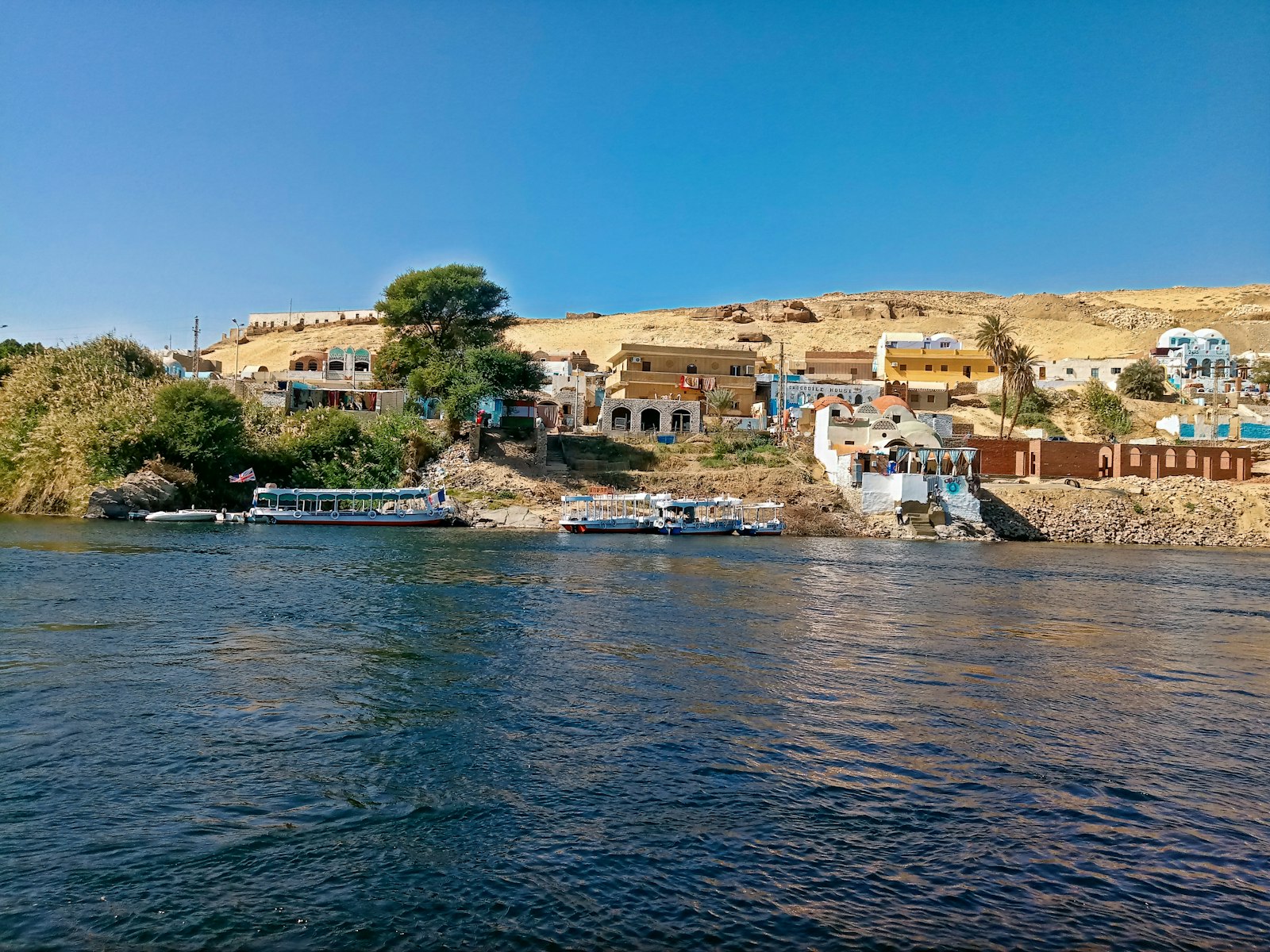
The Temple of Kalabsha offers extraordinary photographic opportunities, especially at sunset when the warm light of the dying sun tinges the sandstone with golden and rosy shades. The upper terrace of the temple offers a spectacular panoramic view over Lake Nasser and the Aswan Dam. For striking photographs, try to include in your compositions the contrast between the ancient stones of the temple and the blue waters of the lake.
To visit the Temple of Kalabsha means to come into contact with a fascinating chapter of Nubian history and with one of the most extraordinary feats of archaeological rescue of the 20th century, in a landscape setting of rare beauty between the waters of Lake Nasser and the sands of the desert.