The Aswan Dam: the Modern Colossus on the Nile
The Aswan Dam, known in Arabic as As-Sadd al-Ali, is one of the greatest engineering works of the 20th century and one of the symbols of modern Egypt. This imposing structure, built between 1960 and 1970 with the technical and financial cooperation of the Soviet Union, radically transformed the economy, agriculture and geography of the entire country. The dam is not only a monument to contemporary engineering, but also represents a crucial chapter of the geopolitical history of the Cold War, when control of the waters of the Nile became a matter of international interest.
Located about 13 kilometres south of the centre of Aswan, the High Dam is one of the essential stages for those who visit Upper Egypt. The view from the summit of the dam offers an extraordinary panorama: on one side the turquoise waters of Lake Nasser extend towards the Nubian desert, on the other the Nile resumes its millenary course towards the Mediterranean.
History of the Dam
The Old Dam and Its Limits
Before the High Dam, the British had built a smaller dam at Aswan between 1898 and 1902, under the direction of the engineer Sir William Willcocks. This dam, called the "Old Dam" or "Low Dam", was the first great work of modern hydraulic engineering on the Nile. It was raised twice, in 1912 and 1933, to increase its containment capacity. However, despite these expansions, the dam was not sufficient to control the annual floods of the Nile nor to guarantee a constant irrigation throughout the year. The catastrophic inundations continued to periodically devastate the Egyptian countryside, while in the periods of low water the water was dramatically scarce.
The High Dam Project
The idea of building a much larger dam took shape in the 1950s, under the presidency of Gamal Abdel Nasser. The original project was elaborated by the Greek-Egyptian engineer Adrian Daninos and provided for the creation of an immense artificial reservoir capable of completely regulating the flow of the Nile. Nasser saw in the dam not only a hydraulic work but the symbol of the Egyptian national rebirth and of independence from colonialism.
Initially, the United States and Great Britain offered to finance the project, but withdrew their offer in 1956 for political reasons linked to Nasser's rapprochement with the Soviet Union and to the recognition of communist China. Nasser responded by nationalising the Suez Canal, unleashing the international crisis that bears its name. It was the Soviet Union that intervened, providing financing, technology and a workforce of about 400 Soviet engineers who worked alongside the 30,000 Egyptian workers on the construction site.
The Construction (1960-1970)
Work officially began on 9 January 1960 with a ceremony presided over by Nasser. The construction site was one of the largest in the world in the 1960s. The first phase (1960-1964) provided for the deviation of the Nile through a lateral canal and the construction of the foundations. The second phase (1964-1968) saw the raising of the main body of the dam and the installation of the turbines. The dam was officially inaugurated on 15 January 1971 by President Anwar al-Sadat, after the death of Nasser which occurred in September 1970.
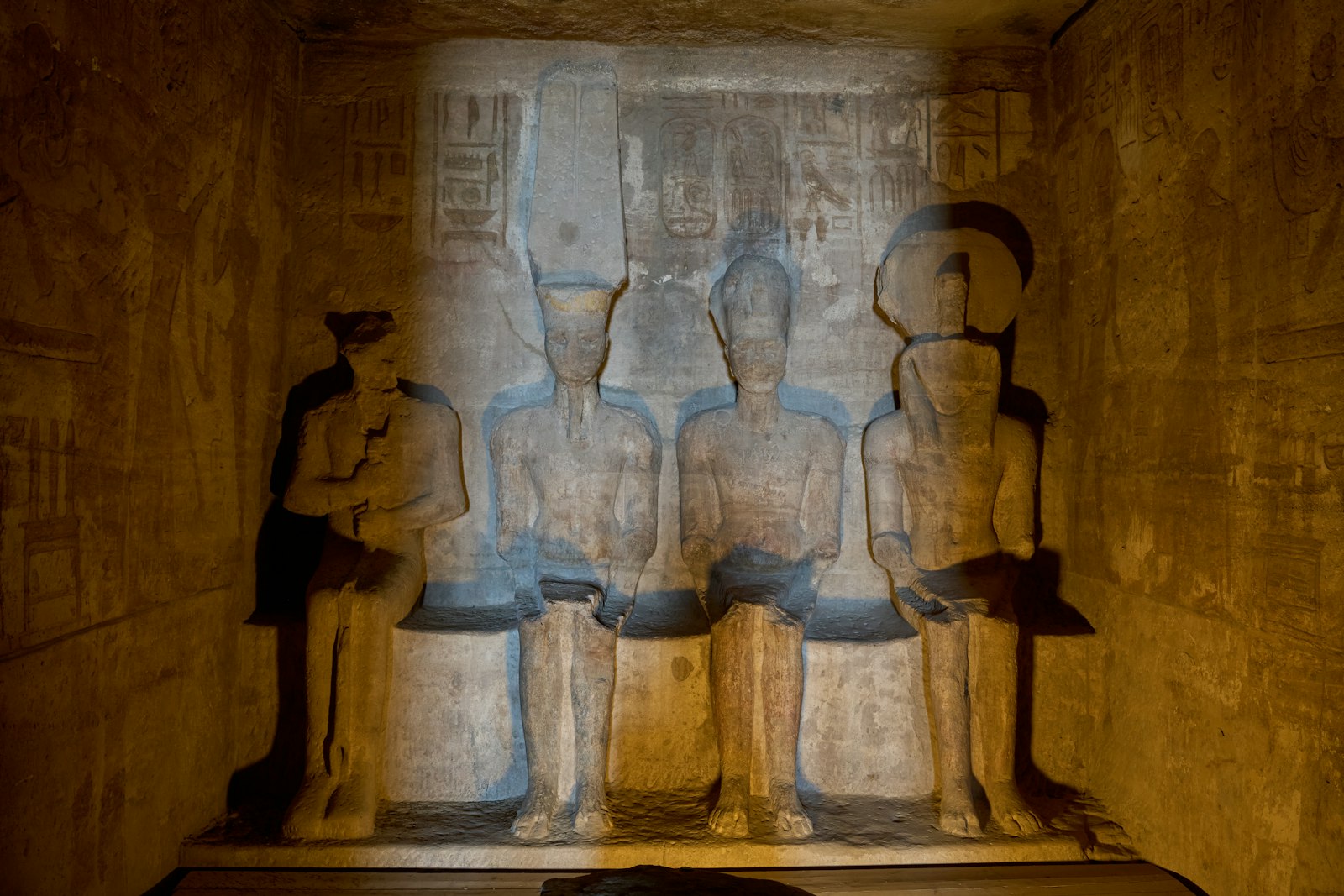
During the construction, the level of the waters behind the dam began to rise inexorably, threatening dozens of millenary archaeological sites in the region of Nubia. This led to the largest archaeological rescue campaign in history, coordinated by UNESCO, which between 1960 and 1980 saved 22 monuments and temple complexes, including the famous temples of Abu Simbel and the Temple of Philae.
Technical Characteristics
Dimensions and Structure
The dimensions of the Aswan Dam are impressive and make it one of the largest earth and rock dams in the world. The structure is 3,830 metres long at the summit and 980 metres wide at the base, narrowing to 40 metres at the top. The height reaches 111 metres above the level of the river bed. The total volume of materials used for the construction is about 43 million cubic metres, a quantity 17 times greater than that of the Great Pyramid of Cheops.
The dam is built with a core of impermeable clay, protected by layers of sand, gravel and rock. On the upstream face, a covering of concrete and granite guarantees protection against the erosion of the waters. The structure is designed to resist earthquakes of considerable intensity and exceptional water flows.
Lake Nasser
The reservoir created by the dam, Lake Nasser, is the largest artificial lake in Africa and one of the largest in the world. It extends about 550 kilometres towards the south, of which 150 kilometres in Sudanese territory, where it takes the name of Lake Nubia. The surface of the lake reaches 5,250 square kilometres at maximum capacity, with a water volume of about 132 billion cubic metres.
Lake Nasser has created a completely new ecosystem in the heart of the desert. Its waters host a rich fish fauna, including the Nile perch and the tiger fish, which have given life to a flourishing fishing industry. The shores of the lake, although desert, attract numerous species of migratory birds, making the area a point of interest for birdwatching.
Energy Production
The hydroelectric plant of the dam, equipped with 12 Francis turbines of 175 MW each, has a total installed capacity of 2,100 MW. At the moment of its construction, the plant supplied about half of the electrical energy of the entire Egypt. Today, while representing a minor percentage of the national energy requirement, the dam continues to produce about 10 billion kWh per year, a significant contribution to the energy mix of the country.
Impact and Consequences
Benefits
The benefits of the Aswan Dam for Egypt have been enormous. The regulation of the floods of the Nile has eliminated the catastrophic inundations that for millennia had alternated abundance and famine. The permanent irrigation has allowed the conversion of about 300,000 hectares of agricultural land from seasonal irrigation to perennial irrigation and the reclamation of a further 400,000 hectares of desert. Agricultural production has increased drastically, allowing Egypt to feed its rapidly growing population.
Environmental Issues
The construction of the dam also had significant negative consequences. The blocking of the fertile silt transported by the Nile has impoverished the agricultural land downstream, making necessary the massive use of chemical fertilisers. The coastal erosion in the Nile Delta has accelerated due to the lack of sediments. The salinisation of the soils has increased in some areas. The ecosystem of the Nile downstream of the dam has been profoundly altered, with the disappearance of some fish species and the proliferation of others.
The Lotus Tower
On the eastern shore of the dam rises the Lotus Tower, a monument 72 metres high in the form of a stylised lotus flower, built to commemorate the Egyptian-Soviet cooperation and the completion of the dam. Designed by Soviet architects, the tower is decorated with reliefs that celebrate the workers and the engineers who built the dam. From the platform at the base of the tower one enjoys a spectacular panoramic view of the dam and of Lake Nasser.
Tips for the Visit
How to Arrive
The Aswan Dam is located about 13 kilometres south of the city centre. The most practical way to reach it is by taxi or through an organised tour. The majority of the excursions from Aswan include the visit to the dam together with the Temple of Philae and the Unfinished Obelisk. The road that crosses the summit of the dam is the only land route to reach the sites to the south, including the airport for Abu Simbel.
The Visit
The visit to the dam is relatively quick. One can travel along the summit of the dam by car or on foot, admiring the views of Lake Nasser to the south and of the Nile to the north. The monument of the Lotus Tower is the focal point of the visit, with its brutalist architecture that contrasts with the surrounding natural landscapes. A small museum near the eastern wall illustrates the history of the construction with photographs, models and documents of the period.
What to Bring and Suggestions
Bring sun protection, a hat and water. The summit of the dam is very exposed to the sun and the wind. The mornings are the best moment for the visit, both for the light and for the more moderate temperatures. Photography is generally permitted, but some areas of the dam, as a strategic infrastructure, may have restrictions: respect any indications of the security personnel.
Combining the Visit
The Aswan Dam combines perfectly with a visit to the Temple of Philae, whose embarkation pier is located in the vicinity. An ideal day in Aswan could include the dam in the morning, followed by Philae and the Unfinished Obelisk in the afternoon. For those who have more time, a cruise on Lake Nasser towards Abu Simbel departs precisely from the port near the dam and is an unforgettable experience.
Curiosities about the Aswan Dam
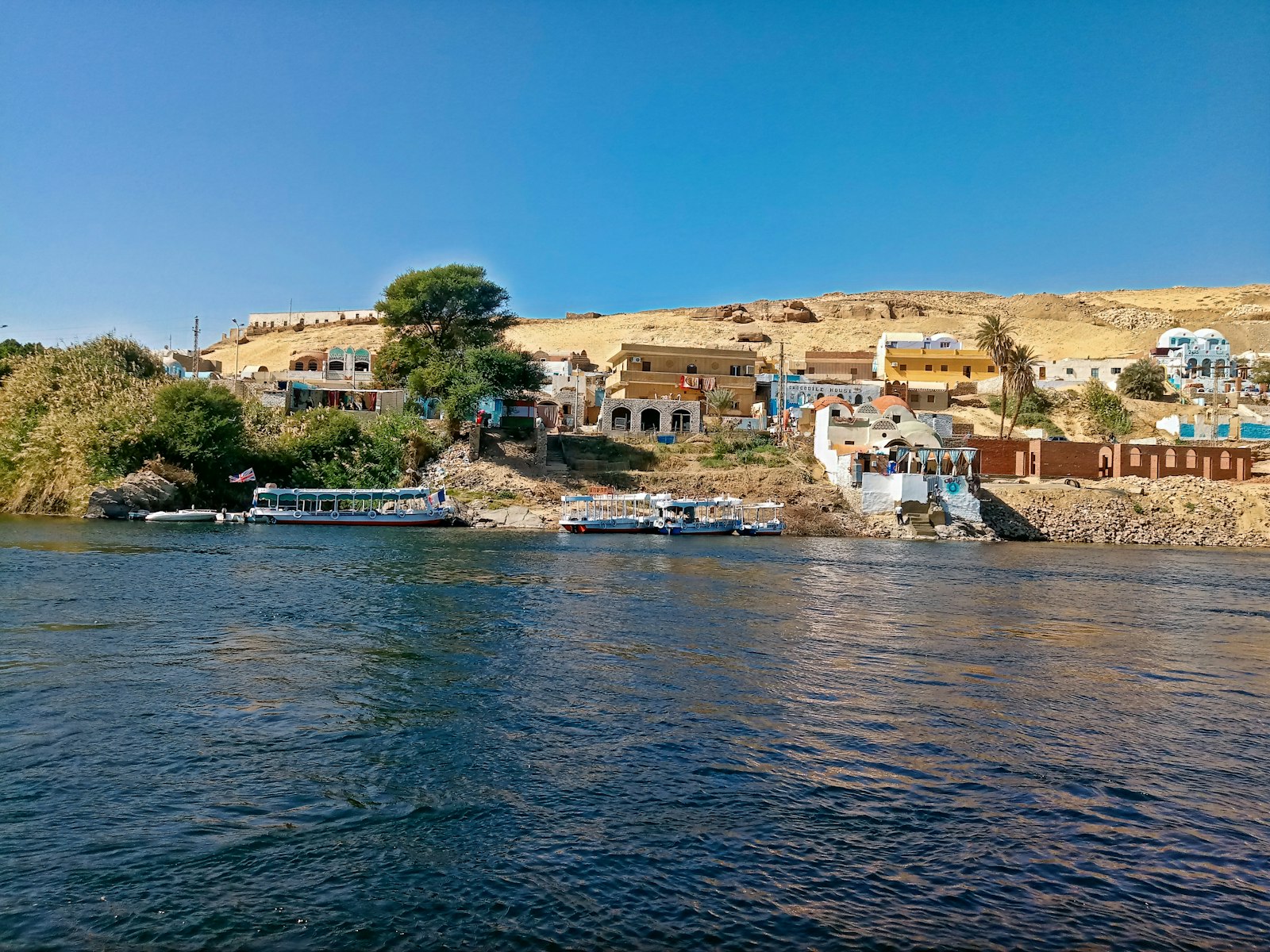
The quantity of material used to build the dam is equivalent to 17 times the volume of the Great Pyramid of Cheops. During the construction, about 90,000 Nubians were transferred from their ancestral lands, submerged by Lake Nasser, into new villages built by the government: a cultural trauma whose consequences are still felt today. President Nasser considered the dam his most important project and compared it to the construction of the pyramids, defining it "the pyramid of modern Egypt".
The Aswan Dam is much more than a hydraulic infrastructure: it is a symbol of the modernisation of Egypt, a monument to international cooperation and a unique observation point for understanding the millenary relationship between Egypt and its sacred river, the Nile.