The Temple of Khnum: the Sanctuary of the Creator God
The Temple of Khnum on Elephantine Island is one of the most significant archaeological sites of Aswan, a place where the religious devotion of the ancient Egyptians towards one of their most ancient gods is manifested in an archaeological stratigraphy that embraces over two thousand years of history. Dedicated to Khnum, the ram-headed god who according to Egyptian mythology shaped the body of human beings on his potter's wheel, the temple represents a unique architectural palimpsest, with pharaonic foundations, Ptolemaic reconstructions and Roman additions that overlap in a fascinating tale of stone.
Located at the southern extremity of Elephantine Island, in a position that dominates the First Cataract of the Nile, the temple was the religious centre of one of the most important frontier cities of ancient Egypt. Today, thanks to the excavations conducted by the German Archaeological Institute (DAI) and the Swiss Institute, the temple is progressively revealing its secrets, offering visitors a rare experience of archaeology in progress.
The God Khnum
The Creator of Humanity
Khnum was one of the most ancient deities of the Egyptian pantheon, whose veneration dates back to the predynastic period. Represented as a man with the head of a ram with horizontal and twisted horns, Khnum was considered the demiurge, the god who had created all living beings. According to the creation myth associated with Khnum, the god sat at his potter's wheel on the banks of the Nile and shaped the physical body (khat) and the vital spirit (ka) of every human being using the clay of the sacred river.
This conception of creation was deeply rooted in Egyptian culture. The clay of the Nile, deposited by the annual floods, was the raw material of life itself, and Khnum was its master craftsman. The scenes that decorate the temples show the god at work on his wheel, with his hands modelling two small human figures — the body and the ka — under the benevolent eyes of the goddesses Hathor and Heket.
The Guardian of the Sources of the Nile
Khnum was not only the creator of humanity but also the guardian of the sources of the Nile. The ancient Egyptians believed that the Nile was born from an underground cavern situated beneath the rocks of the First Cataract, right in the vicinity of Elephantine Island. Khnum controlled the gates of this cavern and regulated the flow of the waters, determining the extent of the annual flood. A favourable flood was a sign of Khnum's benevolence; a scarce or excessive inundation indicated his anger.
This function made the cult of Khnum at Elephantine of capital importance for the economy of all Egypt. The priests of the temple were responsible for the monitoring of the floods through the Nilometer and for the propitiatory rituals destined to ensure favourable inundations.
The Triad of Elephantine
Khnum was venerated at Elephantine together with two female deities who formed with him a sacred triad. Satis (Satet), his divine consort, was the goddess of the cataract and of the waters of the flood, represented as a woman with the white crown of Upper Egypt adorned with two gazelle horns. Anuket (Anukis), their daughter, was the goddess of Nubia and of the First Cataract, depicted with a tall headdress of feathers. Each of these deities had its own temple on Elephantine Island, creating an integrated religious complex.
History of the Temple
The Construction Phases
The archaeological excavations have revealed that the Temple of Khnum at Elephantine was built, destroyed and rebuilt numerous times over the course of the millennia. The first identifiable structures date back to the Old Kingdom (around 2600 BC), when the governors of the island erected a first sanctuary in stone. This primitive temple was enlarged during the Middle Kingdom and further modified during the New Kingdom, when the great pharaohs of the 18th and 19th dynasties enriched the complex with new halls and decorations.
The temple suffered significant damage during the Third Intermediate Period and the subsequent foreign domination. It was Nectanebo I (380-362 BC), the last great indigenous pharaoh of Egypt, who undertook a substantial reconstruction, erecting a new pylon in local pink granite of imposing design. This pylon, still partially visible, is one of the most significant architectural elements of the site.
The Ptolemaic Reconstruction
The most important construction phase of the temple we see today dates back to the Ptolemaic period. The Greek sovereigns of Egypt, eager to legitimise their power through religious continuity, invested massively in the reconstruction and enlargement of the Egyptian temples. At Elephantine, the Ptolemies rebuilt the Temple of Khnum on pharaonic foundations, using large blocks of pink granite extracted from the local quarries. The architectural style combines traditional Egyptian elements with Hellenistic influences, creating an aesthetic typical of Ptolemaic Egypt.
The Roman Additions
After the Roman conquest of Egypt in 30 BC, the temple continued to receive attentions and additions. The Romans, like the Ptolemies before them, recognised the political importance of respecting the local religious traditions. New structures and decorations were added, and the cult of Khnum continued uninterrupted until the definitive closure of the pagan temples ordered by the emperor Theodosius at the end of the 4th century AD.
The Destruction and the Rediscovery
After the closure, the temple was progressively dismantled. The granite blocks were reused for subsequent constructions, and the area was occupied by dwellings. For centuries, the temple remained buried under the houses and the accumulated debris. Only in the 20th century, with the commencement of the systematic excavations conducted by the German and Swiss archaeological missions, did the temple begin to re-emerge from the earth.
The Archaeological Excavations
The German and Swiss Missions
Since 1969, the German Archaeological Institute (DAI) of Berlin, in collaboration with the Swiss Institute for Architectural and Archaeological Research on Ancient Egypt, conducts systematic excavations on Elephantine Island. This is one of the longest-lived and most important archaeological missions of Egypt, which has transformed our understanding of the history of the island and of the cult of Khnum.
The excavations have brought to light not only the remains of the temple, but an entire ancient city with its streets, dwellings, artisan workshops, storerooms and administrative structures. The stratigraphy of the site is exceptionally rich, with levels that range from the predynastic period to the Islamic era, providing a continuous documentation of urban life in Egypt for over five thousand years.
The Principal Discoveries
Among the most significant discoveries of the excavations are the foundations of the superimposed temples, which show how the sanctuary was repeatedly rebuilt on the same sacred place over the course of the millennia. Particularly important is the finding of blocks decorated with refined reliefs that show ritual scenes, divine processions and offerings to the god Khnum. These blocks, many of which were reused in subsequent constructions, are progressively studied and, when possible, repositioned in their original location.
Another discovery of great importance is that of a foundation deposit containing votive objects, ritual instruments and figurines that document the consecration ceremonies of the temple. The seals and the inscriptions found in this deposit have allowed the precise dating of the different construction phases of the sanctuary.
Visit to the Temple
What Can Be Seen Today
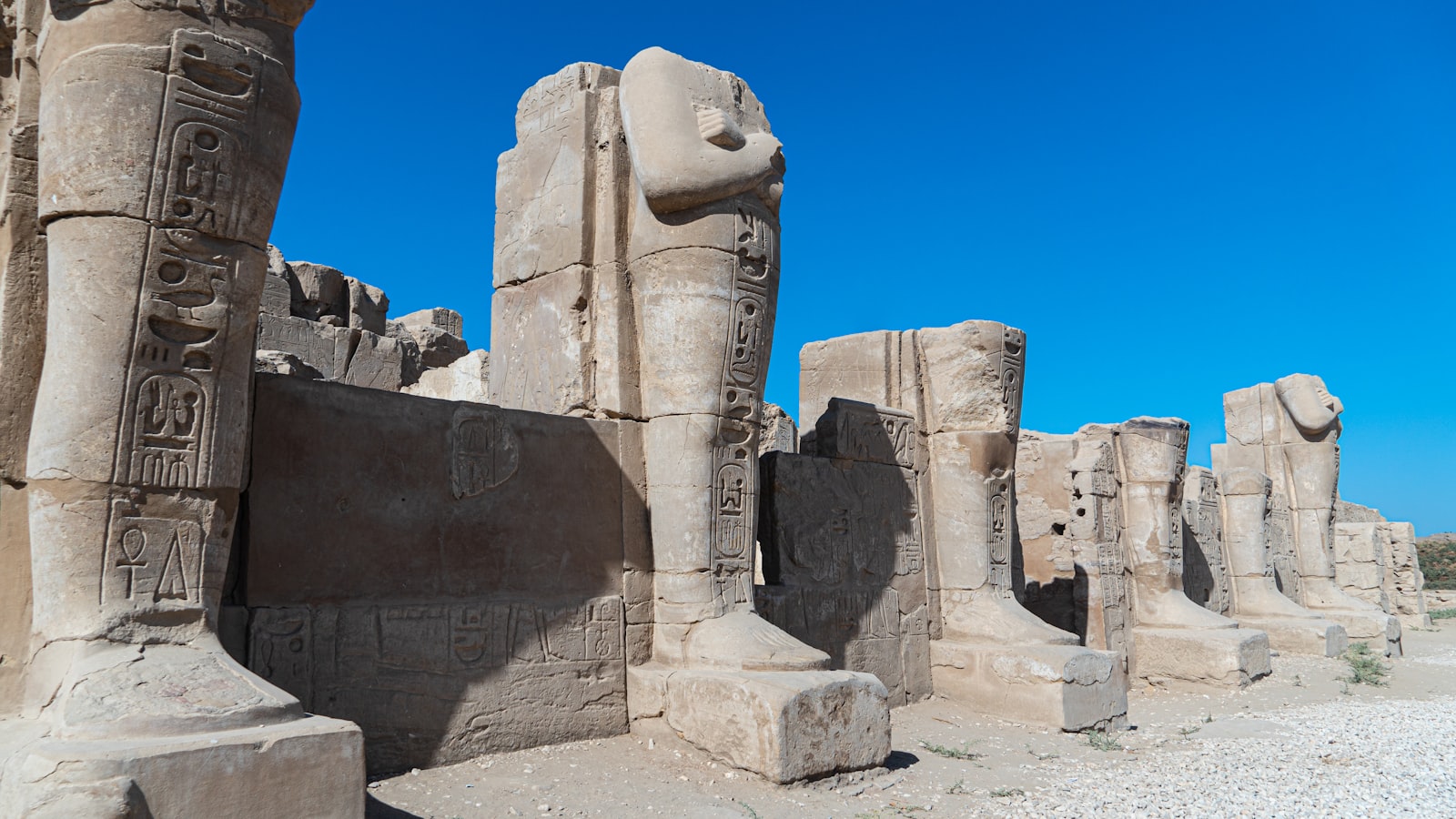
The current state of the Temple of Khnum is that of an archaeological site in the phase of excavation and partial restoration. Visitors can observe the foundations of the temple, the remains of the pylon of Nectanebo I, sections of granite walls and numerous decorated blocks arranged along the visit route. Information panels explain the function of the different structures and the chronology of the site. The experience is different from that of a completely restored temple such as Philae, but it has the unique charm of an active archaeological worksite where history is literally unearthed before the eyes of the visitors.
How to Get There
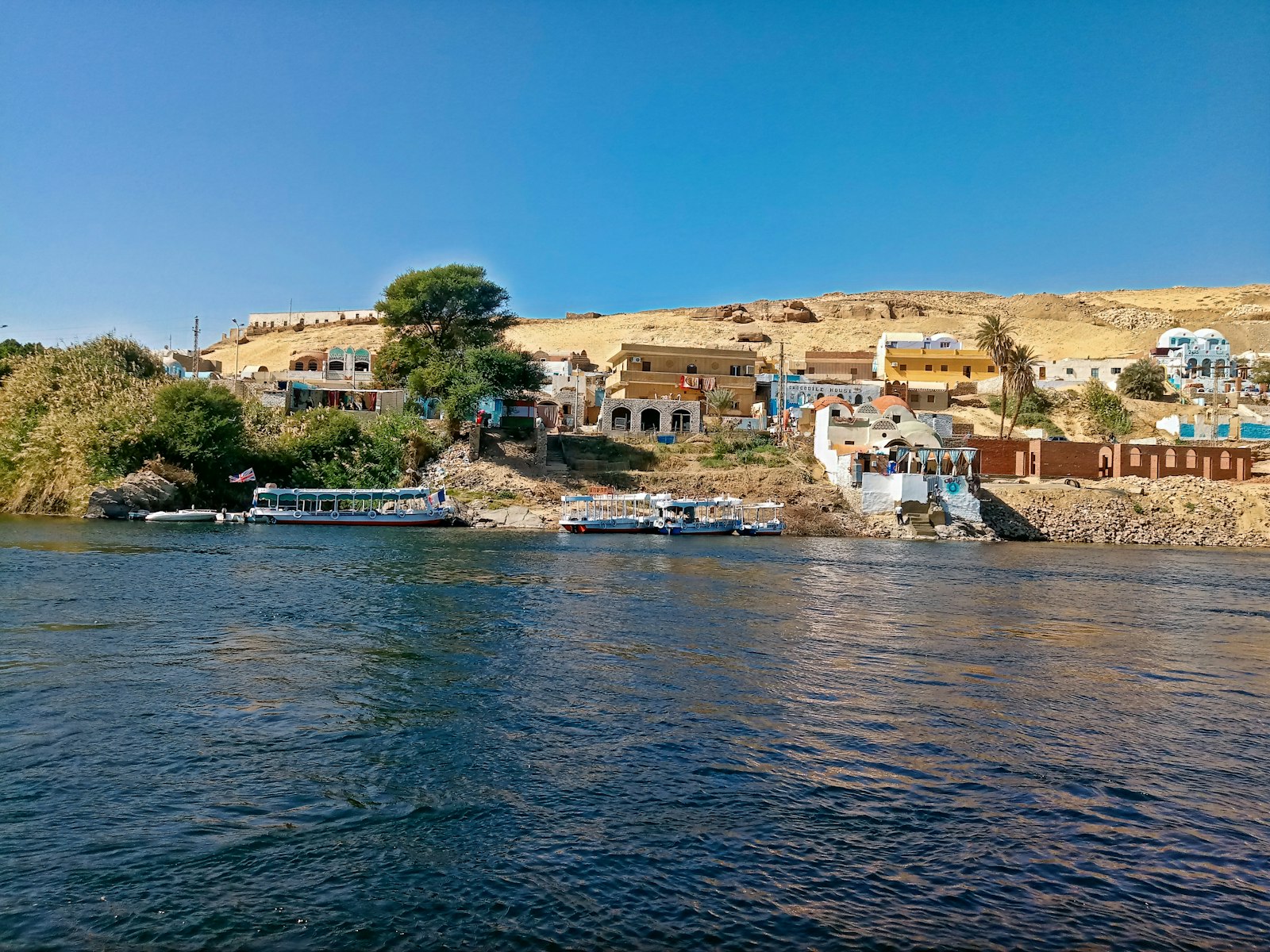
The Temple of Khnum is located within the archaeological site of Elephantine Island, reachable by felucca, motorboat or ferry from the Corniche of Aswan. Entry to the site requires a ticket. The temple is in the southern part of the island, reachable on foot from the landing quay in about 10-15 minutes through the Nubian villages.
Practical Advice
Comfortable shoes are essential since the terrain of the archaeological site is irregular. Bring water and sun protection in abundance. The visit to the temple combines naturally with the exploration of the entire Elephantine Island, including the Nilometer, the Aswan Museum and the Nubian villages. A local guide can enormously enrich the experience, explaining the details of the excavations and the connections between the different construction phases.
Photographic Suggestions
The archaeological site offers interesting photographic opportunities above all in the early morning, when the raking light enhances the textures of the granite and creates dramatic shadows among the blocks. The contrast between the ancient ruins and the Nile that flows in the background is particularly evocative. For overall photographs of the site, the higher points of the archaeological area offer the best perspectives.
Curiosities about the Temple of Khnum
The veneration of the ram at Elephantine was so important that the sacred rams of the temple were mummified after death and buried with almost royal honours. One of these mummies is exhibited in the Aswan Museum on the island. The pink granite used for the construction of the temple comes from the local quarries of Aswan, the same from which the Unfinished Obelisk was extracted, creating a direct link between these two sites.
The Temple of Khnum represents an extraordinary case in the history of Egyptian archaeology: a place where the past is not crystallised in a finished monument, but continues to reveal itself day after day thanks to the patient work of the archaeologists, offering an ever deeper understanding of the religiosity and the architecture of ancient Egypt.