The Temple of Philae: the Sanctuary of the Goddess Isis
The Temple of Philae is one of the most fascinating and best preserved temple complexes of all of Egypt. Dedicated to the goddess Isis, lady of magic and protectress of motherhood, this sanctuary represents a masterpiece of Ptolemaic and Roman architecture that has crossed the millennia defying even the waters of the Nile. Its history is inextricably linked to one of the most extraordinary engineering feats of the 20th century: the transfer of the entire complex from its original site on the Island of Philae to the nearby Island of Agilkia, to save it from the submersion caused by the construction of the Aswan Dam.
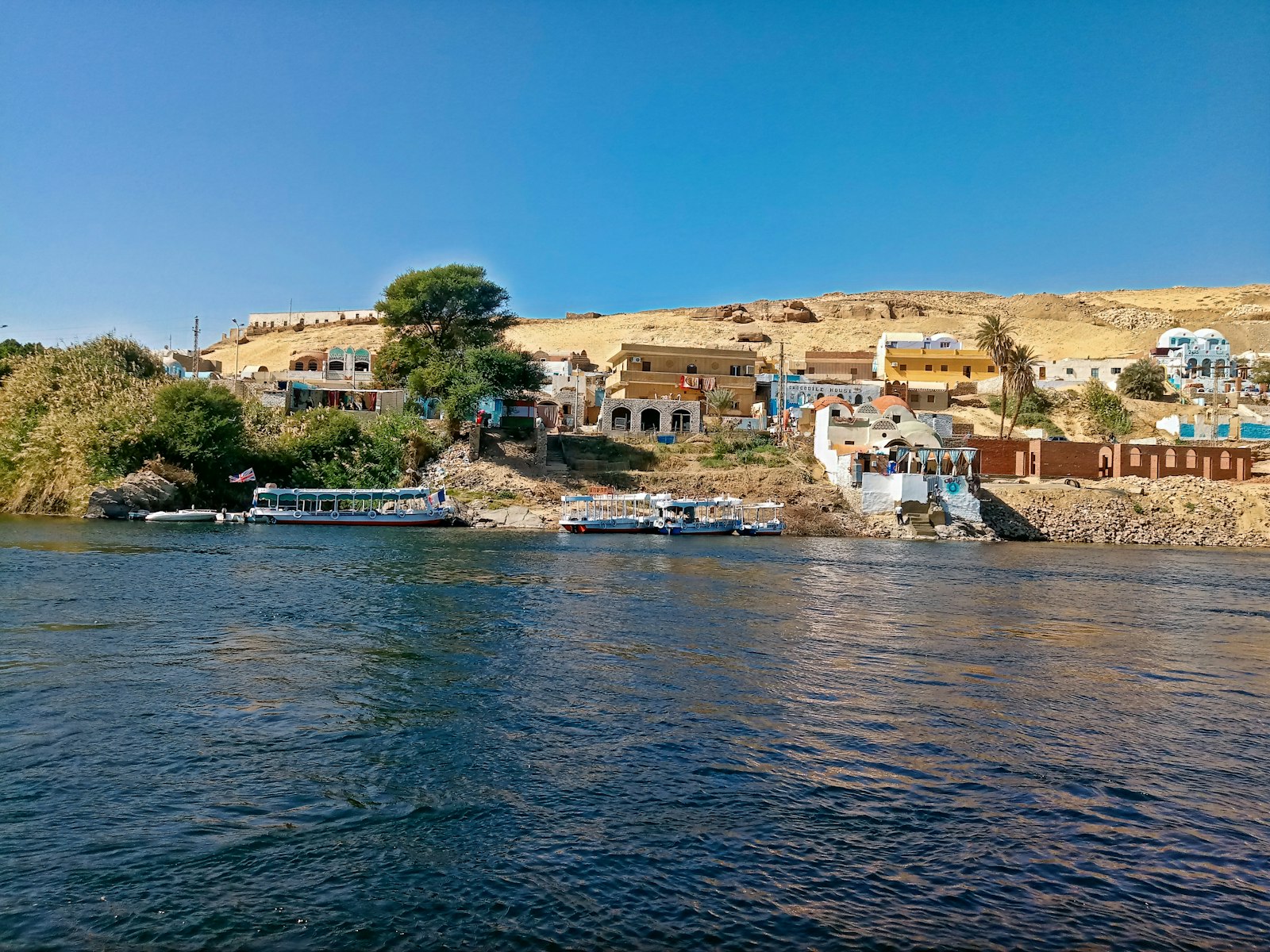
Today the temple rises majestic on the Island of Agilkia, reachable exclusively by boat from the pier located south of the Old Dam of Aswan. The approach from the Nile offers a breathtaking view: the columns and pylons emerge among the vegetation of the island, creating an image that seems to come straight out of a romantic painting of the nineteenth century.
History of the Temple
The Origins of the Cult of Isis at Philae
The cult of Isis on the Island of Philae sinks its roots into the pharaonic period, but the temple complex that we admire today was built mainly during the Ptolemaic period (305-30 BC) and subsequently expanded in the Roman era. The position of the island, situated close to the First Cataract of the Nile, made it a sacred place of border between Egypt and Nubia, a symbolic point of passage between the world of the living and that of the gods.
The original nucleus of the temple was built by the will of Nectanebo I (380-362 BC), last great pharaoh of the XXX dynasty, who built the first kiosk and a small sanctuary. The main construction was then undertaken by Ptolemy II Philadelphus (285-246 BC) and continued by his successors for over three centuries. Each sovereign added new structures, courtyards and decorations, transforming Philae into one of the most important sanctuaries of the Hellenistic world.
The Last Hieroglyphic Inscription
The Temple of Philae has an exceptional historical importance since it hosts the last known hieroglyphic inscription, dated 24 August 394 AD. This inscription, engraved on the Gate of Hadrian, symbolically marks the end of a tradition of writing that lasted over three thousand years. The temple was also the last active pagan sanctuary in Egypt: the cult of Isis continued here until 535 AD, when the Byzantine emperor Justinian ordered the definitive closure of the temple and its conversion into a Christian church dedicated to Saint Stephen.
The UNESCO Rescue
The construction of the Old Dam of Aswan (1898-1902) caused the partial submersion of the Island of Philae for much of the year. After the construction of the High Dam in the sixties, the temple found itself completely surrounded by the waters of Lake Nasser, submerged for a good part of the time between the two dams. UNESCO launched an international rescue campaign that between 1972 and 1980 led to the complete dismantling of the temple, block by block, and to its reconstruction on the Island of Agilkia, specially reshaped to reproduce the topography of the original island. About 40,000 stone blocks were moved, and the entire operation cost over 30 million dollars.
The Temple Complex
The First Pylon and the Courtyard
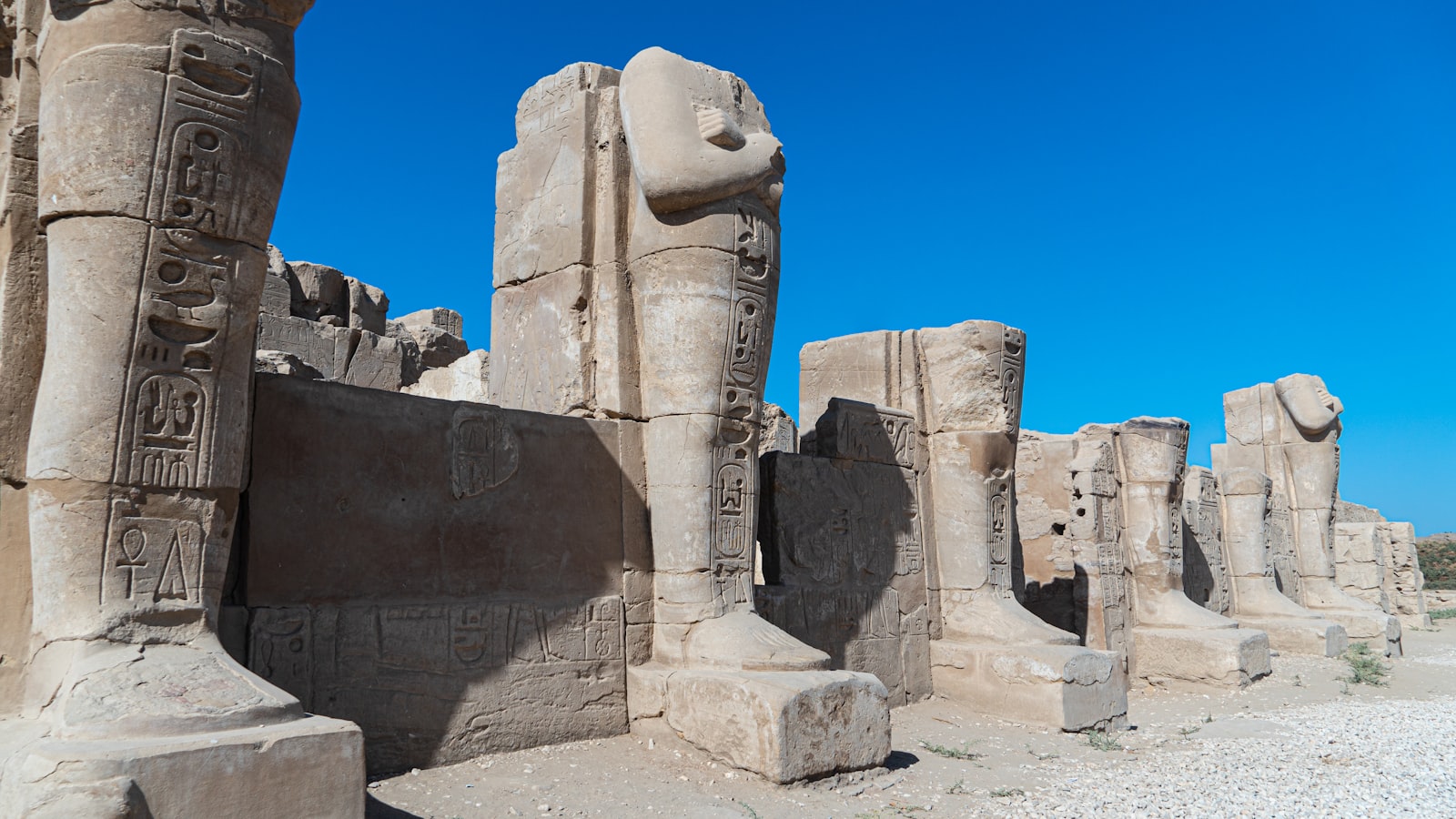
The entrance to the temple complex occurs through a long colonnaded avenue that leads to the First Pylon, 18 metres high and 45 metres wide. The imposing facades of the pylon are decorated with reliefs that depict Ptolemy XII Neos Dionysos in the act of striking the enemies of Egypt in the presence of Isis, Horus and Hathor. This traditional iconography, typical of Egyptian temples, symbolizes the power of the pharaoh as protector of the cosmic order.
The outer courtyard is flanked by an elegant colonnade with capitals of different forms, each unique in its kind, which reflects the refined aesthetic of the Ptolemaic period. On the western side is found the House of Birth (mammisi), a small temple dedicated to the myth of the divine birth of Horus, son of Isis and Osiris.
The Second Pylon and the Sanctuary
Having crossed the courtyard, one reaches the Second Pylon, also richly decorated with religious scenes. Beyond this pylon one enters the heart of the temple: a hypostyle hall with ten columns, whose walls are covered with reliefs that narrate the sacred rituals dedicated to Isis. The quality of the engravings is extraordinary, with very fine details that show offerings, processions and divine ceremonies.
The sancta sanctorum, the innermost and most sacred chamber of the temple, originally hosted the cult statue of the goddess Isis. This small dark room, accessible only to the priests of highest rank, was the spiritual fulcrum of the entire complex. The walls bear scenes of the myth of Osiris and Isis, narrating the death and resurrection of the god Osiris thanks to the magic of his divine wife.
The Kiosk of Trajan
The Kiosk of Trajan, built by the Roman emperor Trajan (98-117 AD), is perhaps the most iconic structure of the entire complex and one of the most photographed monuments of Egypt. This elegant rectangular structure, with fourteen columns about 15 metres high with floral capitals, was probably the ceremonial entrance from the river. Never completed in its decoration, the kiosk presents only two partially sculpted walls, but its architectural grace makes it a masterpiece of Roman art in Egypt.
The Gate of Hadrian and Other Buildings
The Gate of Hadrian, built by the emperor Hadrian (117-138 AD), is a small but precious monument that hosts unique reliefs depicting the myth of the source of the Nile. According to Egyptian legend, the Nile was born from a cavern under the Island of Bigeh, adjacent to Philae, where Osiris was buried. The reliefs show the god Hapy, divinity of the Nile, while he pours sacred water from two amphorae.
The complex also comprises the Temple of Hathor, with delicate scenes of music and dance, the Temple of Augustus and several minor chapels dedicated to Nubian divinities, testimony of the multicultural character of this sacred place of border.
The Sound and Light Show
Every evening the Temple of Philae transforms into a magical stage thanks to the Sound and Light Show, one of the most evocative of Egypt. The show guides visitors through the temple complex illuminated by coloured lights, while an evocative narration tells the history of the temple and the myth of Isis and Osiris. The combination of the nocturnal setting, the reflections on the water and the music creates an unforgettable atmosphere. The show is available in several languages, including Italian on certain days of the week.
The Religious Importance of Isis
The cult of Isis was not limited to Egypt but spread throughout the Mediterranean world, from Italy to Greece, from Spain to Germany. The Temple of Philae was the main centre of this universal cult, attracting pilgrims from every corner of the ancient world. The goddess Isis embodied the perfect mother, the devoted wife and the powerful sorceress, qualities that made her one of the most beloved divinities of antiquity. Many scholars believe that the cult of Isis profoundly influenced the Christian iconography of the Virgin Mary with the Child.
Tips for the Visit
How to Arrive
The Temple of Philae is reached from the pier of Shellal, located about 8 kilometres south of the centre of Aswan. From the pier motorboats depart continuously that take about 10 minutes to reach the Island of Agilkia. The cost of transport by boat is to be agreed before departure; it is advisable to share the boat with other visitors to reduce the expense. Most of the hotels and tourist agencies of Aswan organize daily excursions to the temple.
Hours and Tickets
The complex is open from 07:00 to 16:00 in winter and from 07:00 to 17:00 in summer. It is advisable to arrive early in the morning or in the late afternoon to enjoy the best light and avoid the crowd. For the Sound and Light Show it is necessary to purchase a separate ticket and reach the pier in the evening. Verify the hours and the languages available at your hotel.
What to Bring
Bring with you water in abundance, sun protection and a hat. Comfortable shoes are essential since the terrain of the island is uneven. A camera is a must: every corner of the temple offers extraordinary photographic glimpses. For the evening show, remember to bring a light jacket since the evenings on the Nile can be cool, especially in the winter months.
Suggestions for Photography
The best moments to photograph the temple are early morning, when the grazing light enhances the reliefs of the walls, and the late afternoon, when the low sun creates dramatic shadows on the columns. The Kiosk of Trajan is particularly photogenic at sunset, when it stands out against the fiery sky with the Nile in the background. During the boat journey, do not miss the opportunity to photograph the temple from the water: the overall view from the Nile is spectacular.
Curiosities about the Temple of Philae
The Island of Agilkia, where today the temple rises, was completely reshaped to replicate the form and the topography of the original Island of Philae. Before the transfer, the island was much smaller and devoid of vegetation. The name "Philae" derives probably from the Greek "philai" (beloved), although the exact origin is debated. In the late Roman era, the temple was one of the last bastions of paganism in Egypt, and the priests of Isis resisted for over a century after the official Christianization of the Empire.
To visit the Temple of Philae is an experience that unites the wonder for ancient architecture with the emotion for the extraordinary work of rescue that allowed this jewel to survive. The combination of the boat journey, the insular setting and the beauty of the reliefs makes this visit one of the most memorable of a trip to Egypt.