The Tombs of the Nobles of Giza: A Hidden Treasure at the Foot of the Pyramids
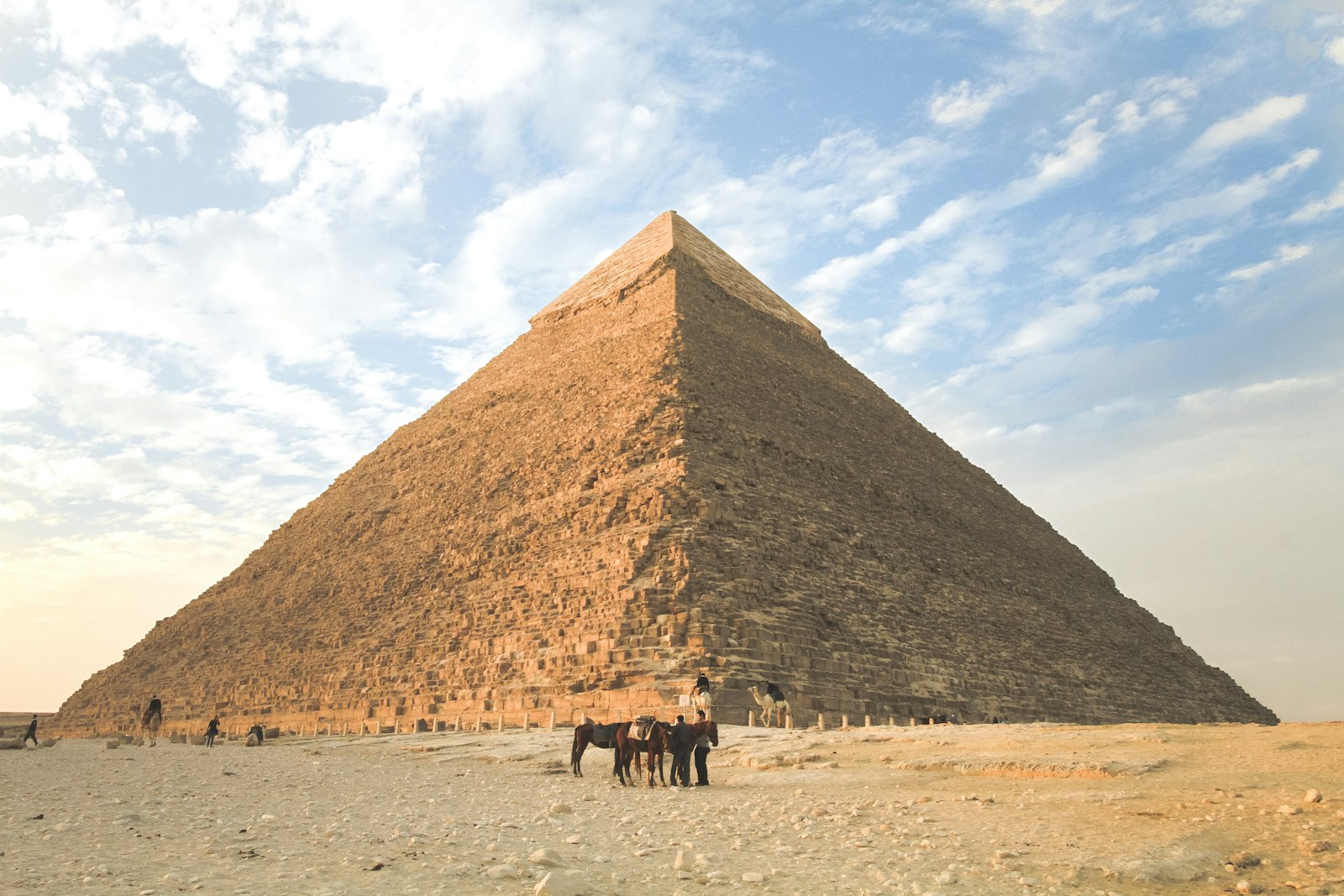
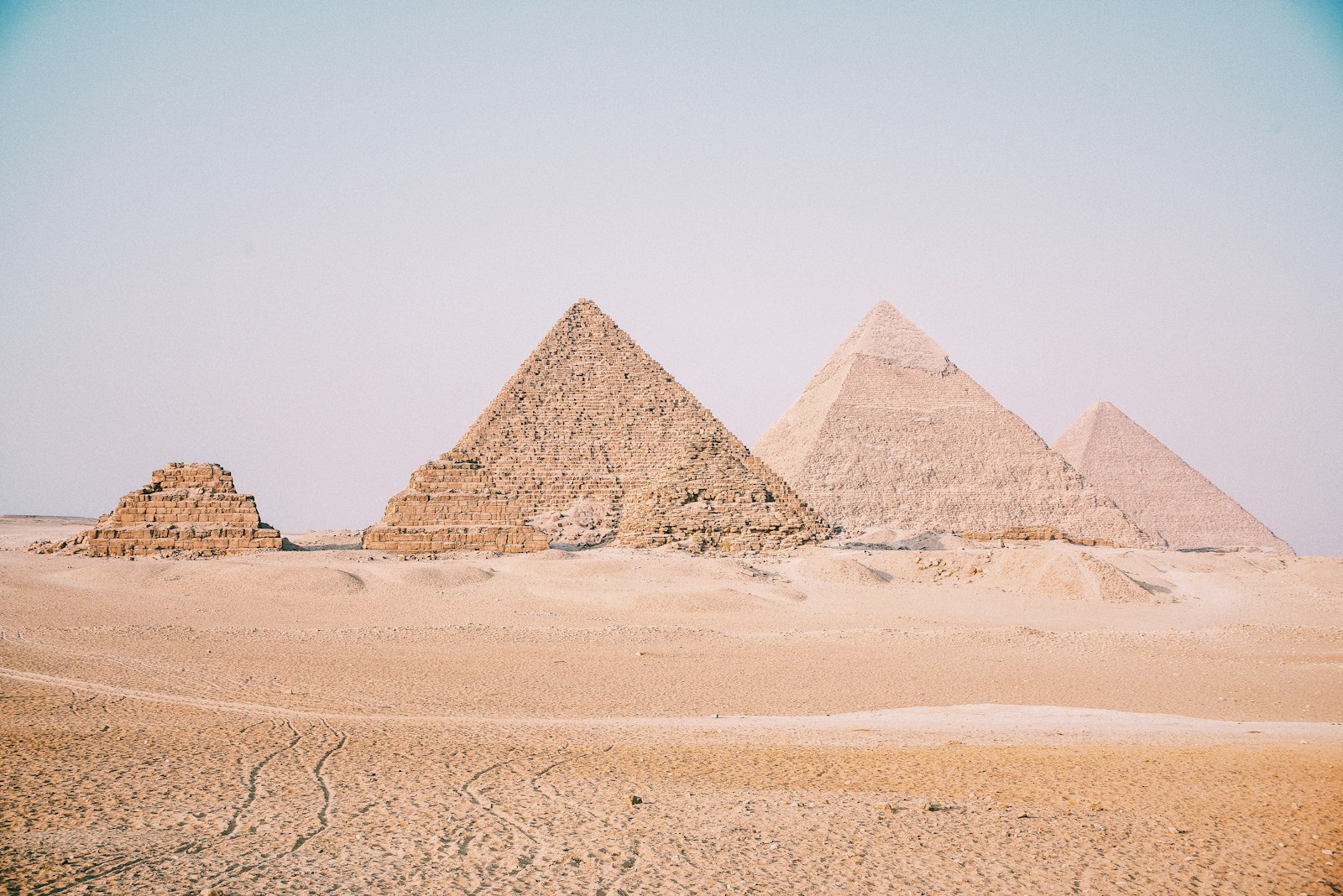
When speaking of the Giza Plateau, the collective imagination immediately evokes the three great pyramids and the majestic Sphinx. Yet, at the foot of these stone colossi lies an equally extraordinary archaeological heritage, though less known to the general public: the Tombs of the Nobles, a vast complex of mastabas belonging to the officials, priests and members of the royal court of the 4th and 5th dynasties of the Egyptian Old Kingdom. These burials represent an invaluable source of information on daily life, religious beliefs and the social organisation of ancient Egypt.
The mastabas, whose name derives from the Arabic word for "bench" because of their rectangular shape with sloping walls, were the typical tombs of the Egyptian elite before the advent of the pyramids. At Giza, hundreds of these structures were built in orderly rows to the east and west of the Great Pyramid of Cheops, creating a true city of the dead that mirrored the social hierarchy of the world of the living.
The Eastern and Western Necropolis
The Western Cemetery
The western cemetery, also known as the Western Cemetery, is the larger of the two and houses the tombs of court officials, royal craftsmen and priests. The mastabas are arranged in regular rows according to a precise urban plan, probably established by the pharaoh Cheops himself. The largest and most decorated tombs are found in the rows closest to the pyramid, reflecting social proximity to the sovereign.
Among the most notable burials of the western cemetery is the mastaba of Iasen, an official of the 5th dynasty, whose walls are decorated with lively scenes of agricultural activities, fishing in the Nile and food preparation. These representations were not merely decorative but had a magical function: to guarantee the deceased eternal enjoyment of all the earthly activities he had loved in life.
The Eastern Cemetery
The eastern cemetery, located to the east of the Great Pyramid, houses the tombs of members of the royal family and the most important officials. Here are found some of the richest and best-preserved burials of the entire necropolis of Giza, including the famous tombs of Qar, Idu and Queen Meresankh III.
The Tomb of Qar
The tomb of Qar (G 7101) is one of the most fascinating of the entire complex. Qar held numerous honorary titles during the 6th dynasty, including that of overseer of the pyramids of Cheops and Mycerinus. His mastaba stands out for the presence of six statues carved in the rock within niches in the western wall of the funerary chapel, a rare architectural element of great visual impact.
The walls of the tomb of Qar are decorated with scenes that illustrate the daily life of the period: processions of offering-bearers, scenes of ritual slaughter, craft activities and representations of the deceased supervising work in the fields. Of particular interest are the scenes of navigation on the Nile, which show various types of vessels used by the ancient Egyptians for transporting goods and people. The artistic quality of the reliefs is remarkable, with figures of natural movement and harmonious proportions that bear witness to the high level reached by Egyptian art during the Old Kingdom.
The Tomb of Idu
Adjacent to the tomb of Qar is that of Idu (G 7102), his son-in-law, who held the role of scribe of the royal documents during the 6th dynasty. The tomb of Idu is famous for its reliefs carved with extraordinary finesse, many of which still preserve traces of the original polychromy, allowing one to imagine the chromatic splendour that once characterised these burials.
Among the most significant scenes of the tomb of Idu are representations of the harvesting of papyrus in the marshes of the Delta, of the making of beer and bread, fundamental foods in the Egyptian economy and religion. A particularly touching scene shows Idu seated at the table with his wife, surrounded by his children, in a moment of family intimacy that crosses the millennia with surprising freshness. The niches with statues of the deceased, similar to those of the tomb of Qar, present figures with serene faces and penetrating gazes, who seem to scrutinise the visitor with an expression of calm eternity.
The Tomb of Queen Meresankh III
The tomb of Queen Meresankh III (G 7530-7540) is undoubtedly the jewel of the entire complex of the tombs of the nobles of Giza. Meresankh III was the granddaughter of the pharaoh Cheops and the wife of the pharaoh Chephren, and her tomb reflects her royal status through decoration of exceptional quality. Discovered in 1927 by the American archaeologist George Andrew Reisner, the tomb revealed one of the most important decorative complexes of the Old Kingdom.
The funerary chapel of Meresankh III is carved into the rock and develops over two levels. The upper level comprises several rooms decorated with painted reliefs that illustrate scenes of daily life, agricultural activities and funerary rituals. Of extraordinary impact is the hall of the ten statues, where ten female figures carved in the rock, probably representing the queen and her daughters, rise in an orderly row from the northern wall. These statues, about a metre and a half high, still preserve traces of paint and represent one of the most impressive sculptural ensembles of Egyptian art of the Old Kingdom.
The walls of the tomb present scenes unique of their kind, including a representation of Meresankh's mother, Queen Hetepheres II, in a papyrus boat hunting birds in the marshes. The colours, surprisingly well preserved, range from ochre red to brilliant yellow, from green to Egyptian blue, creating compositions of great beauty that bear witness to the artistic refinement of the period.
Art and Daily Life
Scenes of Work and Agriculture
One of the most fascinating aspects of the tombs of the nobles of Giza is the richness of the scenes of daily life represented on their walls. Unlike royal tombs, where the decoration was predominantly of a religious and mythological character, the mastabas of the nobles offer us a vivid and detailed cross-section of Egyptian society of the Old Kingdom.
Agricultural scenes are among the most common and show all the phases of the productive cycle: the ploughing of the fields, sowing, the harvesting of grain, threshing and the storage of the harvest in granaries. Other representations illustrate the grape harvest, the pressing of grapes with the feet and the fermentation of the must in large jars. These images not only have artistic value but constitute a precious documentation of the agricultural techniques of the period.
Scenes of Fishing and Hunting
The scenes of fishing in the Nile and hunting in the marshes of the Delta are among the most dynamic and lively of the entire Egyptian artistic repertoire. The nobles are represented standing on fragile papyrus boats, armed with spears or nets, while they catch fish or hunt waterfowl. The representation of the animals is often of great realism, with fish, birds and hippopotamuses rendered with extraordinary attention to anatomical detail.
Particularly evocative are the scenes of hippopotamus hunting, considered a symbolic activity linked to the victory of order over chaos. In these representations, the hunters are often surrounded by lush vegetation of papyrus and lotus, with crocodiles and other aquatic animals animating the waters of the Nile.
Scenes of Craftsmanship
The tombs of the nobles also document the numerous craft activities that flourished in ancient Egypt. One can observe scenes of carpentry, with craftsmen building boats and furniture using tools surprisingly similar to modern ones. Other representations show the working of metals, weaving, the production of pottery and the manufacture of jewellery. These scenes offer precious technical information that is not found in any other historical source of the period.
The Technique of the Reliefs
The reliefs of the tombs of the nobles of Giza were made with various techniques. The sunk relief, in which the figures are carved into the surface of the wall, was the most common technique in less costly tombs. The low relief, where the figures emerge slightly from the background surface, was reserved for the most prestigious burials. In both cases, the reliefs were painted with mineral pigments mixed with a binder of gum arabic, creating a lively polychromy that in many cases has survived for over four millennia.
Tips for the Visit
Planning
The visit to the tombs of the nobles requires a supplementary ticket in addition to the entrance ticket to the Giza Plateau. Not all the tombs are open to the public at the same time: the Supreme Council of Antiquities periodically rotates the accessible burials to ensure their conservation. It is advisable to enquire in advance about which tombs are visitable during the period of your stay.
What to Expect
The interiors of the tombs are narrow and often poorly lit. A torch is useful to appreciate the details of the reliefs, especially in the less illuminated areas. The temperature inside is generally cool, a pleasant relief from the heat outside, but the humidity can be high. The visit is not recommended for those who suffer from claustrophobia.
Recommended Route
It is advisable to start from the tomb of Queen Meresankh III, the most spectacular of the complex, and then continue with the tombs of Qar and Idu. If time permits, exploring also the mastabas of the western cemetery allows one to have a more complete view of the necropolis.
Combining the Visit
The tombs of the nobles lend themselves perfectly to a visit combined with the Great Pyramid of Cheops, the Pyramid of Chephren and the Sphinx. Dedicating an entire day to the Giza Plateau allows one to appreciate not only the most famous monuments but also this hidden treasure that many tourists neglect, missing the opportunity to come into direct contact with the daily life of one of the greatest civilisations in history.
The Tombs of the Nobles of Giza represent an invaluable heritage for the understanding of Egyptian civilisation and deserve an in-depth visit. Strolling among these ancient burials means immersing oneself in a world four and a half millennia distant, where the beauty of art and the depth of religious thought merged in a harmony destined to defy eternity.