The Wadi el-Gemal National Park: the Valley of the Camels
The Wadi el-Gemal National Park, whose name in Arabic literally means "Valley of the Camels", represents one of the most extensive and fascinating protected areas of the entire Egypt. Located along the coast of the Red Sea about 45 kilometres south of Marsa Alam, this extraordinary park extends over a surface of about 7,450 square kilometres, embracing a territory that ranges from the marine depths to the rugged peaks of the Egyptian Eastern Desert. Established in 2003, the park protects an ecosystem of exceptional biodiversity that represents the meeting point between the tropical marine world and the most ancient desert on the planet.
The variety of natural environments present within the park is simply extraordinary: from the pristine coral reefs to the mangrove forests, from the coastal dunes to the deep wadis (beds of fossil rivers) that cut the desert, to the imposing granite mountains of the interior. This diversity makes Wadi el-Gemal a place not to be missed for naturalists, divers, hikers and for anyone who wishes to discover an Egypt far from mass tourism.
The Marine Ecosystem: a Submerged Paradise
The Bay of Hankorab
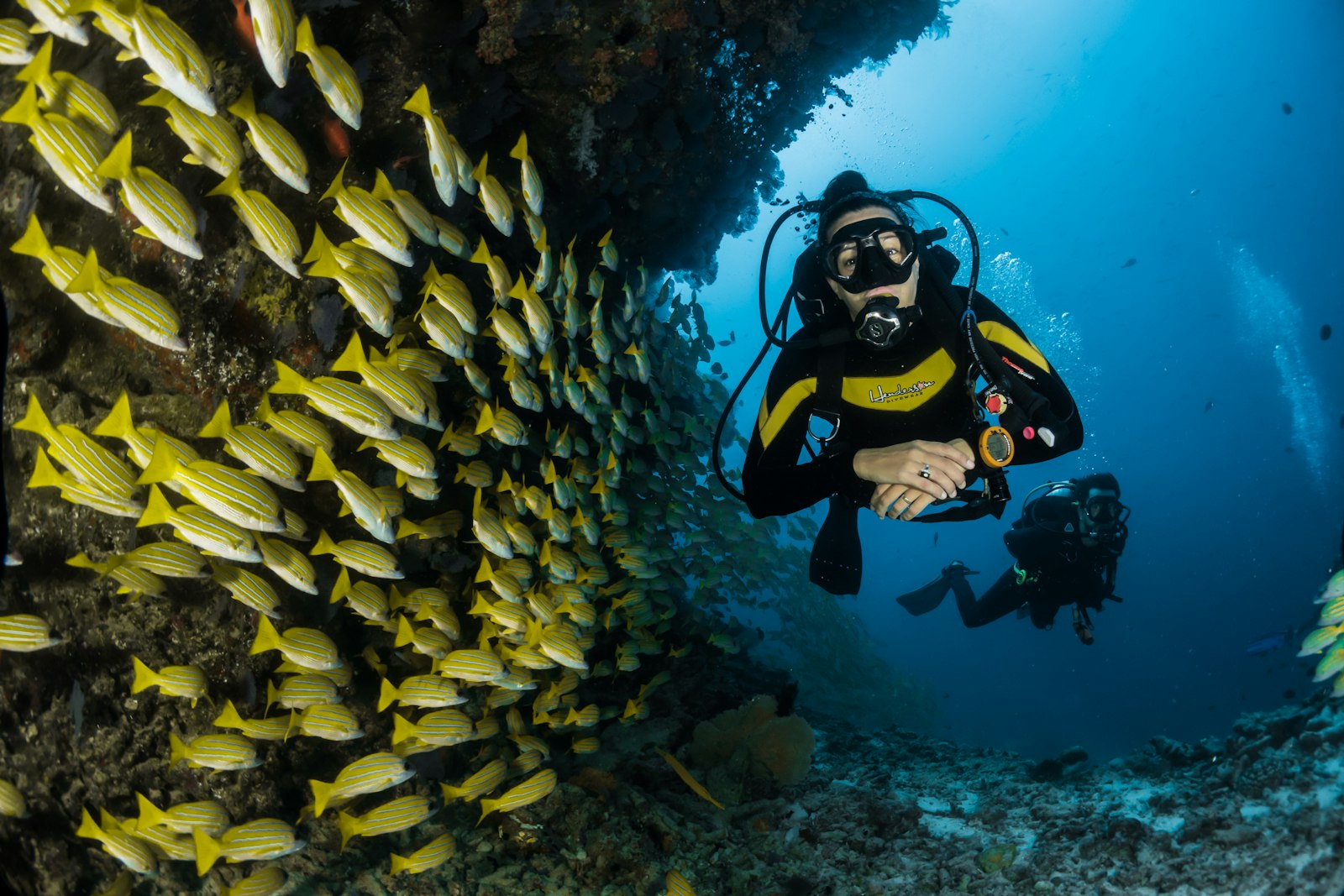
The bay of Hankorab is without doubt the marine pearl of the park. This protected inlet hosts one of the most pristine coral reefs of the entire Red Sea, an ecosystem that the distance from the great tourist centres has preserved in exceptional conditions. The turquoise and crystalline waters of the bay offer a visibility that often exceeds thirty metres, allowing one to admire a submerged world of incredible richness.
The hard and soft corals form underwater gardens of extraordinary chromatic beauty, populated by hundreds of species of tropical fish. It is not rare to spot green turtles and hawksbill turtles that use the beaches of the park as nesting sites, dugongs that graze in the meadows of seagrass, dolphins that play in the deeper waters and, during the winter months, oceanic mantas that visit the cleaning stations present on the reef.
The Mangrove Forests
Along the coastal strip of the park develop extensive mangrove forests, a rare and precious ecosystem in the context of the Red Sea. These extraordinary plants, capable of living with their roots immersed in salt water, perform a fundamental ecological role: they serve as a nursery for innumerable species of fish and crustaceans, protect the coast from erosion, filter the sediments and contribute to the capture of atmospheric carbon.
To walk among the mangroves at sunset, when flocks of herons and flamingos perch among the fronds, is an experience that will remain impressed in the memory of every visitor. The park has built wooden walkways that allow one to explore this habitat without damaging it, a virtuous example of sustainable tourism.
The Desert Interior
The Wadi el-Gemal
The great wadi that gives its name to the park is an ancient river bed that winds for dozens of kilometres through the Eastern Desert. Although today it is dry for most of the year, during the rare precipitations it can transform into an impetuous torrent that brings life into the heart of the desert. Along its course grow acacias and tamarisks, and it is not unusual to spot dorcas gazelles, Nubian ibexes, desert foxes and numerous species of birds of prey.
The wadi is also the traditional territory of the Ababda Bedouins, a nomadic people that for millennia has lived in symbiosis with this extreme environment. The Ababda have developed a profound knowledge of the desert and its resources, and today some members of the community work as guides of the park, sharing with the visitors their millennial traditions, the techniques of survival in the desert and their extraordinary knowledge of the local flora and fauna.
The Emerald Mines of Cleopatra
One of the most fascinating aspects of the park is the presence of the ancient emerald mines of Cleopatra, located in the area of Wadi Sikait. These mines, active since the Ptolemaic era and then intensely exploited during the Roman period, were the most important sources of emeralds of the ancient world. The legend has it that Queen Cleopatra herself was particularly passionate about these green gems, which she had set in her most precious jewels.
The area of Wadi Sikait preserves impressive archaeological remains: galleries dug into the rock, administrative buildings, a small temple dedicated to Isis and numerous dwellings of the miners. The ruins extend along the wadi and on the surrounding hills, creating a landscape that seems suspended in time. Some tunnels are still accessible and allow one to imagine the extremely difficult working conditions of those who, millennia ago, extracted precious stones in the heart of the desert.
The Roman Temple of Wadi Sikait
Among the ruins of the mines stands out a small but significant Roman temple, built to honour the deities and guarantee divine protection to the workers of the mines. The wall structures, although partially collapsed, still preserve the original planimetric layout and allow one to understand the organisation of this mining settlement at the confines of the Roman Empire. The remains of the temple include columns, architraves and fragments of decorations that bear witness to the economic and strategic importance of these mines for Rome.
The inscriptions found in the area document the presence of a military garrison in protection of the mines, as well as the existence of a network of roads and post stations that connected the site to the coast of the Red Sea and, from there, to the commercial ports of the empire.
Flora and Fauna of the Park
The biodiversity of the Wadi el-Gemal National Park is exceptional. In the territory of the park have been recorded over 450 species of reef fish, 120 species of hard corals, numerous species of sharks and rays, as well as resident populations of dugongs and several species of sea turtles. In the terrestrial environment live about 45 species of mammals, including the dorcas gazelle, the Nubian ibex, the striped hyena, the caracal and several species of bats.
The birdlife is particularly rich: the park hosts over 200 species of birds, between residents and migrants. Among the most notable species figure the Bonelli's eagle, the peregrine falcon, the pink flamingo, the grey heron and several species of waders that frequent the coastal wetlands. During the autumn and spring migrations, millions of birds cross the park following the migratory route of the Red Sea, making this a site of international importance for birdwatching.
Tips for the Visit
How to Get There
The Wadi el-Gemal National Park is easily reachable from Marsa Alam. The international airport of Marsa Alam is located about 60 kilometres north of the park, and is served by direct flights from numerous European cities, including several Italian cities. From the city of Marsa Alam, the park is reached by travelling the coastal road towards the south for about 45 kilometres.
To explore the inner areas of the park a 4x4 off-road vehicle is indispensable and, preferably, the accompaniment of an authorised local guide. Several agencies in Marsa Alam organise day or multi-day excursions in the park, including transport, guides and equipment.
What to Bring
The climate in the park is desert with temperatures that can exceed 45°C in summer. Bring with you abundant water (at least three litres per person for half a day), high-factor sun protection, a wide-brimmed hat, sunglasses and light but covering clothing. For the excursions in the interior, sturdy trekking shoes are indispensable. If you intend to do snorkelling, bring a mask, snorkel and reef shoes, although many tour operators provide them.
Recommended Activities
The main activities in the park include snorkelling and scuba diving in the coastal bays, hikes along the wadis of the interior, guided visits to the emerald mines of Cleopatra, birdwatching in the coastal wetlands and safaris in the desert with Bedouin guides. For those who have more days, it is possible to organise multi-day trekking through the Eastern Desert, sleeping in tented camps under a starry sky of extraordinary beauty.
Rules of Conduct
The Wadi el-Gemal National Park is a protected area and the respect of the rules is fundamental for its conservation. It is forbidden to collect corals, shells or any natural element. It is not permitted to feed the wild animals or the fish. Vehicles must remain on the marked routes so as not to damage the fragile desert ecosystem. The correct disposal of waste is a moral and legal obligation. The park imposes a maximum number of daily visitors in some particularly sensitive areas.
Where to Stay
There are no accommodation facilities within the park. Visitors can stay in the resorts and the hotels of Marsa Alam or Port Ghalib, located a short distance from the entrance of the park. Some specialised agencies organise authorised camping within the park, a unique experience that allows one to admire fiery sunsets over the desert and starry nights of rare beauty.
Curiosities
The name "Wadi el-Gemal" derives from the historical presence of wild camels in the valley, a species that still today frequents the most remote areas of the park. The emeralds extracted from the mines of Wadi Sikait were so prized that Pliny the Elder described them in his "Naturalis Historia" as among the most beautiful gems of the known world. The park hosts also some of the most ancient plants of the Eastern Desert, millennial acacias that have resisted centuries of extreme aridity thanks to their very deep roots that reach the underground aquifers.
To visit the Wadi el-Gemal National Park means to immerse oneself in a world where nature reigns undisputed, where the desert meets the sea in an embrace of primordial beauty, and where the traces of ancient history blend with an ecosystem still intact and pulsating with life.