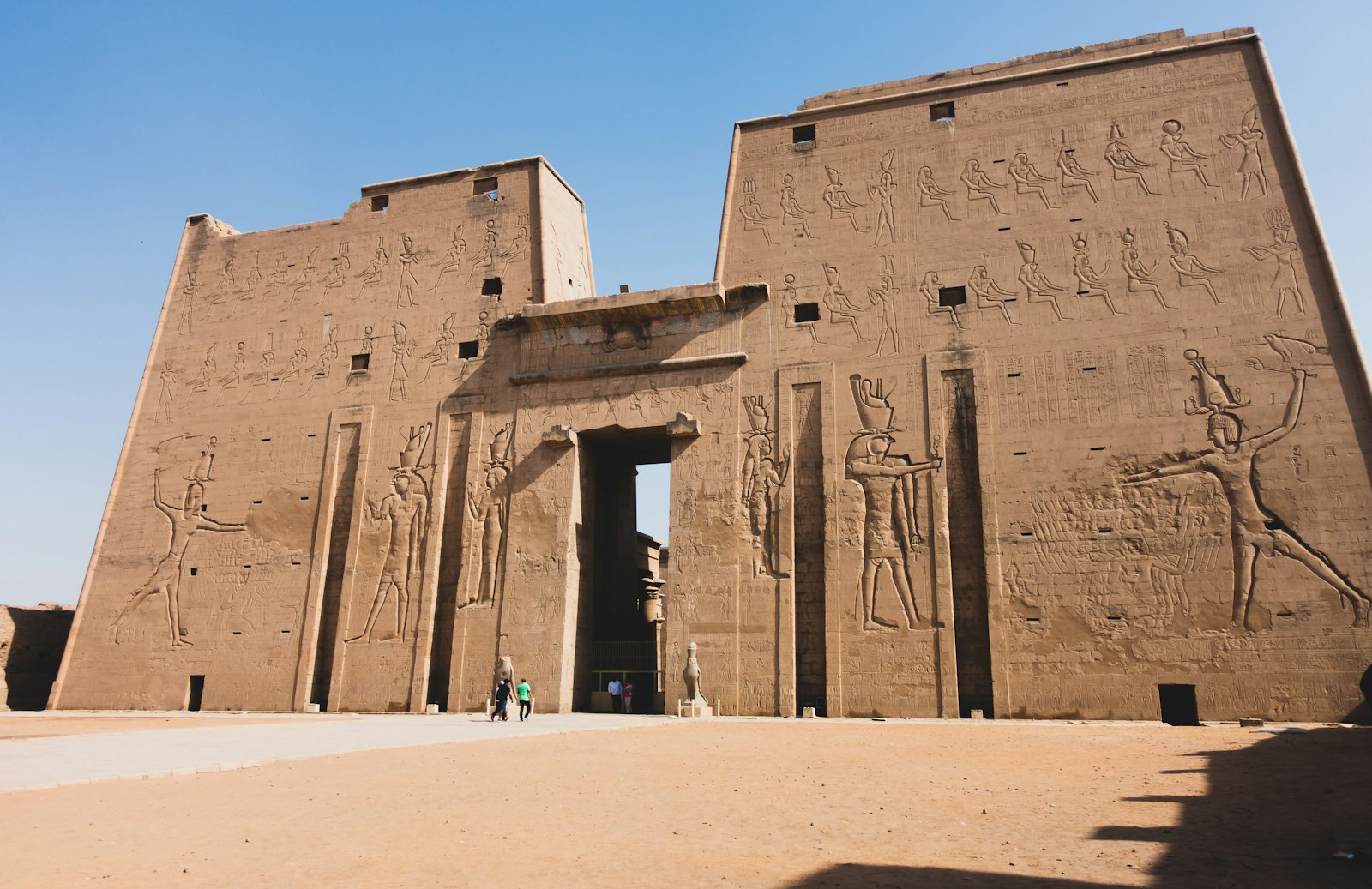
El Kab: the Ancient Nekheb, City of the Vulture Goddess
El Kab, the ancient Nekheb, is one of the most important and least visited archaeological sites of Upper Egypt. Located on the eastern bank of the Nile, about 80 kilometres south of Luxor and 30 kilometres north of Edfu, this millenary city was the centre of the cult of the vulture goddess Nekhbet, patroness and protectress of Upper Egypt, whose symbol adorned the crown of every pharaoh. Its imposing mud-brick walls, its richly decorated rock tombs and its temples testify to an uninterrupted human occupation from prehistory until the Christian era, through more than five thousand years of history.
El Kab offers the visitor an authentic and intimate experience, far from the tourist crowds of the great sites of the western bank of Luxor. Here it is possible to explore tombs with paintings of extraordinary vivacity, to stroll among the ruins of temples dedicated to very ancient deities and to contemplate mud-brick walls that figure among the most imposing of all Egypt, all in the quiet of a desert landscape of austere beauty.
The Monumental Walls
The Mud-Brick Fortress
The most visible characteristic of El Kab are its colossal enclosure walls in mud-brick, which enclose an area of about 590 by 590 metres. With a thickness of about 11 metres and a height that originally reached 12-15 metres, these walls are among the most imposing defensive structures of ancient Egypt. Their construction probably dates back to the late pharaonic era, but they incorporate elements of more ancient fortifications dating to the Middle and New Kingdom.
The wavy form of the walls, still perfectly legible in the upper profile, is not due to erosion but is an intentional characteristic of Egyptian constructive technique: the bricks were laid in concave courses that alternated with convex courses, creating a structure more resistant to lateral thrusts and to earthquakes. This technique, known as "wave construction", is visible in many Egyptian fortresses but rarely so spectacularly as at El Kab.
The Internal Area
Within the walls are the remains of several temples, the main one of which was dedicated to the goddess Nekhbet. Although much of the internal structures has been reduced to foundations, the excavations have revealed a stratigraphic sequence that covers the entire span of Egyptian civilisation, from prehistory to the Coptic era. The remains of a Ptolemaic-Roman temple dedicated to Thoth and Nekhbet are still partially visible, with columns and sculpted blocks that testify to the persistence of the cult of the vulture goddess until late antiquity.
The Rock Tombs
The Tomb of Ahmose Son of Ibana
The most celebrated of the tombs of El Kab is that of Ahmose son of Ibana, a military officer who served under three pharaohs of the 18th dynasty: Ahmose I, Amenhotep I and Thutmose I. The walls of the tomb are covered by an autobiography in hieroglyphs that represents one of the most important historical sources for the reconstruction of the expulsion of the Hyksos from Egypt and the beginning of the New Kingdom.
The text of Ahmose narrates in the first person the military campaigns in which he participated: the siege of Avaris, the expulsion of the Hyksos, the expeditions in Nubia and the campaigns in Palestine. It tells of the rewards received from the pharaoh, including the gold of valour and fertile lands, and describes acts of personal courage such as the capture of enemy prisoners. This inscription is considered one of the most important texts of ancient Egyptian literature for its richness of historical details and its lively narrative style.
The Tomb of Paheri
The tomb of Paheri, governor of Nekheb and of Iunyt (Esna) during the reign of Thutmose III, is perhaps the most beautiful of the site from the artistic point of view. Its mural paintings, exceptionally well preserved, offer a complete panorama of life in Upper Egypt during the 18th dynasty.
The painted scenes include detailed representations of agriculture (ploughing, sowing, harvesting, threshing), winemaking (pressing of grapes, fermentation, bottling), husbandry (cattle, goats, donkeys), fishing with nets and spears, and hunting in the desert with bow and arrows. Banquet scenes show musicians, dancers and guests with cones of perfumed unguent on their heads, while funerary scenes illustrate the transport of the sarcophagus and the rituals of purification before the tomb.
The artistic quality of the paintings of Paheri is remarkable: the figures are drawn with a sure stroke and a vivacity that contrasts with the formal rigidity of much official Egyptian art. The colours, predominantly reds, blacks, greens and yellows, have been preserved in an extraordinary manner thanks to the dry climate and the protection offered by the rock.
The Tomb of Renni
The tomb of Renni, priest of Nekhbet contemporary of Ahmose son of Ibana, hosts some of the rarest and most delicate paintings of El Kab. The scenes include representations of gardens with pomegranate, sycamore and dum palm trees, basins with fish and water lilies, and birds among the foliage, creating an atmosphere of paradisiacal serenity that evokes the Egyptian concept of the afterlife as an eternal garden of abundance.
Other Notable Tombs
Other tombs worthy of attention include that of Setau, viceroy of Nubia under Ramesses II, with scenes of the Nubian tribute that show gold, exotic animals and African products, and that of Ahmose-Pennekhbet, another veteran of the war of liberation from the Hyksos whose autobiography integrates that of his namesake Ahmose son of Ibana.
The Cult of Nekhbet
The Vulture Goddess Patroness of Upper Egypt
Nekhbet, the white vulture goddess, was one of the most ancient and venerated deities of the Egyptian pantheon. As patroness of Upper Egypt, her symbol was inseparable from the crown of the pharaoh: together with the cobra Wadjet, patroness of Lower Egypt, she formed the diadem of the "Two Ladies" (Nebty) that protected the sovereign. Her spread wings were considered a powerful protective amulet, and her image appears in countless temples and tombs of all Egypt.
The cult of Nekhbet at El Kab dates back to prehistory and is attested by finds that precede the foundation of the unified Egyptian state. The goddess was associated with motherhood, with the protection of newborns and with royalty, and her temple at Nekheb was a destination of pilgrimages from all Upper Egypt. Pregnant women and mothers came to the temple to ask for the protection of the goddess during childbirth and for their children.
The Desert Temples
The Peripheral Structures
About one kilometre east of the city walls, in the desert, are several small temples and rock chapels of great interest. The most important is the temple-chapel of Hathor and Nekhbet, a small stone building constructed during the 18th dynasty and enlarged in the Ptolemaic era, decorated with reliefs that show the pharaoh in the act of making offerings to the goddesses.
Nearby there is also a cave with prehistoric rock paintings that depict wild animals (gazelles, ostriches, elephants) and hunting scenes, testimony of the human presence in the region since the Neolithic period, when the eastern desert was a fertile savannah populated by a fauna today disappeared.
Tips for the Visit
How to Get There
El Kab is located on the eastern bank of the Nile, about 80 kilometres south of Luxor. The site is not served by public transport and is reached by private taxi from Luxor (about 1 hour and 15 minutes) or from Edfu (about 30 minutes). Some travel agencies offer combined El Kab/Hierakonpolis excursions that allow visiting both sites in one day.
Opening Hours and Tickets
The site is open from 6:00 to 17:00 every day. The entrance ticket includes access to the walls, to the internal temples and to the rock tombs. The visit of the tombs requires a short uphill walk to the cliff: comfortable shoes are essential. For the desert tombs a supplementary ticket and an additional means of transport are necessary.
What Not to Miss
The tombs of Ahmose son of Ibana and of Paheri are not to be missed: the first for its extraordinary historical content, the second for the quality of its paintings. The enclosure walls deserve a perimeter walk that allows appreciating their monumental dimensions and the wavy architecture. If time permits, extend the visit to the desert temples, where the silence and solitude of the landscape create an unforgettable atmosphere.
Practical Suggestions
Bring abundant water, hat, sunscreen and sturdy shoes. The site is almost completely devoid of shade and service structures. A torch is useful to illuminate the details of the paintings in the tombs, some of which are rather dark. An expert guide enormously enriches the visit, especially for the reading of the autobiographical texts of Ahmose and to understand the pictorial scenes in the tombs.
El Kab is a site that amply repays the effort of the journey. The combination of monumental walls, splendidly decorated tombs and breathtaking desert panoramas offers an archaeological experience of rare intensity, far from mass tourism and immersed in the authentic charm of the millenary Upper Egypt.