Gebel el-Silsila: the Sacred Quarries where the Nile Narrows
Gebel el-Silsila, "the Mountain of the Chain", is one of the most evocative and least known archaeological sites of Upper Egypt. At this point, halfway between Edfu and Kom Ombo, the sandstone cliffs draw near until they create the narrowest passage of the Nile in its entire Egyptian course. For millennia, this place was one of the most important sandstone quarries of ancient Egypt and a sacred centre where pharaohs, priests and officials left hundreds of inscriptions, votive stelae and rock shrines that transformed the rocky walls into a stone archive of Egyptian history.
The Arabic name of the site, Gebel el-Silsila, derives from a legend according to which an iron chain was stretched between the two banks to control river traffic and collect tolls from passing vessels. Although no historical evidence of this chain exists, the name effectively evokes the constricted nature of the passage, where the Nile compresses between the cliffs as if held back by an invisible bond.
The Ancient Sandstone Quarries
The Stone of the Temples
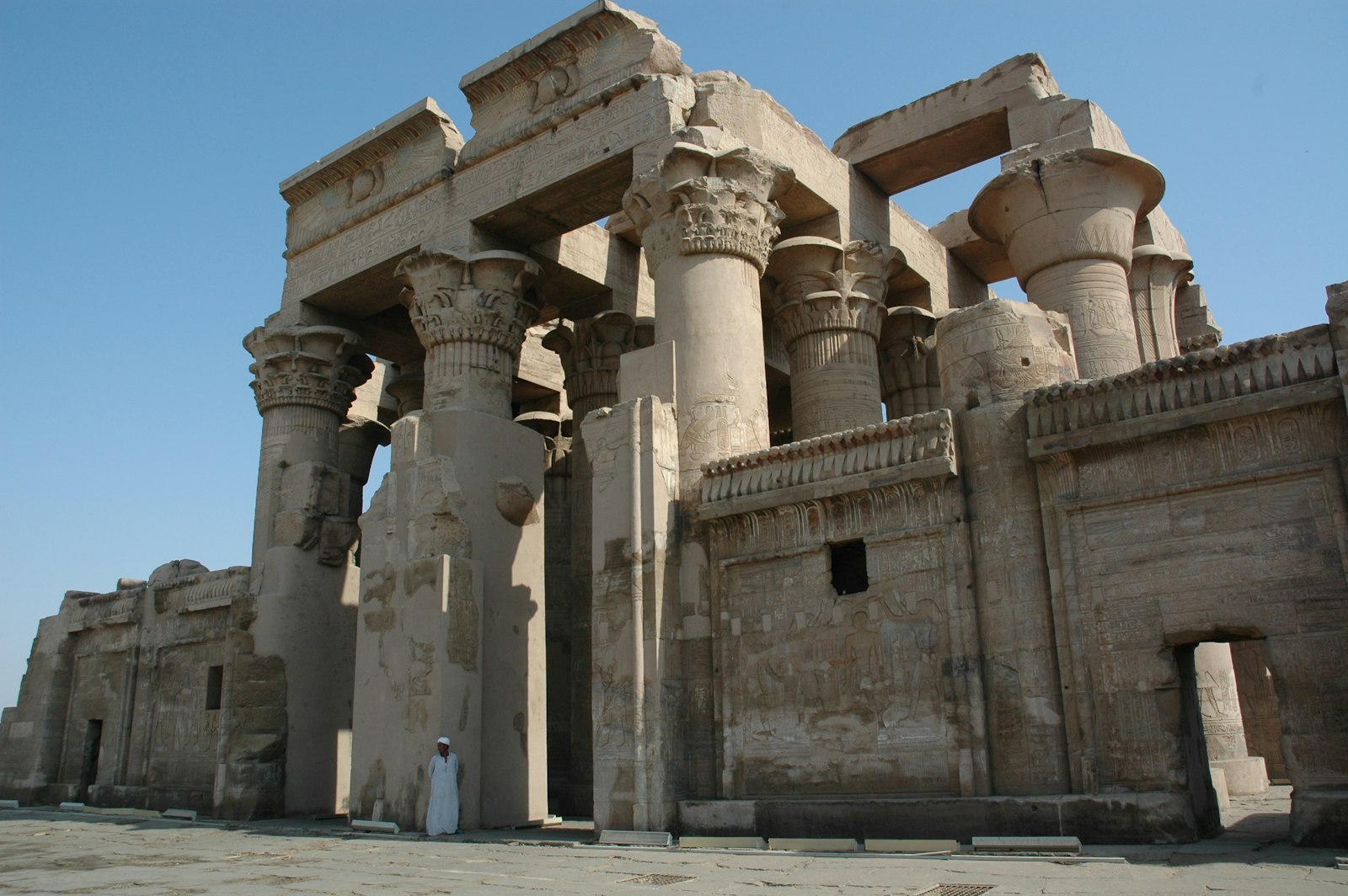
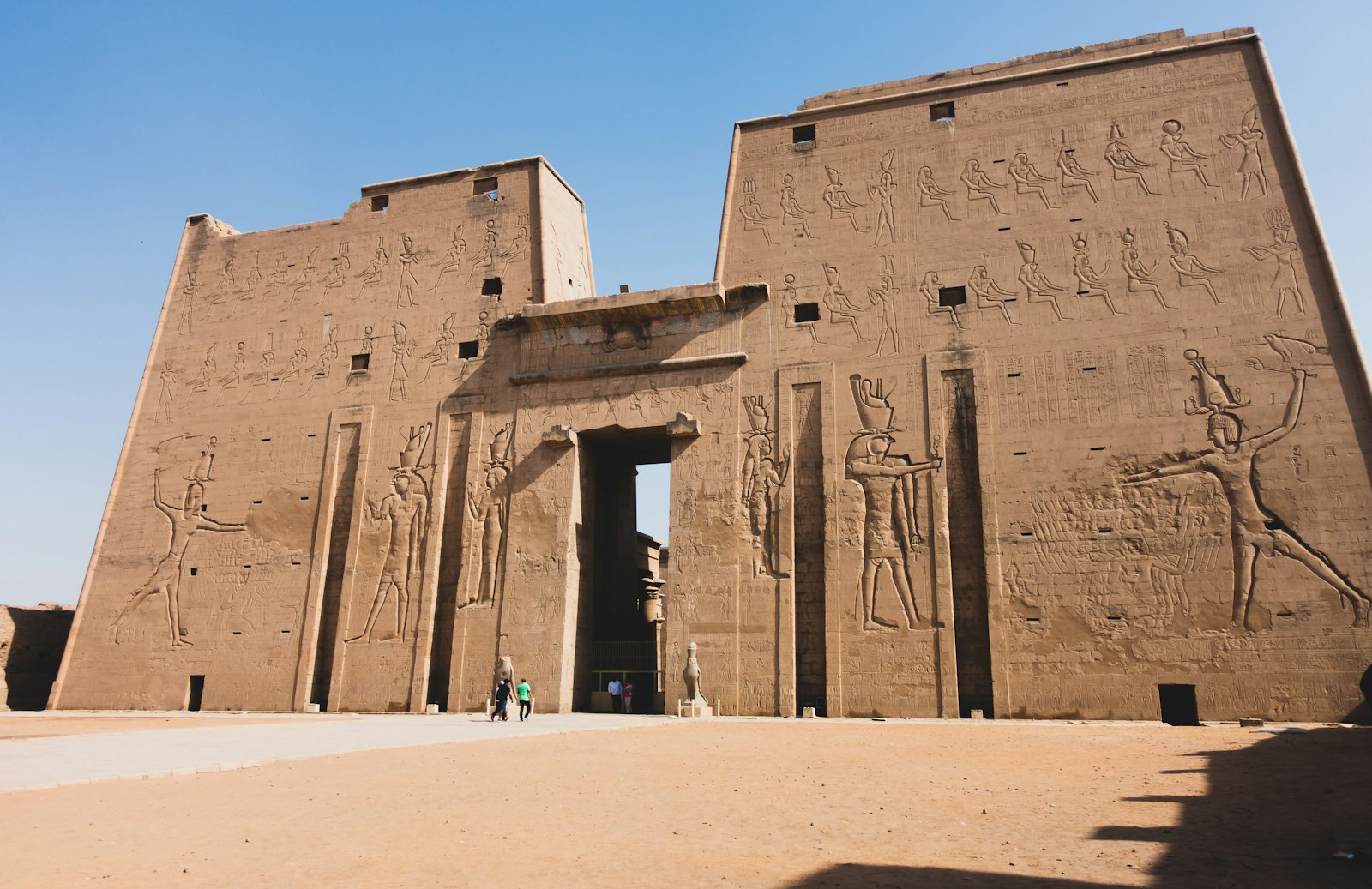
Gebel el-Silsila was the largest and longest-lasting sandstone quarry of ancient Egypt. The Nubian sandstone extracted from these quarries, known for its superior quality and resistance, was used to build most of the great temples of Upper Egypt, from the New Kingdom until the Roman era. The temples of Karnak, Luxor, Edfu, Kom Ombo and Esna owe much of their stone to these quarries.
The traces of extraction activity are visible everywhere: enormous rectangular niches dug into the rock, chisel marks, wooden wedges used to split the blocks and transport ramps that led from the quarry faces down to the riverbank. In many places the partially extracted stone blocks are still visible, abandoned in situ due to defects in the rock or to the completion of the works, offering a direct testimony of ancient extraction techniques.
The Organisation of Labour
The inscriptions left by the quarry overseers provide detailed information on the organisation of labour. Thousands of workers were employed in the quarries, divided into teams with evocative names such as "The team of the mighty bull" or "The beloved of Amun". The stelae record the quantities of stone extracted, the destinations of the blocks, the names of the responsible officials and even the food rations distributed to the workers. These inscriptions represent a historical source of primary importance for understanding the economy and administration of pharaonic Egypt.
The Rock Shrines
The Speos of Horemheb
The most important monument of Gebel el-Silsila is the speos (rock temple) of the pharaoh Horemheb (1319-1292 BC), carved into the rock of the western bank. This small but elegant shrine is composed of a hall with pillars and a sancta sanctorum with seven seated statues representing the principal deities of the Egyptian pantheon together with the pharaoh himself.
The reliefs of the speos show Horemheb in the act of making offerings to the gods, with scenes of great artistic finesse that testify to the quality of Egyptian art in the transition period between the 18th and 19th dynasties. The side walls present scenes of the annual festival of the Nile flood, during which the pharaoh performed propitiatory rituals to ensure an abundant inundation and, consequently, a prosperous harvest.
The Cenotaphs and Votive Niches
Along both banks of the Nile, the cliffs are studded with hundreds of votive niches, cenotaphs and small shrines carved into the rock by officials, priests and persons of rank. These structures, which range from the simple recess in the rocky wall to the elaborate chapel with reliefs and inscriptions, testify to the sacral importance of the site over a span of more than two thousand years.
Particularly interesting are the cenotaphs of the viceroys of Kush, the Egyptian governors of Nubia, who chose Gebel el-Silsila as a place of commemoration for its strategic position at the entrance to Nubian territory. Their reliefs show scenes of tribute from the southern lands, with representations of exotic products such as gold, ebony, ivory, leopard skins and wild animals.
The Stelae and Inscriptions
An Archive of Three Thousand Years
Gebel el-Silsila hosts one of the densest concentrations of rock inscriptions of all Egypt. More than four hundred stelae and inscriptions, dated from the Middle Kingdom until the Roman era, cover the walls of the cliffs on both banks. These inscriptions constitute a historical archive of inestimable value that documents military expeditions, extraction campaigns, royal decrees, private prayers and administrative records.
Among the most important stelae figures that of Amenhotep III, which commemorates a great extraction expedition for the construction of the temple of Luxor, and that of Ramesses II, which celebrates the military conquests of the great pharaoh. Stelae of the Ptolemaic and Roman eras attest to the continuity of the use of the quarries and the persistence of the sacrality of the site well beyond the end of the pharaonic period.
The Flood Inscriptions
A particular category of inscriptions is constituted by the Nile flood marks carved on the rocks at various heights. These "natural nilometers" record the levels reached by the waters during the annual inundations, providing climatic and hydrological data of extraordinary scientific value for reconstructing the environmental history of the region. The oldest inscriptions date back to the Middle Kingdom, creating a series of records that covers almost four thousand years of variations in the Nile level.
The Festive Processions
The Rituals of the Flood
Gebel el-Silsila was the place where important rituals linked to the annual inundation of the Nile were celebrated. The narrowing of the river at this point made the variations of the water level particularly perceptible, transforming the site into a natural observatory for monitoring the arrival of the flood. The pharaohs sent delegations to perform sacrifices and prayers to the river deities, asking for a generous inundation that would guarantee the fertility of the agricultural lands.
The reliefs of the speos of Horemheb document these rituals with vivid scenes: processions of priests with offerings of bread, beer and calves, ritual castings of offerings into the waters of the Nile, and prayers recited before the image of the deified river. These ceremonies were of fundamental importance for the life of Egypt, since an insufficient inundation meant famine, while an excessive inundation entailed devastation.
The Archaeological Missions
The Swedish Excavations
Since 2012, a Swedish archaeological mission of the University of Lund, led by Maria Nilsson, has been conducting systematic excavations at Gebel el-Silsila that have revolutionised the understanding of the site. The most significant discoveries include a vast New Kingdom necropolis with shaft tombs containing funerary goods of quarry workers, a workshop for stone working and new previously unknown rock shrines.
The excavations have also brought to light evidence of a permanent settlement adjacent to the quarries, with ovens for bread, warehouses and dwelling structures, confirming that Gebel el-Silsila was not only a site of temporary extraction but a true inhabited centre with a stable community of specialised workers and their families.
The Legend of the Chain
The legend of the chain that gives the name to the site has historical roots deeper than one might think. Although the iron chain is probably a popular invention, it is possible that in the medieval era barriers of ropes or chains were actually used to control river traffic at this strategic point. Medieval Arab geographers such as al-Idrisi mention the site as an obligatory passage point and a place of river toll.
Tips for the Visit
How to Get There
Gebel el-Silsila is located about 65 kilometres north of Aswan and 40 kilometres south of Edfu. The site is not served by regular public transport and is reachable mainly by private taxi from Kom Ombo or Edfu, or by river with an excursion in felucca or motorboat. Some Nile cruises include a stop at Gebel el-Silsila in their itinerary, but it is not a standard stop.
Opening Hours and Tickets
The site is open from 6:00 to 17:00 every day. The entrance ticket is affordable. The complete visit of the western bank, which hosts the principal monuments, requires about two hours. To also visit the eastern bank with the main quarries, it is necessary to cross the Nile by local boat, adding at least another hour to the visit.
What Not to Miss
The speos of Horemheb is the most important monument and deserves particular attention. Look for the stelae of the pharaohs of the New Kingdom in the niches along the cliff and the Nile flood marks carved at various heights. The quarries on the eastern bank, with the abandoned blocks and the marks of the extraction tools, offer a unique glimpse of Egyptian constructive technology. Do not miss the panorama from the highest point of the cliff, where the view of the Nile flowing in its narrowest passage is unforgettable.
Practical Suggestions
Bring sturdy shoes with good grip: the terrain is rocky and uneven. Abundant water and sun protection are essential, since there are no refreshment points at the site. An expert guide is strongly recommended to orient oneself among the hundreds of inscriptions and understand their historical significance. Early morning is the best moment for the visit, both for the photographic light and for the milder temperatures.
Gebel el-Silsila is a site for true enthusiasts of Egyptian history, a place where the natural landscape and human memory blend in an intense and unforgettable archaeological experience, far from the tourist crowds and immersed in a silence that has the flavour of eternity.