The Temple of Kom Ombo: the Double Sanctuary on the Banks of the Nile
The Temple of Kom Ombo represents a unicum in the sacred architecture of ancient Egypt: it is the only completely symmetrical temple dedicated simultaneously to two distinct divinities. Erected on a promontory that dominates a bend of the Nile, between Edfu and Aswan, this extraordinary Ptolemaic building fascinates visitors with its dual nature, its scientific reliefs and its scenographic position that makes it one of the most memorable stops of every Nile cruise.
The temple rises on the ancient city of Nubt, a strategic settlement that controlled the commercial routes coming from Nubia and from the gold mines of the eastern desert. Its construction began during the reign of Ptolemy VI Philometor (180-145 BC) and continued under various sovereigns of the Ptolemaic dynasty and during the Roman period, until the era of the emperor Macrinus in the 3rd century AD.
The Extraordinary Symmetry of the Double Temple
Two Temples in One
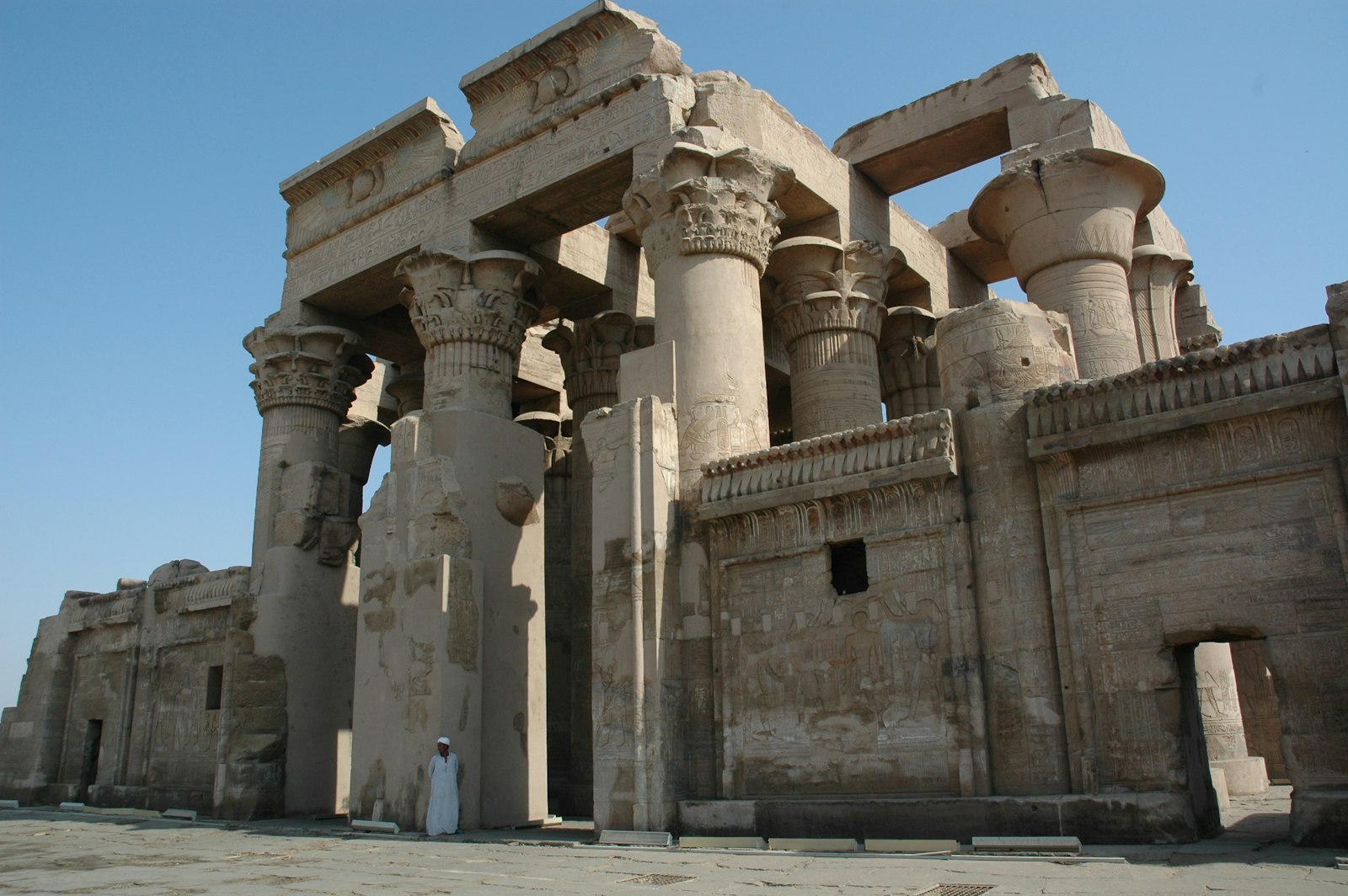
The most surprising characteristic of Kom Ombo is its perfect internal duplication. The temple is divided by a central axis into two identical and mirror-image halves, each with its own entrance, its own corridors, its own hypostyle halls and its own sancta sanctorum. The southern half is dedicated to Sobek, the crocodile god associated with fertility and the power of the Nile, while the northern half is consecrated to Haroeris, that is Horus the Elder, the falcon god linked to royalty and war.
This duplicity is not only architectural but reflects a profound theological conception. Sobek and Haroeris represent complementary aspects of the Egyptian cosmos: water and sky, fertile earth and celestial protection. Their coexistence in the same temple symbolizes the harmony of opposites, a central concept in Egyptian religious philosophy.
The Entrance and the First Pylon
The first pylon, unfortunately largely destroyed by the floods of the Nile and by erosion, originally led to a wide porticoed courtyard. Today visitors access through the remains of the Ptolemaic portal, where reliefs are still visible that depict the pharaohs in the act of making offerings to the two divinities. The arrangement of the decorative scenes rigorously respects the symmetry of the temple: each scene on the right wall finds its mirror correspondent on the left wall.
The Hypostyle Hall
The great hypostyle hall, with its fifteen powerful columns, represents the architectural heart of the temple. The columns present composite capitals of extraordinary variety, decorated with floral motifs different one from the other, a trait typical of Ptolemaic architecture that demonstrates the creativity of the craftsmen of the era. The walls are covered with finely sculpted reliefs that narrate ritual scenes, divine offerings and sacred processions.
The Scientific Reliefs: Medicine in Ancient Egypt
The Surgical Instruments
One of the most celebrated and studied elements of the Temple of Kom Ombo is the panel of the so-called surgical instruments, located on the rear external wall of the temple. This relief, dating to the Roman period, depicts a series of instruments that scholars have identified as scalpels, forceps, scissors, cupping vessels, spatulas and even what seems to be an obstetric speculum.
The presence of these reliefs at Kom Ombo is not casual: the temple also functioned as a place of healing, and the cult of Haroeris had a strong medical component. The sick were brought into the temple to receive treatments that combined medical practices with religious rituals. The basins for sacred water, still visible in the enclosure of the temple, were used for therapeutic ritual baths.
The interpretation of these reliefs has aroused a lively academic debate. Some scholars believe that they represent instruments really used in the medical practice of the era, while others interpret them as ritual or symbolic objects linked to the cult. Regardless of the interpretation, these reliefs bear witness to the sophistication of medical culture in Greco-Roman Egypt.
The Calendar and the Astronomical Reliefs
The walls of the temple also host important calendrical reliefs that illustrate the system of measurement of time in ancient Egypt. Representations of the months of the year, of the agricultural seasons and of the religious festivities linked to the cycle of the floods of the Nile are visible. These reliefs provide precious information on daily life and on the social organization of the Ptolemaic era.
The Crocodile Museum
A Tribute to the God Sobek
Inaugurated in 2012, the Crocodile Museum of Kom Ombo is hosted in a modern building adjacent to the temple and represents an unmissable stop of the visit. The museum exhibits a unique collection of mummified crocodiles, some of which reach impressive dimensions, found in the sacred necropolis dedicated to Sobek in the surroundings of the temple.
The cult of the crocodile at Kom Ombo was profoundly rooted in the local culture. The crocodiles of the Nile, which in antiquity were very numerous in this zone, were considered living manifestations of the god Sobek. The sacred specimens were raised in the enclosures of the temple, fed with care and, at their death, mummified with the same respect reserved for human beings. The mummies on display in the museum, adorned with garlands and wrapped in finely worked linen bandages, bear witness to the importance of this cult.
The museum also exhibits stone sarcophagi for crocodiles, votive stelae, amulets in the form of a crocodile and explanatory panels that illustrate the techniques of animal mummification and the religious meaning of the cult of Sobek in the region.
The Strategic Position on the Nile
A Crossroads of Commerce
The position of Kom Ombo on a bend of the Nile was not casual. In antiquity, this fluvial point was an important commercial crossroads where the caravans coming from the gold mines of the eastern desert met the Nilotic routes that connected Egypt to Nubia. The promontory on which the temple rises offered a strategic observation point on the fluvial traffic and on the surrounding lands.
The zone was also known for the presence of large sand banks where the crocodiles of the Nile loved to sunbathe, a factor that probably contributed to the choice of the site for the cult of Sobek. The irrigation of the plain of Kom Ombo, made possible by the nearness of the Nile, transformed the zone into a prosperous agricultural area, famous for the cultivation of sugar cane, a tradition that endures still today.
The Stop of the Cruises
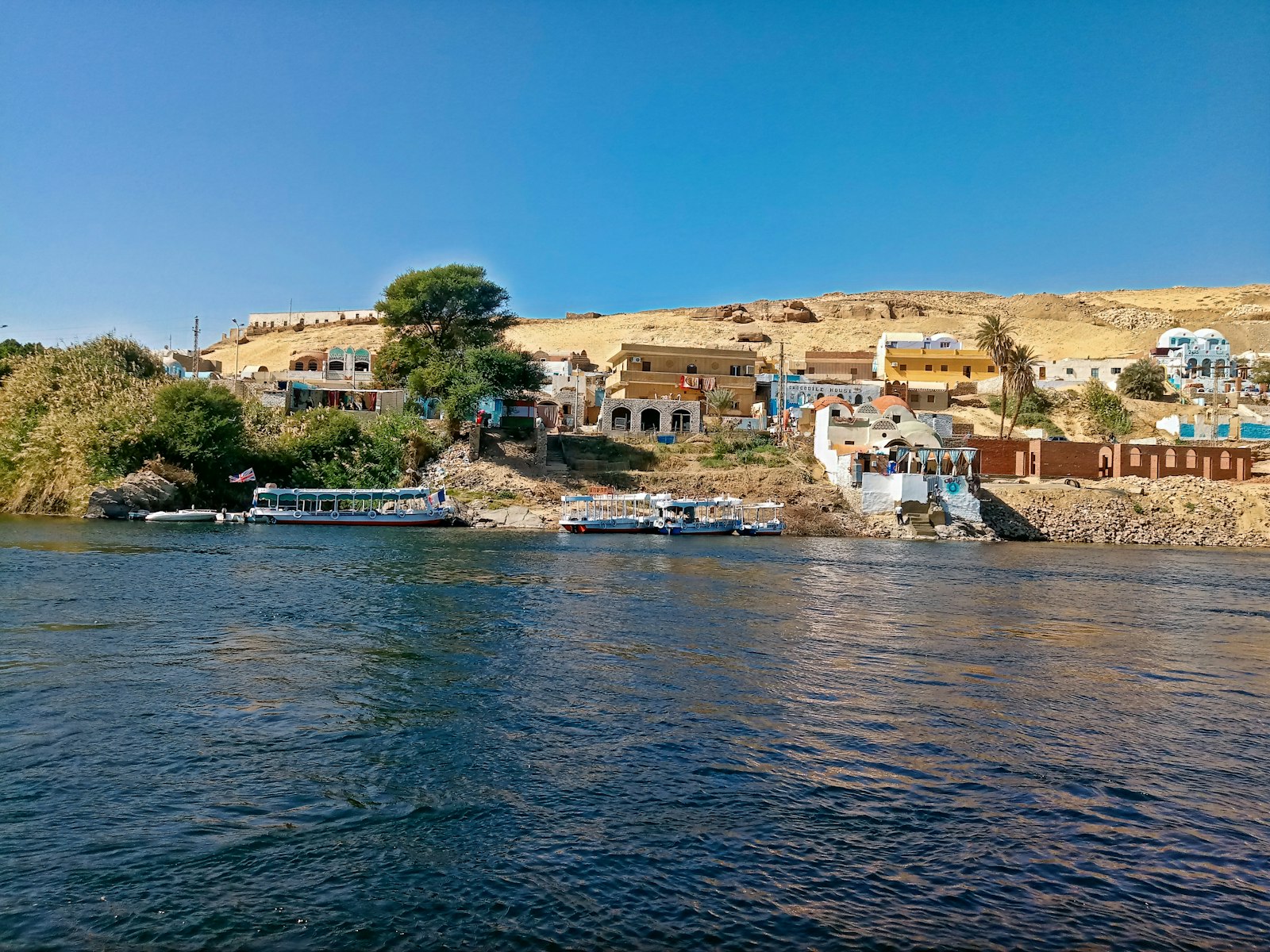
Today Kom Ombo is one of the most appreciated stops of the Nile cruises between Luxor and Aswan. The ships moor directly at the feet of the promontory on which the temple rises, offering passengers a spectacular view of the illuminated remains that stand out against the sunset sky. The visit to the temple at sundown, when the artificial lights create a magical atmosphere among the ancient columns, is an experience that remains impressed in the memory of every traveller.
The Nilometer and the Accessory Structures
Measuring the Floods of the Nile
In the enclosure of the temple is present a nilometer, an instrument used by the ancient Egyptians to measure the level of the waters of the Nile during the annual floods. The nilometer of Kom Ombo is constituted by a circular well connected to the river by means of an underground conduit, with steps and measurement marks engraved in the internal walls. The readings of the nilometer were fundamental to predict the extent of the inundations and, consequently, the harvest of the following year, also determining the amount of the agricultural taxes.
The Chapel of Hathor and the Sacred Well
Within the temple enclosure are also found the remains of a chapel dedicated to the goddess Hathor and a deep sacred well that served for the rituals of purification of the priests. The well, dug into the limestone rock, reached the water table and provided the water considered pure and sacred necessary for the daily ceremonies of the temple.
Tips for the Visit
How to Arrive
Kom Ombo is located about 45 kilometres north of Aswan and 165 kilometres south of Luxor. Most of the visitors arrive within the framework of a Nile cruise, but the site is reachable also by taxi or by bus from Aswan. The local trains stop at the station of Kom Ombo, from which the temple is about 3 kilometres distant.
Hours and Tickets
The temple is open every day from 7:00 to 21:00, with evening illumination that makes the visit particularly evocative in the evening hours. The entrance ticket includes access to the Crocodile Museum. It is advisable to dedicate at least an hour and a half to the complete visit of the site, including the museum.
When to Visit
The best period to visit Kom Ombo goes from October to April, when the temperatures are milder. In the summer months, the heat can be very intense, especially in the central hours of the day. If possible, plan the visit in the late afternoon to enjoy the sunset on the Nile and the evening illumination of the temple.
What Not to Miss
Do not limit the visit to the main temple alone. Explore the Crocodile Museum, observe the nilometer and look for the reliefs of the surgical instruments on the external rear wall. Dedicate a few minutes to the walk along the promontory that dominates the Nile: the view is spectacular, especially at sunset.
Practical Suggestions
Bring with you water, sun protection and a hat. The shaded areas inside the temple offer refreshment, but a large part of the visit takes place in the open air. A local guide can enormously enrich the experience, explaining the meaning of the reliefs and the complex theology of the double temple. The small souk near the temple offers spices, souvenirs and fresh drinks.
The Temple of Kom Ombo, with its unique architecture, its scientific reliefs and its scenographic position on the Nile, represents one of the hidden gems of Upper Egypt. Its visit offers a fascinating look at the complexity of Egyptian religion, at the sophistication of ancient medicine and at the ability of the Ptolemaic architects in creating sacred spaces of extraordinary beauty and harmony.