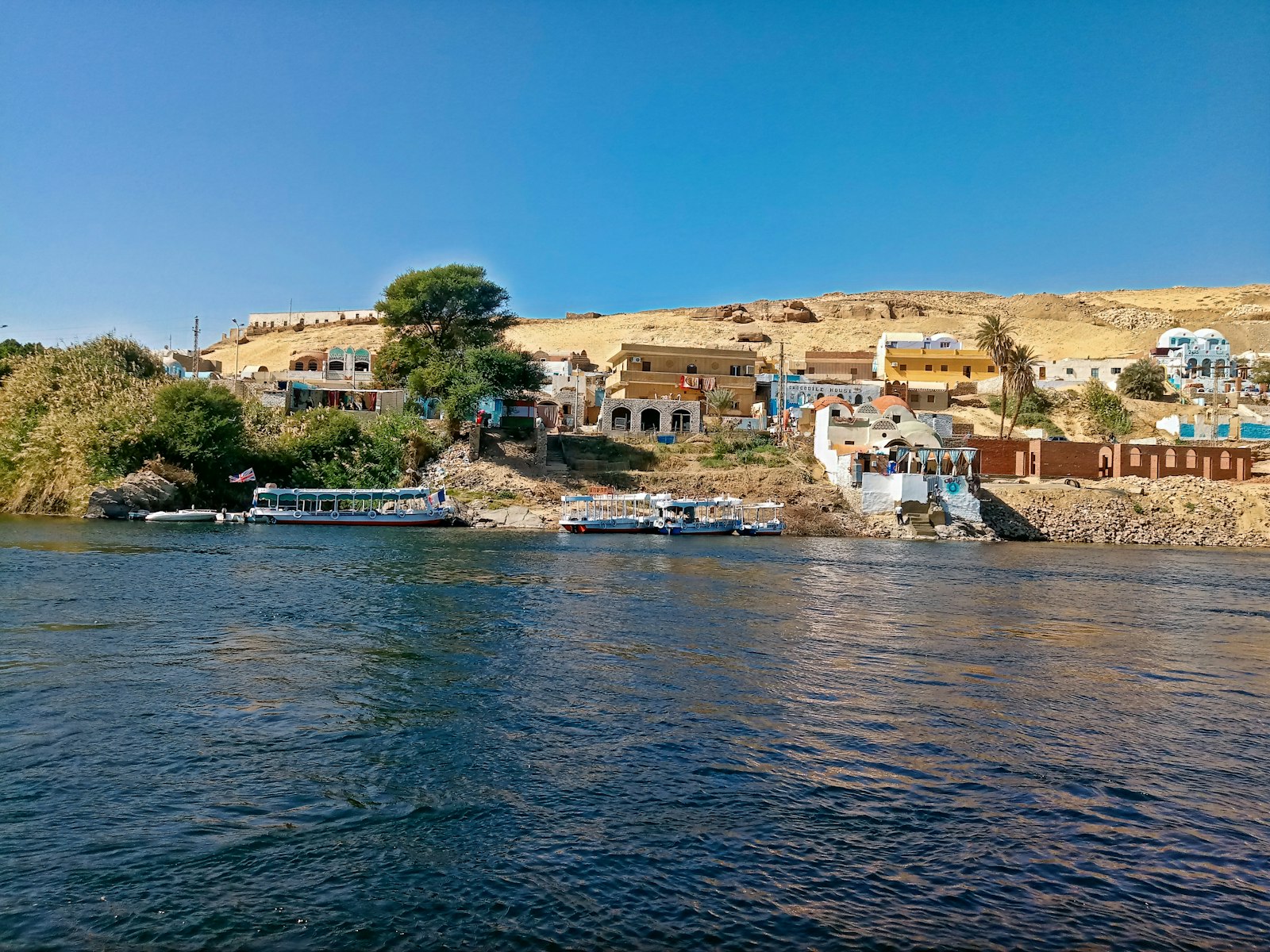
Sehel Island: the Book of Stone at the Gates of Nubia
Sehel Island, nestled among the waters of the Nile a few kilometres south of Aswan, is one of the most extraordinary rock archives of ancient Egypt. Its enormous boulders of pink and grey granite, smoothed by millennia of river floods, bear engraved over two hundred and fifty inscriptions covering an immense span of time, from the 6th Dynasty of the Old Kingdom until the Roman era. Among these stands out the famous Famine Stela, one of the most fascinating and debated texts of Egyptology, which narrates seven years of famine under the pharaoh Djoser.
Reachable by felucca from the corniche of Aswan, Sehel Island offers an experience that combines the natural beauty of the Nilotic landscape with the historical depth of the millennial inscriptions, all within the frame of a serene and timeless atmosphere that contrasts pleasantly with the vivacity of nearby Aswan.
The Geographical and Historical Context
The Gate of the First Cataract
Sehel Island is located in the stretch of the Nile immediately upstream of the bank of Aswan, in an area where the river divides into multiple channels among granite outcrops and rocky islets that form the first cataract of the Nile. This cataract, a stretch of rapids and shallow waters caused by the outcrops of granite rock, constituted in antiquity the southern border of Egypt proper and the gateway towards Nubia, the mysterious land rich in gold that extended towards the south.
The strategic position of Sehel, at the entrance of the cataract, made it an obligatory point of passage for all commercial and military expeditions directed towards Nubia. The officials, soldiers and merchants who departed for the south or returned from it stopped on the island to engrave in the rock propitiatory prayers, thanksgivings for the journey accomplished and records of their expeditions, gradually transforming the boulders of the island into an impressive book of stone.
The Cult of the Goddess Anuket
Sehel was the principal centre of the cult of the goddess Anuket, divinity of the first cataract and of the Nile flood. Anuket, represented as a woman with a high crown of ostrich feathers, was the daughter of Khnum (the ram god of Elephantine) and of Satis, forming with them the divine triad of the cataract. She was venerated as personification of the tumultuous waters of the cataract and as bearer of the beneficial inundation that fertilised the lands of Egypt.
Many of the inscriptions of Sehel are dedicated to Anuket or invoke her protection for the safe passage through the dangerous rapids of the cataract. A small temple dedicated to the goddess rose on the island, but only fragmentary traces remain of it. During the annual feast of Anuket, which coincided with the arrival of the Nile flood, offerings of food, flowers and jewels were thrown into the river from the rocks of the island.
The Rock Inscriptions
A Palimpsest of Three Thousand Years
The over two hundred and fifty inscriptions of Sehel Island constitute one of the richest collections of rock texts of ancient Egypt. Engraved on the granite boulders that dot the eastern slope of the island, these inscriptions document commercial expeditions, military campaigns, mining extraction missions and devotional acts that cover a period of over three thousand years.
The most ancient inscriptions date back to the 6th Dynasty of the Old Kingdom (about 2300 BC) and are small personal stelae of officials charged with the commerce with Nubia. With the passing of the centuries, the inscriptions become ever more numerous and elaborate, reaching the maximum density during the New Kingdom (about 1550-1070 BC), when Egypt extended its dominion deep into Nubia and the expeditions towards the south were very frequent.
Typologies of Inscriptions
The inscriptions of Sehel can be classified in various categories: royal stelae with cartouche and decrees of the pharaohs, private stelae of officials with titles and autobiographies, prayers and invocations to the divinities of the cataract, records of expeditions with dates and quantities of goods transported, and more informal graffiti with simple names and dates.
Particularly interesting are the inscriptions of the "overseers of the southern lands", the Egyptian officials responsible for the commerce and administration of Nubia, who record the imported products (gold, ivory, ebony, incense, leopard skins, ostrich feathers, exotic animals) and the difficulties encountered during the expeditions. These inscriptions provide a vivid picture of the commercial and diplomatic relations between Egypt and the lands south of the first cataract.
The Famine Stela
The Most Celebrated Text of the Island
The Famine Stela is without doubt the most famous and studied inscription of Sehel Island. Engraved on a large granite boulder, this stela tells a story set in the reign of the pharaoh Djoser (3rd Dynasty, about 2670 BC): seven consecutive years of meagre floods of the Nile had provoked a terrible famine that was devastating Egypt. Desperate, Djoser turned to his counsellor Imhotep, the celebrated architect of the step pyramid of Saqqara, asking him where the god Khnum resided, lord of the sources of the Nile and responsible for the annual flood.
Imhotep indicated the island of Elephantine as the seat of Khnum and Djoser made a pilgrimage to the cataract, where the god appeared to him in a dream promising to make the waters of the flood return in exchange for the concession of the territory between Aswan and the first cataract to his temple. Djoser consented, and the famine came to an end.
Interpretation and Dating
Despite the text presenting itself as a decree of the pharaoh Djoser of the Old Kingdom, scholars have determined that the stela was in reality composed much later, during the Ptolemaic era (probably 3rd-2nd century BC), by the priests of the temple of Khnum on the island of Elephantine. The purpose was probably that of legitimising the territorial and economic claims of the temple of Khnum over the region of the cataract, attributing to an ancient and venerated pharaoh the concession of such rights.
The Famine Stela is a fascinating example of temple propaganda masked as historical document, and the account of the seven years of famine has aroused comparisons with the biblical story of Joseph in Egypt, although there is no proof of a direct connection between the two accounts.
Life on the Island
The Nubian Village
Sehel Island hosts a small Nubian village whose very colourful mud-brick houses, painted in vivid tones of blue, yellow and pink, create a picturesque contrast with the grey of the granite boulders and the green of the palms. The inhabitants of the island, descendants of the ancient Nubian population of the region, live on fishing, small-scale agriculture and, increasingly, on tourist hospitality.
A visit to the village offers the opportunity to know contemporary Nubian culture, taste mint tea or karkadè prepared according to local tradition and buy Nubian handicrafts such as woven baskets, jewellery in coloured beads and stone statuettes. The hospitality of the inhabitants is proverbial and represents one of the most pleasant aspects of the visit to the island.
The Nature of the Island
Sehel Island is a small natural jewel set among the waters of the Nile. The vegetation of the island comprises date palms, dum palms, acacias and desert shrubs that grow among the granite boulders, creating corners of lush green that contrast with the aridity of the surrounding desert. The birdlife is rich: herons, kingfishers, bee-eaters and hoopoes frequent the shores of the island, making Sehel an ideal place also for birdwatching.
The Felucca Experience
Traditional Navigation
The most evocative way to reach Sehel Island is the felucca, the traditional sailing boat of the Nile. The navigation from Aswan to Sehel lasts about forty-five minutes in conditions of favourable wind and offers unforgettable panoramas: the granite rocks of the cataract that emerge from the turquoise waters, the green islands that dot the river, the mausoleums on the western bank and, in the background, the golden dunes of the Sahara desert.
The felucca ascends the Nile following the navigable channels among the rocky outcrops, guided by the skill of the Nubian boatmen who know every shallow and every current of this insidious stretch of river. The silence of sailing navigation, interrupted only by the rustle of the water against the hull and by the song of the birds, creates an atmosphere of contemplative peace that predisposes to the visit of the archaeological site.
Tips for the Visit
How to Get There
Sehel Island is reached exclusively by water from Aswan. The feluccas depart from the corniche of Aswan or from the tourist jetty near the Old Cataract Hotel. The price of the felucca is negotiable and generally includes the wait on the island during the visit. It is possible to combine the visit to Sehel with other felucca excursions, such as Elephantine Island, the botanical gardens of Kitchener and the Mausoleum of the Aga Khan.
Opening Hours and Tickets
The island is accessible from 6:00 to 17:00. The entrance ticket to the archaeological site is modest. The visit of the inscriptions requires a walk of about 30-40 minutes on a rocky path that climbs among the granite boulders: closed shoes with good grip are indispensable. For the village no ticket is necessary.
What Not to Miss
The Famine Stela is the most important monument and is located in the upper part of the island. Along the route, look for the stelae with the cartouches of the pharaohs of the New Kingdom and the inscriptions of the Nubian merchants. The panorama from the summit of the island, with the view over the first cataract and the surrounding islands, is unforgettable. Do not miss a stop at the Nubian village for a traditional tea.
Practical Suggestions
Bring water, hat and sunscreen. The granite rocks can become very hot under the sun and the climb is exposed. A guide is useful to locate and interpret the most important inscriptions. Early morning is the best moment for the visit: the grazing light of dawn brings out the reliefs engraved in the rock and the temperatures are milder. Negotiate the price of the felucca before embarking and clearly agree the duration of the stop on the island.
Sehel Island offers an experience that unites archaeology, nature and Nubian culture in a context of rare beauty. It is a place where the history of pharaonic Egypt is read directly on the stone, in the silence of an island that seems out of time, cradled by the slow flowing of the waters of the Nile towards the first cataract and the distant lands of Nubia.