The Monastery of Saint Simeon: a Fortress of Faith in the Desert
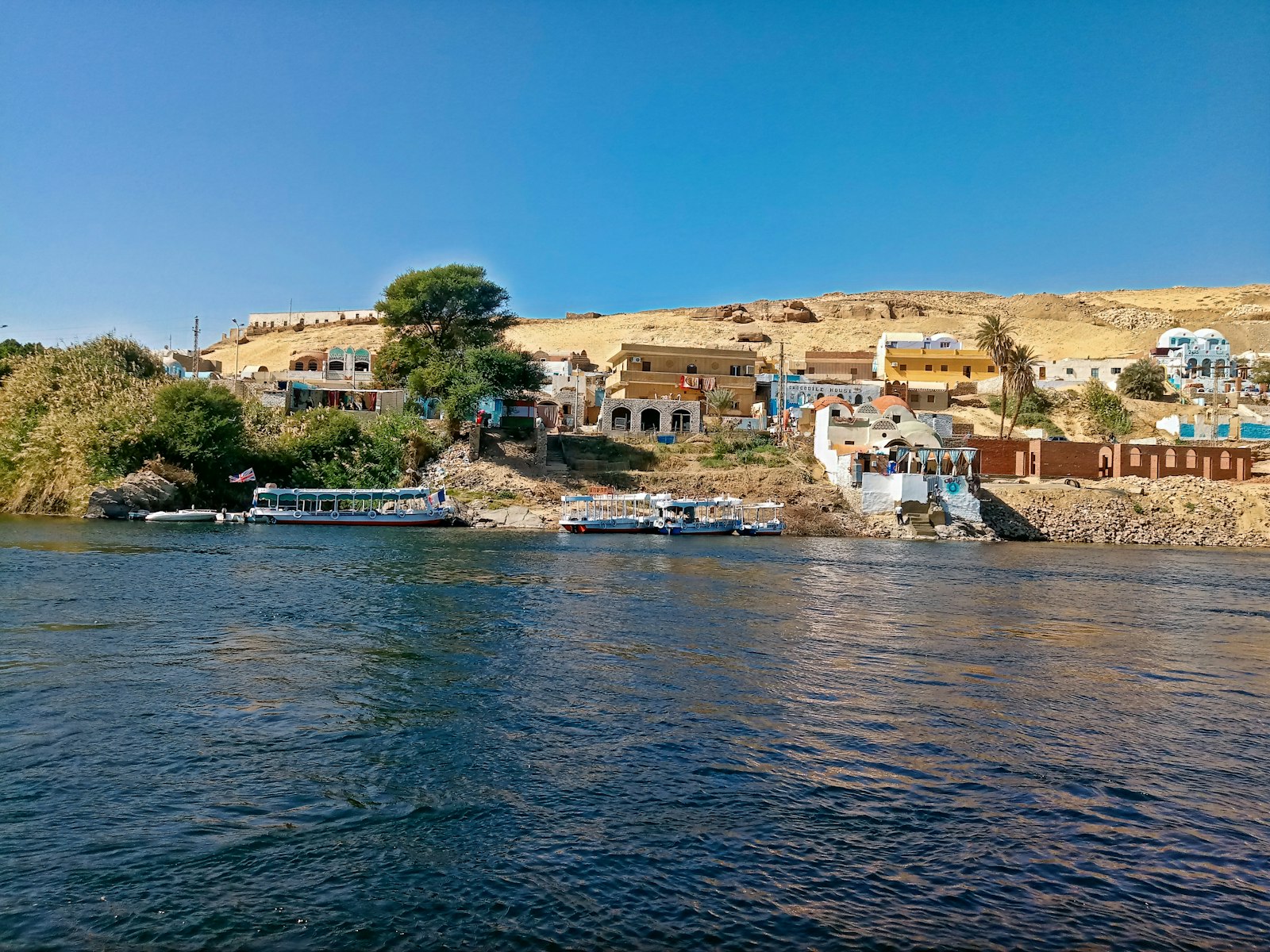
The Monastery of Saint Simeon, known in Arabic as Deir Anba Hatre, is the largest and best preserved Coptic monastery of Egypt. Perched on a desert hill on the western bank of the Nile, opposite the city of Aswan, this extraordinary monastic complex resembles a medieval fortress risen from nothing amid the dunes of sand. Its mighty walls, up to 10 metres high, enclose a world of spirituality, architecture and history that for centuries was the centre of Christian life in Upper Egypt.
Founded in the 6th-7th century AD and originally dedicated to Saint Hedra (Anba Hatre), a local saint of the 4th century, the monastery was erroneously associated with Saint Simeon by the first European travellers. Despite the improper name, the charm of the place is intact: the visit offers an immersion in the history of Coptic Christianity, one of the most ancient Christian traditions of the world, and a unique perspective on monastic life in the Egyptian desert.
History of the Monastery
The Origins
The monastery was founded in the 6th or 7th century AD, during the period of maximum expansion of Christian monasticism in Egypt. The Egyptian monastic tradition, born in the 3rd century with the desert fathers like Saint Anthony and Saint Pachomius, had given life to hundreds of monastic communities along the Nile and in the surrounding deserts. The site chosen for the monastery of Anba Hatre exemplifies the monastic philosophy of detachment from the world: an isolated position in the desert, sufficiently far from the city to guarantee contemplative solitude, but close enough to the Nile to ensure the water supply.
Saint Hedra (Anba Hatre), to whom the monastery is dedicated, was a bishop of Aswan of the 4th century who, according to Coptic tradition, renounced worldly riches on the very day of his marriage to dedicate himself to the ascetic life. His story is emblematic of the Coptic monastic ideal: the rejection of the material world in favour of the spiritual search in the desert.
The Golden Age
In the centuries that followed the foundation, the monastery grew to become one of the most important monastic centres of Upper Egypt. At the height of its prosperity, between the 10th and 12th centuries, the complex could house up to 300 monks and served as a stage for the caravans that crossed the desert. The monks did not limit themselves to contemplative life: the monastery was a centre of production of manuscripts, a place of study and of teaching, and a base for the Christian missions towards Nubia.
The library of the monastery, today lost, was considered one of the most important of Upper Egypt. The monks copied and translated religious texts in Coptic, Arabic and Greek, contributing to the preservation of the Christian cultural heritage in an area increasingly Islamized. The monastery also served as a reception point for the pilgrims travelling towards the holy places of Nubia and Ethiopia.
The Abandonment
The monastery was abandoned in the 13th century, probably in 1173, when the troops of Saladin sacked the complex during a military campaign in the region. According to some sources, the attack was a reprisal against the monks who had provided assistance to the Crusaders. Other interpretations attribute the abandonment to the progressive exhaustion of the water resources and to the growing isolation of the Christian community in the region.
After the abandonment, the monastery was gradually covered by the sand of the desert, which paradoxically contributed to its exceptional conservation. The European travellers of the 19th century rediscovered it and described it with admiration, and since then the site has been the object of studies and conservation interventions.
The Architecture of the Monastery
The Enclosure Walls
The enclosure walls of the monastery are the most impressive element of the structure. Up to 10 metres high, about 2 metres thick at the base, they surround a rectangular area of about 100 x 80 metres. The lower part of the walls is built in stone, while the upper part is in mud bricks (adobe), a construction technique typical of Coptic monastic architecture. The walls were originally provided with watchtowers at the corners and along the sides, some of which are still partially preserved.
The fortress aspect of the monastery was not only symbolic. In an era of Bedouin incursions and religious conflicts, the monastic communities had to protect themselves physically. The massive walls, with a single reinforced entrance, guaranteed the security of the monks and of their precious manuscripts.
The Two-Level Structure
The monastery develops over two main levels, corresponding to two natural terraces of the hill on which it rises. The lower level housed the main church, the refectory, the kitchen, the storerooms and the workshops. The upper level contained the cells of the monks, the library and the spaces of meditation. A system of stairs and corridors connected the two levels, creating an efficient internal circulation.
The Main Church
At the centre of the lower level is found the main church of the monastery, a basilica with three naves with a semicircular apse oriented towards the east. The walls of the church still preserve significant traces of frescoes that depict Christ Pantocrator, the Virgin Mary, saints and angels. These paintings, although faded by time and by the exposure to atmospheric agents, represent a precious example of medieval Coptic art in Upper Egypt. The style, with its large frontal eyes and stylized proportions, is typical of Coptic iconography and exercised a significant influence on Ethiopian Christian art.
The Cells of the Monks
The upper level houses orderly rows of small cells, each of the approximate dimensions of 2 x 3 metres, provided with a niche in the wall that served as a shelf and as a lectern for reading and prayer. The corridors between the cells are narrow and low, in conformity with the monastic ideal of simplicity and humility. In some cells one can still see inscriptions in Coptic and arabesques carved on the walls by the monks, small testimonies of the daily life of men who dedicated their existence to prayer and to study.
The Water System
One of the engineering wonders of the monastery is its system of water supply. The water of the Nile was transported up to the monastery through a system of channelling and conserved in great cisterns dug into the rock. This system guaranteed the water self-sufficiency of the community for long periods, a vital necessity in a desert environment. The remains of the cisterns are still visible and testify to the sophisticated planning that presided over the monastic life.
Coptic Christianity in Egypt
A Millenary Tradition
The visit to the Monastery of Saint Simeon offers the opportunity to deepen the knowledge of Coptic Christianity, one of the most ancient and fascinating Christian traditions of the world. The Coptic Church was founded, according to tradition, by the evangelist Mark in the 1st century AD at Alexandria of Egypt. For the first centuries of its history, Egypt was one of the most important centres of Christianity, cradle of monasticism and seat of some of the greatest theological schools of antiquity.
The Copts developed a cultural and artistic identity of their own, manifested in their language (last stage of ancient Egyptian), in their liturgy, in their architecture and in their refined decorative arts. Still today, the Coptic community constitutes about 10% of the Egyptian population and keeps alive traditions that go back to the first centuries of Christianity.
Tips for the Visit
How to Get There
The Monastery of Saint Simeon is found on the western bank of the Nile, in a position not immediately accessible. The most traditional and evocative way to reach it is to cross the Nile by felucca or motorboat to the western bank, and then proceed on camelback (about 20-30 minutes) through the desert up to the monastery. Alternatively, it is possible to reach the monastery on foot from the bank of the Nile (about 30-40 minutes of walking in the desert), but this option is not advised in the hotter hours.
What to Bring
The visit takes place entirely in a desert environment, without any zone of shade during the route of approach. Bring abundant water (at least one litre per person), high-factor sun protection, a wide-brimmed hat and sunglasses. Closed and comfortable shoes are indispensable to walk on the sand and on the ruins. A light jacket can be useful in the winter mornings, when the temperatures in the desert can be surprisingly low.
Organizing the Visit
The visit to the monastery itself requires about an hour, but the entire route from the bank of the Nile and back can engage half a day. The early morning is the ideal moment for the visit, both for the milder temperatures and for the extraordinary light that the desert offers in the first hours of the day. It is advisable to combine the visit with a felucca cruise on the western bank and a stop at the Mausoleum of the Aga Khan, situated in the vicinity.
Photographic Suggestions
The Monastery of Saint Simeon is extremely photogenic. The enclosure walls that stand out against the blue sky and the golden dunes offer spectacular compositions. Inside, the residual frescoes of the church and the orderly rows of cells merit close-ups with good illumination. The panorama from the monastery towards the Nile and the city of Aswan is one of the most beautiful of the region. For an overall photo of the monastery in its desert context, climb the hill that overlooks it to the north.
Curiosities about the Monastery of Saint Simeon
The monastery could house not only the 300 resident monks but also a large number of passing pilgrims, thanks to a system of rooms for guests that anticipated by centuries the modern idea of hostel. The walls of the monastery were built deliberately to resemble a fortress, to the point that some medieval travellers mistook it for a military castle. The sand of the desert that covered the monastery after the abandonment preserved the frescoes of the church better than any human restoration would have done, protecting them from the sun, from the wind and from vandalism for over seven centuries.
The Monastery of Saint Simeon is a place that speaks of tenacity and of faith, a monument to the spirituality of the men who chose to live and to pray in the heart of the desert. Its visit offers an unforgettable experience that combines adventure, history and contemplation in one of the most evocative landscapes of Upper Egypt.