The Nubian Museum: Guardian of a Millenary Civilisation
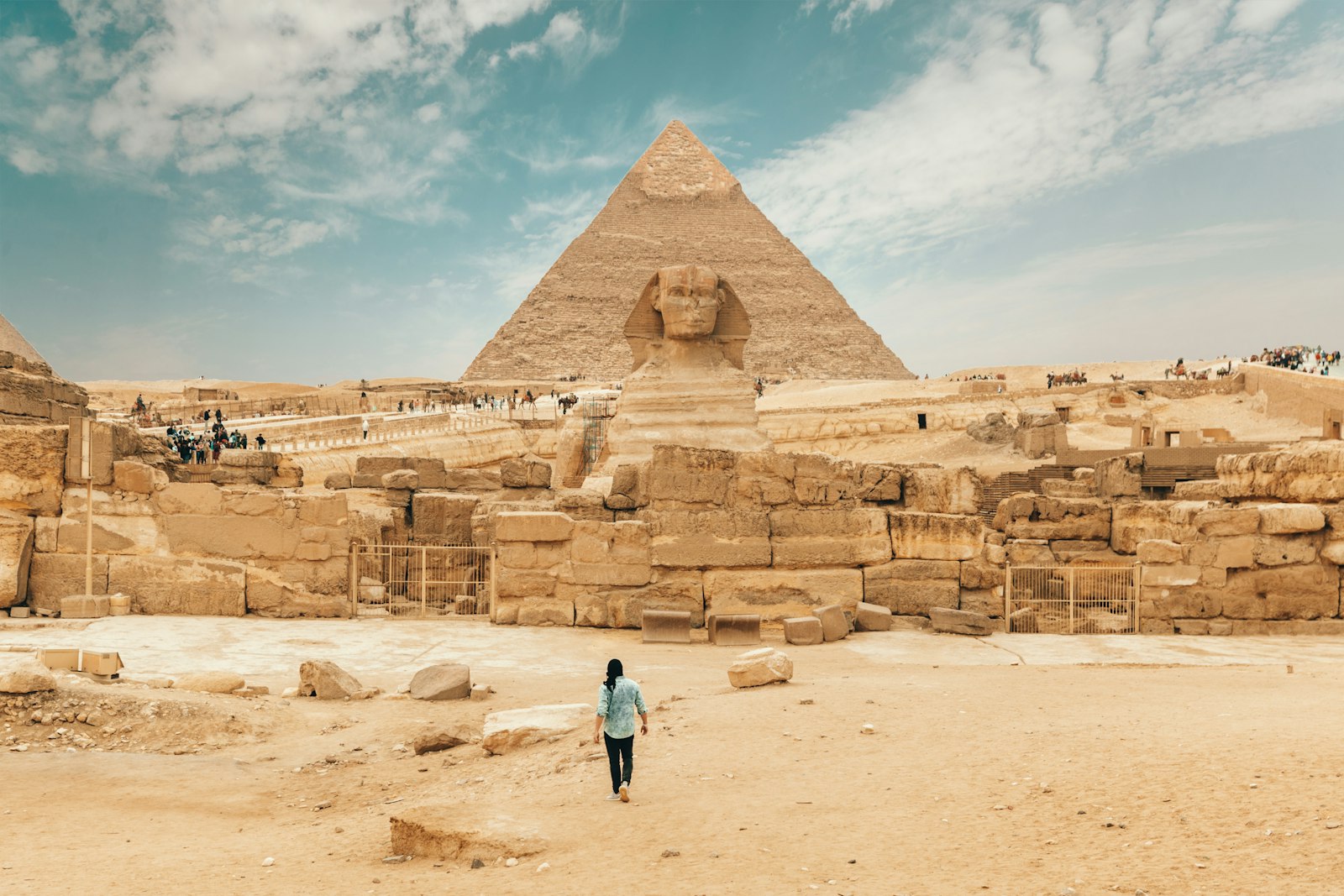
The International Museum of Nubia, commonly known as the Nubian Museum, is one of the most important and best-designed museum institutions of all Egypt. Inaugurated in November 1997 and honoured with the prestigious Aga Khan Award for Architecture in 2001, the museum represents an extraordinary tribute to the Nubian civilisation, one of the most ancient and fascinating of Africa, whose history is inextricably intertwined with that of pharaonic Egypt.
Located on a hill in the southern part of Aswan, the museum extends over an area of about 50,000 square metres, of which 7,000 dedicated to the interior exhibitions. The building itself is a work of architectural art, inspired by traditional Nubian constructions and perfectly integrated into the surrounding landscape. Its gardens, dotted with palms and sculptures, offer a breathtaking view over the city of Aswan and over the waters of the Nile.
The Birth of the Museum
The Historical Context
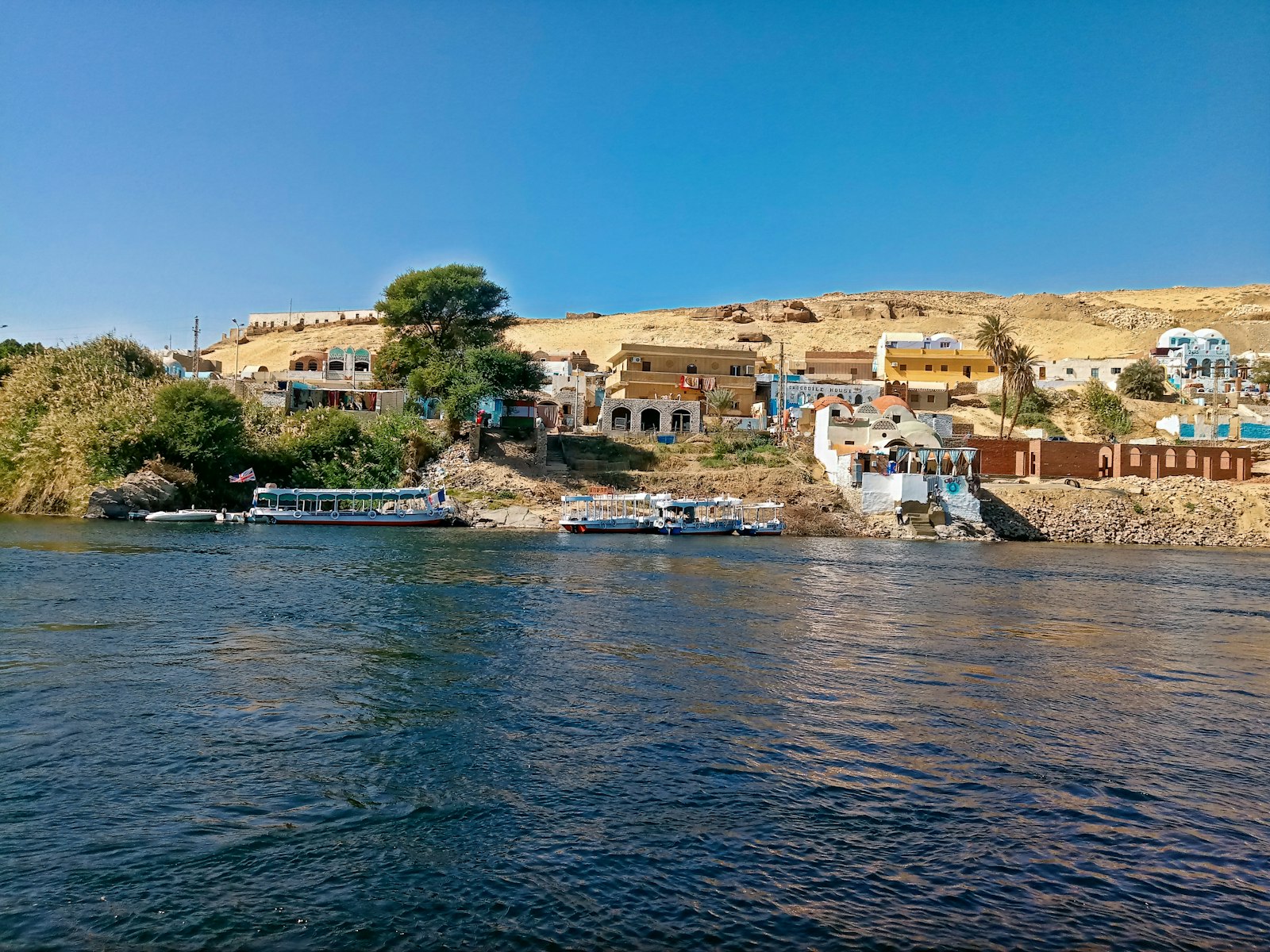
The creation of the Nubian Museum was the cultural response to one of the most serious heritage losses of the 20th century. The construction of the Aswan High Dam in the Sixties led to the formation of Lake Nasser, which submerged the entire region of Lower Nubia, a territory of about 500 kilometres along the Nile, between the First and the Second Cataract. With that territory disappeared under the waters millenary villages, temples, churches, fortresses and a cultural landscape unique in the world.
The international rescue campaign launched by UNESCO between 1960 and 1980 succeeded in saving the most important monuments, such as Abu Simbel and Philae, and in conducting systematic excavations before the submersion. The countless artefacts recovered during this campaign needed an adequate exhibition seat. At the same time, the need was felt to document and preserve the memory of Nubian culture, whose bearers — about 90,000 Nubians — had been transferred from their ancestral lands to new settlements.
The Architectural Project
The museum was designed by the Egyptian architect Mahmoud El-Hakim in collaboration with international consultants. The building draws inspiration from traditional Nubian architecture, with its simple volumes, inclined walls and the use of local materials such as pink sandstone and granite. The structure is articulated around a central courtyard, according to the model of traditional Nubian dwellings, and develops on three levels following the natural slope of the hill.
Natural lighting was studied with particular attention, using skylights and openings that filter the sunlight creating a warm and enveloping atmosphere, avoiding at the same time the overheating of the exhibition environments. The result is a museum space that dialogues harmoniously with the surrounding landscape and with the culture it is called to celebrate.
The Collections
The Prehistoric Section
The exhibition route begins with the prehistory of Nubia, documenting the human settlements in the region since the Palaeolithic. Flint tools, decorated ceramics and rock art testify to a sophisticated culture that developed along the Nile millennia before the unification of Egypt. Of particular interest are the ceramics of the A-Group (3800-3100 BC) and of the C-Group (2300-1600 BC), characterised by incised and painted geometric motifs of great aesthetic refinement, which rival in quality any ceramic production of the ancient world.
The Pharaonic Era
The section dedicated to the pharaonic era illustrates the complex relationship between Egypt and Nubia, made of trade, war, domination and cultural exchange. Artefacts coming from the Egyptian fortresses in Lower Nubia, statues of Nubian governors, commemorative stelae of military campaigns and luxury objects imported from sub-Saharan Africa tell a story of interaction lasting three thousand years.
Among the most notable pieces figure colossal statues of Ramesses II coming from the Nubian temples, commemorative stelae of the military campaigns of Thutmose III and Amenhotep II, jewels in gold and precious stones and an extraordinary collection of scarabs and amulets. A hall is dedicated to the temples of Nubia, with scale models and photographs that show the monuments before and after the submersion.
The Kingdom of Kush
One of the most fascinating sections is dedicated to the Kingdom of Kush, the great Nubian civilisation that between 1070 BC and 350 AD dominated a vast territory from southern Sudan to the Mediterranean. The Kushites conquered Egypt in 747 BC, founding the 25th Dynasty (the "black pharaohs") which governed the country for about a century. The museum exhibits artefacts coming from Kerma, Napata and Meroe, the successive capitals of the Kushite kingdom, including refined ceramics, objects in bronze and iron, and jewels that testify to the high level of development reached by this civilisation.
The Christian Era
Nubia was one of the first African regions to embrace Christianity. Between the 6th and the 14th century, three Nubian Christian kingdoms — Nobatia, Makuria and Alodia — flourished in the region, creating a unique artistic culture that fused Coptic, Byzantine and African elements. The museum exhibits icons, frescoes detached from the Nubian churches before the submersion, manuscripts in ancient Nubian language and liturgical objects of great beauty. The wall paintings, with their vivid colours and the unmistakable style, represent one of the most precious treasures of the collection.
The Islamic and Modern Era
The last sections document Islamic and contemporary Nubia. Ceramics, textiles, musical instruments, silver jewels and objects of daily life illustrate the richness of Nubian culture that has survived the historical transformations. Particularly touching is the section dedicated to the transfer of the Nubian communities after the construction of the High Dam, with photographs and testimonies that document the forced uprooting of a people from their own ancestral lands.
The Ethnographic Gallery
The ethnographic gallery is dedicated to contemporary Nubian material culture. Reconstructions of domestic interiors, traditional costumes, agricultural tools, miniature boats and ceremonial objects offer a vivid cross-section of Nubian daily life before the great transfer. Nubian music, with its characteristic rhythms and its unique instruments such as the tar and the kisir, is documented through audio recordings and exhibited instruments.
The Gardens of the Museum
An Open-Air Museum
The gardens of the Nubian Museum are themselves an attraction of great value. Designed as an open-air extension of the collections, they house colossal statues, architectural elements coming from Nubian sites, reconstructions of traditional dwellings and an area dedicated to prehistoric rock art. A route among palms and flowering flowerbeds leads visitors through this open-air exhibition, also offering splendid panoramic views over Aswan.
At the centre of the gardens is an artificial grotto that houses reproductions of prehistoric rock paintings, created with traditional techniques to give visitors an idea of the art of the first inhabitants of the region. A small artificial lake with a reconstruction of a traditional Nubian house completes the exterior layout.
Tips for the Visit
How to Get There
The Nubian Museum is located in the southern part of Aswan, on the hill near the Fatimid cemetery. It is reachable by taxi from the city centre or from the railway station in a few minutes. Many organised excursions of Aswan include the museum in their itinerary. The museum is open from 09:00 to 21:00, with hours that can vary during Ramadan.
Organising the Visit
The museum deserves at least two hours of attentive visit, but enthusiasts of archaeology and history can easily spend half a day there. The captions are in Arabic and in English. The exhibition route is chronological and well organised, but a guide can notably enrich the experience with insights and anecdotes.
What to Bring
The interior of the museum is air-conditioned, offering a pleasant shelter from the exterior heat. For the visit to the gardens, sun protection and a hat are recommended. Photography is generally permitted inside the museum without flash. A small shop at the entrance sells books, postcards and reproductions of Nubian artefacts.
Combining the Visit
The Nubian Museum combines perfectly with a visit to Elephantine Island and to the Nubian villages for a day dedicated to the discovery of Nubian culture. The proximity to the Mausoleum of the Aga Khan and to the Fatimid Cemetery allows creating an itinerary that covers different eras and cultures within a radius of a few kilometres.
Curiosities about the Nubian Museum
The museum houses over 3,000 artefacts, of which about 1,500 are permanently exhibited. The Aga Khan Award for Architecture received in 2001 recognised not only the architectural quality of the building but also its role in preserving Nubian cultural identity. The Nubian language, documented in the museum, is one of the most ancient written languages of Africa, with texts that go back to the 8th century AD. The museum was financed with the contribution of UNESCO and of the Egyptian government, as part of the moral debt contracted towards Nubian culture during the construction of the Aswan Dam.
The Nubian Museum is not simply a container of archaeological artefacts: it is a living monument to a civilisation that risked being forgotten, a place that restores dignity and voice to a people whose land lies today under the waters of Lake Nasser.