The Mosque of Sultan Hassan: the Masterpiece of Mamluk Architecture
The Mosque of Sultan Hassan is universally recognised as one of the greatest masterpieces of world Islamic architecture. Built at the foot of the Citadel of Saladin in the heart of Cairo between 1356 and 1363 AD, this monumental mosque-madrasa represents the apex of Mamluk architecture and one of the most impressive religious buildings ever constructed. Its colossal dimensions, the perfection of the proportions and the richness of the decorations make it a monument without equal in the history of Islamic art.
Commissioned by the sultan an-Nasir Hasan ibn Muhammad, this mosque combines the function of place of worship with that of educational centre, hosting four madrasas dedicated to the principal juridical schools of Sunni Islam. Its troubled history, marked by political intrigues, assassinations and sieges, adds a further charm to a building that already in itself leaves one breathless.
History and Historical Context
The Sultan an-Nasir Hasan
The sultan an-Nasir Hasan ibn Muhammad ascended the Mamluk throne for the first time in 1347, at the age of only thirteen, in a period of great political instability. Deposed and reinstated twice, he managed finally to consolidate his power in 1354 and decided to build the largest and most imposing mosque that Cairo had ever seen, a monument to his own glory that would eclipse the constructions of his predecessors.
The historical context of the construction is particularly dramatic. Egypt had been devastated by the Black Death of 1348-1349, which had exterminated about a third of the population. Paradoxically, it was precisely this catastrophe that made possible the construction of the mosque: the enormous inheritances left by the victims of the plague flowed into the coffers of the state, providing the sultan with the financial resources necessary for such an ambitious project.
The Construction
The construction works began in 1356 and engaged thousands of workers for seven years. The project was of an unprecedented scale: the mosque had to be the largest religious building of Cairo, with a surface of over 7,900 square metres and a minaret that was supposed to be the tallest of the Islamic world.
The identity of the architect responsible for the project remains unknown, an unusual fact for a building of such importance. It is hypothesised that he may have been a Christian or a foreigner, which would explain the absence of his name from the chronicles written by the Muslims of the time. Whoever he was, his genius is evident in every aspect of the construction.
The construction was plagued by several accidents, the most serious of which was the collapse of one of the minarets in 1361, which killed about 300 people. The sultan himself never saw his work completed: in 1361 he was assassinated by his emirs during a coup d'état and his body was never recovered. By irony of fate, the magnificent mausoleum that he had built for himself inside the mosque remained empty, and one of his sons was buried there instead.
Architecture and Characteristics
The Monumental Dimensions
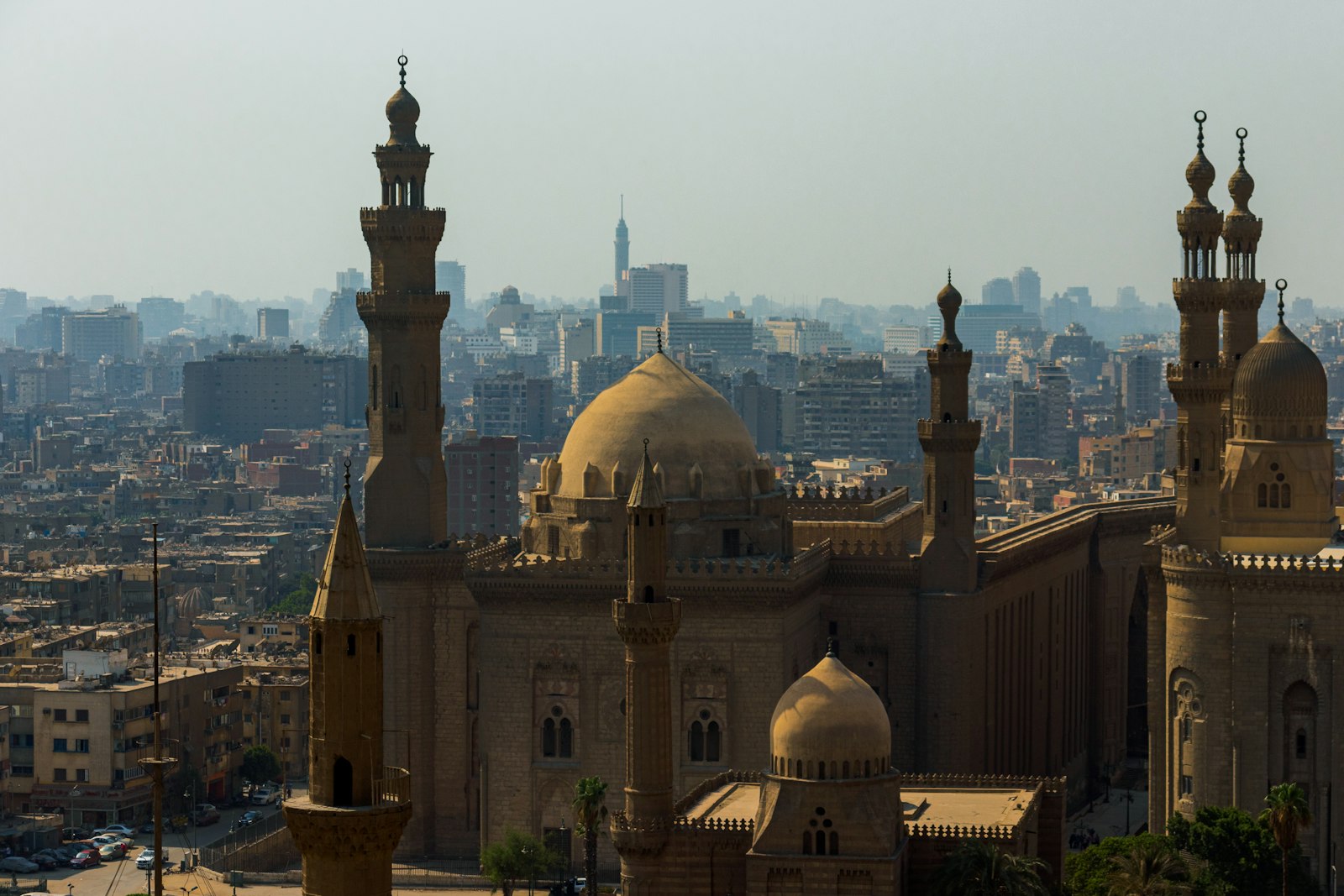
The dimensions of the Mosque of Sultan Hassan are dizzying. The building rises for about 36 metres of height, with external walls so massive that they seem the walls of a fortress rather than of a place of worship. The total length reaches 150 metres, while the surviving minaret towers at 68 metres of height, one of the tallest of medieval Egypt.
The internal volume is such that the space could contain thousands of faithful during the Friday prayer, in addition to the students and the professors of the four madrasas that operated daily within it. The scale of the building was intentionally conceived to express the power and the magnificence of the sultan, but also to reflect the greatness of the Islamic faith.
The Monumental Portal
The main entrance of the mosque is one of the most impressive architectural elements of the entire Islamic world. The portal rises for about 26 metres of height, creating an effect of crushing verticality that prepares the visitor for the grandeur of the interior spaces. The niche of the portal is decorated with stalactites in stone (muqarnas) of extraordinary complexity, while the lateral panels present geometric and calligraphic motifs sculpted in the stone with millimetric precision.
The entrance corridor makes a right-angled turn before opening onto the interior courtyard, an architectural expedient typical of Islamic architecture that serves both to guarantee the privacy of the sacred space and to create a dramatic effect of surprise when the visitor emerges suddenly into the wide courtyard illuminated by the sun.
The Courtyard and the Four Iwans
The central courtyard, of cruciform plan, is dominated by the four large iwans that open onto each side. Each iwan was dedicated to one of the four juridical schools of Sunni Islam: Hanafi, Shafi'i, Maliki and Hanbali. The students of each school followed the lessons in their own iwan and lodged in the adjacent rooms, creating a true Islamic university within the mosque.
The iwan of the qibla, oriented towards Mecca, is the largest and most spectacular. With a vault that reaches 25 metres of height and a width of almost 20 metres, it is one of the most imposing covered spaces of medieval Islamic architecture. The walls are clad in polychrome marble in the lower part and decorated with Quranic inscriptions in golden letters in the upper part. The mihrab, the niche that indicates the direction of Mecca, is a masterpiece of sculpture in stone and inlaid marble.
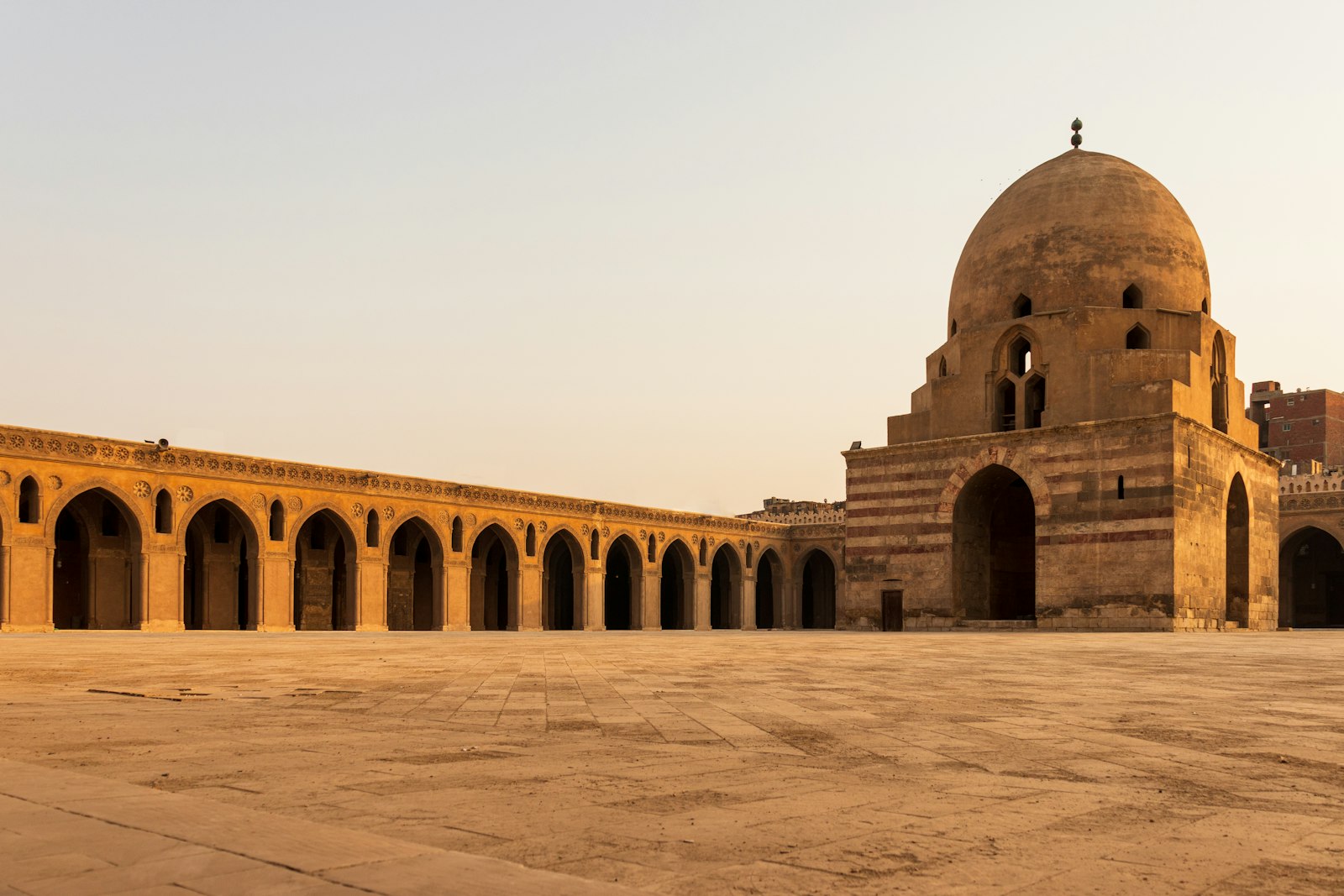
At the centre of the courtyard is a fountain for the ritual ablutions, surmounted by a dome supported by columns of marble. The fountain, of relatively modest dimensions compared to the scale of the building, creates a pleasant contrast with the surrounding monumentality and offers a visual focal point that helps to orient the gaze in the space.
The Mausoleum
At the back of the mosque, behind the iwan of the qibla, is the mausoleum of the sultan, covered by a great dome. This square room, with sides of about 21 metres, is one of the most grandiose funerary spaces of Islamic architecture. The walls are decorated with a frieze of Quranic inscriptions in golden stucco that runs along the entire perimeter, while the floor is clad in polychrome marble with geometric designs of great complexity.
As already said, the mausoleum remained empty for years after the assassination of the sultan in 1361, since his body was never recovered. It was finally used for the burial of two of the sons of the sultan. The current cenotaph, surrounded by a balustrade in carved wood, is a later addition that confers on the space an appropriate solemnity.
The Minarets
The mosque was originally endowed with four minarets, of which today three survive. The largest, situated in the south-east corner, reaches a height of 68 metres and was for a brief period the tallest minaret of the Islamic world. Its structure presents three sections of decreasing diameter, each with a balcony for the muezzin, crowned by a small pavilion with a bulb dome.
The collapse of the north-west minaret during the construction, which caused hundreds of victims, was interpreted by the contemporaries as a funereal omen for the sultan, an interpretation that seemed to be confirmed with his assassination a short time later.
Historical and Cultural Significance
A Monument to Mamluk Greatness
The Mosque of Sultan Hassan represents the apex of Mamluk architecture, a style that dominated Egypt and Syria from the 13th to the 16th century. The Mamluks, warrior-slaves of Turkish and Circassian origin who had taken power in Egypt in 1250, were great patrons of architecture and the arts, and left to Cairo a monumental heritage of inestimable value.
The mosque reflects the ambition and the taste for greatness that characterised Mamluk culture. The choice to combine mosque and madrasa in a single monumental building expressed the Mamluk ideal of power as a combination of military force, religious devotion and cultural patronage.
The Mosque as a Fortress
The strategic position of the mosque at the foot of the Citadel and its massive walls also conferred on it a military role over the centuries. During the power struggles between Mamluk factions, the mosque was several times used as a fortified position from which to launch attacks against the Citadel or defend against the besiegers. The traces of projectiles visible on the external facade testify to these warlike events.
Tips for the Visit
How to Arrive
The mosque is located in Salah el-Din Square, at the foot of the Citadel of Saladin. It is reachable by taxi or by ride-sharing service from the centre of Cairo. The nearest metro station is Mohamed Naguib on line 1 or 2, from which one can continue by taxi for about 10 minutes.
Times and Tickets
The mosque is open every day from 8:00 to 17:00. The entrance ticket is at a contained price and reductions are available for students. It is possible to buy a combined ticket that includes the visit to the nearby Mosque of al-Rifa'i. It is advisable to visit in the early hours of the morning to avoid the crowd and enjoy the best natural lighting.
What to Wear and Bring
As for all Islamic places of worship, it is necessary to dress in a respectful way. The shoes are to be removed before entering the prayer hall. Bring a camera with a wide-angle lens to capture the monumental dimensions of the interior spaces. A torch can be useful to appreciate the decorative details in the less illuminated zones.
Suggestions for the Visit
Dedicate at least an hour and a half to the visit, taking time to admire the decorative details that reveal themselves only to an attentive examination. The mausoleum, at the back of the mosque, is often less crowded than the main courtyard and merits an accurate visit. Ask the guardian if it is possible to climb onto the roof or access the minaret for a spectacular view over the Citadel and historic Cairo.
Combining the Visit
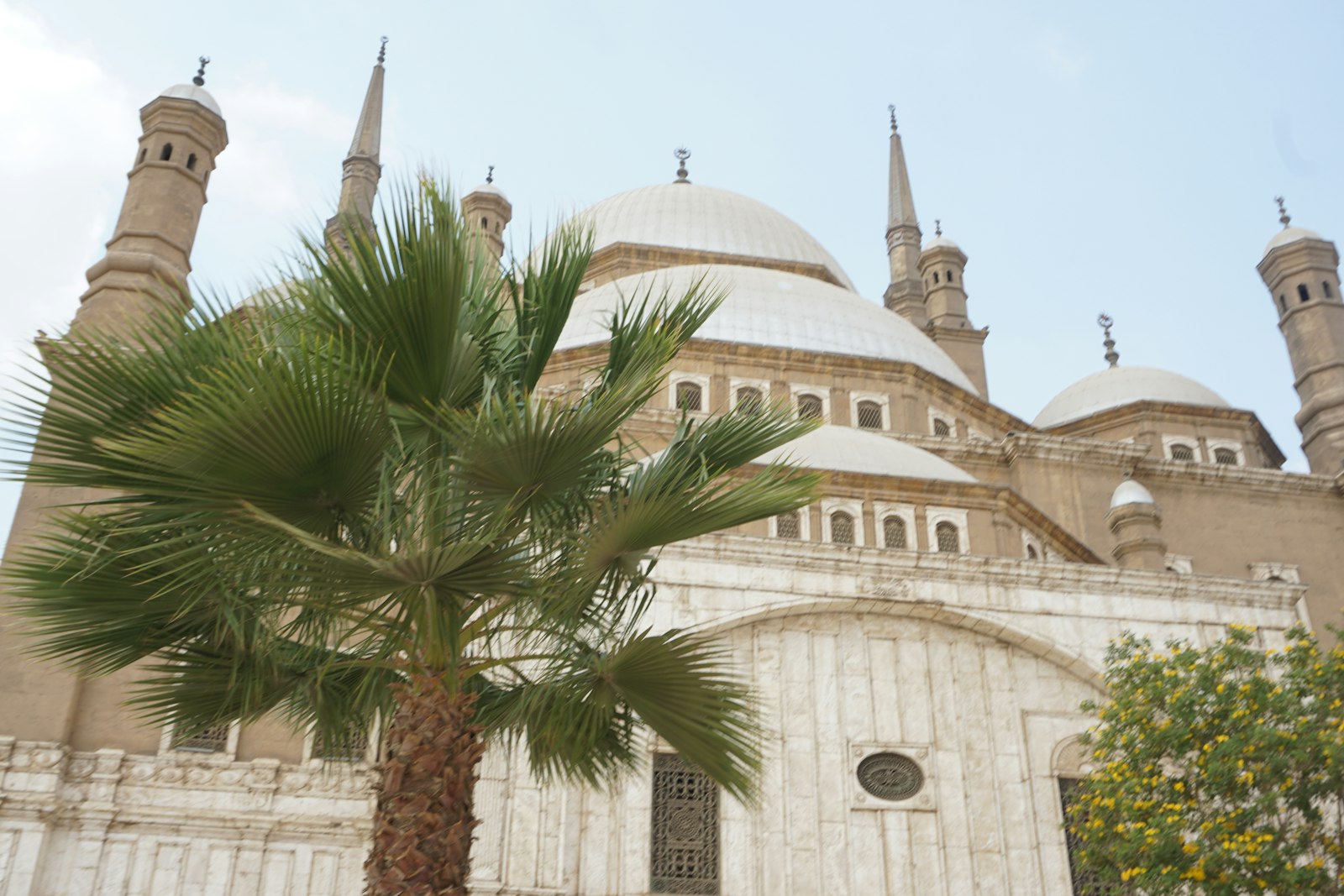
The position of the mosque makes it perfect as a stage of an itinerary of Islamic Cairo. Opposite is the Mosque of al-Rifa'i, while a few steps uphill one reaches the Citadel of Saladin with the Mosque of Muhammad Ali. This triptych of monuments constitutes one of the most impressive monumental routes of Cairo and can be visited in an intense half-day.
To visit the Mosque of Sultan Hassan means to immerse oneself in one of the absolute summits of Islamic architecture, a monument whose grandeur continues to leave visitors and scholars speechless after over six centuries from its construction.