The Al-Rifa'i Mosque: the Royal Pantheon of Modern Egypt
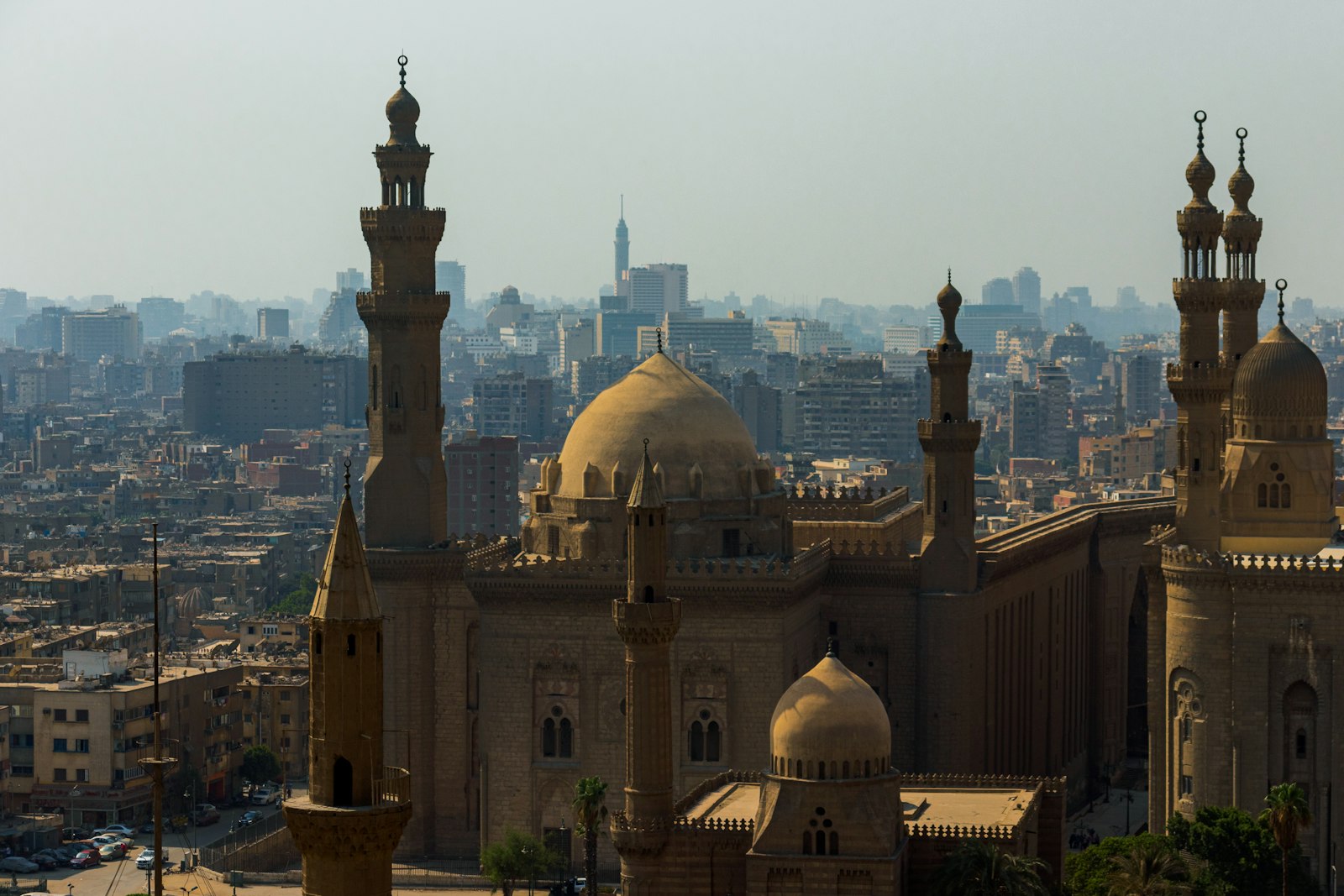
The Al-Rifa'i Mosque is one of the most imposing and evocative monuments of Cairo, a building that combines the grandeur of neo-Mamluk architecture with the fascination of Egypt's modern history. Located in Salah el-Din Square, directly opposite the medieval Mosque of Sultan Hassan, this royal mosque was built between 1869 and 1912 to house the tombs of the Egyptian royal family and the shrine of the Sufi saint Ahmad al-Rifa'i.
Its history is intertwined with that of the dynasty of Muhammad Ali, which governed Egypt from 1805 to 1952, and with that of international figures such as the last Shah of Iran, Mohammad Reza Pahlavi, whose tomb is found within it. The mosque represents a bridge between the glorious past of Islamic architecture and the ambitions of the modern Egyptian nation.
History of the Construction
The Origins of the Project
The construction of the Al-Rifa'i Mosque was begun in 1869 at the behest of Khushyar Hanim, mother of Khedive Isma'il Pasha, the sovereign who modernised Egypt and inaugurated the Suez Canal. The original project was entrusted to the Egyptian architect Hussein Fahmi Pasha, who conceived a building capable of rivalling in size and magnificence the nearby Mosque of Sultan Hassan, creating an architectural pendant of extraordinary scenographic effect.
The aim was twofold: on the one hand to create a royal mausoleum worthy of the reigning dynasty, on the other to build a place of worship that honoured the memory of Ahmad al-Rifa'i, founder of the Sufi order of the Rifa'iyya, whose original shrine stood nearby. The mosque was to be a symbol of the prestige and legitimacy of the Egyptian royal family, a monument to their religious piety and their patronage.
A Troubled Construction
The construction of the mosque was a long and complex affair, lasting over forty years. Work began with enthusiasm in 1869, but was interrupted in 1880, when only the foundations and part of the perimeter walls had been completed. The death of Hussein Fahmi Pasha and the financial difficulties of Egypt, aggravated by the debt crisis that led to the British occupation in 1882, caused an interruption of almost twenty years.
Work resumed in 1906 under the direction of the Italian architect Max Herz Pasha, then head of the Committee for the Conservation of the Monuments of Arab Art. Herz, a profound connoisseur of Islamic architecture, revised the original project, maintaining its general layout but making significant modifications to the decorative details, inspired by the best examples of Mamluk architecture of the 14th and 15th centuries. The mosque was finally completed and inaugurated in 1912, under Khedive Abbas Hilmi II.
Architecture and Decorations
The Neo-Mamluk Style
The Al-Rifa'i Mosque is the largest and most ambitious example of neo-Mamluk architecture in Egypt. The neo-Mamluk style, developed in the 19th century, set out to reinterpret the forms and decorations of medieval Mamluk architecture (13th-16th centuries) using modern techniques and materials. The result is a building that, although relatively recent, integrates harmoniously into the monumental landscape of historic Cairo.
The exterior of the mosque is characterised by a monumental façade in limestone that takes up the decorative motifs typical of Mamluk architecture: blind niches, moulded cornices, calligraphic inscriptions and muqarnas (decorative stalactites). The two minarets, about 50 metres high each, follow the classic Mamluk model with cylindrical sections of decreasing diameter and projecting balconies for the muezzin.
The main dome, which covers the mausoleum, is one of the most visible elements of the skyline of historic Cairo. Its shape and dimensions were carefully studied to create a visual balance with the dome of the Mosque of Sultan Hassan located opposite.
The Sumptuous Interiors
If the exterior of the mosque is austere and monumental, the interior is of an almost dazzling decorative richness. The walls are clad in polychrome marble from Italy, Turkey and Egypt, with geometric and vegetal motifs of great complexity. The floor is a mosaic of precious marbles, while the ceiling is decorated with gilded stuccoes and polychrome paintings that create an effect of oriental opulence.
The interior columns, in pink granite from Aswan and white marble from Carrara, support ogival arches decorated with arabesques in gilded stucco. The windows are closed by coloured stained glass that filters the outside light, creating chromatic effects of great impact, particularly evocative in the morning hours when the rays of the sun pass through the eastern windows.
The mihrab, the niche that indicates the direction of Mecca, is a masterpiece of marble inlay with floral and geometric motifs in polychrome marble. The minbar (pulpit) in carved and gilded wood is another element of great artistic value.
The Monumental Chandelier
One of the most spectacular elements of the interior is the large central chandelier in gilded bronze and crystal, imported from Europe in the 19th century. This chandelier, weighing several tonnes, hangs from the main dome and illuminates the space below with a warm and golden light that accentuates the richness of the surrounding decorations.
The Royal Tombs
The Egyptian Royal Family
The main function of the Al-Rifa'i Mosque is that of royal mausoleum. Within it rest numerous members of the family of Muhammad Ali, the dynasty that governed Egypt from 1805 to 1952. Among the most important personalities buried in the mosque are Khedive Isma'il Pasha, architect of the modernisation of Egypt and the opening of the Suez Canal, and King Fuad I, first king of modern Egypt.
King Farouk, last sovereign of the dynasty, was also to have found his final resting place here, but the revolution of 1952 and the king's exile in Italy prevented the realisation of this project. Farouk died in Rome in 1965 and was initially buried in Italy, although his remains were subsequently repatriated and interred in the mosque.
The Tomb of the Shah of Iran
The most unusual and perhaps most visited element of the mosque is the tomb of Mohammad Reza Pahlavi, the last Shah of Iran, who died in exile in Cairo in July 1980. After the Iranian Islamic revolution of 1979, the Shah was forced to leave his own country and, after wandering between various countries, found refuge in Egypt thanks to the hospitality of President Anwar Sadat.
The tomb of the Shah is located in a side chapel of the mosque, adorned with Persian carpets and a marble tombstone with inscriptions in Farsi and Arabic. The presence of this tomb still today attracts Iranian visitors and scholars of contemporary history, and represents a significant chapter in the relations between Egypt and Iran.
The Shrine of Ahmad al-Rifa'i
The mosque also houses the cenotaph of Ahmad al-Rifa'i (1118-1182), founder of the Sufi order of the Rifa'iyya, one of the most important and widespread in the Islamic world. Although al-Rifa'i is buried in Iraq, his cenotaph in Cairo has for centuries been a place of popular devotion, a destination for pilgrims who come to pray and ask for the intercession of the saint.
The Relationship with the Mosque of Sultan Hassan
Two Twin Mosques
The visual relationship between the Al-Rifa'i Mosque and the Mosque of Sultan Hassan is one of the most fascinating aspects of the urban landscape of Cairo. The two mosques face each other in the majestic Salah el-Din Square, creating a scenographic effect of extraordinary power. Although separated by five centuries of history, the two buildings dialogue harmoniously thanks to the neo-Mamluk choice of the more recent mosque, which takes up the proportions, materials and decorative style of its illustrious neighbour.
This architectural dialogue was intentional: the patrons of the Al-Rifa'i Mosque explicitly wanted to create a pendant to the Mosque of Sultan Hassan, so that the two structures formed a monumental ensemble worthy of the greatest urban setting of Cairo.
Tips for the Visit
How to Get There
The mosque is located in Salah el-Din Square, easily reachable by taxi from the centre of Cairo. The Citadel of Saladin is in the immediate vicinity, reachable on foot in a few minutes by going up the hill. The nearest metro station is Mohamed Naguib, from which you can proceed by taxi.
Hours and Tickets
The mosque is generally open from 9:00 to 17:00. The entrance ticket is inexpensive and reductions are available for students. It is advisable to buy a combined ticket with the nearby Mosque of Sultan Hassan to save money and guarantee access to both monuments.
Suggestions for the Visit
Devote at least an hour to the visit, taking time to admire the details of the interior decorations and to visit the various funerary chapels. The best moment for the visit is the morning, when the sunlight filters through the coloured stained glass creating a magical atmosphere. Ask the custodian to point out the most significant tombs, including that of the Shah of Iran, which might not be immediately visible.
Photographic Suggestions
The interior of the mosque offers exceptional photographic opportunities, but the light can be scarce: bring a tripod or use a bright lens. The exterior is best photographed in the late afternoon, when the warm light accentuates the golden colour of the limestone. For an iconic photo of the two twin mosques, position yourself in the centre of Salah el-Din Square.
Combining the Visit
The Al-Rifa'i Mosque is ideal as a stage of an itinerary that includes the Mosque of Sultan Hassan and the Citadel of Saladin with the Mosque of Muhammad Ali. This triptych of monuments, all reachable on foot from one another, offers a complete panorama of the Islamic architecture of Cairo from the Mamluk era to modernity, and can be comfortably visited in half a day.
The visit to the Al-Rifa'i Mosque is a journey through the modern history of Egypt, a place where art and architecture merge with the human affairs of sovereigns and saints, offering a unique and fascinating insight into Egyptian culture.