The Temple of Seti I at Abydos: The Summit of Egyptian Art
The Temple of Seti I in Abydos is universally recognized as the guardian of the most refined reliefs of the entire Pharaonic Egypt, an absolute masterpiece of the art of bas-relief which represents the technical and aesthetic summit reached by the artisans of ancient Egypt. Located in the sacred city of Abydos, approximately 160 kilometers north of Luxor and 90 kilometers south of Sohag in Upper Egypt, this funerary temple is also a historical document of inestimable value, thanks to the famous King List which lists the cartouches of 76 pharaohs from the beginning of Egyptian civilization up to Seti I.
Abydos was for millennia the most important pilgrimage center of ancient Egypt, the sacred place where, according to tradition, the head of the god Osiris, lord of the afterlife and judge of the dead, was buried. Every devout Egyptian aspired to make at least one pilgrimage to Abydos in their lifetime, and many wished to be buried in the god's vicinity or, at the very least, to erect a memorial stele in the sacred precincts.
History and Construction
Seti I: The Restorer of Egypt
Seti I (reign: ca. 1294-1279 BC) was the second pharaoh of the 19th Dynasty and the father of the great Ramesses II. Having ascended the throne after a period of political instability following the end of the XVIII dynasty and the Amarnian period, Seti I dedicated his reign to the restoration of Egyptian greatness: he conducted victorious military campaigns in Syria-Palestine and Libya, restored the cult of the traditional gods and started an ambitious program of monumental construction.
The temple of Abydos was his most important work, conceived not only as a funerary temple for his posthumous cult but also as a sanctuary dedicated to six great deities of the Egyptian pantheon and to the memory of the pharaohs who preceded him. Seti I died before the completion of the temple, and it was his son Ramesses II who completed the work, although the artistic quality of the parts completed by Ramesses is visibly lower than that of the sections created under Seti I.
The Single Plan of the Temple
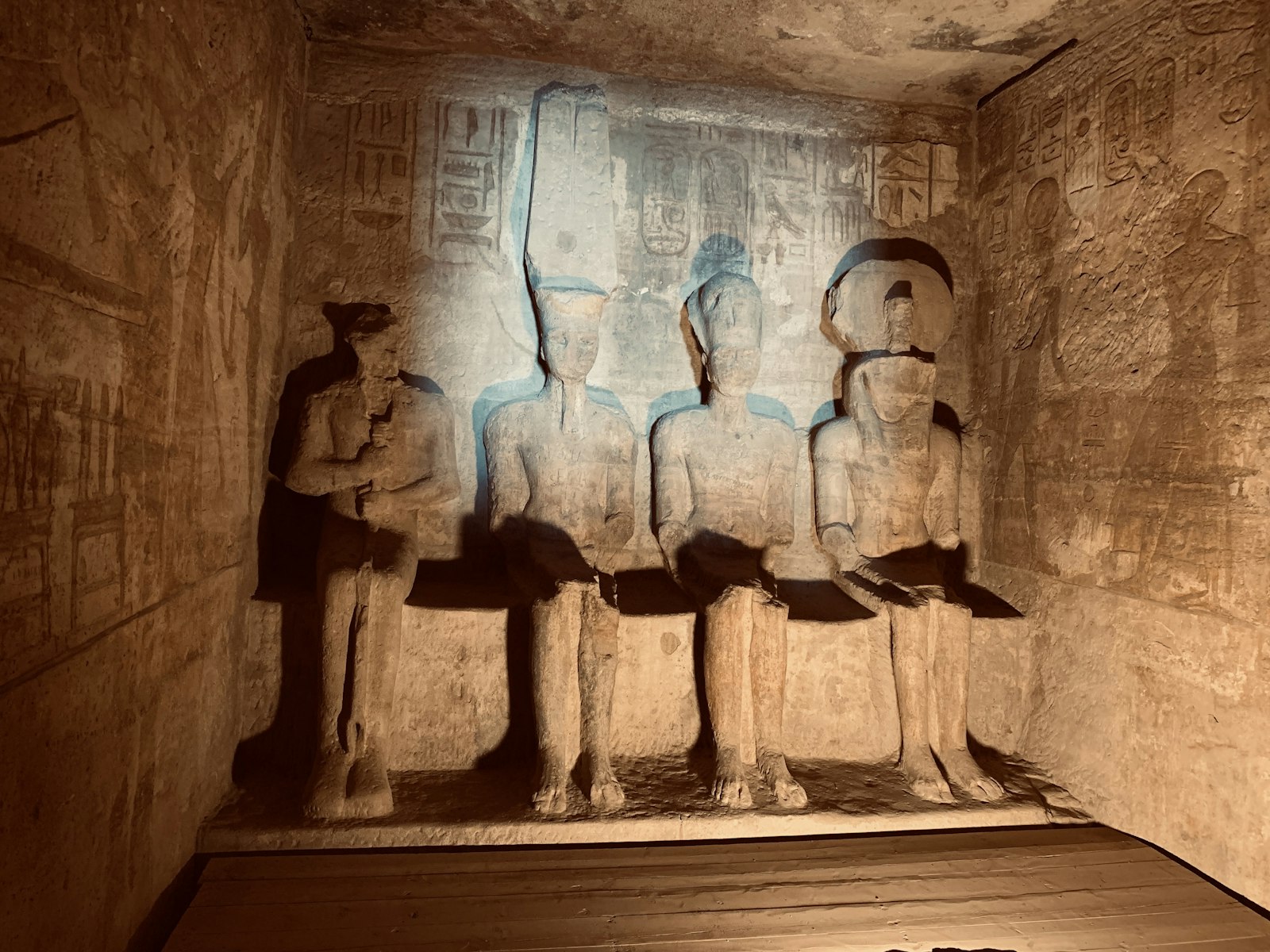
The temple of Seti I presents an architectural plan unique in Egyptian architecture: instead of the traditional single-axis axial layout, the temple develops on an L-shaped plan with seven parallel chapels at the rear, dedicated respectively to Osiris, Isis, Horus, Ptah, Amun-Ra, Ra-Horakhty and the deified Seti I himself. This seven-parallel-axis configuration has no parallel in any other Egyptian temple and gives the building an extraordinary planimetric complexity.
The Reliefs: The Summit of Egyptian Art
The Hollow Relief Technique
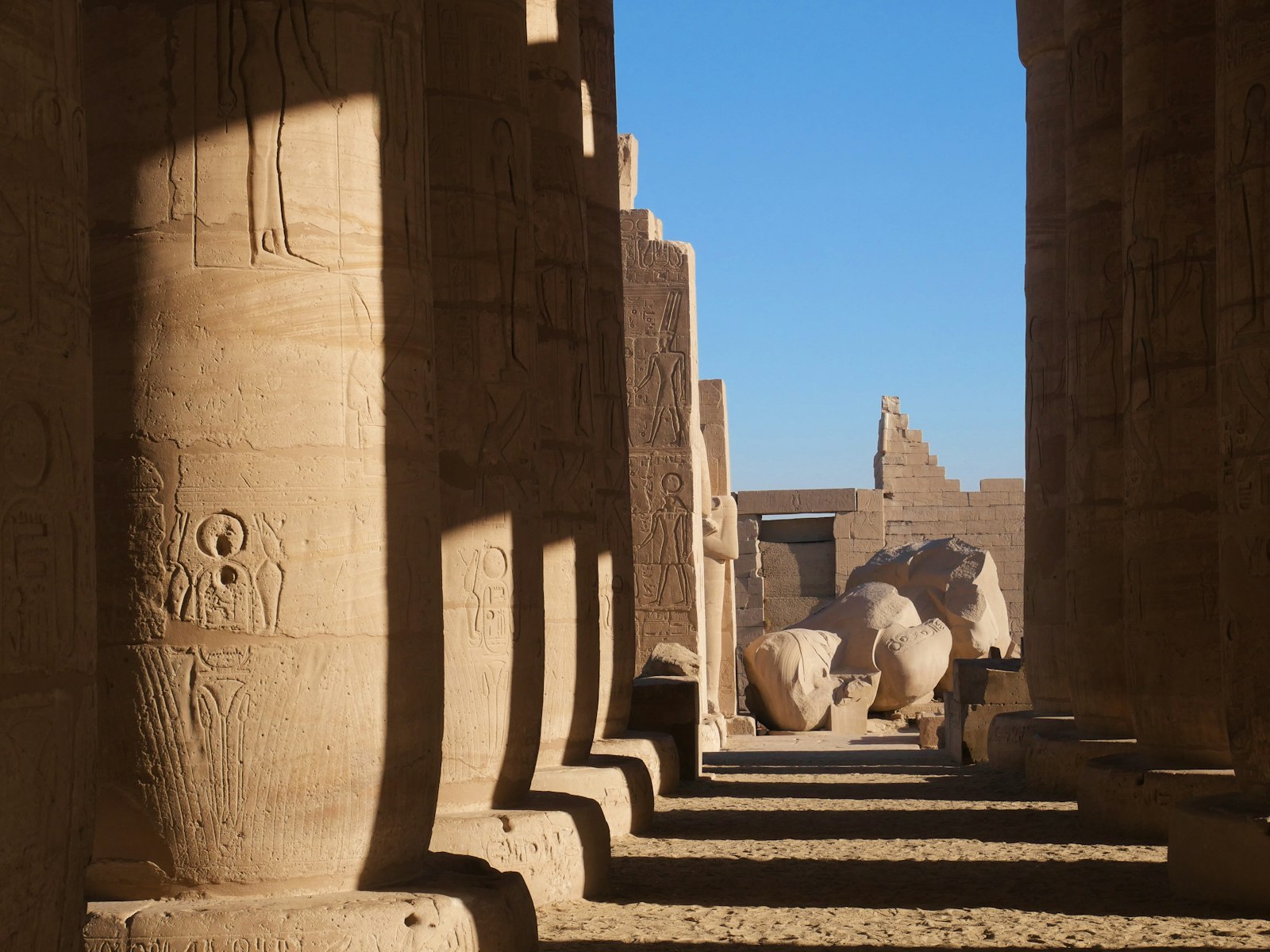
The reliefs of the temple of Seti I are unanimously considered the most beautiful of ancient Egypt. Executed in the delicate technique of bas-relief "en creux", in which the figures are carved within the surface of the wall, these masterpieces reach a level of refinement, elegance and technical perfection unprecedented and never equaled again in the history of Egyptian art.
The divine and regal figures are sculpted with an almost painterly softness: the faces express a sublime serenity, the bodies present a delicate anatomical modelling, the clothes and hairstyles are rendered with meticulous detail. The hieroglyphics that accompany the scenes are also carved with absolute calligraphic perfection, to the point that Egyptologists consider them among the most beautiful ever produced.
The Scenes of the Chapels
Each of the seven chapels presents a complete cycle of ritual scenes documenting the daily ceremonies of divine worship: the opening of the naos, the awakening of the deity, the offering of food, incense and libations, the dressing of the cult statue and the closing of the sanctuary. These scenes constitute the most complete and detailed documentation of the Templar rituals of ancient Egypt.
The Osiris chapel is the most elaborate and leads, through a series of successive rooms, to a complex of chambers dedicated to the Osiriac mysteries, where the scenes represent the secret rites linked to the death and resurrection of the god. In these rooms, the walls are covered with ritual texts and mythological representations of extraordinary theological complexity.
Comparison with the Reliefs of Ramesses II
The difference between the reliefs executed under Seti I and those completed by Ramesses II is dramatically evident within the same temple. While the sections of Seti I display unsurpassed finesse and elegance, the reliefs of Ramesses II—executed in the deep-incision relief (sunken relief) technique rather than bas-relief—are coarser and less refined, though effective in their monumentality. This difference allows the visitor to concretely appreciate how artistic quality could vary significantly from one kingdom to another.
The Abydos King List
A Fundamental Historical Document
On the wall of the corridor that connects the second hypostyle hall to the southern chapel is the famous King List of Abydos, one of the most important chronological documents of the entire Egyptian civilization. This list, carved in very fine bas-relief, shows the pharaoh Seti I and the young prince Ramesses (the future Ramesses II) in adoration in front of 76 cartouches containing the names of the pharaohs who preceded them, from the 1st dynasty up to Seti I himself.
The list is arranged on three horizontal registers and constitutes a fundamental source for the reconstruction of Egyptian chronology. However, like all Egyptian royal lists, it contains deliberate omissions: pharaohs considered illegitimate or unworthy—such as the Hyksos rulers of the 15th-16th dynasties, Queen-Pharaoh Hatshepsut, and the pharaohs of the Amarnian period (Akhenaten, Smenkhara, Tutankhamun, and Ay)—have been excluded from the list, in an act of damnatio memoriae.
The Political Meaning
The King List was not a simple chronological document but a powerful tool of political and religious propaganda. Presenting an uninterrupted and purified succession of legitimate pharaohs leading directly to Seti I, the list affirmed the dynastic continuity and legitimacy of the Nineteenth Dynasty, which arose in circumstances not entirely clear after the end of the Eighteenth Dynasty. The gesture of the young Ramesses reading the names of his predecessors next to his father symbolized the transmission of royal power through the generations.
The Osireion
The Cenotaph of Osiris
Behind the temple of Seti I, on a lower level, lies the enigmatic Osireion, a one-of-a-kind subterranean structure that was likely conceived as a symbolic cenotaph of Osiris — an empty tomb of the god reminiscent of the primordial mound of creation.
The Osireion features striking megalithic architecture: huge blocks of pink granite and sandstone, some weighing tens of tons, form a large central hall with an island surrounded by a water channel, which symbolized the primordial mound emerging from the waters of the Nun. The hall is supported by colossal monolithic granite pillars reminiscent of the valley temple architecture of the Khafre complex at Giza, deliberately suggesting archaic antiquity.
The walls of the Osireion are decorated with texts from the Book of the Dead and the Book of Doors, and the ceiling of the central chamber bore a detailed astronomical depiction. The entire structure was originally covered with an earthen mound, simulating a burial mound.
Mysteries and Controversies
The Osireion has generated much controversy. Some alternative authors have argued that the structure is much older than the temple of Seti I, based on its archaic-looking megalithic architecture. However, the Egyptological community agrees in attributing the Osireion to Seti I, recognizing that the archaic style was a deliberate choice to evoke the primordial antiquity of the Osiris myth. Inscriptions and decorations that can be dated with certainty to the reign of Seti I and his nephew Merenptah confirm this dating.
Abydos: The Sacred City of Osiris
The Pilgrimage Centre
Abydos was the most important religious center of ancient Egypt for over three thousand years. The city was sacred to Osiris, the god of the afterlife, and each year there was a great procession (the Mysteries of Osiris) commemorating the god's death, dismemberment, and resurrection—a sacred drama that attracted pilgrims from all over Egypt.
The sacred area of Abydos includes numerous other monuments in addition to the temple of Seti I: the temple of Ramesses II (with more damaged but equally impressive reliefs), the royal tombs of the 1st and 2nd dynasties (the oldest known royal burials), the funerary enclosure of Khasekhemwy, and the enigmatic complex of Shunet ez-Zebib. The entire area is a layering of history spanning over three thousand years of civilization.
The Temple of Ramesses II
A short distance from the temple of Seti I stands the temple built by his son Ramesses II, also dedicated to Osiris. Although less well preserved and artistically less refined than his father's temple, the temple of Ramesses II still features notable limestone reliefs with traces of the original polychromy, which allow us to imagine the chrome appearance that Egyptian temples originally had.
Tips for the Visit
How to Get There
Abydos is located approximately 160 kilometers north of Luxor and 90 kilometers south of Sohag. The site can be reached by car or taxi from either city, with a drive of around two hours from Luxor via the Western Desert Road. From Sohag, the distance is shorter and the journey shorter. Many Luxor tour operators organize day trips to Abydos, often in combination with the Dendera temple.
Organization of the Visit
The temple of Seti I is the focal point of the visit and requires at least an hour and a half to be properly appreciated. The Osireion, accessible from the back of the temple, is worth an additional visit of about thirty minutes. The Temple of Ramesses II, located a short distance away, adds another half hour to the visit. The internal lighting of the Temple of Seti I is sufficient to appreciate the reliefs, but a flashlight may be useful for details in less well-lit areas.
What to Bring
Bring water, sunscreen and comfortable shoes. The site is relatively compact compared to other Egyptian sites, but visiting the temple requires time and attention to artistic detail. Binoculars can be useful for admiring the higher reliefs on the walls and ceilings. A good guide book or informative app is highly recommended to understand the very rich decorative program of the temple.
Importance of Light
The temple's natural lighting changes significantly throughout the day. The early hours of the morning and late afternoon offer a grazing light that enhances the hollow reliefs, creating delicate shadows that reveal their extraordinary three-dimensionality. At midday, when the sun is high, many details are less visible. It is therefore advisable to plan your visit during the hours of oblique light.
Combination with Dendera
The classic excursion from Luxor combines Abydos with the temple of Hathor in Dendera, which can be visited on the way back. This combination allows you to admire two of the most beautiful temples in Egypt on the same day, representing different eras (19th dynasty for Abydos, Ptolemaic period for Dendera) and contrasting but equally extraordinary artistic styles.
The temple of Seti I in Abydos is one of those places that transform the visitor. Faced with its reliefs of almost supernatural perfection, one understands that ancient Egypt was not only a civilization of pyramids and mummies, but also - and above all - of artists of genius who were able to reach aesthetic heights unsurpassed in the history of humanity. Abydos is not simply a tourist stop: it is a pilgrimage towards absolute beauty.