The Temple of Esna: the Hidden Jewel beneath the Modern City
Buried nine metres below the level of the modern city of Esna, the Temple of Khnum emerges from the past like an extraordinarily preserved time capsule. This Ptolemaic-Roman temple, of which survives the magnificent pronaos with its twenty-four columns, is celebrated for its recently restored astronomical ceiling that has revealed vivid colours hidden for two thousand years under centuries of soot. Located about 55 kilometres south of Luxor, Esna represents a fascinating and often underrated stop along the route of Nile cruises.
The temple is dedicated to the god Khnum, the ram-headed god who, according to Egyptian mythology, had created humanity at his potter's wheel, moulding the bodies of human beings and their ka (vital spirit) from the clay of the Nile. This creator deity was particularly venerated in the region of the first cataract, but the temple of Esna represents its most monumental and best-preserved sanctuary.
The Uniqueness of the Temple
A Temple Beneath the City
The most immediately perceptible characteristic of the Temple of Esna is its position: it lies in a deep pit dug in the heart of the modern city, accessible through a staircase that descends a full nine metres below street level. This situation arose over the course of millennia due to the progressive accumulation of layers of sediment, debris and constructions that gradually raised the level of the surrounding ground, while the temple remained fixed at its original height.
Strolling through the lanes of the lively market of Esna, visitors suddenly find themselves before this archaeological chasm from which emerge the majestic columns of the pronaos, creating a surreal contrast between ancient Egypt and the daily life of a contemporary Egyptian town. It is a one-of-a-kind experience, different from any other archaeological site in the country.
The Surviving Pronaos
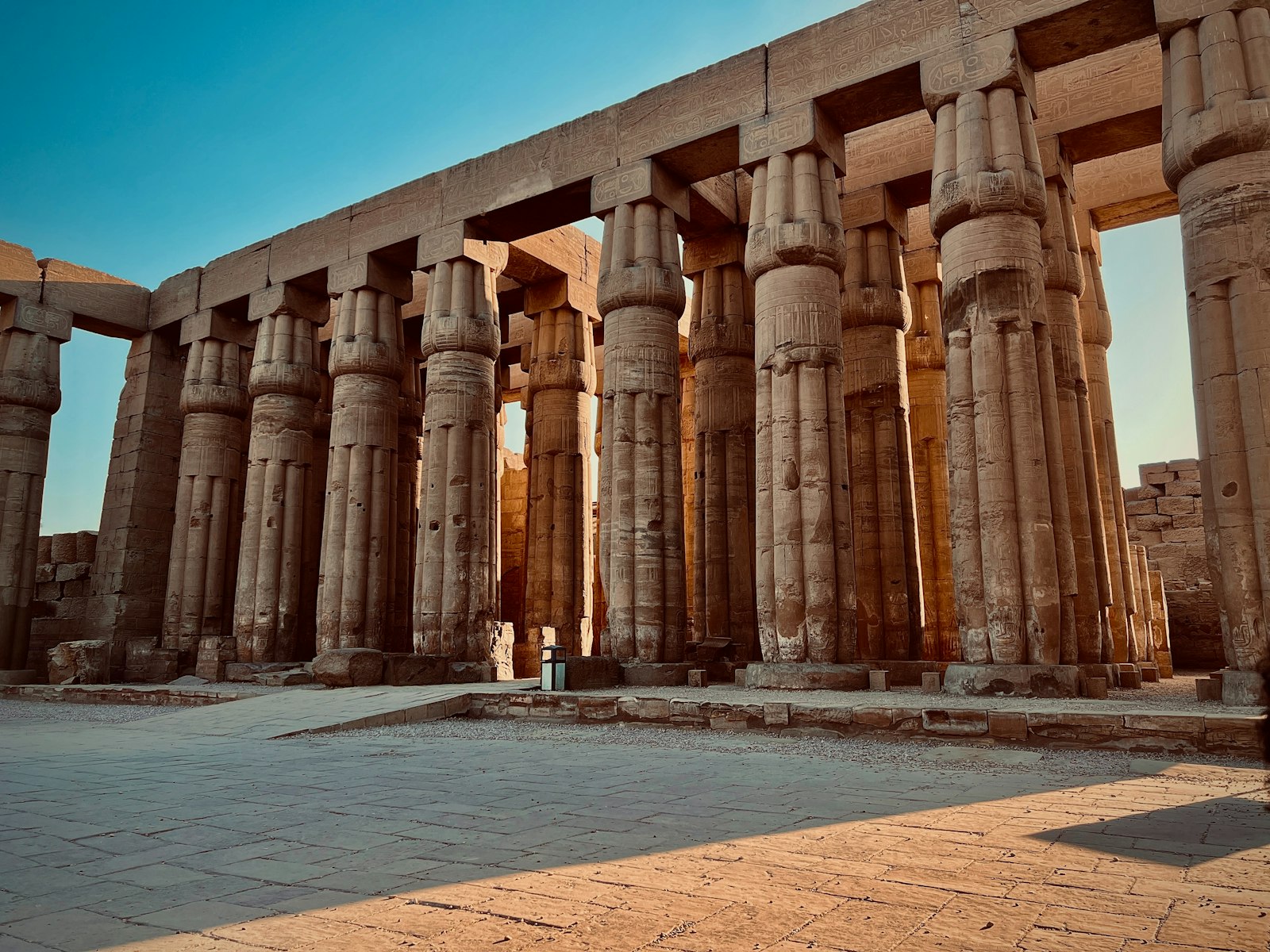
Of the entire temple complex, today only the pronaos survives, that is the great columned hall that constituted the monumental entrance of the temple. Nevertheless, what remains is of extraordinary beauty. The hall measures about 37 metres in width and 20 in depth, with a height of over 15 metres. The twenty-four columns that support the ceiling present a unique characteristic: no capital is the same as another. Lotus flora, papyrus, palm, grapes and fantastic floral compositions alternate in a decorative variety that testifies to the creativity and artistic freedom of the craftsmen of the Roman-Ptolemaic era.
The Astronomical Ceiling: a Revolutionary Discovery
The Restoration Project
Beginning in 2018, a team of German restorers from the University of Tübingen, in collaboration with the Egyptian Ministry of Antiquities, undertook meticulous work cleaning the ceiling of the pronaos. For almost two thousand years, the surfaces had been covered by a thick layer of soot and dirt accumulated when the temple was used as a warehouse, stable and even as a dwelling during the centuries following the abandonment of pagan worship.
The result of the restoration exceeded every expectation. Beneath the layer of soot emerged an astronomical ceiling of extraordinary beauty, with vivid and perfectly preserved colours that left scholars and the international public breathless. The tones of blue, yellow, red and green appear fresh as if they had been applied yesterday, offering an unprecedented glimpse of the original appearance of Egyptian temples, which in our modern imagination are associated with grey stone but which in reality were explosions of colour.
The Ceiling Decorations
The ceiling of the pronaos is divided into decorative panels of extraordinary complexity. At the centre stands a representation of the sky goddess Nut, with her arched body embracing the celestial vault. Around her are arranged the Egyptian constellations, the hours of day and night, the decans (groups of stars used to measure time) and deities associated with the heavenly bodies.
Particularly fascinating are the zodiacal representations, which mix Egyptian astronomical tradition with elements of Greco-Roman astrology, reflecting the cultural syncretism of the era. Alongside the zodiac signs appear mythological scenes of creation, with the god Khnum at his wheel in the act of moulding living beings, and representations of the daily solar cycle.
The Sacred Texts of the Temple
The Texts of Creation
The walls of the pronaos host some of the most important and best-preserved religious texts of the Roman era in Egypt. The so-called "texts of creation" describe in detail the role of the god Khnum as creator of the universe and of all living beings. According to these texts, Khnum did not limit himself to creating human beings, but also moulded animals, fish, birds and even plants, conferring on each creature its unique characteristics.
The Hymns to the Crocodile
Among the most singular texts of the temple figure the hymns to the crocodile, poetic compositions dedicated to the sacred crocodile of the Nile, manifestation of the god Sobek. These hymns present an enigmatic structure: they are written using mainly the hieroglyph of the crocodile in different variants, creating a sophisticated linguistic game that still challenges Egyptologists today. It is a form of sacred cryptography that demonstrates the extraordinary complexity of the Egyptian writing system in its late phase.
The Calendar of Festivities
The walls of the temple also bear a detailed calendar of the religious festivities celebrated at Esna throughout the year. This calendar provides precious information on the religious life of the local community, listing processions, rituals, distributions of food and moments of public celebration linked to the astronomical and agricultural cycles.
The Historical Context: Esna in Antiquity
The City of Latopolis
The ancient Greeks called Esna "Latopolis", the "city of the lates fish" (the Nile perch), a fish sacred to the god Khnum that was bred and venerated within the temple enclosure. The city was an important textile centre, famous for the production of very high quality linen used both for clothing and for mummy bandages. This textile tradition is attested both by ancient literary sources and by the reliefs of the temple itself.
The Esna Lock
Today Esna is also known for its lock on the Nile, built in 1906 and renovated in 2018, which regulates the flow of the river waters and constitutes an obligatory passage for all vessels navigating between Luxor and Aswan. The crossing of the lock, which requires about an hour, is in itself an interesting experience for cruise passengers, who can observe the ship-lifting system up close.
The Market of Esna
An Authentic Experience
The temple is reached by crossing the lively souq of Esna, one of the most authentic and least touristy markets of Upper Egypt. The market lanes, flanked by shops of spices, fabrics, ceramics and agricultural produce, offer a glimpse of Egyptian daily life far from the most beaten tourist circuits. The smell of spices, the shouting of vendors and the colours of the displayed goods create an engaging atmosphere that prepares the visitor for the encounter with the ancient temple hidden in the bowels of the city.
Local Products
Esna is famous for its traditional ceramics, colourful fabrics and spices. The market offers excellent opportunities to buy authentic souvenirs at much more reasonable prices compared to the main tourist sites. Karkadè (hibiscus), saffron and spice blends for tea are among the products most appreciated by visitors.
Tips for the Visit
How to Get There
Esna is located about 55 kilometres south of Luxor on the western bank of the Nile. Most visitors arrive as part of a Nile cruise: the ships dock near the lock and passengers reach the temple on foot through the market (about 10-15 minutes' walk). For those travelling independently, Esna is reachable by taxi or minibus from Luxor in about an hour.
Opening Hours and Tickets
The temple is open from 6:00 to 18:30 every day. The entrance ticket is among the cheapest of the Egyptian archaeological sites. Visiting the pronaos alone requires about 45 minutes, but it is advisable to dedicate at least an hour and a half to also include the walk through the market.
When to Visit
The ideal period runs from October to April. The position of the temple below street level offers natural protection from direct sun, making the visit more comfortable even on hot days. The best light to appreciate the astronomical ceiling is in the central hours of the morning, when the sun's rays penetrate obliquely through the upper opening.
What Not to Miss
The astronomical ceiling is obviously the main attraction: bring binoculars to appreciate the details of the reliefs and the restored colours. Do not neglect the capitals of the columns, each different from the other, true works of sculptural art. Look for the hymns to the crocodile on the southern walls and the scenes of Khnum at the potter's wheel. The descent through the staircase that leads to the temple is in itself a moving experience, since it allows one to physically perceive the depth of the time elapsed.
Practical Suggestions
Bring a torch to illuminate the details of the reliefs in the more shadowed areas. An expert guide is particularly recommended at Esna, where the complexity of the cryptographic texts and the iconographic richness of the ceiling require a specialist key of interpretation. After the visit to the temple, treat yourself to a stroll in the souq and a stop at one of the local cafés to enjoy a mint tea or a cold karkadè.
The Temple of Esna, with its rediscovered astronomical ceiling and its unique position beneath the modern city, offers an archaeological experience different from any other in Egypt. It is a place where the past literally re-emerges beneath the feet of the present, reminding us that beneath every modern city of the Nile are hidden millennia of history still to be discovered.