The Tomb of Seti I: The Masterpiece of the Valley of the Kings
The tomb of Seti I, catalogued as KV17, is unanimously considered the most beautiful and spectacular of the entire Valley of the Kings. Discovered in 1817 by the Italian adventurer Giovanni Battista Belzoni, this extraordinary royal burial represents the absolute summit of Egyptian funerary art of the New Kingdom. With its 137 meters of length and a depth that reaches 40 meters below the surface, it is also the longest and deepest tomb of the entire Theban necropolis.
The pharaoh Seti I, second sovereign of the 19th dynasty, reigned from about 1294 to 1279 BC, during a period of political and artistic rebirth of Egypt. Father of the famous Ramesses II, Seti I was a skilled military commander and a great patron of the arts, qualities that are magnificently reflected in his eternal dwelling.
The Discovery of Belzoni
The Italian Adventurer
Giovanni Battista Belzoni was an extraordinary character: born in Padua in 1778, he was a former circus performer and hydraulic engineer who had reinvented himself as an explorer and collector of antiquities in Egypt. On October 16, 1817, during his researches in the Valley of the Kings, Belzoni discovered the entrance of a tomb that would forever change our understanding of Egyptian art.
Entering the tomb, Belzoni was astounded by the magnificence of the decorations. Unlike many other tombs of the valley, the reliefs of KV17 were not simply painted on the rock, but sculpted in bas-relief and then painted with very vivid colors. Belzoni described the tomb as "the greatest and most splendid" that he had ever seen, a judgment that modern scholars continue to share.
The Consequences of the Discovery
Unfortunately, Belzoni's methods were those of his time: to document the decorations, he made wax casts that irreparably damaged some surfaces. Moreover, he took away from the tomb the magnificent translucent alabaster sarcophagus of the pharaoh, which today is in the Sir John Soane's Museum of London, where it constitutes one of the most prized pieces of the collection. This removal, although at the time considered legitimate, today deprives the visitors of the tomb of one of its most evocative elements.
The Architecture of the Tomb
A Descending Path into the Subsoil
The tomb of Seti I follows a long and articulated path that descends progressively into the limestone rock of the Theban mountain. The entrance opens onto the rocky wall of the valley and leads to a series of descending corridors, stairways, antechambers, and halls that succeed one another for over 137 meters before reaching the main burial chamber.
The architectural project of the tomb reflects a precise religious conception: the descending path symbolizes the journey of the sun through the underworld during the twelve hours of the night, from death at sunset until rebirth at dawn. Every hall and every corridor corresponds to a stage of this cosmic journey.
The Principal Halls
The tomb comprises numerous environments, each with a specific function in the complex funerary ritual. The first corridor is decorated with scenes drawn from the Litany of Ra, a religious text that identifies the deceased pharaoh with the sun god. The subsequent corridors present scenes of the Amduat, the most important funerary text of the New Kingdom, which describes the nocturnal journey of the sun through the twelve regions of the afterlife.
The hall of the well, characterized by a deep excavation in the floor originally destined to protect the tomb from floods and looters, is decorated with scenes that show the pharaoh before various deities. Beyond the well is the pillared hall, an ample and magnificently decorated environment that may have had the function of a false burial chamber to deceive tomb robbers.
The Wall Decorations
The Book of the Gates
One of the most extraordinary characteristics of the tomb of Seti I is the presence of the Book of the Gates, one of the most important funerary texts of ancient Egypt. This text describes the journey of the sun through twelve gates guarded by serpents and guardian deities, representing the twelve hours of the night. The scenes are sculpted with a precision and a delicacy that have no equals in any other tomb of the valley.
Each gate is presided over by a fire-spitting serpent and by protective deities that the deceased must overcome by reciting the appropriate magic formulas. The representations also show the judgment of the dead, with scenes of blessed souls and damned souls, anticipating by millennia the Christian concept of the Last Judgment.
The Amduat
The Amduat, literally "that which is in the afterlife," is represented with extraordinary completeness in the tomb of Seti I. This text describes the twelve hours of the night through which the sun god travels in the underworld on his sacred barque. In each hour, the sun encounters deities, demons, and souls of the dead, overcomes dangers, and combats the serpent Apophis, symbol of chaos and destruction.
The scenes of the Amduat in the tomb of Seti I are painted with a richness of details and a chromatic vivacity that leave one breathless. The divine figures are represented with a grace and an elegance that reflect the refined taste of Ramesside art at its apex.
The Astronomical Ceiling
The burial chamber of the tomb hosts one of the most famous astronomical ceilings of ancient Egypt. Painted in dark blue with golden stars, the ceiling represents the constellations of the northern and southern sky, the decans (subdivisions of the night sky used for the measurement of time), and the divine figures associated with the celestial bodies.
This astronomical ceiling is not simply decorative: it represents the Egyptian conception of the universe and of the cosmic cycle of death and rebirth. The body of the goddess Nut, goddess of the sky, arches her starry body above the chamber, swallowing the sun at sunset and giving birth to it at dawn, in an eternal cycle of renewal that the deceased pharaoh is called to share.
The Alabaster Sarcophagus
A Masterpiece of Egyptian Craftsmanship
The sarcophagus of Seti I was a unique work of art: sculpted in a single block of translucent calcite alabaster coming from the quarries of Hatnub, it was over 2.8 meters long and decorated with texts of the Book of the Gates incised and filled with blue paste. When a light was placed inside, the sarcophagus illuminated from within, creating an effect of supernatural luminosity that was meant to symbolize the divine transformation of the pharaoh.
The Journey to London
Belzoni transported the sarcophagus to England in 1821, where he attempted to sell it to the British Museum. The museum refused the purchase, considering the price of 2,000 pounds excessive. The architect Sir John Soane instead acquired it for his private collection, and still today the sarcophagus is exhibited in the crypt of the Sir John Soane's Museum at Lincoln's Inn Fields, London, where visitors can admire it for free.
The Pillared Hall
An Environment of Rare Beauty
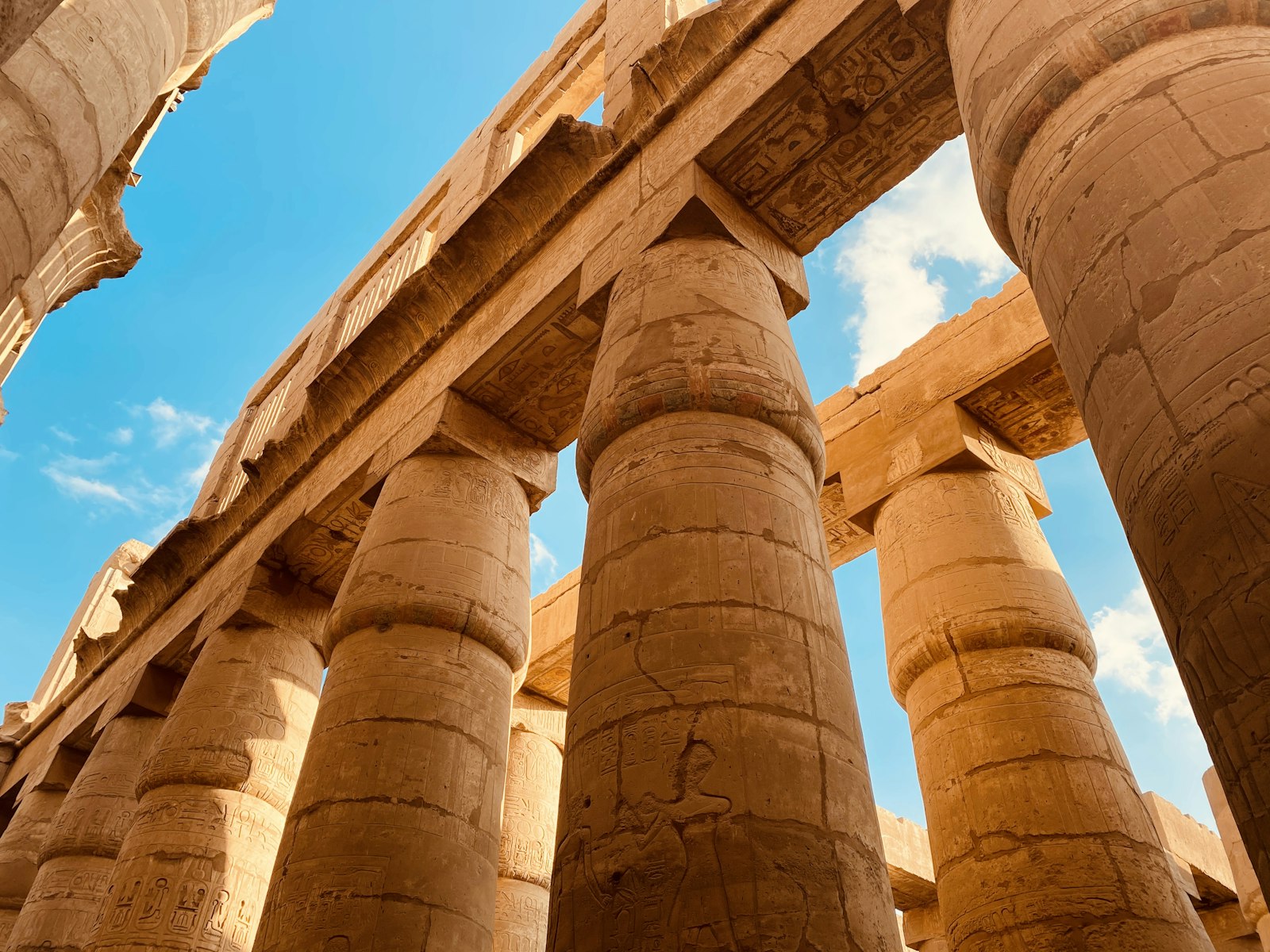
The pillared hall is one of the most impressive environments of the tomb. Six massive pillars support the ceiling, and every face of every pillar is decorated with scenes depicting the pharaoh before various deities. The quality of the reliefs is exceptional: the figures are sculpted with a very subtle bas-relief and painted with a chromatic range that comprises tones of blue, red, yellow, green, and white on a golden background.
The scenes show Seti I welcomed by the principal deities of the Egyptian pantheon: Osiris, Isis, Horus, Hathor, Anubis, and many others. The pharaoh is represented with a regal dignity and an ideal beauty that reflect the Egyptian conception of the sovereign as an intermediary between the human world and the divine one.
State of Preservation and Restoration
The Challenges of Conservation
The tomb of Seti I has suffered significant damage over the course of the centuries. The floods caused by the rare but intense rains in the valley have deposited sediments and mineral salts on the decorations. The humidity brought by the visitors has contributed to the growth of molds and to the deterioration of the pigments. The casts made by Belzoni and other explorers of the 19th century have damaged some of the most delicate surfaces.
In recent decades, restoration campaigns coordinated by the Egyptian Supreme Council of Antiquities and by international institutions have stabilized the conditions of the tomb. The access has been limited and regulated to reduce the impact of tourism, and systems of ventilation and environmental monitoring have been installed to control humidity and temperature.
The Factum Arte Project
As for the tomb of Tutankhamun, the organization Factum Arte has realized three-dimensional scans at very high resolution of the entire tomb of Seti I, creating a complete digital archive of the decorations. This project allows not only the virtual conservation of the tomb, but also the creation of faithful replicas that can substitute the visit to the original tomb in the periods of closure for restoration.
Tips for the Visit
Practical Information
The tomb of Seti I requires a special ticket, separate from the general ticket of the Valley of the Kings, due to the extreme fragility of its decorations. The cost is significantly higher compared to the other tombs, but the experience is absolutely priceless. The number of daily visitors is strictly limited.
How to Prepare
The visit to the tomb requires descending through steep and narrow corridors for over 100 meters. Wear comfortable shoes with anti-slip soles and bring a small flashlight to best appreciate the details of the reliefs in the less illuminated areas. The internal temperature is elevated and the air can be humid: the visit is not advisable for those who suffer from claustrophobia or respiratory problems.
Combine with Other Visits
It is advisable to visit the tomb of Seti I together with the tombs of Tutankhamun and Ramesses VI to have a complete overview of the evolution of funerary art in the Valley of the Kings. The funerary temple of Seti I at Gurna, on the same western bank of Luxor, offers an ideal complement to the visit of the tomb, showing a different aspect of the art of the period of Seti I.
Ideal Period
The best conditions for the visit are from October to April. Arrive early at the Valley of the Kings to purchase the special ticket before the available places for the day run out. The light of the early morning is also the best to appreciate the chromatic details of the decorations in the entrance area.
The tomb of Seti I is an experience that transcends simple cultural tourism: it is a journey into the art and the spirituality of a civilization that, three thousand years ago, reached heights of beauty and technical perfection that still today leave us admiring and moved.