The Tombs of the Nobles of Aswan: Eternal Memories on the Hill of Qubbet el-Hawa
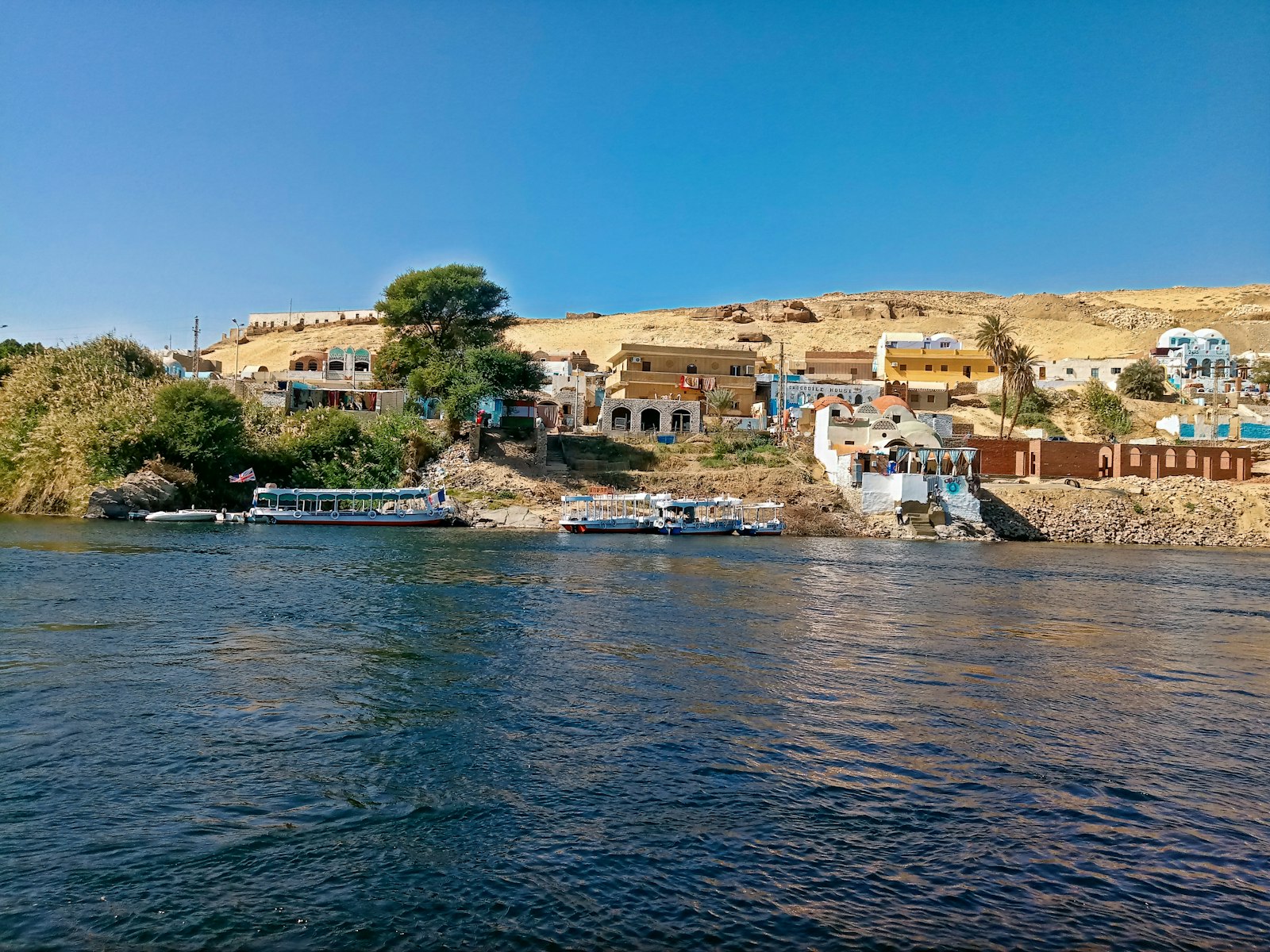
On the western bank of the Nile, opposite the modern city of Aswan, rises the sandy hill of Qubbet el-Hawa, literally "Dome of the Wind," an evocative name that recalls the constant breeze that blows on the summit of this desert promontory. Here, carved directly into the sandstone rock, are the Tombs of the Nobles, a rock necropolis that guards the burials of the governors, priests, and dignitaries who administered the region of Aswan during the Egyptian Old and Middle Kingdom, a temporal arc that extends from about 2300 to 1900 BC.
Unlike the monumental tombs of the Valley of the Kings at Luxor, these burials belonged to provincial officials, men who governed the southern frontier of Egypt and managed the commerce with the mysterious lands of sub-Saharan Africa. Their stories, incised on the walls of the tombs, offer a unique cross-section of life at the borders of the pharaonic empire, recounting adventurous expeditions, commercial traffics, and military enterprises that the official history of the pharaohs often neglected.
History of the Necropolis
The Southern Frontier of Egypt
Aswan, the ancient Swenet, occupied a fundamental strategic position in ancient Egypt. Situated at the first cataract of the Nile, it marked the natural border between Egypt and Nubia, the mysterious land rich in resources that extended toward the south. The governors of Aswan were figures of enormous political and commercial importance: they controlled the caravan routes toward central Africa, supervised the granite quarries that supplied the material for the pharaonic monuments, and conducted diplomatic and military expeditions into the Nubian lands.
The choice of Qubbet el-Hawa as a place of burial was not casual. The hill dominates the Nile from above, offering a spectacular view that embraces the entire panorama of Aswan, from the Elephantine Island to the turquoise waters of the river. For the ancient Egyptians, the elevated position on the western bank — the bank of the dead, where the sun set every evening — had a profound symbolic meaning linked to the journey of the soul in the afterlife.
The Excavation Campaigns
The tombs were rediscovered in the 19th century by European explorers, but the first systematic excavation campaigns were conducted only at the beginning of the 20th century. In recent decades, Spanish, German, and Egyptian archaeological missions have brought to light new burials and finds of extraordinary historical value. In 2019, a mission of the University of Jaén discovered a new intact tomb dating to the 6th dynasty, containing a rich funerary assemblage that has provided precious information on the funerary practices of the epoch.
The Principal Tombs
The Tomb of Harkhuf (QH 34n)
Among all the burials of Qubbet el-Hawa, that of Harkhuf is without doubt the most famous from the historical point of view. Harkhuf was governor of Aswan during the 6th dynasty, under the reigns of the pharaohs Merenra and Pepi II, and his autobiography, incised on the facade of the tomb, represents one of the most fascinating documents of ancient Egypt.
In this long inscription, Harkhuf recounts his four expeditions toward the land of Yam, a region of equatorial Africa probably situated in modern-day Sudan or Chad. These journeys, of the duration of several months each, had the purpose of procuring exotic goods for the pharaoh: incense, ebony, ivory, leopard skins, and precious oils. The most famous narration concerns the last expedition, during which Harkhuf managed to capture a dancing pygmy, a creature considered miraculous by the Egyptians.
The letter of the young pharaoh Pepi II, at the time still a child, is reproduced integrally on the facade of the tomb. The sovereign, enthusiastic at the idea of seeing the pygmy, orders Harkhuf to protect him with every care during the return journey, promising extraordinary rewards. This letter, in its infantile spontaneity, is one of the most touching and human documents of the entire Egyptian history.
The Tomb of Sarenput II (QH 31)
The tomb of Sarenput II, governor of Aswan during the 12th dynasty of the Middle Kingdom, is considered the best preserved of the entire necropolis and one of the most beautiful rock tombs of all Egypt. The quality of the wall paintings is exceptional: the colors, protected for millennia by the darkness of the rock, maintain a surprising vivacity.
The entrance of the tomb opens onto a long corridor flanked by pillars, which leads to a chamber deeply carved into the rock. On the walls, Sarenput II is depicted with his family in scenes of daily life of extraordinary elegance. Particularly famous is the portrait of the governor seated before a table of offerings, with his son who hands him a lotus flower. The finesse of the stroke, the richness of the details, and the luminosity of the colors render this tomb a masterpiece of the pictorial art of the Middle Kingdom.
The Tombs of Mekhu and Sabni (QH 25-26)
The adjacent tombs of Mekhu and Sabni recount a moving story of filial love and courage. Mekhu, governor of Aswan during the 6th dynasty, died during an expedition in Nubia in violent circumstances. His son Sabni immediately organized a recovery expedition, reaching Nubia with an army to bring back home the body of his father and avenge his death.
The inscriptions in the two tombs narrate in detail this dramatic affair: the dangerous journey toward the south, the recovery of the corpse, the triumphant return, and the solemn funerals. The pharaoh Pepi II, struck by the filial devotion of Sabni, sent royal embalmers and precious oils for the mummification of Mekhu, an exceptional honor for a provincial official. The two tombs, placed one beside the other, testify to the indissoluble bond between father and son even in eternity.
Other Notable Tombs
The necropolis comprises over thirty visitable tombs, each with its own particularities. The tomb of Sarenput I (12th dynasty) is distinguished by its imposing dimensions and by the pillars decorated with statues of the deceased. The tomb of Heqaib (6th dynasty) preserves interesting scenes of fishing and hunting in the Nile. The tomb of Pepinakht, also called Heqaib the Great, recounts his military enterprises against the rebel Nubian tribes and his expeditions on the coast of the Red Sea.
Architecture and Decoration
The Access Ramps
One of the most distinctive characteristics of the necropolis of Qubbet el-Hawa are the steep sandy ramps that connect the tombs to the different levels of the hill. These ramps, carved into the rock and covered with sand, were used both for the transport of the sarcophagi during the funerals and for the ritual processions that took place periodically in honor of the deceased. Today, traveling these ramps under the sun of Aswan represents a physically demanding but extremely evocative experience.
The Style of the Burials
The tombs generally follow a common architectural scheme: an entrance on the facade of the hill, a vestibule with pillars carved into the rock, one or more internal chambers, and a niche for the statue of the deceased. The walls are decorated with painted reliefs that depict scenes of daily life, funerary offerings, commercial expeditions, and religious rituals. Unlike the royal tombs, where religious texts and scenes of the afterlife predominate, the tombs of the nobles of Aswan show a lively representation of terrestrial life, rendering these burials a precious source of information on the society of the epoch.
Tips for the Visit
How to Reach the Necropolis
To reach the Tombs of the Nobles it is necessary to cross the Nile by boat. The feluccas and the small motor boats depart regularly from the corniche of Aswan, and the brief crossing on the river is already in itself a pleasant experience. Once disembarked on the western bank, a brief walk uphill leads to the entrance of the necropolis. It is possible to combine the visit with an excursion to the nearby Monastery of Saint Simeon, reachable on foot or by camel.
Hours and Tickets
The site is open every day, generally from 7:00 to 16:00 in winter and until 17:00 in summer. The entrance ticket includes the access to the principal tombs open to the public. Not all the tombs are always accessible: some are closed on rotation for restoration works. It is advisable to inquire in advance at the tourist office of Aswan about the tombs effectively visitable.
What to Bring and When to Visit
The visit requires good physical form, since the access ramps are steep and the hill is exposed to the sun. Bring abundant water, sunscreen, a hat, and comfortable shoes with anti-slip soles. The best period for the visit is from October to April, when the temperatures are milder. It is advisable to visit the site in the first hours of the morning to avoid the intense heat and enjoy the best light for the photographs.
Photographic Suggestions
From the summit of the hill, the view of the Nile, of the Elephantine Island, and of the city of Aswan is simply spectacular. Bring a camera with a good wide-angle lens to capture the panorama and a flashlight to illuminate the details of the decorations inside the tombs. The best light conditions to photograph the facade of the hill are in the late afternoon, when the sun at sunset tints the sandstone rock with a warm golden color.
Curiosities and Lesser-Known Aspects
The hill of Qubbet el-Hawa takes its name from the small white dome of a Muslim saint visible on the summit, a place of pilgrimage still venerated by the local population. The necropolis also contains burials of the late and Coptic epoch, testifying to a funerary use of the site that extends for over three thousand years. Recent archaeological discoveries have revealed that some tombs were reused in subsequent epochs, with new decorations superimposed on the original ones.
Visiting the Tombs of the Nobles of Aswan means immersing oneself in a chapter often neglected of Egyptian history, far from the magnificence of the royal tombs but rich in human and adventurous stories that render these places extraordinarily fascinating and touching.