Al-Muizz Street: the Longest Open-Air Museum of Islamic Art
Al-Muizz li-Din Allah Street, commonly known as Al-Muizz Street, is the backbone of Islamic Cairo and represents one of the most extraordinary architectural treasures of the entire Muslim world. This historic artery, which winds for about a kilometre from the monumental gateway of Bab al-Futuh in the north to Bab Zuweila in the south, is universally recognised as the longest open-air museum dedicated to Islamic architecture. Along its course is concentrated an unparalleled density of historic monuments, with mosques, madrasas, mausoleums, sabils, palaces and caravanserais that bear witness to over a thousand years of history and artistic splendour.
The street takes its name from the Fatimid caliph Al-Muizz li-Din Allah, who in 969 AD founded the city of Cairo as the new capital of his empire. It was he who ordered the construction of the city walls and the monumental gates that still today delimit the street, transforming a simple thoroughfare into a symbol of the power and grandeur of the Fatimid dynasty. From that moment, every dynasty that governed Egypt left its own architectural imprint along this street, creating a palimpsest of styles and eras that fascinates scholars and visitors from all over the world.
The History of the Street of the Caliphs
The Fatimid Era (969-1171)
When the general Jawhar al-Siqilli conquered Egypt on behalf of the caliph Al-Muizz, the urban plan of the new capital provided for a great ceremonial axis that crossed the city from north to south, connecting the two caliphal palaces. This processional way became the beating heart of the city, the place where religious celebrations, military parades and luxury commerce took place. The Fatimids, bearers of a refined artistic culture influenced by North African and Persian traditions, built along the street some of the first and most important mosques of Cairo, including the mosque of al-Hakim and the mosque of al-Aqmar, the latter famous for its richly decorated façade that represents one of the first examples of an ornamental façade in Islamic architecture.
The Ayyubid and Mamluk Era (1171-1517)
It was under the Mamluk sultans that Al-Muizz Street reached its maximum architectural splendour. The Mamluks, warrior-slaves become sovereigns, were patrons of the arts of extraordinary generosity and ambition. The complex of Sultan Qalawun, built in 1284-1285, is perhaps the most imposing monument of the entire street: it comprises a madrasa, a mausoleum and a hospital (maristan), all enclosed in a monumental façade over seventy metres long decorated with Gothic motifs that reveal the influence of the Crusades on Islamic architecture.
Next to the complex of Qalawun are the madrasa and the mausoleum of Sultan al-Nasir Muhammad, and a little beyond the madrasa of Sultan Barquq, first sovereign of the Circassian Mamluk dynasty. These three monuments, aligned along the western side of the street, form an architectural ensemble of rare visual power that the Cairenes affectionately call "the triptych of the sultans".
The Ottoman and Modern Era
With the Ottoman conquest of 1517, the architectural style changed but the importance of the street did not diminish. The Ottoman merchants built elegant wikalas (caravanserais) and private houses with the characteristic carved wooden balconies (mashrabiya). In the 19th century, with the modernisation of Cairo under the Khedive Ismail, many streets of the historic centre were widened or demolished, but Al-Muizz Street was spared thanks to its historical and religious importance.
The Main Monuments
The Qalawun Complex
The complex of Sultan al-Mansur Qalawun is the undisputed jewel of the street. Its façade, with ogival arches and mullioned windows, shows a Gothic influence believed to derive from contacts with the Crusaders. The interior of the mausoleum is one of the most magnificent spaces of Islamic architecture: an octagon surrounded by granite columns that support a dome decorated with gilded stuccoes. The annexed maristan was for centuries one of the most advanced hospitals in the Islamic world, where free care was practised for all the sick regardless of religion or social condition.
The Sabils and the Kuttabs
Along Al-Muizz Street are numerous sabils, public fountains surmounted by Quranic schools (kuttabs). These structures, typical of Mamluk and Ottoman architecture, performed a dual function: on the ground floor they offered free drinking water to passers-by through finely worked bronze grilles, while on the upper floor they housed classrooms where children learned to read and memorise the Quran. The sabil-kuttab of Abd al-Rahman Katkhuda, located at the intersection with the street that leads to al-Azhar, is one of the best preserved and most photographed examples.
The Fatimid Mosques
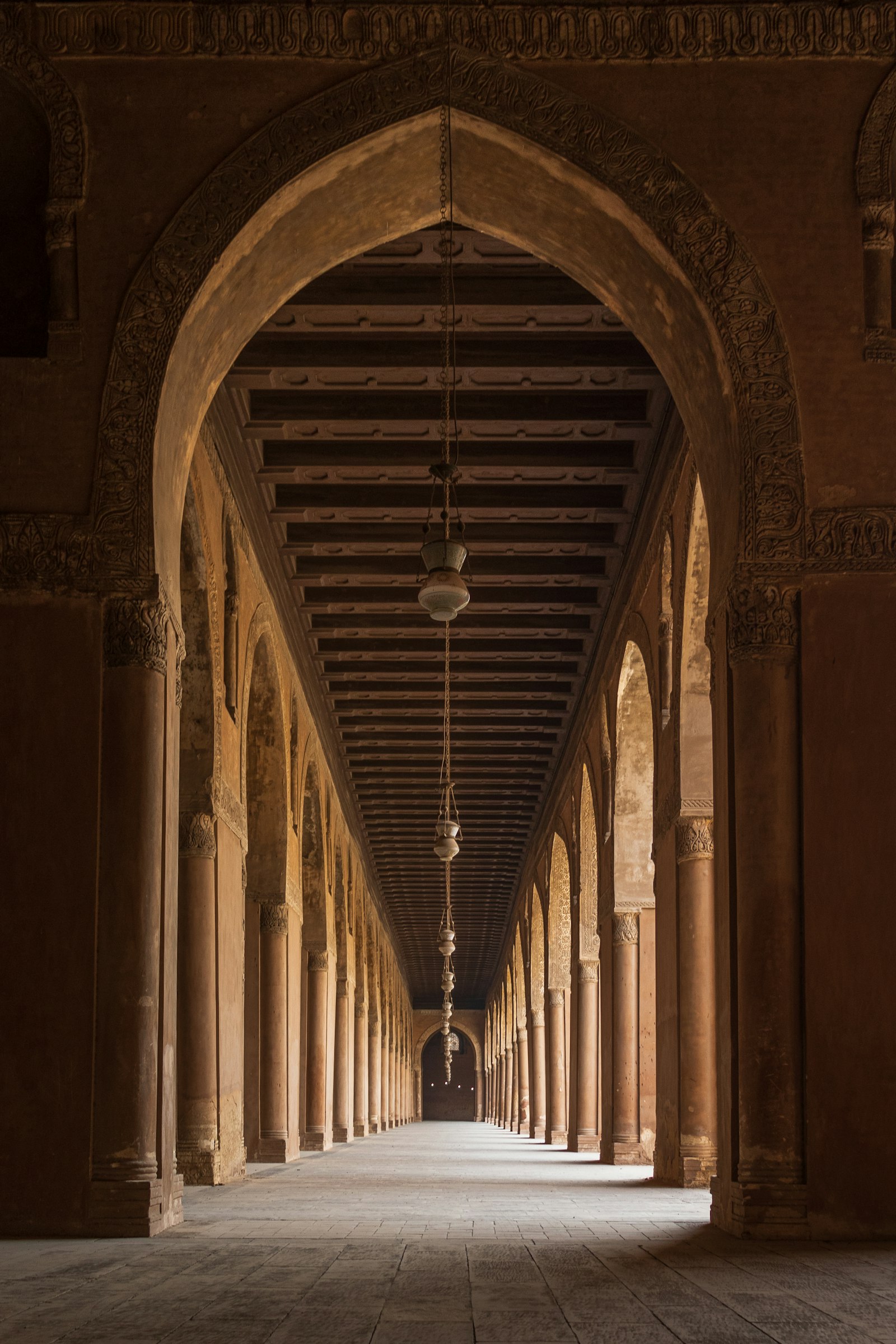
The mosque of al-Hakim bi-Amr Allah, built between 990 and 1013, rises imposingly near Bab al-Futuh. With its vast courtyard and its two asymmetrical minarets, it is one of the largest mosques of Cairo. After being used for centuries as a warehouse and even as a stable during the Napoleonic campaigns, it was restored in the 1980s by the Bohra Ismaili community.
The small mosque of al-Aqmar, built in 1125, is a masterpiece of Fatimid architecture. Its façade is the first in Egyptian Islamic architecture to be decorated with elaborate motifs, including Quranic inscriptions, stalactite niches (muqarnas) and medallions with the name of the prophet Muhammad.
The Carpet Market and the Suqs
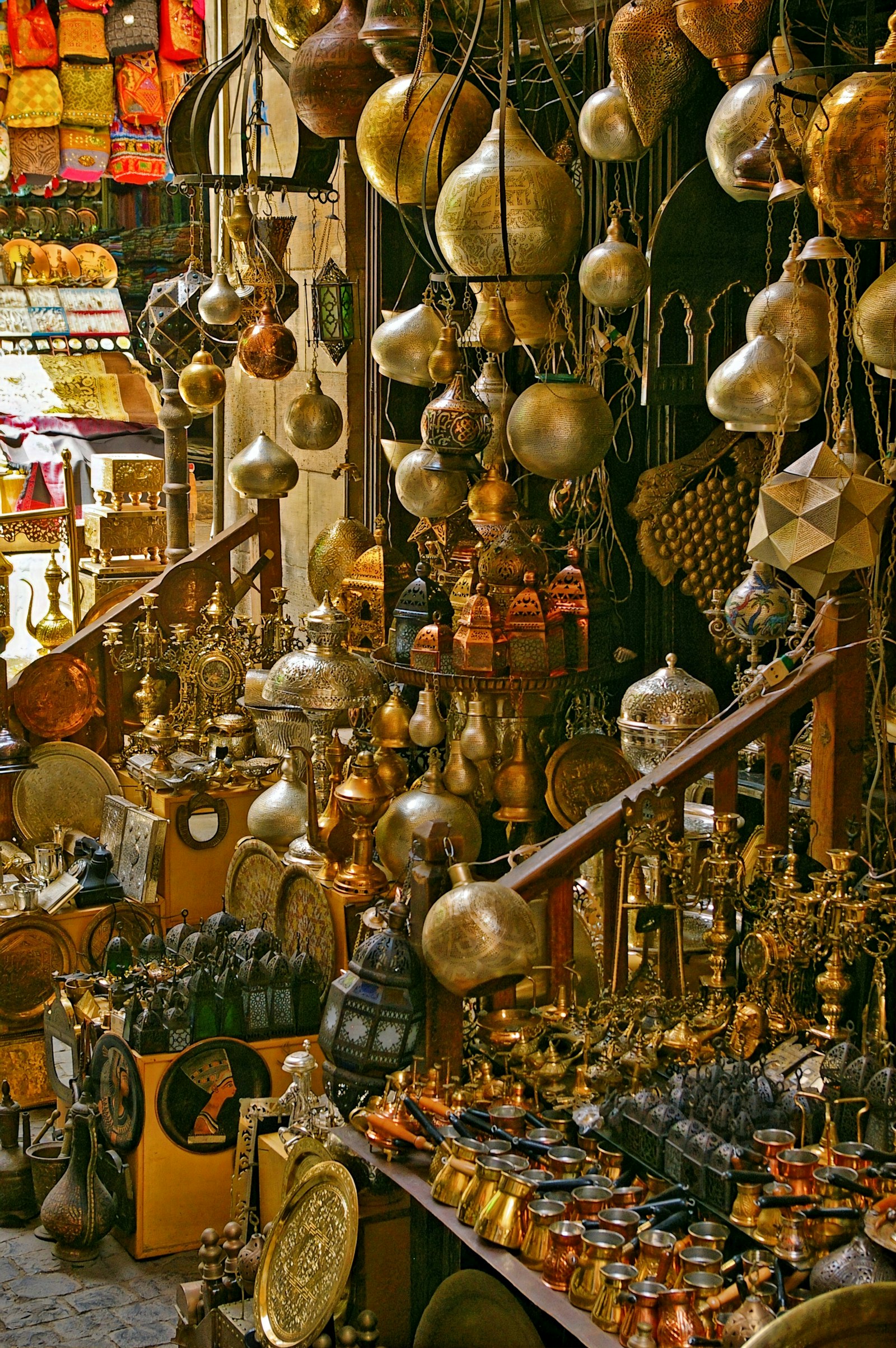
The southern portion of the street is traditionally associated with commerce. Here are the specialised suqs where the merchants sell spices, fabrics, worked copper and carpets. The carpet market, in particular, is famous for the quality of the artefacts coming from all over the region. The shops open on both sides of the street with their colourful signs and their intense scents, creating an atmosphere that has not changed much over the centuries.
The Pedestrianisation and the Restoration
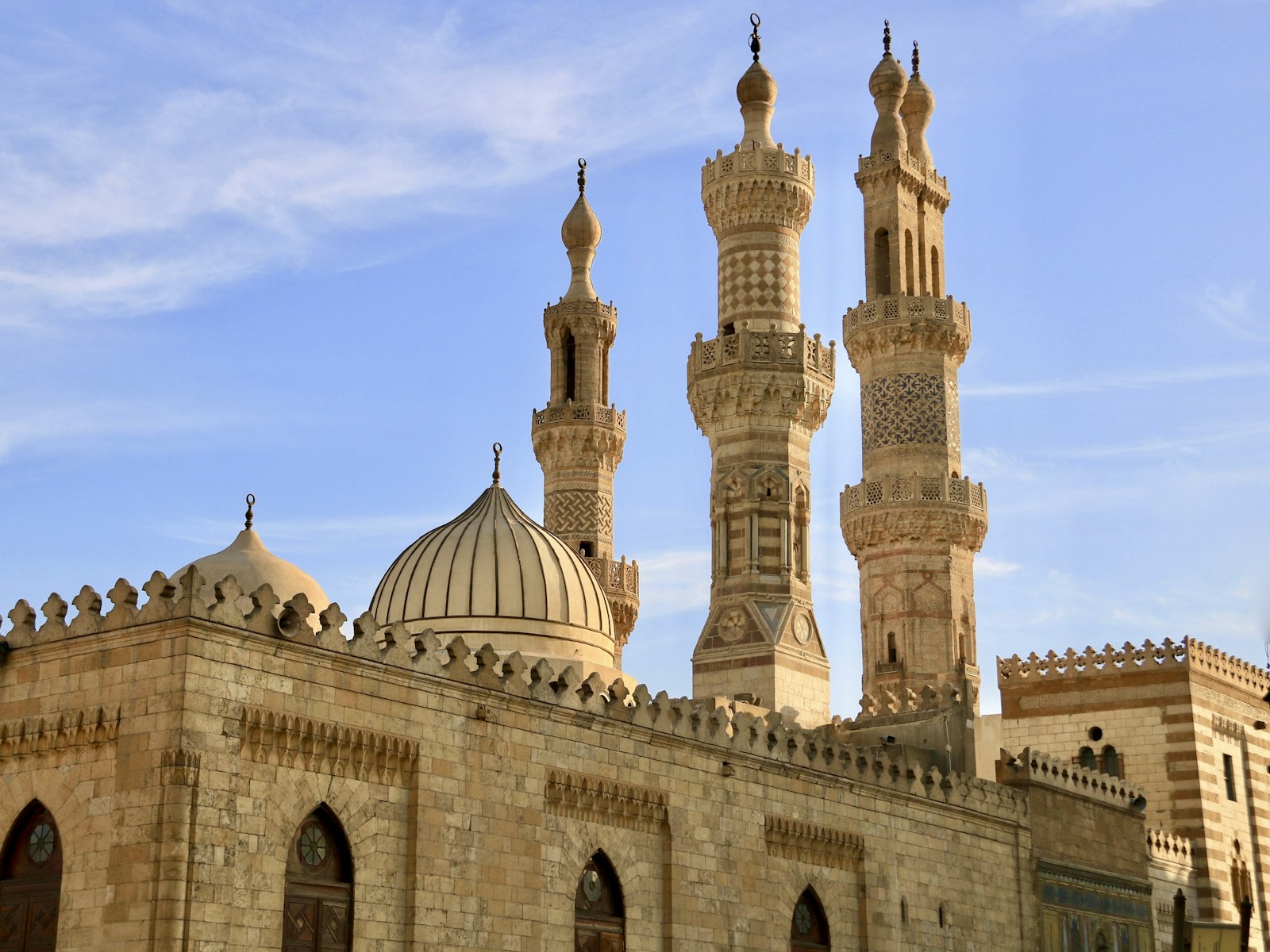
One of the most significant changes in the recent history of Al-Muizz Street has been the pedestrianisation of much of its course, completed in the early 2000s. This decision, initially controversial among the local merchants, has radically transformed the visiting experience. Without the chaotic traffic that once made the walk stressful and dangerous, today it is possible to admire the monuments calmly, raising one's gaze towards the minarets and the domes without risking being run over.
The restoration project, supported by UNESCO and the Egyptian government, included the resurfacing of the stone paving, the installation of a system of artistic night lighting and the restoration of the façades of numerous historic buildings. In the evening, when the artificial lights illuminate the monuments creating plays of shadows on the stucco and stone decorations, Al-Muizz Street takes on an almost magical aspect that fully justifies its fame as an open-air museum.
The Night Lighting
One of the most evocative experiences that Al-Muizz Street offers visitors is the evening walk. When the sun sets and the lights come on, the monuments take on a completely new dimension. The Mamluk façades, illuminated by carefully positioned spotlights, reveal architectural details that during the day go unnoticed: the shades of the limestone, the plays of light and shadow in the muqarnas niches, the Quranic inscriptions that seem to come to life under the warm light of the projectors.
The cafés and the stalls that animate the street in the evening hours add a touch of everyday life to this historic setting, creating that contrast between past and present that is the very essence of Cairo.
Tips for the Visit
When to Visit
The ideal period to visit Al-Muizz Street is between October and April, when the temperatures are milder. It is advisable to dedicate at least half a day to the visit, starting in the late afternoon in order to be able to appreciate the street both with the natural light and with the night lighting. On Friday, the day of prayer, many mosques are particularly crowded but also offer the opportunity to attend evocative religious ceremonies.
How to Get There
The simplest way to reach Al-Muizz Street is to take the metro to the Al-Azhar or Ataba station and then continue on foot for about ten minutes through the Islamic quarter. Alternatively, a taxi or a ride-sharing service can drop you off near Bab al-Futuh (to start the walk from the north) or Bab Zuweila (to start from the south).
What to Wear
Being an area rich in mosques and places of worship, respectful clothing is recommended: the shoulders and the knees should be covered, and women may want to bring a scarf to cover their head before entering the mosques. Comfortable shoes are essential, as the stone paving can be slippery.
Practical Suggestions
Bring with you cash in small denominations for purchases in the suqs and for tips to the custodians of the mosques who will open the doors of the mausoleums for you. Bottled water is fundamental, especially in the warmer months. Do not hesitate to bargain in the shops: it is part of the local commercial tradition and the merchants expect a lively and friendly negotiation.
Safety
Al-Muizz Street is generally safe, but as in all crowded tourist places it is good to pay attention to pickpockets, especially during peak hours. Keep valuables in a closed bag carried in front of the body.
Al-Muizz Street Today
Today Al-Muizz Street is not only a monument of the past, but a living place where history intertwines with the present. Craftsmen who work copper with techniques handed down for generations, sellers of sugar cane juice who prepare their drink with ancient presses, perfumers who compose essences according to centuries-old recipes: all this coexists with the majesty of the medieval monuments, creating a total sensory experience that no indoor museum could ever replicate.
To stroll along Al-Muizz Street means to cross a millennium of Islamic history, from the fervour of the Fatimids to the grandiosity of the Mamluks, from Ottoman elegance to the vitality of contemporary Cairo. It is a journey that engages all the senses and that leaves in the visitor an indelible memory of the extraordinary cultural richness of Egypt.