The Islamic District of Cairo: The Largest Medieval City in the World
The Islamic District of Cairo, inscribed on the UNESCO World Heritage list since 1979, is unanimously recognised as the largest and best preserved historic Islamic centre in the world. With over 600 catalogued monuments — among mosques, madrasas, mausoleums, palaces, caravanserais, public fountains and monumental gates — this extraordinary urban fabric represents a living archive of over a thousand years of Islamic architecture and civilisation. No other city in the world can boast such a concentration of Islamic monuments, a density that has earned Cairo the appellation of "the city of a thousand minarets".
To stroll through the alleys of the Islamic District means to traverse centuries of history: from the Fatimid foundations of the 10th century to the Mamluk magnificences of the 13th-15th century, from the Ottoman splendours of the 16th-18th century to the lively contemporary reality of a district that is not an open-air museum, but a place still fully alive and pulsating, where millions of people live, work, pray and trade as their ancestors did for generations.
History of the District
The Fatimid Foundation
The history of the Islamic District begins in 969 AD, when the Fatimid general Jawhar al-Siqilli conquered Egypt and founded a new royal city, Al-Qahira ("the victorious"), destined to become the capital of the Fatimid dynasty. Unlike al-Fustat, the commercial city already existing further south, Al-Qahira was conceived from the beginning as a palace-city, a citadel of power reserved for the caliphs, the court and the army.
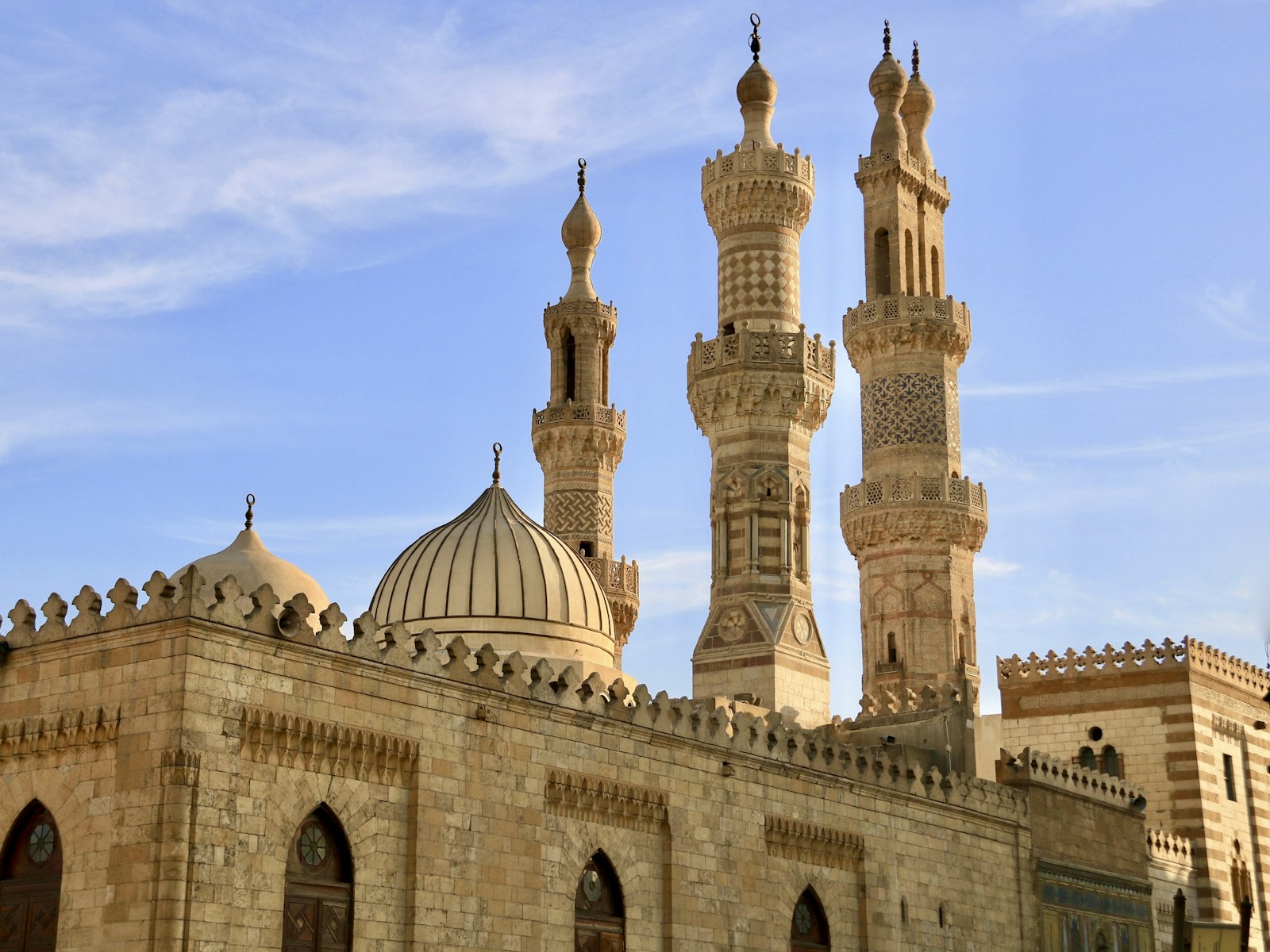
The new city was surrounded by powerful walls and provided with monumental gates, some of which — Bab al-Futuh, Bab al-Nasr and Bab Zuweila — still survive today as majestic witnesses of Fatimid grandeur. Within the walls rose the two great caliphal palaces, the Mosque of Al-Azhar (founded in 970 and transformed into a university in 988, becoming the oldest university still active in the world) and numerous public and religious buildings.
The Ayyubid Era
In 1171, the great leader Saladin (Salah ad-Din) put an end to the Fatimid dynasty and established the Ayyubid dynasty. Saladin radically transformed the urban structure of Cairo: he demolished the walls that separated Al-Qahira from al-Fustat, unifying the two cities into a single great metropolis, and built the Citadel on the hill of Muqattam, which became the new centre of political and military power.
Under the Ayyubids, Cairo opened to the mercantile and popular classes, transforming from an exclusive palace-city into a great cosmopolitan capital. New mosques, madrasas and charitable institutions rose throughout the urban fabric, and the district began to assume the complexity and richness that characterise it still today.
The Mamluk Splendour
The Mamluk period (1250-1517) represents the architectural and cultural apogee of Islamic Cairo. The Mamluk sultans, former military slaves who had conquered power, invested enormous resources in the construction of religious and civil monuments that were to legitimise their dominion and guarantee their eternal memory. The result was an explosion of architectural creativity without equal in the Islamic world.
Sultan Hassan had his monumental mosque-madrasa built (1356-1363), considered one of the masterpieces of world Islamic architecture. Qalawun erected his magnificent complex on the via al-Mu'izz, which comprises a mosque, a madrasa and a hospital. Al-Ghuri created the complex that bears his name, with the mosque, the mausoleum, the wikala (caravanserai) and the sabil-kuttab (fountain-school).
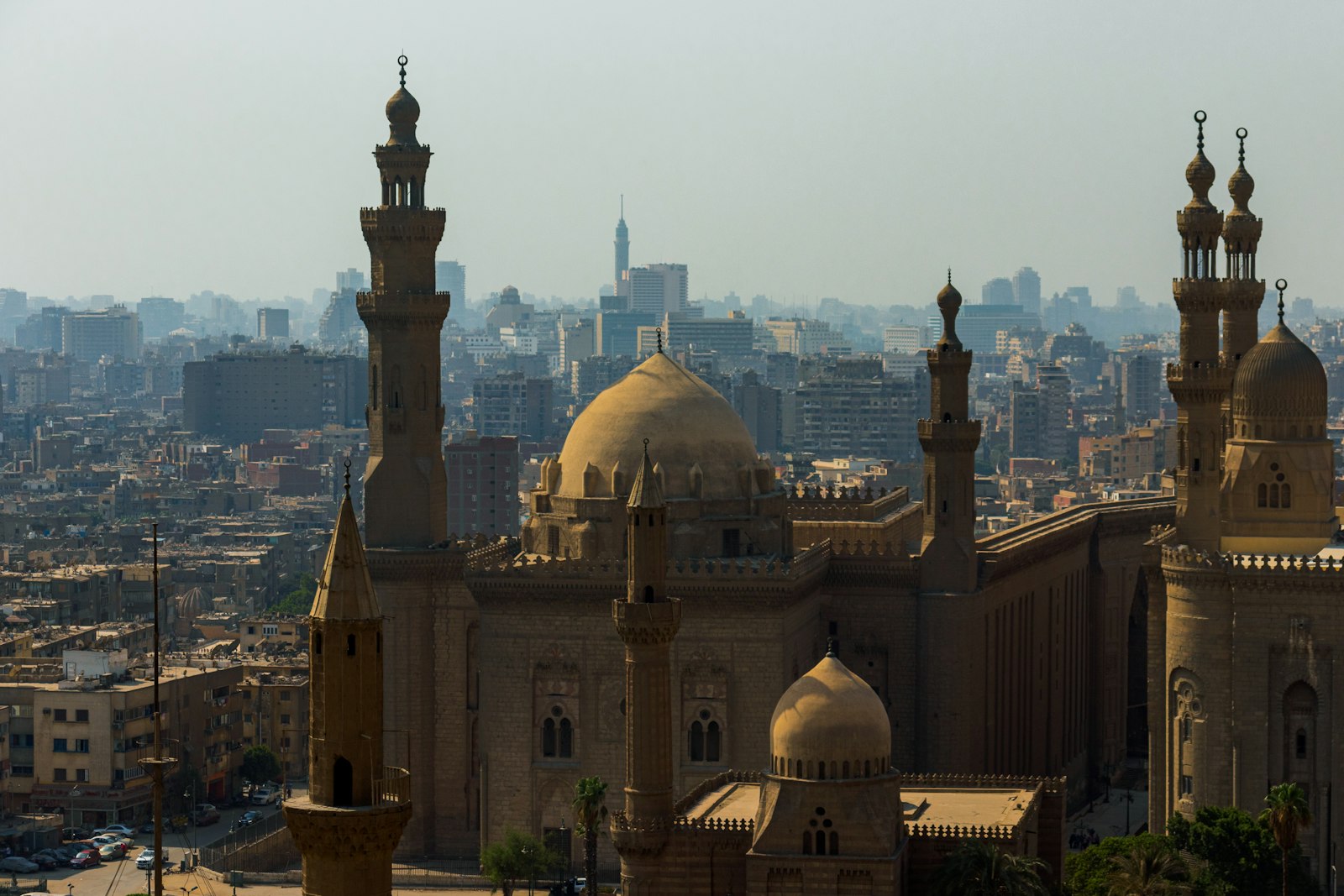
Mamluk architecture is distinguished by its grandiosity, decorative inventiveness and the virtuosic use of stone, marble and stucco. The Mamluk minarets, with their various octagonal and cylindrical sections surmounted by elaborate lanterns, have become the very symbol of historic Cairo.
The Ottoman Period
With the Ottoman conquest of 1517, Cairo lost its role as imperial capital but continued to be one of the greatest and most important cities of the Islamic world. The Ottomans introduced new architectural styles — influenced by the imperial architecture of Istanbul — and built mosques with central domes and pointed minarets that distinguish themselves clearly from the previous Mamluk constructions.
Among the most important Ottoman monuments of the district figure the Mosque of Muhammad Ali in the Citadel (1830-1848), inspired by the Blue Mosque of Istanbul, and numerous public fountains (sabil) and Quranic schools (kuttab) that testify to the endurance of the tradition of public charity that has characterised the Islamic civilisation of Cairo.
The Principal Monuments
The Via al-Mu'izz
The via al-Mu'izz li-Din Allah is the backbone of the Islamic district and one of the most extraordinary historic streets in the world. This artery, which crosses the district from north to south connecting Bab al-Futuh to Bab Zuweila, concentrates along its course the highest density of Islamic monuments of any street in the world. Walking it, one literally traverses a thousand years of history of Islamic architecture.
Among the monuments that face the via al-Mu'izz figure the Complex of Qalawun, with its monumental facade over 60 metres long; the Madrasa and the Mausoleum of Sultan al-Nasir Muhammad; the Mosque and the Madrasa of Barquq; the Madrasa of al-Kamil; and the Complex of al-Ghuri, which marks the border between the northern and the southern section of the street.
Khan el-Khalili
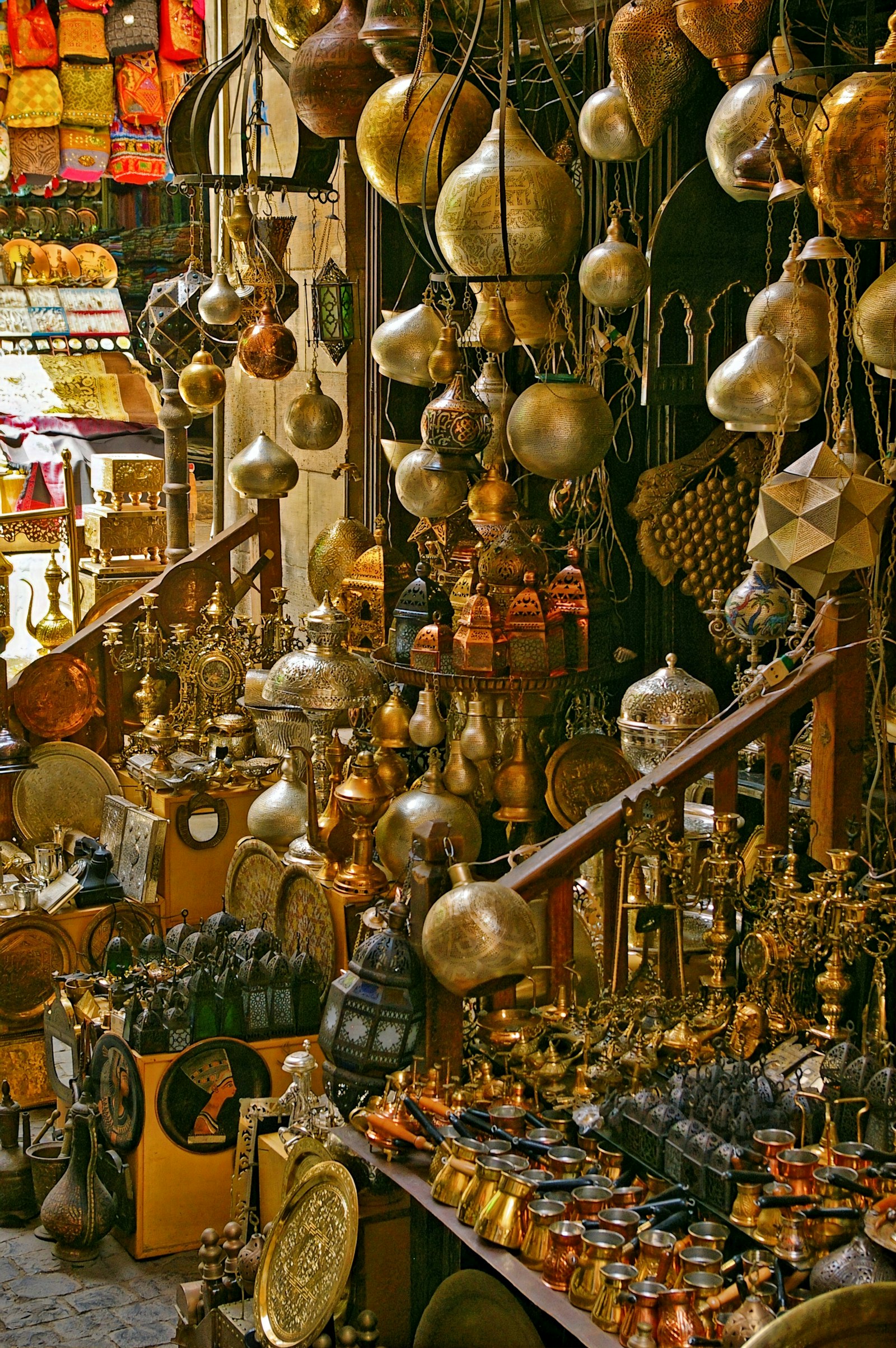
The celebrated bazaar of Khan el-Khalili, founded in 1382 by the Mamluk prince Jaharkas el-Khalili, is the commercial heart of the Islamic district and one of the great souks of the Arab world. This labyrinth of covered alleys and shops is an unforgettable sensory experience: the perfume of spices, the gleam of gold and silver, the vivid colours of fabrics and ceramics, the voices of merchants haggling with customers create an atmosphere that has enchanted travellers and traders for over six centuries.
The Great Mosques
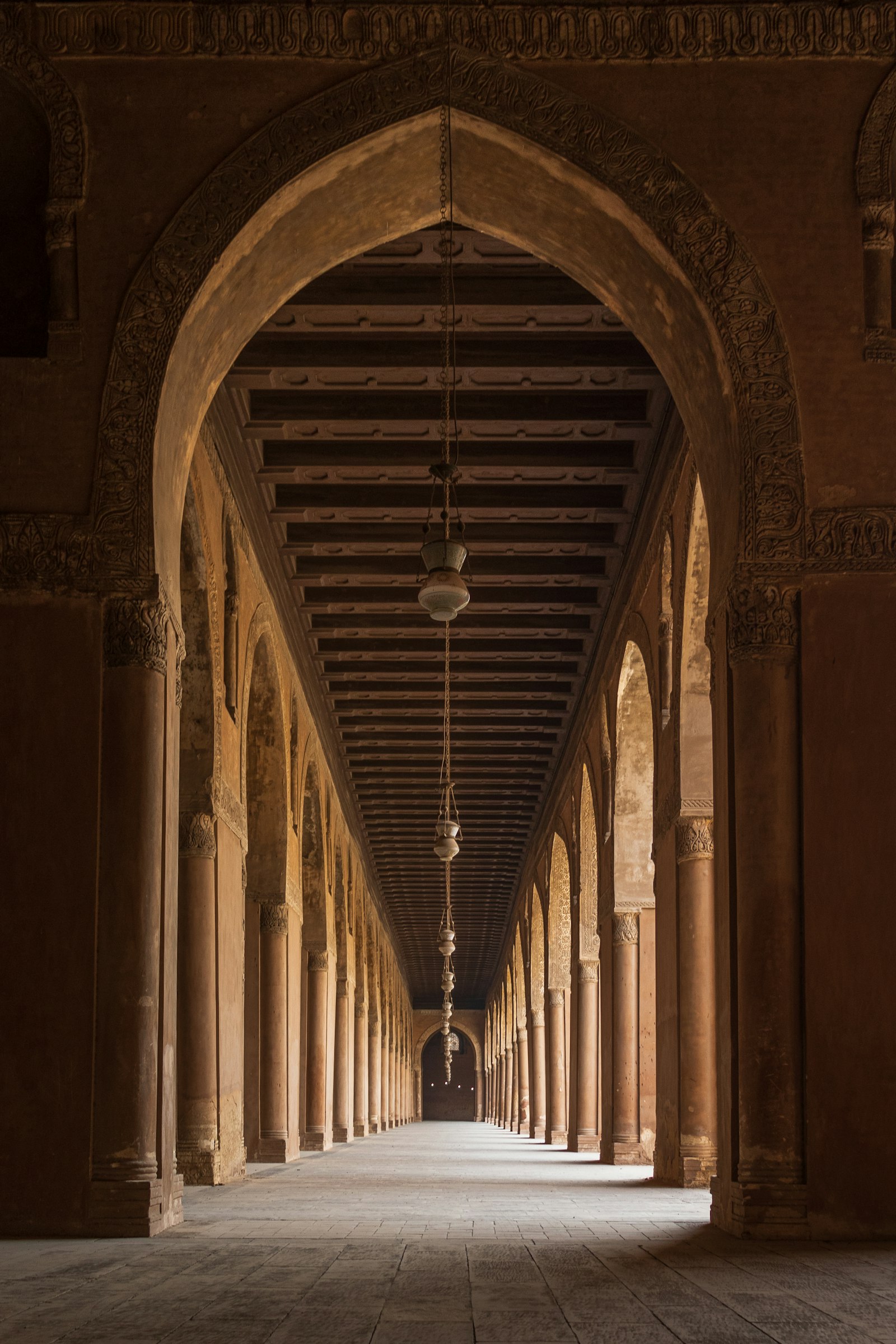
The Islamic district hosts some of the most important and beautiful mosques of the Islamic world. The Mosque of Al-Azhar, founded in 970, is the intellectual centre of Sunni Islam. The Mosque of Sultan Hassan (1356-1363) is a masterpiece of monumental proportions. The Mosque of Ibn Tulun (879), the oldest mosque of Cairo surviving in its original form, is a sublime example of Abbasid architecture. The Mosque of Al-Rifai (completed in 1912) guards the tombs of the kings of modern Egypt.
The Monumental Gates
The three surviving Fatimid gates — Bab al-Futuh ("gate of conquests"), Bab al-Nasr ("gate of victory") and Bab Zuweila — are among the most impressive examples of Islamic military architecture. Built in 1087 with blocks of massive stone and provided with guard towers, these gates delimit the original nucleus of the Fatimid city and offer, from their summit, spectacular panoramic views of the district.
The Citadel of Saladin
Dominating the district from the hill of Muqattam, the Citadel of Saladin was the centre of the political and military power of Egypt for almost 700 years, from the 12th to the 19th century. Within its walls are the Mosque of Muhammad Ali, the Military Museum, the Museum of Gardens and Carriages and several other historic buildings. The view of the city from the Citadel is one of the most iconic of Cairo.
Architecture and Art
The Architectural Styles
The Islamic District of Cairo is a living manual of Islamic architecture, where it is possible to observe and compare styles and construction techniques developed over the course of more than a thousand years. Fatimid architecture is recognised by its ogival pointed arches, the stucco decorations and the Kufic inscriptions. Mamluk architecture is distinguished by the grandiosity of proportions, the skilful use of bicoloured stone (ablaq) and the minarets articulated in superimposed sections. Ottoman architecture introduces the central domes, the tapered minarets and the decorations in ceramic tiles.
Traditional Craftsmanship
The Islamic district is still today a vital centre of traditional Egyptian craftsmanship. In the shops and workshops hidden in the alleys ancient arts are practised: the inlay of wood and mother-of-pearl, the working of copper and brass, the weaving of carpets, Islamic calligraphy, the production of perfumes and spices. Many of these craft traditions are handed down from father to son for generations and represent an intangible cultural heritage of great value.
Tips for the Visit
How to Get There
The Islamic district is reachable in various ways: by taxi or with ride-sharing services up to Bab Zuweila or Khan el-Khalili; by metro (Al-Ataba stop, Line 1 or 2, followed by a short walk); or on foot from the centre of Cairo. The most scenographic entrance is from the gate of Bab al-Futuh, from which one can walk the entire via al-Mu'izz towards the south.
When to Visit
The best period to visit the district is from October to April, when the temperatures are more pleasant for walking outdoors. It is advisable to begin the visit in the early morning, when the monuments are less crowded and the light is ideal for photography. Avoid Friday during the hour of the midday prayer, when many mosques are not accessible to tourists.
What to Wear
It is essential to dress respectfully, especially to visit the mosques: shoulders and knees covered for everyone, and a headscarf for women in the eventuality that covering the head is required. Comfortable and closed shoes are indispensable to walk the cobbled and often irregular alleys.
Recommended Itineraries
For a first visit, it is advisable to walk the via al-Mu'izz from Bab al-Futuh to Bab Zuweila, stopping at the principal monuments along the course and making a stop at Khan el-Khalili. This itinerary requires at least 4-5 hours and covers the most important monuments. For a more in-depth visit, add the Mosque of Sultan Hassan, the Mosque of Al-Rifai and the Citadel, providing for a whole day.
Safety and Practical Tips
The Islamic district is generally safe for tourists, but it is opportune to take the normal precautions applicable to any large city: keep an eye on personal objects, do not flaunt jewellery or expensive photographic equipment and pay attention to particularly insistent street vendors, especially at Khan el-Khalili. Bring with you water in abundance, sun protection and a map or a navigation app, since it is easy to get lost in the labyrinth of alleys.
Photography
The Islamic district is a paradise for photographers. The best moments to photograph are the early hours of the morning and the late afternoon, when the warm light exalts the colours of the stone and creates suggestive plays of shadows in the narrow alleys. The minarets at sunset and the lanterns of Khan el-Khalili at dusk are among the most iconic subjects.
The Living District
What makes the Islamic District of Cairo unique compared to other historic centres UNESCO heritage is the fact of being a place still fully alive. Here one does not find isolated monuments in a museum context, but historic buildings integrated in a vital urban fabric, where millenary mosques still welcome the faithful for the daily prayer, where the medieval bazaars continue to be the centre of commercial activity, where the public fountains still offer shade and refreshment to passers-by.
This vitality is at the same time the strength and the fragility of the district: the architectural heritage is constantly threatened by pollution, by demographic growth and by building speculation, but it is also continuously vivified by the daily use that its inhabitants make of it. To visit the Islamic District of Cairo is not only a cultural and artistic experience, but an encounter with a living civilisation that continues to evolve in the furrow of a millenary tradition.