The Nawamis: the Prehistoric Tombs of Sinai
The Nawamis are among the most enigmatic and fascinating structures of all Egypt: ancient stone funerary monuments dating to the Chalcolithic period (4500-3500 BC) that dot the desert landscape of southern Sinai like silent sentinels of forgotten civilisations. These circular or elliptical dry-stone constructions, among the most ancient structures built by man in the Middle East, represent an archaeological mystery that continues to challenge scholars with questions about their origin, their builders and the ritual practices that took place inside them.
The name "Nawamis" — plural of the Arabic "namus", which means "mosquito" or "gnat" — was attributed by the local Bedouins who, unaware of the true function of these structures, believed them ancient shelters built by the Israelites during the Exodus to protect themselves from the plagues of insects sent by God. This popular etymology, although historically unfounded, testifies to the sense of mystery that these structures have always exercised on the local populations.
Description and Distribution
The Structures
The Nawamis are circular or slightly elliptical constructions, with diameters between 2 and 5 metres and heights that vary from 1 to 2.5 metres. The walls are made of local sandstone, arranged dry without mortar, with a technique that recalls the tholos constructions of the ancient Mediterranean world. The roof, also of stone, is made with the technique of the progressive corbel (false dome covering), where each course of stones projects slightly towards the interior with respect to the previous one until closing the upper space.
Each structure presents a single opening, generally turned towards the west. This constant orientation is one of the most interesting aspects of the Nawamis, since it suggests a precise ritual intentionality linked to the sunset — the direction in which the sun dies every day, universally associated in ancient cultures with the world of the dead and the afterlife. Some openings are so small as to permit passage only on all fours, indicating that they were not conceived as dwellings but as sepulchral chambers.
The Sites in Sinai
At least fifteen sites of Nawamis have been identified, distributed in southern Sinai, with particular concentrations in the mountainous areas between Nuweiba, Dahab and Saint Catherine. The best-known and best-preserved sites are located about 20 kilometres from Nuweiba, reachable with off-road vehicles along desert tracks.
Some sites contain few units, while others present groupings of dozens of structures, suggesting the existence of true community cemeteries. The largest known site counts over forty structures grouped over an area of several hectares. The arrangement does not seem to follow a rigid geometric scheme, but the structures tend to group in small nuclei, perhaps corresponding to family groups or clans.
Excavations and Finds
The Archaeological Campaigns
The first systematic explorations of the Nawamis go back to the end of the 19th century, when European explorers and archaeologists began to document the structures during their journeys across Sinai. However, the most important scientific excavation campaigns were conducted in the Seventies and Eighties of the 20th century, in particular by Ofer Bar-Yosef of Harvard University and by other Israeli archaeologists during the period of occupation of Sinai.
These campaigns brought to light fundamental information on the dating, the function and the contents of the structures. The carbon-14 analyses of the organic materials found inside confirmed that the Nawamis date back to the Chalcolithic period, placing them between 4500 and 3500 BC — contemporary, therefore, with the first phases of predynastic Egyptian civilisation and prior to the construction of the pyramids by at least a thousand years.
The Funerary Goods
The excavations have revealed that the Nawamis were effectively funerary structures. Inside have been found human skeletal remains — often of several individuals in the same structure — accompanied by funerary goods that included objects of great archaeological interest.
Among the most significant finds figure: ceramic vessels decorated with geometric motifs, beads and ornaments in marine shells (indicators of commercial contacts with the coasts of the Red Sea and of the Mediterranean), tools in worked flint, palettes for cosmetics and copper objects that testify to the knowledge of metallurgy. The presence of shells from the Arabian Sea and from the Mediterranean suggests that the builders of the Nawamis were inserted in commercial networks that covered considerable distances.
The Funerary Practices
The analysis of the human remains and of the goods has permitted to partially reconstruct the funerary practices associated with the Nawamis. The deceased were laid in a flexed position, often with the face turned towards the opening of the structure. The presence of several individuals in the same structure suggests that the Nawamis were used as family or community tombs, periodically reopened for new burials.
Some remains show signs of decomposition before the final burial, indicating a possible practice of exposure of the body or of secondary burial, where the bones were collected after the decomposition of the soft tissues and laid in the structure at a second moment. These practices are known in various prehistoric cultures of the Middle East and suggest a complex system of beliefs relating to death and the afterlife.
The Mystery of the Builders
Who Were They?
The identity of the builders of the Nawamis remains one of the great questions of Sinai archaeology. The main hypotheses include nomadic or semi-nomadic populations who frequented Sinai as a route between Africa and Asia, communities of shepherds who practised transhumance between the mountains of Sinai and the coastal zones, or groups linked to the Chalcolithic cultures of southern Palestine (in particular the Beersheva culture).
The absence of permanent settlements in the vicinity of the Nawamis suggests that the builders were a people in movement, who used Sinai as a migratory corridor or as a seasonal pasture. The funerary structures, built with great care and in prominent positions, indicate however a strong bond with the territory and a desire to mark the presence in the land of their ancestors.
The Academic Debate
The academic debate on the Nawamis is still lively. Some scholars believe that they were built by local populations of Sinai, predecessors of the current Bedouins, who autonomously developed this funerary tradition. Others link them to the Chalcolithic cultures of southern Palestine, noting similarities with the funerary structures of sites such as Shiqmim and Abu Matar in the Negev.
A third hypothesis suggests a possible connection with the pastoral cultures of north-eastern Africa, who would have crossed Sinai in their migrations towards the Levant. This theory is based on parallels with similar structures found in the eastern Sahara and in northern Sudan, although the differences are significant.
The Bedouin Legends
The Oral Tradition
The Bedouins of Sinai have transmitted orally for generations their own explanations on the origin of the Nawamis. According to a legend widespread among the tribe of the Muzeina, the structures were built by the people of Aad, a mythical civilisation mentioned in the Quran known for its superhuman strength and destroyed by God for its arrogance. This attribution reflects the sense of wonder that the structures arouse: their survival for millennia in the desert appears almost miraculous.
Another Bedouin legend tells that the Nawamis were built by the djinn, the spirits of the desert of the Arab tradition, as dwellings or as prisons for evil spirits. This belief has contributed to protecting the structures from destruction, since many Bedouins avoided disturbing them for fear of supernatural consequences.
The Context of the Desert
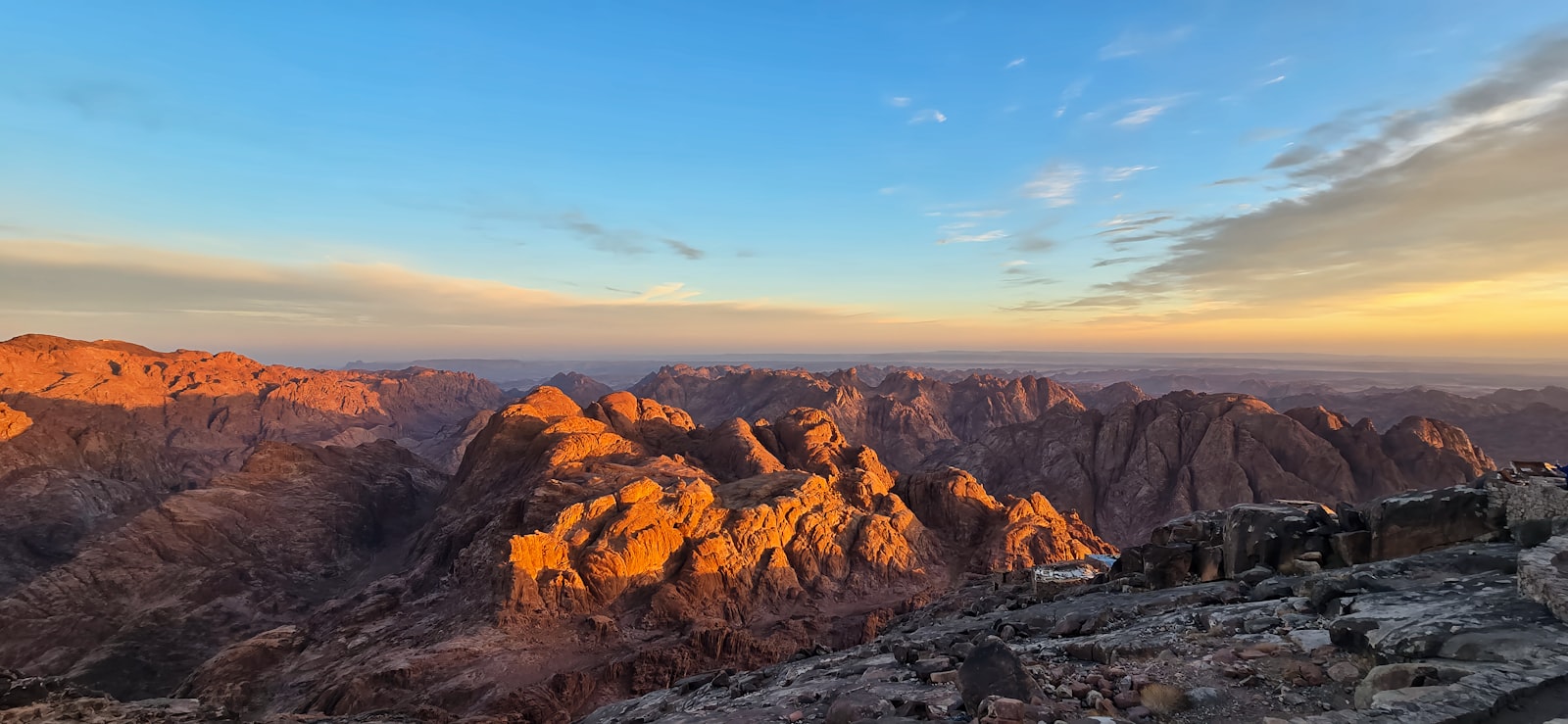
The landscape in which the Nawamis are inserted is of a severe and hypnotic beauty. The structures emerge from the rocky terrain like natural outgrowths, almost camouflaged with the surrounding stones. In the hours of the morning and of the late afternoon, when the grazing light of the sun creates long shadows and dramatic contrasts, the site assumes an almost sacred atmosphere.
The silence of the desert that surrounds the Nawamis is absolute. Here, far from any inhabited centre and from any trace of modernity, it is possible to perceive the depth of time in an almost physical way. Standing in front of these structures built six millennia ago, the observer confronts the vastness of human history and the tenacity of the populations who inhabited and sacralised this extreme landscape.
Tips for the Visit
How to Get There
The sites of the Nawamis are not reachable by public transport nor by ordinary vehicles. It is necessary to organise an excursion with a specialised tour operator from Nuweiba, Dahab or Sharm el-Sheikh, who provides an off-road vehicle and a Bedouin guide. The excursion to the Nawamis is often combined with the visit to the Colored Canyon or to the White Canyon.
Bedouin Guide
A local Bedouin guide is essential not only to reach the site, but also to understand the historical and cultural context of the structures. The Bedouin guides add a narrative dimension to the visit, sharing the legends handed down from their oral tradition and their knowledge of the territory.
What to Bring
Bring abundant water (at least 2 litres per person), sun protection, hat, closed shoes and a camera. There are no services of any type near the sites, so it is necessary to be completely self-sufficient. Binoculars can be useful to observe the constructive details of the more distant structures.
Respect for the Site
The Nawamis are extremely fragile structures, survived for millennia thanks to the dry climate of the desert. Do not lean on the walls, do not collect stones or fragments and do not enter the structures unless they are sufficiently large and stable. Do not leave rubbish and do not move any object from the site. Respect for these prehistoric monuments is fundamental for their conservation for future generations.
Photography
The Nawamis offer excellent photographic subjects, especially in the hours of the early morning and of the late afternoon, when the warm light exalts the textures of the stone and creates deep shadows inside the structures. A wide angle is ideal to capture the landscape context, while a telephoto lens allows highlighting the constructive details.
Visiting the Nawamis is a unique experience that transports the visitor back six millennia, in the presence of some of the most ancient testimonies of human ingenuity in the Sinai desert, a journey in time that few other sites in the world can offer.